Custom Velcro Patches for Teams, Gear, and Events
Custom Velcro patches are popular for one simple reason: they make identity flexible. A sewn patch can look great, but once it is attached, it stays there. A hook-and-loop patch can move from a jacket to a backpack, from an event vest to a display board, or from one team role to another in seconds.
Technically, Velcro is a brand name, while the general term is hook-and-loop. Still, many people search for “custom Velcro patches” when they want removable patches with a rough hook backing that grips onto a soft loop surface. For teams, gear makers, event organizers, outdoor clubs, and apparel brands, that removable format can solve practical problems while keeping the design polished and professional.
The key is not just ordering a patch with the right backing. A great removable patch starts with the right artwork, size, edge style, material, color contrast, and intended use. When all of those choices work together, the patch becomes more than decoration. It becomes a reusable identifier, a collectible, a uniform detail, or a branded product people actually want to keep.
Why custom Velcro patches work so well
The biggest advantage of a hook-and-loop patch is flexibility. A team can use one jacket for multiple roles by swapping name, department, or rank patches. An outdoor brand can let customers personalize bags and pouches. An event organizer can issue temporary staff, media, VIP, or security patches without permanently altering apparel.
That flexibility also helps with inventory. Instead of producing separate garments for every name, title, event date, or division, you can create a base item with a loop field and order smaller patch runs for the details that change. This is especially useful for growing teams, recurring events, and limited-edition merchandise.
Custom Velcro patches also have a tactile quality that printed graphics often lack. They add depth, texture, and a sense of purpose. A removable patch on a gear bag or jacket communicates that the item is built for use, not just display. For broader ideas on how patches create recognition and identity, HiLabels’ guide to custom patches for brands, teams, and creators is a helpful companion.
Best uses for teams, gear, and events
For teams, removable patches make uniforms easier to adapt. Sports clubs, volunteer groups, field crews, security teams, school organizations, and corporate event staff can all benefit from patches that identify roles without requiring a different garment for every person. Names, numbers, titles, departments, and seasonal campaigns are all strong candidates.
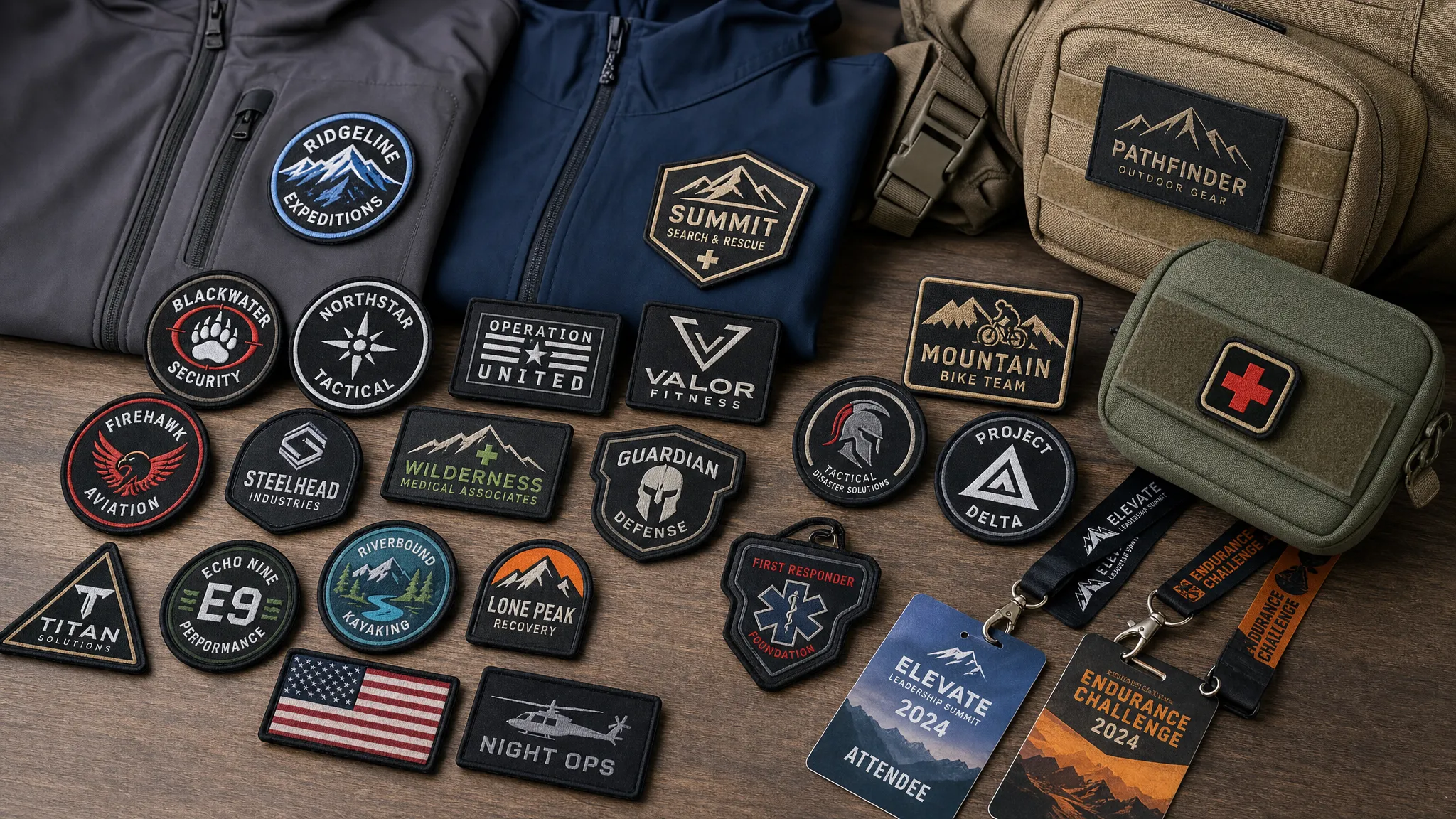
For gear, hook-and-loop patches are often used on backpacks, camera bags, tactical pouches, travel cases, tool bags, pet harnesses, and outdoor apparel. The patch can mark ownership, display a logo, show a membership badge, or add personality. Because the patch is removable, users can change the look of their setup without buying new gear.
For events, custom Velcro patches can function as staff identifiers, commemorative keepsakes, sponsor items, or tiered access markers. A festival might use one color for crew and another for VIP hosts. A conference might give speakers a removable patch for a bag or jacket. A race, retreat, or brand activation can create collectible patches for attendees.
Patch culture is especially meaningful in service, outdoor, and public-safety communities because patches often represent shared stories, roles, and lived experience. For readers interested in the personal side of identity, service, and reflection, personal reflections from military and law enforcement life show why symbols like patches can carry meaning far beyond the fabric itself.
Choosing the right patch style
A hook-and-loop backing can be paired with different patch faces, so your first major decision is the patch style. The right choice depends on how much detail is in your artwork, how rugged the patch needs to be, and what look you want.
Woven patches are excellent for sharp logos, small lettering, thin lines, and detailed artwork. Because the design is woven with fine threads, they can capture more precision than many raised-thread styles. This makes them a strong option for brand logos, team crests, event marks, and clean typography.
Embroidered patches have a raised, textured look. They work well for bold shapes, simple icons, block lettering, and traditional team or uniform aesthetics. If your design relies on fine detail, very small text, or subtle linework, compare the options carefully before choosing. HiLabels’ breakdown of custom embroidered patches vs woven patches explains the visual and practical differences in more depth.
Printed patches can work well when the artwork includes gradients, photos, or complex color transitions. PVC and rubber-style patches are often chosen for waterproof or outdoor-oriented aesthetics, although the best material depends on the supplier and the intended application. For apparel and merch, woven and embroidered styles remain versatile because they balance durability with a premium textile feel.
| Use case | Best design approach | Why hook-and-loop helps |
|---|---|---|
| Team uniforms | Clear logo, name, number, or role text | Patches can be swapped as roles or rosters change |
| Outdoor and tactical gear | High-contrast artwork with strong borders | Users can move patches between bags, jackets, and pouches |
| Events and conferences | Color-coded staff, speaker, VIP, or sponsor designs | Temporary identification does not permanently alter garments |
| Merch and collectibles | Limited-edition art, club marks, or campaign graphics | Customers can personalize gear and collect multiple designs |
| Corporate field teams | Department, title, location, or certification patches | Standard uniforms can be adapted for different teams |
Design tips for custom Velcro patches that look professional
The most successful custom Velcro patches are designed for real-world visibility. A patch might look great on a large digital proof, but if the final size is only three inches wide, tiny details can disappear. Start by thinking about where the patch will be seen: up close on a backpack, at a distance on a uniform, or as a collectible item in someone’s hand.
Size matters. A small patch is great for hats, chest placements, sleeves, and compact gear. Larger patches work better for jacket backs, equipment bags, or statement merch. Before approving a size, print the artwork at actual scale and view it from the same distance your audience will see it.
Color contrast is equally important. Dark lettering on a dark background, thin outlines, or low-contrast gradients can make the design difficult to read. For team and event use, clarity should come before complexity. A patch that identifies a staff member quickly is more useful than one packed with fine detail.
Keep these practical design rules in mind:
- Use bold shapes and readable lettering for patches viewed from a distance.
- Choose woven construction when fine lines, small text, or detailed logos matter.
- Add a strong border to help the patch hold its shape and frame the artwork.
- Match the patch size to the loop area on the garment or gear.
- Avoid overcrowding the design with too many words, dates, icons, or slogans.
For patches used in rugged environments, the design should also account for abrasion, repeated removal, and exposure to dirt or moisture. Military-inspired, tactical, and outdoor patches often need simpler artwork and stronger contrast because they are used in motion, not just displayed. If durability is a priority, HiLabels’ article on design tips for durable custom military patches offers useful principles that apply to many demanding patch projects.
Backing, placement, and attachment details
A custom Velcro patch usually has the hook side attached to the back of the patch. The garment, bag, vest, or panel needs the soft loop side. This matters because the patch will only perform well if both sides are compatible, clean, and properly sized.
If you are ordering patches for existing gear, measure the loop area before finalizing the patch size. A patch that is too large may curl at the corners or fail to sit flat. A patch that is too small may look lost on the garment. Ideally, leave a small margin around the patch so it fits neatly within the loop field.
Placement also changes the design requirements. A chest patch should be easy to read without overwhelming the garment. A sleeve patch can be more graphic and symbolic. A backpack patch may allow for bolder colors or playful artwork. A tactical vest or field bag may need subdued tones, high contrast, or a shape that does not snag easily.
If you are producing apparel from scratch, plan the loop field early. The loop area should be sewn securely to the garment or gear before the patch is used. For curved surfaces, such as hats or small pouches, check whether the patch shape and size will sit smoothly. Rectangles, shields, circles, and simple custom shapes are usually easier to manage than long, thin designs.
Ordering custom Velcro patches: what to prepare
Before you request a quote or upload artwork, clarify how the patch will be used. A patch for a one-day event has different priorities than one worn weekly by a field team. A collectible merch patch can be more expressive, while a uniform patch must be easy to read and consistent across the group.
Your artwork file should be as clean as possible. Vector artwork is ideal when available because it scales well and preserves sharp edges. If you only have a raster image, use the highest-resolution version you can provide. Avoid screenshots, blurry photos, or compressed files if you want crisp results.
It also helps to prepare a short project brief. Include the intended size, quantity, patch shape, preferred colors, expected use, and whether the patch will be attached to apparel, bags, uniforms, or event gear. If you are unsure about size or construction, share the placement details and ask for guidance before production.
HiLabels offers custom patches and an online ordering process designed to make branded textile products easier to create. For teams and organizations, that means you can focus on the design and purpose of the patch while working toward a finished product that looks consistent, durable, and professional.
Common mistakes to avoid
One of the most common mistakes is treating a removable patch like a tiny poster. Too many words, thin lines, small icons, and multiple slogans can make the design hard to read. A patch should communicate quickly. If the viewer needs to study it for several seconds, simplify the artwork.
Another mistake is ignoring the base item. The best patch in the world will not perform well if the loop field is poorly placed, too small, or weakly attached. Always design the patch and the garment or gear as a system.
It is also important to choose the right attachment method for the job. Hook-and-loop backing is excellent when the patch needs to be removed or swapped. If the patch should stay on the garment permanently, a sew-on or iron-on option may be more appropriate. For retail apparel, a permanent patch can sometimes feel more finished, while a removable patch can feel more functional and customizable.
Finally, do not forget extras. Teams grow, patches get lost, and events often need last-minute additions. Ordering a small buffer can prevent problems later, especially if the design includes a date, sponsor, or limited-edition theme.
Caring for hook-and-loop patches
Good care helps custom Velcro patches last longer. Remove patches before harsh washing when possible, especially if the garment will be turned inside out, exposed to high heat, or washed with items that may snag. If the patch must stay attached during washing, make sure it is pressed firmly onto the loop area.
The hook backing can collect lint, thread, hair, and debris over time. Cleaning it gently helps maintain grip. Store patches flat when they are not in use, and avoid pressing the hook side against delicate fabrics. For teams that rotate patches frequently, a dedicated storage panel or organizer can keep designs visible and ready to use.
If a loop field starts to lose grip, the patch may not be the problem. The soft loop side can wear down with repeated use, especially on high-friction gear. In that case, replacing or reinforcing the loop panel may restore performance.
Frequently Asked Questions
Are custom Velcro patches the same as hook-and-loop patches? In everyday language, yes. Velcro is a well-known brand name, while hook-and-loop is the general term for the fastening system. Many people use “custom Velcro patches” to describe removable patches with hook backing.
What size should custom Velcro patches be? The right size depends on placement. Small chest, sleeve, and hat patches often need simple artwork, while larger jacket, bag, or event patches can include more detail. Always measure the loop area before choosing the final size.
Are woven or embroidered patches better for hook-and-loop backing? Both can work well. Woven patches are better for fine detail, small lettering, and clean logos. Embroidered patches are better for bold designs with a raised, classic texture.
Can custom Velcro patches be used for events? Yes. They are useful for staff identification, VIP access, sponsor branding, team roles, and commemorative merch. Since they are removable, event patches can be collected, reused, or swapped between garments.
Do custom Velcro patches last? They can last well when designed properly and cared for correctly. Durability depends on patch construction, backing quality, usage, washing, and the condition of the loop surface they attach to.
Create patches that match how your team actually works
Custom Velcro patches are practical, professional, and adaptable. They help teams stay organized, make gear more personal, and give events a branded detail that people can wear, swap, and keep.
Whether you are planning patches for uniforms, outdoor equipment, staff apparel, or event merchandise, start with the real use case first. Then choose the right size, style, artwork, and attachment method. With the right approach, your patch will not just look good on delivery day. It will keep working every time someone puts it on, pulls it off, and wears it again.


