What Anti Theft Zipper Pulls Can and Cannot Protect Against
A secured zipper can make a quick, unnoticed opening harder, but anti theft zipper pulls do not make a bag theft-proof. Their usefulness depends on the closure design, how they attach to the zipper and what kind of access you want to discourage. A clip may add an extra step for an opportunistic thief, while a lock can restrict ordinary opening. Neither necessarily protects the fabric, other compartments or the bag itself.
The practical question is not whether a pull looks secure. It is which risks the complete bag design actually addresses.
The pull is only one part of the security system
A zipper pull is the tab or extension you grip. The slider is the component that joins or separates the zipper teeth. Security depends on more than either part alone: the zipper chain, pull attachment, locking mechanism and surrounding fabric all matter.
Products described as anti-theft may use clips, interlocking tabs or openings that accept a separate lock. These designs do not offer identical protection. A clip adds a release step, while a functioning lock requires an authorized means of release during normal use.
An ordinary branded pull, cord extension or oversized grip does not gain a security function simply because it is strong or easy to hold. Likewise, an auto-locking slider intended to resist unintended movement is not necessarily an access-control device.
For a closer look at the closure geometry, HiLabels explains how interlocking zipper pulls work on travel bags. The key distinction is whether the design merely connects the pulls or actually restricts opening.
What anti theft zipper pulls can realistically protect against
Quick access through the normal zipper opening
A secured closure can interrupt the simplest access attempt: taking hold of a pull and opening the compartment normally. Requiring an additional release action may make that attempt slower or more noticeable, particularly when the bag remains within your control.
This is deterrence, not guaranteed prevention. A readily accessible clip may be easy for someone else to release. A more restrictive mechanism can create a stronger barrier to ordinary opening, but its effectiveness still depends on the attachment and the rest of the bag.
Some unintended openings
Certain closures can also help keep sliders from drifting apart during movement. That may be useful on a crowded commute or when a packed bag puts pressure on the zipper.
Do not assume every security-style pull provides this benefit. Loose connections, poor alignment or excessive space between the secured sliders can leave a gap.
| Situation | Potential benefit | Important limitation |
|---|---|---|
| Someone tries to open the zipper normally | Adds a release step or restricts slider movement | The mechanism may remain accessible |
| Sliders move during everyday handling | May help keep the opening closed | Depends on fit and closure geometry |
| Someone reaches into another pocket | No benefit unless that pocket is also secured | Protection is compartment-specific |
| Someone takes the entire bag | No direct protection | The bag is still portable |
| Someone damages the bag to gain access | Limited protection from the pull alone | Fabric, seams and zipper construction matter |
What they cannot reliably protect against
For anti theft zipper pulls, the most important limitation is that securing an opening does not secure everything around it. A product can perform its intended closure function and still leave significant theft risks unaddressed.
Theft of the entire bag
Joining or locking zipper pulls does not attach a backpack to its owner, a chair or another fixed object. An unattended bag can still be carried away with every zipper secured.
This distinction matters in cafés, stations and shared luggage areas. A closure protects access to a compartment; supervision and an appropriate anchoring arrangement address a different risk. Even anchoring depends on the strength of the strap, attachment point and supporting object.
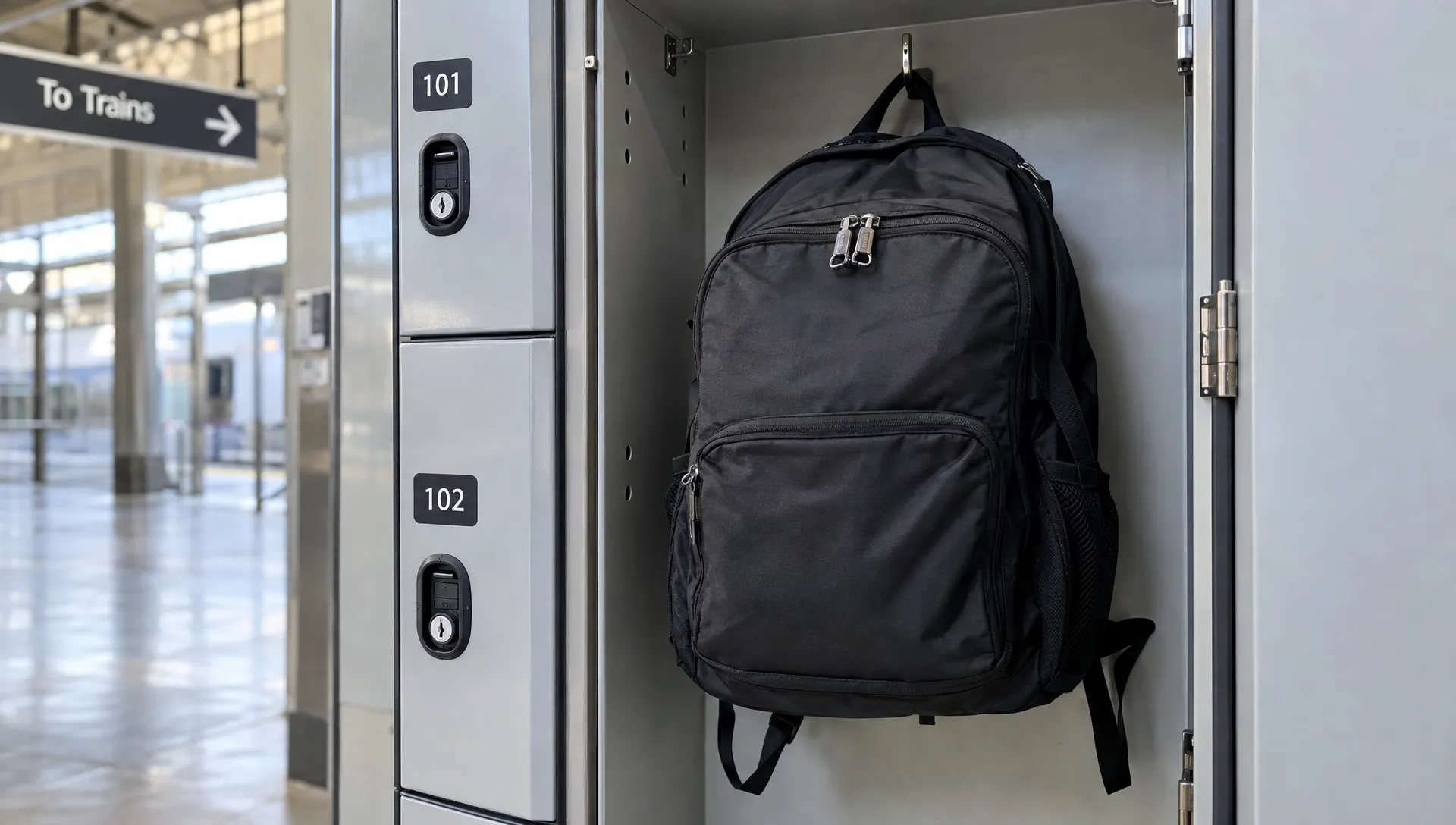
If you need to leave a bag unattended, a secure storage facility may be a better choice than relying on its zipper hardware.
Forced access through other parts of the bag
A pull does not reinforce fabric panels, seams or the zipper chain. Those components can remain vulnerable even when the pulls stay connected.
There is also a difference between resisting casual handling and resisting deliberate force. A closure that survives daily use has not necessarily been evaluated for attempted theft. Soft attachment loops, worn pull tabs or damaged sliders can further limit the usefulness of an otherwise sound mechanism.
Avoid judging protection by the lock alone. A substantial lock attached to a weak pull connection does not strengthen that connection, and an oversized lock may interfere with operation or strain lightweight hardware.
Undetected access or missing contents
Anti theft zipper pulls should not be treated as tamper-evident devices unless the particular system provides that function. Finding the pulls connected afterward does not, by itself, prove that nobody accessed the bag.
An exposed secondary pocket may remain available, or someone may open and reclose a release mechanism. A closure also cannot protect against theft by someone who already has authorized access.
Where evidence of access matters, use a purpose-designed tamper-evident system and follow its inspection procedure. Tamper evidence and access restriction are separate functions: one helps reveal interference, while the other attempts to limit entry.
How to assess a closure before relying on it
Identify exactly what is restrained
Look at the complete arrangement with the compartment closed. Does it hold two sliders together, secure a slider to a fixed point or simply keep two decorative extensions beside each other?
Check whether the opening remains closed throughout the permitted movement. Pulls that appear connected can still leave an opening if their geometry allows excessive travel or separation.
Ask the supplier what the mechanism is designed to do. “Anti-theft” language alone is not enough to establish a particular level of resistance, and a description of the material is not a substitute for relevant performance information.
Check the release and attachment
When comparing anti theft zipper pulls, distinguish an extra step from controlled access. A snap hook that anyone can release may discourage a quick opening, but it does not provide the same restriction as a lock.
Inspect the entire connection, including the slider’s attachment point and any ring, cord or connector. Look for wear, distortion and poor fit. HiLabels’ guide to installing a zipper pull that stays secure covers attachment considerations, although secure installation alone does not establish theft resistance.
The closure must also remain usable by its intended owner. Check operation with the bag loaded and in the conditions that matter, such as wearing gloves or using one hand. A mechanism that is regularly left disengaged provides little practical benefit.
Use closures alongside measures that address other risks
Start by deciding which compartment holds your most valuable items. Securing a large main opening offers limited value if your phone or passport remains in an accessible exterior pocket.
On crowded transport, keep the bag where you can monitor it and position important openings close to your body when practical. In a café or waiting area, maintain control of the bag rather than assuming a closed zipper makes it safe to leave behind.
For checked luggage, separate theft deterrence from screening access. The TSA’s security screening guidance explains baggage inspection procedures. A lock designed to accommodate TSA inspection serves that access requirement; it is not a promise that the luggage cannot be stolen or opened by anyone else.
A useful approach combines anti theft zipper pulls with appropriate pocket placement, sound bag construction and attentive handling. Each measure addresses a different vulnerability. Adding more hardware to the same opening does not automatically address the remaining ones.
What brands should verify before making security claims
For a bag or accessory brand, the safest starting point is a precise description of the function. “Connects the zipper pulls to add a release step” communicates something concrete. “Prevents theft” makes a much broader promise that the pull alone cannot support.
Evaluate the finished assembly rather than an isolated component. A connector may perform well on its own but fit poorly with the chosen slider, interfere with packing or become difficult to engage after repeated use.
Useful checks include repeated opening and closing, attachment retention, operation on a normally loaded bag and inspection for wear. These checks help assess usability and durability. They do not establish forced-entry resistance unless the evaluation specifically addresses that claim.
For anti theft zipper pulls, ask suppliers to identify the configuration tested, the conditions used and what the results actually demonstrate. If stronger security claims are central to the product, seek suitable independent evaluation rather than inferring performance from appearance or material choice.
Custom branding is a separate decision. A logo, distinctive shape or comfortable grip can support product identity and everyday use, but those features should not be presented as security mechanisms without supporting evidence.
Frequently asked questions
Are zipper pulls that clip together the same as locking pulls? No. A clip generally adds a release action, while a lock restricts ordinary opening until it is released by the appropriate key, code or other mechanism. Both still depend on their attachments and the bag’s construction.
Can I add a security closure to any backpack? Not necessarily. Compatibility depends on the sliders, pull openings and closure geometry. Some bags lack suitable attachment points, and improvised fittings may leave gaps or strain the hardware. Confirm suitability before relying on a retrofit.
Does a TSA-compatible lock make a bag theft-proof? No. Compatibility with inspection procedures concerns screening access. It does not secure the bag against being carried away or eliminate weaknesses elsewhere in its construction.
Are anti theft zipper pulls worthwhile for commuting? They can be useful when your goal is to discourage quick access through the normal zipper opening. Their value is greatest when you engage them consistently, secure the relevant compartment and keep the bag under your control.
Will a larger metal pull provide better protection? Size and material alone do not establish security performance. The mechanism, connection strength and complete bag design matter more than how substantial the pull looks.
Separate branding needs from security requirements
If you are developing a bag or garment, define the closure’s required function before choosing its appearance. Specify grip, attachment compatibility and everyday durability separately from any theft-deterrence claim.
HiLabels offers custom zipper pulls and other branding products for brands developing those details. For a security-focused design, confirm the intended mechanism and supporting performance information rather than assuming a custom pull is a locking or theft-resistant component.


