Custom Embroidered Patches vs Woven Patches
Choosing between custom embroidered patches and woven patches is not just a production decision. It affects how your logo reads, how your apparel feels, and how customers perceive your brand the moment they pick up a garment.
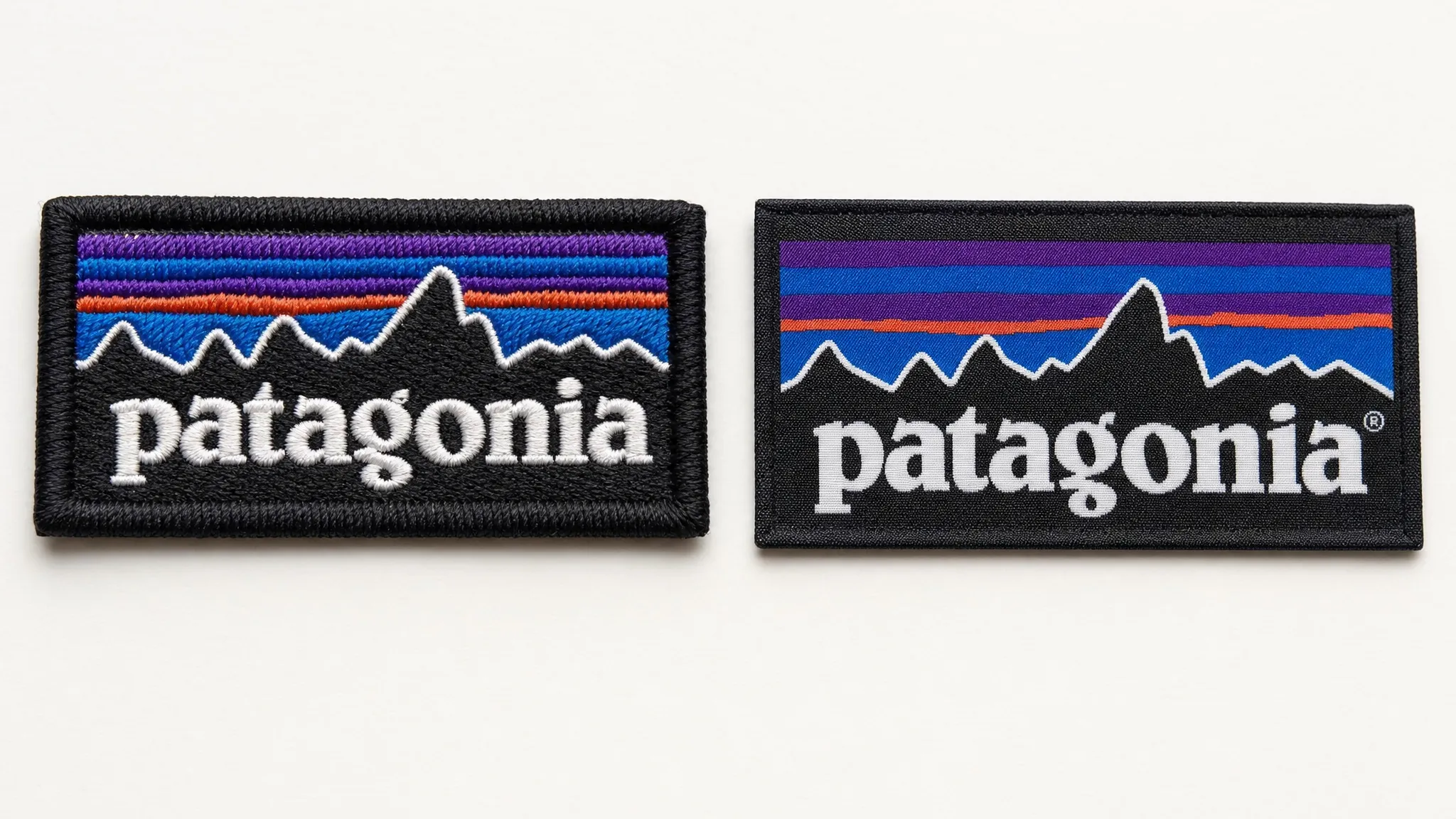
Both patch styles can look professional, durable, and retail-ready. The difference is in the construction. Custom embroidered patches are stitched onto a fabric base, creating a raised, textured surface. Woven patches are made by weaving threads together to form the design, producing a flatter, smoother, and more detailed finish.
If you are building an apparel line, upgrading uniforms, creating merch, or adding a branded detail to hats, jackets, bags, or accessories, this guide will help you choose the right patch style for your artwork and product goals.
What Are Custom Embroidered Patches?
Custom embroidered patches are made by stitching thread into a backing fabric to recreate a logo, name, emblem, or graphic. The embroidery sits above the base material, giving the patch a dimensional, tactile look.
That raised thread is what gives embroidered patches their classic appeal. They are often associated with varsity jackets, workwear, uniforms, outdoor gear, club patches, military-inspired designs, and heritage apparel. If your brand wants a bold, textured patch that feels substantial, embroidery is usually the first option people think of.
Embroidered patches work best when the artwork is simple and strong. Large lettering, thick outlines, bold icons, and limited color palettes translate especially well. Because the design is stitched with thread, very small details can become less crisp, especially on compact patch sizes.
In short, embroidered patches are a great fit when you want your branding to feel tactile, traditional, and easy to recognize from a distance.
What Are Woven Patches?
Woven patches are created by weaving threads together to form the entire design. Instead of stitching the design on top of a base fabric, the artwork is built into the surface of the patch through the weave itself.
This construction gives woven patches a smoother, thinner, and more refined appearance. The biggest advantage is detail. Woven patches can usually handle smaller text, cleaner lines, and more intricate artwork than embroidered patches of the same size.
For brands with minimalist logos, fine typography, detailed illustrations, or compact product branding, woven patches often offer the cleaner result. They are also softer and more flexible, which can make them a good choice for lighter garments or areas where comfort matters.
Woven patches are especially popular for fashion labels, premium apparel, accessories, bags, beanies, and products where the patch should feel integrated rather than bulky.
Custom Embroidered Patches vs Woven Patches: Key Differences
The best patch choice depends on your artwork, garment type, and desired brand impression. This comparison gives you a practical overview.
| Feature | Custom embroidered patches | Woven patches |
|---|---|---|
| Texture | Raised, dimensional, tactile | Smooth, flat, refined |
| Detail level | Best for bold and simple designs | Better for small text and fine details |
| Overall look | Classic, rugged, heritage-inspired | Clean, modern, premium |
| Thickness | Usually thicker | Usually thinner and more flexible |
| Best artwork style | Simple logos, large type, emblems, icons | Detailed logos, fine lines, compact branding |
| Readability | Strong for larger letters | Strong for smaller lettering |
| Feel on garment | More structured | Softer and lighter |
| Common use cases | Hats, jackets, uniforms, denim, workwear | Fashion apparel, bags, beanies, accessories, subtle branding |
Neither option is automatically better. A great embroidered patch can look far more premium than a poorly planned woven patch, and a well-made woven patch can outperform embroidery when the artwork requires precision.
The smartest choice is the one that protects the integrity of your design at the actual patch size.
When to Choose Custom Embroidered Patches
Choose custom embroidered patches when you want texture, depth, and a bold visual presence. Embroidery is ideal when the patch is meant to be noticed as a statement piece rather than blend quietly into the garment.
This makes embroidered patches a strong choice for outerwear, hats, uniforms, denim, sportswear, club apparel, and promotional merchandise. The raised thread gives the patch a handcrafted quality that can make even a simple logo feel more substantial.
Embroidered patches are also useful when your design has a traditional badge or crest format. Circular, shield, rectangular, and arched patches often look especially good in embroidery because the stitched texture reinforces the classic patch aesthetic.
You should consider embroidery if:
- Your logo is simple, bold, and easy to read.
- You want a raised thread texture customers can feel.
- The patch will be used on heavier garments like jackets, denim, caps, or workwear.
- Your brand style is classic, outdoorsy, collegiate, vintage, rugged, or uniform-inspired.
- The design does not depend on tiny lettering or very fine linework.
The main limitation is detail. If your artwork includes small taglines, thin strokes, tiny icons, or complex illustration work, embroidery may require simplification. That does not mean the design cannot work, but it may need to be adjusted for thread, scale, and readability.
When to Choose Woven Patches
Choose woven patches when precision matters. Because woven patches can capture finer detail, they are often the better option for logos with small text, delicate shapes, thin lines, or compact layouts.
Woven patches also have a slimmer profile. This can make them feel more comfortable on lightweight garments, children’s apparel, soft accessories, and items where a thick patch may feel too stiff.
The look is generally cleaner and more contemporary. If embroidered patches feel like a traditional badge, woven patches feel closer to a high-end brand label or refined apparel trim.
You should consider woven patches if:
- Your logo includes small text or fine details.
- You want a smooth, flat, polished surface.
- The patch will be placed on lighter garments or soft accessories.
- Your brand style is modern, minimalist, technical, premium, or fashion-focused.
- You need the patch to coordinate closely with woven labels, ribbons, or other branded trims.
Woven patches can still be bold, but they do not have the same raised, dimensional texture as embroidery. If the tactile effect is central to your design, embroidered patches may be more appropriate.
How Artwork Changes the Best Patch Choice
Artwork is often the deciding factor. A patch is much smaller than a website logo, packaging design, or social media graphic. Details that look clear on a screen can disappear when converted into thread.
Before choosing a patch type, view your logo at the actual finished size. If you are planning a 2-inch patch, shrink the artwork to 2 inches on your screen or print it at scale. This simple step often reveals whether small text, icons, or outlines will remain readable.
For embroidered patches, simplify wherever possible. Thicker lines, larger letters, fewer tiny gaps, and strong contrast will produce a cleaner result. For woven patches, you have more flexibility with detail, but you should still avoid overcrowding. Even woven construction has practical limits when a design becomes too small or too complex.
Color also matters. Thread is not the same as ink. It has texture, sheen, and physical thickness. Strong contrast between the background and design elements usually improves legibility for both embroidered and woven patches.
A good production-ready patch design should answer three questions clearly: What is the logo or message? Can it be read at the intended size? Does the patch style support the brand personality?
Texture, Feel, and Brand Perception
Patches communicate before customers read them. Texture, thickness, and placement all influence how a product feels in the hand.
Embroidered patches tend to feel more rugged and tactile. They can give a garment a sense of durability, tradition, and authenticity. This works beautifully for denim jackets, canvas bags, caps, uniforms, and apparel with a workwear or outdoor influence.
Woven patches feel smoother and more refined. They can make a product feel cleaner, lighter, and more precise. This is useful for contemporary fashion, lifestyle brands, children’s apparel, premium basics, and accessories where subtlety matters.
Think of embroidery as texture-forward and woven as detail-forward. If your customer should notice the patch from across the room, embroidery may be the better visual tool. If they should appreciate the detail up close, woven may be the stronger choice.
Durability and Care Considerations
Both embroidered and woven patches can be durable when they are properly made, attached, and cared for. The key is matching the patch to the garment and its expected use.
A patch on a work jacket has different demands than a patch on a boutique beanie. A uniform patch may need frequent washing, while a promotional tote may experience more abrasion than laundering. The attachment method, fabric type, and care routine all affect long-term performance.
Sew-on patches are often the most reliable option for long-term wear, especially on garments that will be washed frequently. Heat-applied backings can be convenient, but they must be compatible with the fabric and application temperature. Hook-and-loop backings are useful for removable patches, especially on uniforms, tactical gear, or interchangeable branding.
If the finished product will be sold as apparel, care instructions should be considered as part of the full branding system. The Federal Trade Commission’s Care Labeling Rule provides guidance for textile products sold in the United States. A beautiful patch should not be an afterthought if the garment also needs compliant care labeling.
Best Uses by Product Type
Different garments favor different patch styles. There are exceptions, but these general guidelines can help you narrow the decision.
| Product type | Best patch direction | Why it works |
|---|---|---|
| Baseball caps | Embroidered or woven | Embroidery gives a bold front-panel look, while woven works for detailed side or back branding |
| Denim jackets | Embroidered | Raised texture pairs well with heavier fabric and classic styling |
| Hoodies | Embroidered or woven | Embroidery adds a statement detail, woven keeps branding smoother and softer |
| Beanies | Woven | Thin, flexible patches often sit more comfortably on knitwear |
| Work uniforms | Embroidered | Bold, durable-looking branding is easy to recognize |
| Fashion basics | Woven | Clean detail supports subtle premium branding |
| Tote bags | Embroidered or woven | Choice depends on whether the design is bold or detailed |
| Kidswear | Woven | Softer, flatter patches may be more comfortable on smaller garments |
For a broader look at patch selection by apparel type, you can also read HiLabels’ guide on how to choose the right patches for any apparel line.
Border and Backing Options Matter Too
The patch type is only one part of the final result. Border and backing choices can change the patch’s look, structure, and application.
A merrowed border, the rounded stitched edge commonly seen on classic patches, often complements embroidered designs. It adds thickness and a traditional finished edge. A heat-cut or laser-cut edge can feel cleaner and may be better for custom shapes or modern woven patches.
Backing should be chosen based on how the patch will be applied. Sew-on backings are versatile and durable. Iron-on or heat-seal backings can simplify application, but they require proper heat, pressure, and fabric compatibility. Adhesive backings are generally better for temporary uses rather than long-term apparel wear.
If you are unsure, start with the garment. Heavy cotton, denim, canvas, fleece, nylon, and stretch fabrics all behave differently. A patch that works perfectly on a structured jacket may not be right for a thin, stretchy T-shirt.
Common Mistakes to Avoid
Many patch problems begin before production, usually with artwork or placement. The good news is that they are easy to prevent with a few practical checks.
One common mistake is choosing embroidered patches for artwork that is too detailed. Embroidery is beautiful, but thread needs space. If your design depends on tiny text or narrow lines, woven may preserve the design better.
Another mistake is making the patch too small. Small patches can look refined, but only if the artwork is designed for that scale. A complex logo reduced to a tiny patch can quickly lose impact.
Brands also sometimes overlook garment weight. A thick embroidered patch may feel premium on a jacket but too heavy on a lightweight tee. A thin woven patch may look polished on a beanie but too subtle for a bold uniform badge.
Finally, avoid treating patches separately from the rest of your branding. Your patch, woven label, care label, zipper pull, and packaging ribbon should feel like they belong to the same brand system. Consistency across these details makes apparel look more professional and intentional.
For more ideas on building a complete product branding system, see HiLabels’ article on custom woven labels for designers.
How to Decide: A Simple Patch Selection Framework
If you are still unsure, use this quick decision framework.
- Start with the artwork: If the design is bold and simple, embroidery can work beautifully. If it has fine detail or small text, woven may be safer.
- Consider the garment: Heavier items can support more texture. Lightweight or soft items may benefit from thinner woven patches.
- Define the brand feeling: Choose embroidered for classic, rugged, collegiate, or heritage styles. Choose woven for modern, clean, premium, or detail-focused branding.
- Check the viewing distance: If the patch should be recognized from far away, prioritize bold contrast and embroidered texture. If it will be appreciated up close, woven detail may matter more.
- Think about long-term use: Consider washing, abrasion, placement, and attachment method before finalizing the patch construction.
This approach keeps the decision grounded in function, not just personal preference.
Which Patch Style Is Better for Your Brand?
There is no universal winner in the custom embroidered patches vs woven patches debate. The right answer depends on what your brand needs the patch to do.
Choose custom embroidered patches when you want a bold, raised, classic finish that adds texture and presence. Choose woven patches when your design requires crisp detail, smaller text, a smoother hand feel, or a more refined look.
If your brand uses different product categories, you may even use both. A streetwear brand might use embroidered patches on caps and jackets, then woven patches on beanies or premium basics. A uniform program might use embroidery for name or logo badges and woven patches for smaller detailed marks.
The strongest apparel brands choose trims intentionally. A patch is not just decoration. It is a small but highly visible brand signal.
Frequently Asked Questions
Are custom embroidered patches more durable than woven patches? Both can be durable when properly made and attached. Embroidered patches often feel more rugged because of their raised thread, while woven patches can perform well when sewn or applied correctly. Durability depends on garment fabric, backing, placement, washing, and use.
Do woven patches show more detail than embroidered patches? Yes, woven patches are generally better for fine detail, small lettering, and intricate logos. Embroidered patches are better for bold designs with thicker lines and larger text.
Are embroidered patches or woven patches better for hats? Both can work. Embroidered patches create a bold, classic cap look, especially on front panels. Woven patches are helpful when the hat design includes small details or a cleaner, flatter finish.
Can I use the same artwork for both patch types? Sometimes, but the artwork may need adjustments. Embroidered patches often require simplified shapes and larger lettering, while woven patches can usually preserve more detail. It is best to review artwork at the final patch size before ordering.
Which patch type looks more premium? It depends on the brand style. Embroidered patches can feel premium through texture and dimension. Woven patches can feel premium through precision, smoothness, and detail. The most premium result is the one that fits the garment and reproduces the artwork clearly.
Create Custom Patches That Match Your Brand
The best patch starts with the right construction, clean artwork, and a production partner that understands apparel branding details.
HiLabels helps brands create professional custom branding products, including woven labels, patches, ribbons, zipper pulls, and care labels. With an easy online ordering process, artwork upload options, personalized customer service, and more than 31 years of experience, HiLabels makes it easier to turn your design into a polished finishing touch.
Ready to compare options for your next apparel project? Visit HiLabels to start creating custom patches and labels that make your products look complete.


