Best Zipper Pulls for Jackets in 2026
A jacket zipper pull is small, but it has an outsized effect on how a jacket feels in the hand, performs in bad weather, and communicates brand quality. In 2026, the best zipper pulls for jackets are not just decorative add-ons. They are practical touchpoints that improve grip, support accessibility, and turn a standard garment into a more polished product.
For apparel brands, merch teams, uniform buyers, and independent designers, the right choice depends on how the jacket will be used. A puffer jacket needs a different pull than a sleek leather-style bomber, and a ski shell has different priorities than a corporate event jacket. This guide breaks down the best options, what to compare, and how to choose a pull that fits your jacket design without overcomplicating production.
What makes a jacket zipper pull the best in 2026?
The best zipper pull is the one that solves the jacket’s real use case. A premium metal pull may look excellent on a fashion jacket, but it may feel too cold or heavy on an ultralight shell. A cord pull may be perfect for gloves, but too sporty for a tailored coat.
In 2026, the strongest jacket zipper pull designs share five qualities:
- Easy grip: The wearer should be able to open and close the zipper quickly, even with cold fingers or gloves.
- Durability: The pull should withstand repeated tugging, washing, weather exposure, and everyday friction.
- Balanced weight: A pull should feel substantial enough to use, but not so heavy that it strains the slider or distorts the garment.
- Brand clarity: If the pull includes a logo, the artwork should remain readable at a small size.
- Style alignment: The material, color, and finish should match the jacket’s price point and purpose.
Think of zipper pulls as part of the jacket’s finishing system. They should coordinate with labels, patches, drawcords, snaps, and trims instead of feeling like an afterthought.
Best zipper pulls for jackets by jacket type
The fastest way to narrow your options is to start with the jacket category. The table below shows which zipper pull styles typically work best for common jacket types in 2026.
| Jacket type | Best zipper pull style | Why it works |
|---|---|---|
| Fashion bomber or coach jacket | Custom metal, soft rubber, or woven tab | Adds brand detail without overwhelming the silhouette |
| Puffer jacket | Lightweight cord, molded rubber, or fabric pull | Easy to grip and less likely to weigh down the zipper |
| Outdoor shell or rain jacket | Cord pull with rubberized end | Performs well with gloves, wet hands, and cold weather |
| Workwear jacket | Metal, molded PVC, or high-contrast rubber | Durable, visible, and practical for repeated use |
| Kids’ jacket | Rounded rubber or soft fabric pull | Comfortable, easy to hold, and less sharp than metal |
| Premium wool or leather-style jacket | Engraved metal or leather-like pull | Matches a higher-end finish and creates a refined detail |
| Event or team jacket | Logo pull in brand colors | Helps unify staff, athletes, or promotional apparel |
This does not mean you must follow the table exactly. A streetwear brand may intentionally use rugged outdoor-style cord pulls on a fashion jacket. A luxury brand may choose minimal tone-on-tone rubber instead of polished metal. The goal is to make an intentional choice.
Top zipper pull styles to consider in 2026
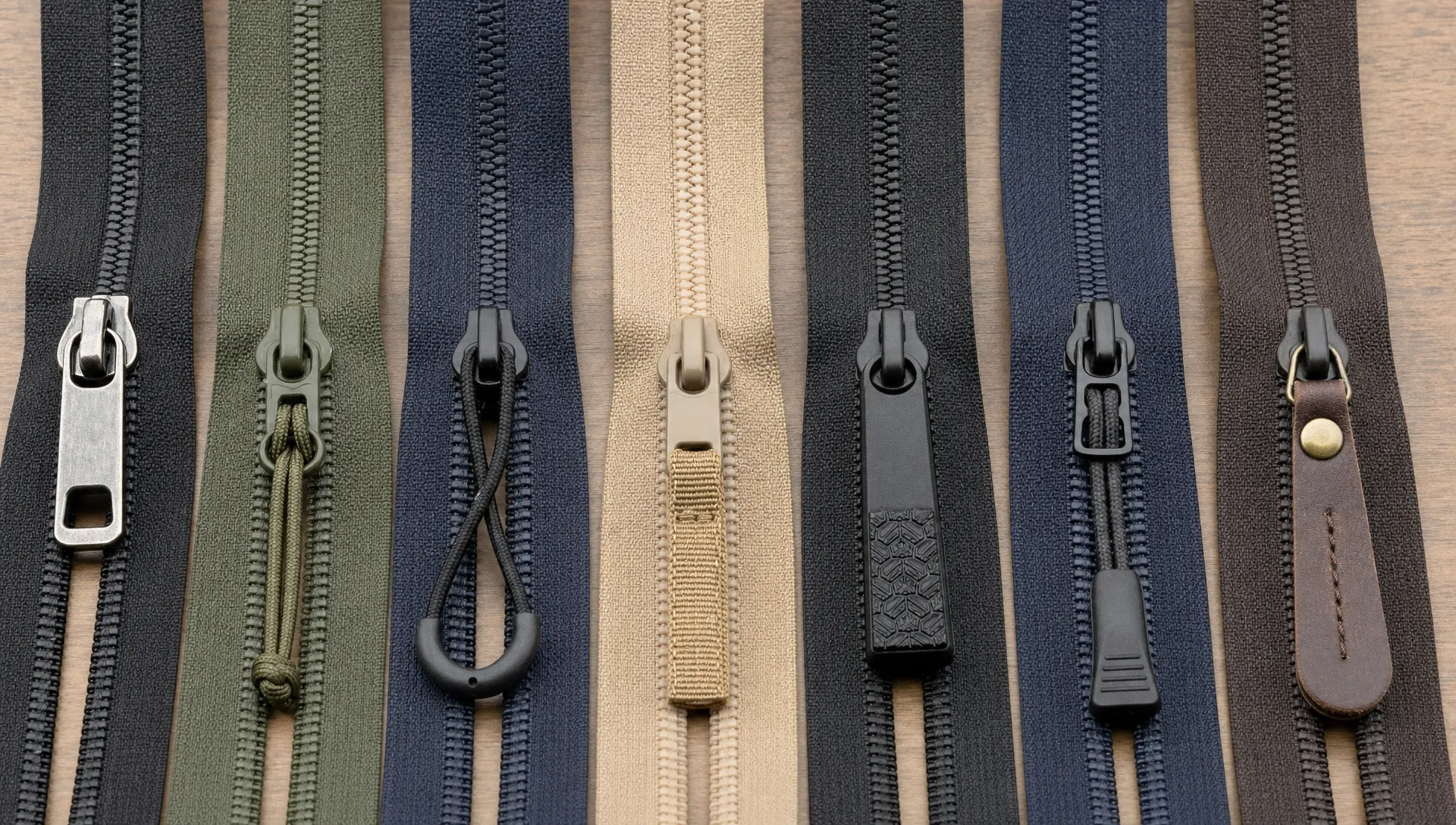
Custom metal zipper pulls
Custom metal pulls are among the best choices for jackets that need a premium, durable, and polished appearance. They work especially well on bomber jackets, varsity jackets, leather-style jackets, denim jackets, and higher-end outerwear.
Metal pulls can communicate quality because they feel solid in the hand and hold fine detail well. They are also a strong option when the zipper pull is meant to act as a small brand marker rather than just a functional tab. If you are comparing finishes and use cases, HiLabels has a helpful guide to metal zipper pulls for jackets, bags, and gear that explores the upgrade potential of this material in more detail.
Best for: premium fashion jackets, lifestyle outerwear, branded merchandise, and jackets where perceived value matters.
Watch out for: excess weight, sharp corners, noisy movement, or finishes that clash with other hardware on the jacket.
Rubber and soft molded zipper pulls
Rubber-style and soft molded pulls are practical, comfortable, and highly versatile. They are often a strong fit for casual jackets, kids’ outerwear, activewear, rain jackets, and uniforms.
Their main advantage is grip. A textured rubber pull is easier to hold than a small metal tab, especially in wet or cold conditions. Rubber-style pulls also allow strong color matching, which makes them useful for brands with bold palettes or team apparel programs.
Best for: sportswear, rainwear, school jackets, active jackets, and colorful branded apparel.
Watch out for: overly thick designs that look bulky on lightweight jackets, or complex artwork that becomes hard to read at small scale.
Cord zipper pulls and pull extensions
Cord pulls are one of the most functional choices for outdoor, winter, and performance jackets. They extend the reach of the zipper and make it easier to operate with gloves. They are also lightweight, which is important for packable shells, insulated jackets, and technical outerwear.
A cord pull can be simple, such as a looped cord with a small molded end, or more branded, with a custom tag attached to the end. For a deeper look at how extensions improve usability, see this guide to zipper pull extensions for better grip and style.
Best for: ski jackets, rain shells, hiking jackets, tactical outerwear, and winter puffers.
Watch out for: cords that are too long, knots that loosen, or colors that do not match the rest of the trim package.
Woven and fabric zipper pulls
Fabric zipper pulls offer a softer, more textile-focused look. They can be especially effective when you want the zipper pull to coordinate with woven labels, neck labels, hem tags, or branded ribbons.
For lifestyle brands, woven or fabric pulls can feel less industrial than metal and less sporty than rubber. They are also comfortable in the hand and can add a subtle branded touch without adding much weight.
Best for: streetwear, casual jackets, lightweight layers, children’s jackets, and brands with a textile-driven identity.
Watch out for: fraying, weak stitching, or artwork that is too detailed for the available surface area.
Leather-style and PU zipper pulls
Leather-style pulls, including PU options, can elevate jackets with a heritage, outdoor-lifestyle, or premium casual feel. They are common on waxed jackets, canvas jackets, fleece layers, and wool-blend outerwear.
These pulls are best when the jacket already includes earthy colors, antique metal hardware, or textured fabrics. They can look out of place on highly technical jackets, but they are excellent for garments with a classic or handcrafted feel.
Best for: heritage jackets, canvas outerwear, wool coats, fleece jackets, and premium casual apparel.
Watch out for: moisture resistance, edge finishing, and whether the pull will keep its shape after repeated use.
2026 design trends for jacket zipper pulls
Jacket trims in 2026 are moving toward practical customization. Brands want details that look distinctive but still make sense for daily wear. The best zipper pull designs tend to fall into a few clear trends.
Tone-on-tone branding
Instead of high-contrast logos on every trim, many brands are using subtle tonal branding. A black pull on a black jacket with raised lettering, or a navy pull on a navy shell with debossed artwork, can feel more sophisticated than a bright logo.
Tone-on-tone designs work well for premium basics, minimalist streetwear, and uniforms where brand presence should be visible but not loud.
Larger, glove-friendly pulls
For outdoor and winter jackets, small zipper tabs are becoming less desirable. Wearers expect jacket details to perform in real conditions. Slightly larger pulls, textured ends, and cord extensions make zippers easier to use in cold weather.
This is especially important for pockets. A jacket may have a front zipper that is easy to grab, but pocket zippers are often smaller and harder to reach. Adding custom pulls to pocket zippers can improve the whole garment experience.
Coordinated trim systems
More brands are treating zipper pulls, patches, labels, and care labels as one connected branding system. This is a smart approach because the customer experiences these details together.
For example, a jacket might use a woven neck label, a sleeve patch, and a matching zipper pull color. HiLabels offers custom woven labels, patches, ribbons, care labels, and zipper pulls, which makes it easier for brands to think about the full trim package rather than sourcing each detail in isolation.
Event and limited-edition customization
Zipper pulls are also becoming more popular for limited runs, staff apparel, team jackets, and promotional outerwear. When jackets are used in events, every visible detail can contribute to the overall impression. The same principle appears in large-scale event production, where specialists such as Luuk Broos Events create memorable focal points that help an experience stand out.
For a brand jacket, the zipper pull can serve a similar role on a smaller scale. It is a tactile detail people notice every time they put the jacket on.
How to choose the best zipper pull material
Material is usually the most important decision. It affects the pull’s look, weight, hand feel, durability, and cost. Use the comparison below as a practical starting point.
| Material style | Strengths | Best use cases | Design tip |
|---|---|---|---|
| Metal | Premium feel, durable, crisp logo detail | Fashion jackets, premium outerwear, merchandise | Match the finish to snaps, eyelets, and zipper teeth |
| Rubber or soft molded | Strong grip, flexible color options, comfortable | Activewear, kids’ jackets, uniforms, rainwear | Use bold shapes and simple artwork |
| Cord with molded end | Lightweight, glove-friendly, functional | Outdoor shells, ski jackets, puffers | Keep the cord length practical and consistent |
| Woven or fabric | Soft, lightweight, textile-friendly | Casual jackets, streetwear, lightweight layers | Coordinate with woven labels or fabric patches |
| Leather-style or PU | Heritage look, warm texture, refined detail | Canvas, wool, fleece, and lifestyle jackets | Choose colors that complement the garment fabric |
| Reflective accent pull | Better visibility, technical look | Running jackets, cycling layers, workwear | Use as a functional accent, not the only safety feature |
If you are unsure, start with the jacket’s environment. Will it be worn in rain, cold, work conditions, school settings, or fashion contexts? The environment often determines the most sensible material before aesthetics enter the conversation.
Size, shape, and artwork guidelines
A zipper pull should be large enough to grip, but not so large that it swings awkwardly or distracts from the jacket. For most jackets, the best designs are compact, rounded, and easy to hold.
For artwork, simplicity wins. Small zipper pulls do not give you the same space as a back patch or chest embroidery. Fine lines, tiny slogans, and complex illustrations may lose clarity. A short wordmark, icon, monogram, or simplified logo usually works better.
Good design choices include:
- A simple logo mark instead of a full detailed crest
- Rounded edges for comfort and durability
- A color that matches another jacket trim
- A shape that echoes the brand identity without becoming awkward to grip
- A finish that coordinates with zipper teeth, snaps, drawcord tips, and patch details
Avoid making every trim element compete for attention. If the jacket already has a bold chest patch or sleeve artwork, the zipper pull can be more subtle. If the jacket is minimal, the pull can carry more of the brand personality.
Common mistakes to avoid
The wrong zipper pull can make an otherwise strong jacket feel less refined. Most issues come from overdesigning, under-testing, or choosing a pull that does not match the garment’s purpose.
A few mistakes are especially common:
- Choosing a pull that is too heavy: Heavy pulls can strain sliders and look awkward on lightweight fabrics.
- Using artwork that is too detailed: Tiny type and thin lines may not reproduce clearly.
- Ignoring the wearer’s hands: A pull that looks good but is hard to grip will frustrate customers.
- Forgetting pocket zippers: Pocket pulls are often used more frequently than the main zipper.
- Mismatching hardware finishes: A shiny silver pull may clash with matte black zipper teeth or antique brass snaps.
- Skipping sample testing: A pull should be tested for feel, movement, and proportion on the actual jacket.
The best approach is to view the zipper pull on the garment, not in isolation. A pull that looks perfect on a design proof may feel too large once attached to a slim jacket pocket.
When custom zipper pulls are worth it
Custom zipper pulls are worth considering when the jacket is part of a brand, collection, uniform program, event, or merchandise line. Standard pulls may be functional, but they rarely create a memorable brand impression.
Customization is especially valuable when:
- The jacket will be sold as branded apparel
- The product sits at a premium price point
- The jacket is part of a coordinated collection
- You want consistent trims across jackets, bags, and accessories
- You need a stronger grip than the standard zipper tab provides
- The garment is used by staff, teams, or event crews
If you already have artwork, you can explore a custom zipper pull through HiLabels and align it with your broader apparel branding. HiLabels also supports custom labels, patches, ribbons, and care labels, which helps brands build a more complete finishing package.
Quick buying checklist for 2026
Before placing an order, review the practical details that determine whether the zipper pull will work well on the finished jacket.
| Decision point | What to check | Why it matters |
|---|---|---|
| Jacket use | Fashion, outdoor, workwear, kids, event, or uniform | Determines the right material and grip level |
| Pull weight | Light, medium, or substantial | Prevents strain and keeps the jacket balanced |
| Grip | Easy to hold with bare hands or gloves | Improves daily usability |
| Artwork | Simple logo, icon, or short text | Keeps branding readable at small size |
| Color | Match or intentionally contrast with trims | Creates a cohesive design |
| Attachment | Secure connection to the slider | Reduces failure during repeated use |
| Sample review | Test on the actual jacket | Confirms scale, comfort, and appearance |
A zipper pull may be small, but it should go through the same design thinking as every other visible brand element. The best results come from balancing appearance, function, and the wearer’s real experience.
Frequently Asked Questions
What are the best zipper pulls for winter jackets in 2026? Cord zipper pulls with molded or rubberized ends are often the best choice for winter jackets because they are lightweight and easy to grip with gloves. Rubber pulls can also work well when you want a softer, more branded look.
Are metal zipper pulls good for jackets? Yes, metal zipper pulls are excellent for fashion jackets, premium outerwear, and branded merchandise. They feel durable and upscale, but they should be sized carefully so they do not feel too heavy on lightweight fabrics.
What size should a jacket zipper pull be? The best size depends on the jacket type and zipper location. Main front zippers can usually handle a slightly larger pull, while pocket zippers often need something smaller and lighter. The pull should be easy to grip without swinging excessively.
Can zipper pulls include a logo? Yes, zipper pulls can include logos, icons, initials, or short text. For the cleanest result, use simplified artwork that remains readable at a small size.
Should every zipper on a jacket have a custom pull? Not always. A main zipper pull may be enough for a minimal jacket, while outdoor jackets, workwear, and bags often benefit from pulls on pocket zippers as well. Consider how often each zipper will be used.
Build a better jacket with the right finishing details
The best zipper pulls for jackets in 2026 combine usability, durability, and brand expression. Metal pulls add polish, rubber pulls improve grip, cord pulls support performance, and woven or fabric pulls create a softer apparel-focused finish.
If you are developing branded jackets, do not treat the zipper pull as a last-minute trim. Match it to the garment’s purpose, test it on the actual jacket, and keep the artwork clear. With the right choice, a zipper pull becomes more than a functional part. It becomes a small but memorable detail that customers use every day.


