Grosgrain Zipper Pulls for a Softer, Branded Finish
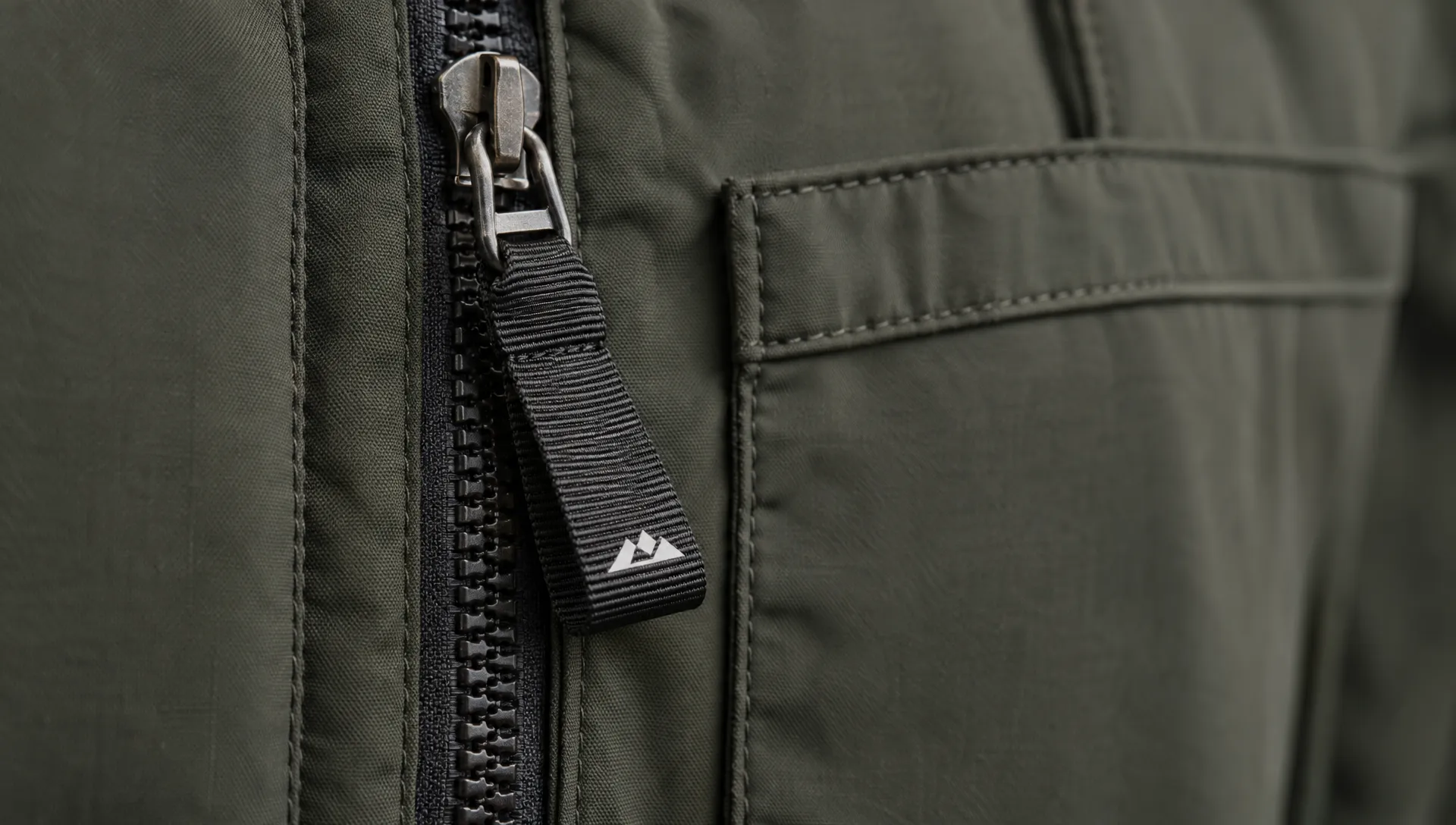
A grosgrain zipper pull can give a jacket, bag or pouch a softer point of contact without making its branding feel oversized. The ribbon’s ribbed surface adds texture, while a short, flexible tab creates room for a recognizable color or compact brand mark. The detail is small, but customers touch it every time they open the product.
Getting that finish right takes more than choosing a ribbon color. A stiff ribbon, scratchy cut edge or bulky attachment can undermine the intended feel. The strongest approach is to design the ribbon, branding and connection to the zipper together, then test the assembly on the finished item. For apparel designers and accessory brands, that makes the pull a deliberate part of the product rather than a decoration added at the end.
What a grosgrain zipper pull adds to the finish
Grosgrain is a woven fabric recognizable by its closely spaced transverse ribs. Those ribs distinguish it from the smooth, glossy surface associated with satin ribbon. On a zipper, the texture can provide a more tactile gripping surface and a restrained, textile-led appearance.
Ribbed does not automatically mean soft. Fiber, thickness, weave density and finishing treatments all influence how the ribbon bends and feels against the hand. A firm ribbon may hold its shape neatly but feel less comfortable than a more flexible version. Evaluate physical samples rather than relying on photographs.
The appeal is especially clear on fabric products where a large metal accessory would feel visually heavy. A tonal ribbon can blend into a jacket, while a contrasting tab can make a pocket easier to locate. The existing metal hardware remains part of the assembly, so adding ribbon does not necessarily eliminate rattling or hard contact points.
Also distinguish the pull from the slider. The slider joins and separates the zipper teeth; the pull gives the user something to hold. Understanding the difference between zipper sliders and branded pulls helps prevent ordering a decorative component when the zipper mechanism itself needs attention.
Choose the ribbon and attachment together
Before approving a grosgrain zipper pull, check how its width and thickness work with the opening in the existing pull tab. A ribbon that looks proportionate on a drawing may bunch up when threaded through a small hole, especially when the attachment requires two layers to pass through it.
Polyester and cotton ribbons can produce different results. Polyester generally offers good dimensional stability, while cotton may provide a natural hand but needs careful evaluation for shrinkage and drying behavior. Neither fiber alone guarantees comfort, colorfastness or durability. Ask for the composition and finishing details of the actual ribbon being quoted.
Keep the connection compact
Possible constructions include a ribbon loop passed through the existing tab or a folded strip secured with stitching. The appropriate method depends on the hardware, ribbon and assembly process. Do not assume one attachment works across every zipper in a collection.
Check the pull with the zipper both open and closed. It should not foul the slider, become trapped against a seam or create a large loop that catches surrounding objects. For locking sliders, confirm that the added ribbon does not interfere with the original pull tab’s movement.
Cut ends deserve equal attention. Some synthetic ribbons can be heat-sealed, but excessive heat can leave a hard bead. Cotton requires a suitable non-melting finish, such as a folded and secured end. Specify the result you want: contained fibers without a sharp or scratchy edge.
Make the branding readable on a moving surface
The usable branding area on a grosgrain zipper pull is smaller than its total ribbon length. Folds, attachment points and stitching can hide part of the design, while the tab may twist or hang with its reverse side facing outward.
Start with the simplest recognizable element: a short brand name, initials or a compact symbol. A detailed crest or lengthy tagline may work on a larger label but lose clarity on narrow ribbon. Artwork should be reviewed at actual size, not just enlarged on a screen.
Separate the ribbon texture from the decoration method
Grosgrain describes the fabric structure, not how the logo is applied. Printed artwork and woven-in branding involve different production considerations, and a supplier may not offer both on the same ribbon construction. Confirm the available method before preparing final artwork.
For printing, assess how the ribs affect fine lines and small lettering. For woven-in designs, ask about achievable detail and whether the proposed construction retains the texture you want. Do not assume a custom woven ribbon is necessarily grosgrain.
Contrast also matters. A subtle tone-on-tone mark may suit a minimalist collection, but it can disappear in low light. Request a sample showing the logo’s position when attached, including the reverse side if that will be visible during normal use.
Turn the design into a clear supplier specification
A reproducible grosgrain zipper pull needs a brief that describes the finished assembly, not just the loose ribbon. “Short black ribbon with our logo” leaves too many decisions open, including the exposed length, folded area and edge treatment.
Use the same measurement references throughout the brief. Distinguish the ribbon’s cut length from the length visible after attachment, and identify whether dimensions refer to a flat strip or a completed loop.
| Specification | What to document | Why it matters |
|---|---|---|
| Ribbon construction | Fiber composition, ribbed texture and thickness | Establishes the intended feel and flexibility |
| Width and finished length | Ribbon width and exposed length after attachment | Controls proportion, grip and clearance |
| Attachment | Looping or stitching method and compatible hardware | Helps avoid bunching and interference |
| End finish | Folded, secured or suitable sealed edges | Limits fraying and uncomfortable contact |
| Branding | Artwork size, orientation, placement and decoration method | Keeps the mark visible after assembly |
| Color | Ribbon and logo references, approved against a sample | Reduces ambiguity in matching |
| Care requirements | Intended washing and drying conditions | Gives the supplier a relevant performance brief |
If several products share the same branding, keep a common visual specification but verify the attachment on each zipper. A pouch and an insulated jacket may need different exposed lengths even when their ribbon colors and logo treatments match.
Sample the complete assembly before production
Testing a grosgrain zipper pull on loose hardware can miss problems that appear once the zipper is sewn into a garment or bag. Seams, pocket openings and surrounding fabric all affect access and movement. Approve a sample attached to a representative finished product whenever possible.
Begin with ordinary opening and closing. Check whether the ribbon offers enough purchase, whether it folds comfortably between the fingers and whether the user can reach it when the pocket is fully closed. If gloves are part of the intended use, test with the actual glove type rather than assuming a larger tab will solve every access problem.
Then evaluate the conditions the product will encounter:
- Repeated handling: Look for loosening stitches, fraying edges and changes in the attachment position.
- Intended cleaning: Follow the proposed care instructions, then check shape, color and logo clarity.
- Damp contact: Assess whether color transfers to nearby fabric under relevant wet conditions.
- Movement and storage: Check for snagging, twisting and interference when the item is worn, packed or stacked.
These are practical development checks, not a substitute for any required formal testing. If the product has defined performance requirements, agree on appropriate test methods and acceptance criteria with the supplier.
Keep an approved reference sample and written notes. “Feels softer” is useful feedback, but “no hard edge at the cut end and no bunching through the tab opening” gives the production team a clearer target.
Match the pull to the customer’s working environment
A travel pouch, fashion jacket and workwear pocket should not automatically receive the same ribbon assembly. A longer tab may be easy to locate in a bag but inconvenient on outerwear worn around equipment. Placement and surrounding hardware matter as much as appearance.
For a livestock transport crew arranging cattle or horse loads through Livestock Way’s load board for livestock haulers, a useful field sample might be a document pouch or jacket used during travel and loading days. Check access with gloves, exposure to dust and snagging near gates or equipment. The ribbon is a handling detail, not safety equipment.
In that setting, a grosgrain zipper pull should earn its place through comfortable handling and a secure, compact attachment. For a retail accessory, visible branding may carry more weight. Let the actual use case determine the balance rather than applying one specification across every product.
Frequently asked questions
Is grosgrain softer than a metal zipper pull? The ribbon portion can offer a more flexible contact surface, but its softness depends on fiber, weave and edge finishing. The underlying metal tab may remain exposed, so evaluate the complete assembly.
Can I add ribbon to an existing zipper? Often, provided the original pull tab has a suitable opening and the attachment does not interfere with slider operation. Check the fit before committing to a batch. Ribbon will not repair damaged teeth or a worn slider.
Will the cut ends fray? Unfinished woven ribbon can fray. The appropriate treatment depends on the material and construction. Ask for an edge finish that contains the fibers without creating a hard point against the hand.
Can a grosgrain zipper pull carry a detailed logo? It can carry branding, but small dimensions, surface ribs and the chosen decoration method limit detail. A simplified mark usually deserves consideration. Approve physical artwork samples at the intended size.
Does ribbon make a zipper waterproof? No. Water resistance depends on the zipper and surrounding product construction, not the added ribbon tab.
Build your brief around the finished feel
HiLabels offers custom zipper pulls alongside woven labels, ribbons, patches and care labels. Start with its custom zipper pull option and discuss your intended product, artwork and attachment requirements with the team.
Confirm whether the requested grosgrain construction, decoration method and end finish are available before approving an order. A clear brief and an assembly sample make it easier to achieve the detail that matters: a comfortable tab with branding that stays readable in everyday use.


