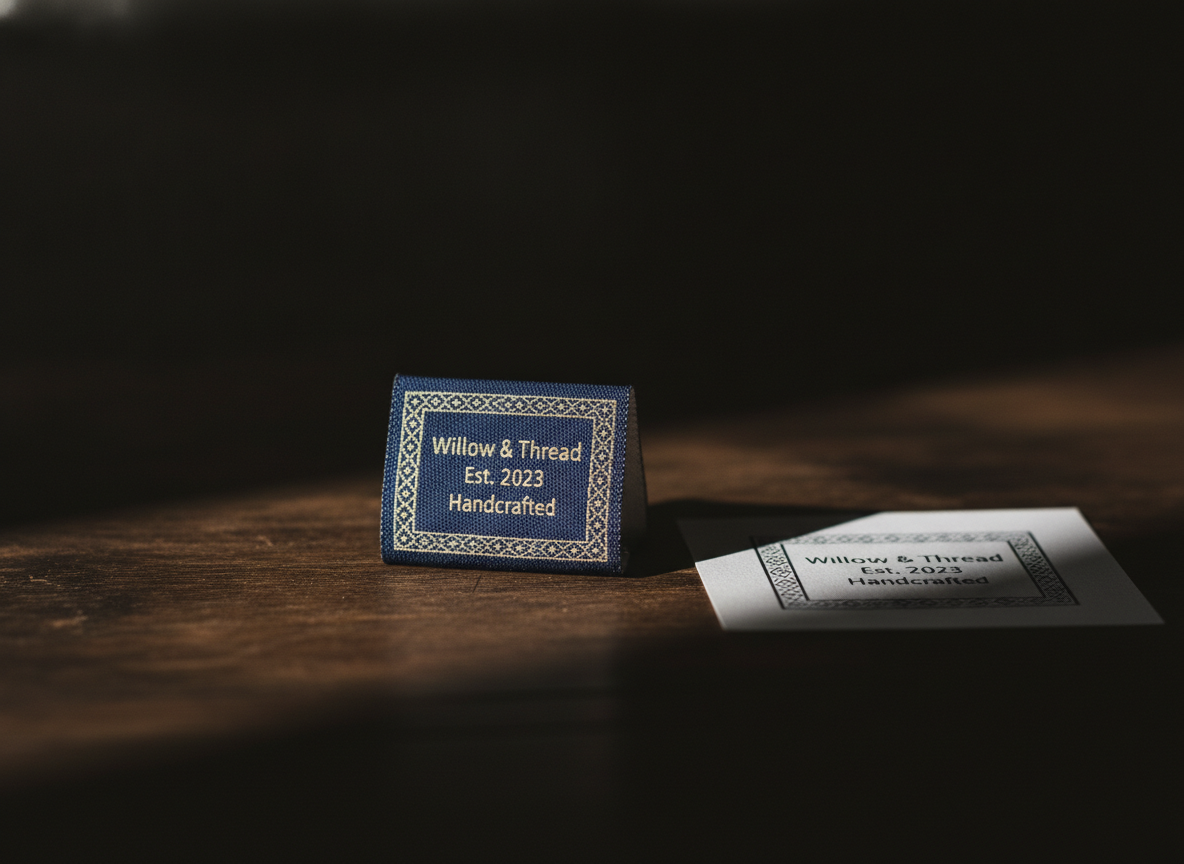
A well-designed woven label is more than just a piece of fabric attached to a product; it’s a powerful silent salesperson, a mark of quality, and a key element of your brand's identity. It speaks volumes about your attention to detail and commitment to excellence. For many brands, understanding how to design custom woven labels effectively becomes a crucial step in distinguishing themselves in a competitive marketplace. This guide will help you navigate the journey, transforming a simple concept into a tangible, memorable statement.
Laying the Groundwork: Understanding Woven Label Fundamentals
Before you dive into intricate design details, consider the basic components of your custom woven label. These foundational choices significantly impact the final look and feel. Moreover, they influence how the label integrates with your product. Therefore, thinking through these elements early in the process proves beneficial.
Material and Weave Types
The material and weave of your label determine its texture, durability, and visual precision. Polyester is a common, versatile choice, offering excellent color retention and strength. Additionally, recycled polyester provides an eco-friendly option without sacrificing quality. Organic cotton labels appeal to brands focusing on natural fibers and sustainability. The choice reflects your brand's values.
Next, consider the weave. Damask is a popular high-density weave. It allows for intricate details and fine text, making designs crisp and clear. Taffeta offers a lighter, flatter finish, often with a slightly stiffer feel. It works well for bolder designs. Satin labels feature a smooth, shiny surface, ideal for luxurious branding. Each weave lends a different character to the label. Furthermore, it impacts the tactile experience.
Label Folds and Finishing
How you fold your woven label affects both its appearance and how it attaches to the product. Straight-cut labels are simply cut to size and sewn flat, often used for outer branding or patch applications. End fold labels have the short ends folded under, providing a clean finish when sewn into a seam. Loop fold labels create a loop when sewn, often used in necklines or waistbands for a hanger loop and branding. Miter fold labels feature angled folds at the ends, creating a more professional and robust attachment. Consequently, the fold choice should complement your product's construction and aesthetic.
Crafting Your Brand's Visual Story
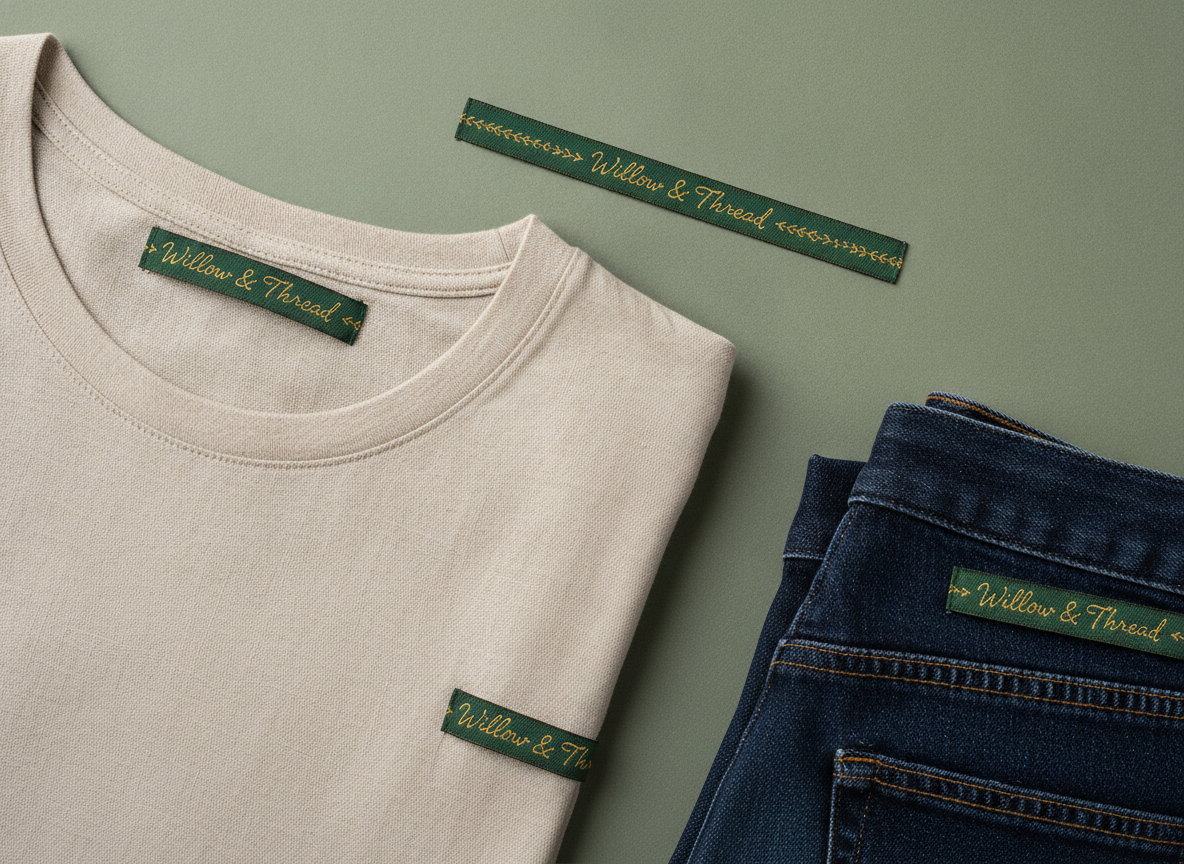
With the structural basics understood, you can now focus on the visual elements that tell your brand's story. This stage is critical for making your label instantly recognizable and appealing. It ensures your label communicates professionalism and brand integrity. Truly, good design makes a difference.
Logo, Artwork, and Text Clarity
Your logo is the centerpiece of your custom woven label. Keep the design simple and scalable for optimal readability, especially on smaller labels. Complex gradients or tiny details often do not translate well into woven form. Instead, focus on clean lines and distinct shapes. Similarly, select fonts that are clear and legible at a small size. Sans-serif fonts typically perform better than highly decorative scripts for woven text. Always prioritize readability above all else. This ensures your message comes across effectively.
Color Palette and Contrast
Color choices play a significant role in brand recognition. Aim for a palette that aligns with your overall brand identity. High contrast between text and background colors is essential for legibility. While woven labels offer a wide array of colors, limiting the number of colors in your design can reduce complexity and sometimes cost. Carefully chosen colors enhance the label's impact. They also reinforce your brand's aesthetic.
Size, Shape, and Placement
The physical dimensions of your label must suit the product it adorns. A large, obtrusive label on a delicate garment can detract from its appeal. Conversely, a tiny label on a bulky item might go unnoticed. Consider the common placement points: necklines, side seams, hems, or outer garments. Each location dictates appropriate sizing and folding options. Therefore, visualize the label on the actual product. This helps you select the perfect size and shape, ensuring harmonious integration.
Practical Steps to Design Custom Woven Labels Effectively
Moving from concept to creation involves several practical steps. These ensure your vision translates accurately into a high-quality finished product. Precision and attention to detail are key during this phase. They safeguard your brand's reputation.
Preparing Your Artwork for Production
Accurate artwork preparation is paramount. Always provide your manufacturer with vector files (AI, EPS, PDF, SVG). Vector graphics scale without losing resolution, which is crucial for woven reproduction. If vector files are unavailable, high-resolution JPEG or PNG files may work for simpler designs. However, vector is always preferred. Clearly indicate colors using Pantone Matching System (PMS) codes for consistency. This eliminates guesswork. It also guarantees color accuracy across production batches.
Legal and Care Label Considerations
Beyond branding, your labels often carry vital legal information. Care instructions, fiber content, and country of origin are frequently mandatory. For instance, the FTC's Care Labeling Rule dictates specific guidelines for clothing and textile products sold in the U.S. Always check regional regulations relevant to your market. Including clear care instructions protects both your brand and your customers. It prevents product damage and ensures proper garment maintenance. This also builds consumer trust. Furthermore, transparent fiber content information is often a legal requirement. Knowing these requirements is fundamental when you design custom woven labels.
Prototyping and Sampling
Before committing to a large production run, always request samples of your custom woven labels. A physical sample allows you to assess color accuracy, weave quality, texture, and overall feel. You can also test its attachment to your product and check how it withstands washing or wear. Minor adjustments can save significant costs and ensure satisfaction with the final product. For this reason, prototyping is an invaluable step in the design process. HiLabels, with over 30 years of experience, understands the importance of precise samples and offers expert guidance to perfect your design.
Avoiding Common Pitfalls in Woven Label Design
Even seasoned designers can encounter challenges when creating woven labels. Being aware of common mistakes helps you navigate the process more smoothly. Consequently, you save time and resources. Avoiding these pitfalls ensures a higher quality outcome. It safeguards your brand's image.
Overly Complex Designs
The inherent nature of weaving has limitations. Extremely fine lines, tiny text below 1mm, or intricate gradients can become distorted or lost. A general rule is: if it looks delicate on screen, it might appear blurred when woven. Simplify your artwork. Focus on clean, bold elements that translate well into thread. This ensures clarity and impact. Therefore, embrace simplicity in your design to achieve the best woven result. When you set out to design custom woven labels, less often means more.
Ignoring Material and Finish Limitations
Different materials and finishes behave uniquely. A crisp taffeta label might fray differently than a soft damask. Satin might show wear more readily than polyester. Consider the end-use of your product. Will the label be exposed to heavy washing, abrasion, or harsh chemicals? Select materials and finishes that withstand the expected conditions. Furthermore, discuss these concerns with your manufacturer. Their expertise can guide your choices. They ensure durability. Understanding these limitations is crucial for long-lasting labels.
Neglecting Wash and Wear Tests
Your beautiful label should endure the life of the garment. Always perform wash and wear tests on samples. Check for colorfastness, shrinkage, and any potential irritation against the skin. A label that fades, unravels, or causes discomfort reflects poorly on your brand. Moreover, it leads to customer dissatisfaction. Thorough testing prevents these issues. This step confirms the label’s practical performance. It ensures a positive user experience. Ultimately, it protects your brand's reputation.
Elevating Your Labels with Expert Partnership
The journey to design custom woven labels is complex, demanding both creative vision and technical precision. Partnering with an experienced manufacturer makes a significant difference. They transform your ideas into tangible, high-quality products. Their expertise guides you through every decision.
HiLabels offers over 30 years of experience in custom label manufacturing. Our European loom quality ensures exceptional detail, vibrant colors, and superior durability. We work closely with brands of all sizes, providing expert advice on material selection, weave types, finishing options, and artwork optimization. From intricate damask to smooth satin, we produce woven labels that truly embody your brand's essence. We understand the nuances of textile production. Our team helps you avoid common pitfalls. Therefore, your labels will consistently exceed expectations. They become a proud representation of your brand.
Frequently Asked Questions About Custom Woven Labels
Q: What is the minimum order quantity for custom woven labels?
A: Minimum order quantities (MOQs) vary by manufacturer and specific label requirements. Generally, MOQs start from 100 to 500 pieces. It depends on the complexity and customization level.
Q: Can I use multiple colors in my woven label design?
A: Yes, you can use multiple colors. However, most woven labels have a practical limit on the number of colors. Each additional color adds complexity to the weaving process. Discuss your color palette with your manufacturer for best results.
Q: How long does it take to produce custom woven labels?
A: Production timelines vary. They depend on design complexity, order quantity, and current production schedules. Typically, after artwork approval, production can take 2-4 weeks. This does not include shipping time.
Q: What file format should I provide for my label artwork?
A: Vector files such as .AI, .EPS, .PDF, or .SVG are highly recommended. These formats ensure the highest quality reproduction. They allow for scaling without loss of detail. If you only have raster files like .JPG or .PNG, ensure they are high resolution.
Designing the best custom woven labels demands careful consideration of materials, visuals, and practical application. By focusing on quality and partnering with an experienced provider, your labels become powerful brand ambassadors. Ready to bring your brand to life with exceptional custom woven labels? Visit hilabels.com to explore our options and start your design journey today.


