How to Fix a Broken Zipper Pull Without Replacing the Zipper
A broken zipper pull can make a perfectly good jacket, backpack, pouch, or piece of luggage feel unusable. The good news is that the zipper itself is often fine. If the teeth still mesh, the slider still moves, and only the tab you hold has snapped or fallen off, you can usually fix it in minutes without replacing the whole zipper.
This guide walks through practical, low-cost ways to handle fixing a broken zipper pull, from quick emergency fixes to cleaner, longer-lasting replacements. You will also learn when a simple pull repair is not enough and when the slider, tape, or zipper teeth may need attention.
First, identify what actually broke
Before grabbing pliers, look closely at the zipper. The “zipper pull” is the part you hold, but people often use the term to describe several parts of the zipper assembly. A successful repair depends on knowing whether the pull tab broke, the slider bridge cracked, or the zipper teeth failed.
If the slider still has a small loop, hole, or bridge where the original tab was attached, you have an easy repair. You can add a split ring, cord loop, replacement tab, or branded pull. If that attachment point is broken, most pull fixes will not hold for long because there is nowhere secure to connect the new piece.
| What you see | What it usually means | Best fix without replacing the zipper |
|---|---|---|
| Pull tab snapped off, slider hole is intact | Only the pull is damaged | Add a split ring, cord, or replacement pull |
| Pull is missing but slider moves normally | The zipper mechanism still works | Install a new pull tab or extension |
| Slider bridge is cracked or missing | New pulls may fall off | Replace the slider, not necessarily the full zipper |
| Teeth do not close behind the slider | Slider may be loose or teeth may be damaged | Adjust or replace the slider if teeth are intact |
| Zipper tape is torn or teeth are missing | Structural zipper damage | Full zipper replacement is usually needed |
A quick test helps: zip and unzip slowly by holding the slider body between your fingers. If the zipper opens and closes smoothly, the repair is likely limited to the pull.
Tools and materials you may need
You do not need a sewing machine for most zipper pull repairs. In many cases, the best fix is simply choosing the right attachment and securing it cleanly.
| Tool or material | Why it helps | Best for |
|---|---|---|
| Needle-nose pliers | Opens or closes small rings and tabs | Metal pulls, split rings, small hardware |
| Small split ring | Works like a miniature key ring | Jackets, bags, luggage, pouches |
| Cord or paracord | Creates a soft, easy-grip loop | Outdoor gear, backpacks, kids’ items |
| Replacement zipper pull tab | Looks cleaner than an improvised fix | Apparel, accessories, product repairs |
| Scissors | Cuts cord or ribbon neatly | Cord loop fixes |
| Lighter or heat source | Seals synthetic cord ends carefully | Nylon or polyester cord |
Avoid using super glue as your main repair. Glue can stiffen the slider, seep into the zipper teeth, or make future repairs harder. A mechanical attachment, such as a ring, tab, or tied loop, is almost always more reliable.
Method 1: Reattach the original pull if it only came loose
If the original pull tab is still in good condition, inspect the tiny opening where it detached. Some metal tabs connect with a small loop that may have opened slightly under stress. If the slider bridge is intact, you may be able to reattach the original tab.
Use needle-nose pliers to gently open the connecting loop just enough to slide it back through the slider hole. Once it is seated, squeeze the loop closed. Do not overbend the metal. Many zipper pull tabs are made from plated metal or thinner alloy, and repeated bending can weaken them.
After reattaching it, tug gently in the direction you normally zip. If the connection spreads open again, switch to a split ring or new pull instead of repeatedly forcing the old tab back into shape.
Method 2: Use a split ring for a fast, sturdy repair
A small split ring is one of the easiest ways to fix a missing zipper pull. It works especially well on bags, luggage, jackets, and utility pouches where function matters more than a perfect factory look.
Choose a ring small enough to move freely through the slider hole but large enough to grip comfortably. A ring that is too thick can rub against fabric or jam near a zipper garage. A ring that is too thin may bend open under daily use.
To install it, feed one end of the split ring through the slider hole the same way you would add a key to a key ring. Rotate until the ring is fully seated. Test it several times by opening and closing the zipper. If it catches on surrounding fabric, use a smaller ring or add a cord loop through the ring for better handling.
This fix is quick, inexpensive, and durable. The downside is appearance. On a premium garment or branded accessory, a plain ring may look like an emergency repair rather than a finished detail.
Method 3: Tie on a cord loop for better grip
A cord loop is a great option when the zipper is small, hard to grab, or used with gloves. It is common on backpacks, outdoor jackets, sportswear, and travel accessories because it is quiet, lightweight, and comfortable.
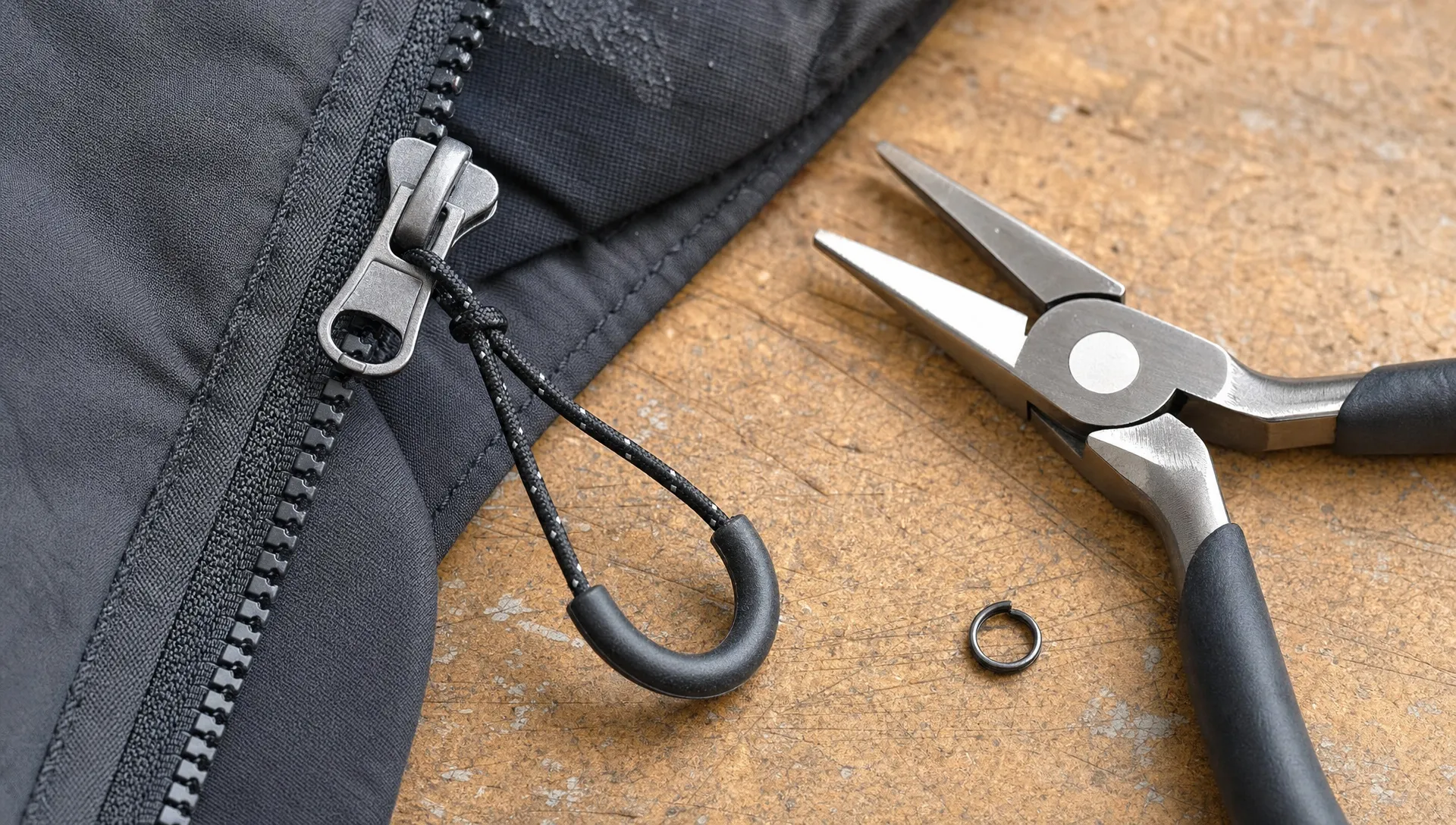
Cut a short piece of cord, usually around 4 to 6 inches depending on the item. Thread it through the slider hole, bring the ends together, and tie a secure knot. A simple overhand knot can work, but a bulkier stopper knot is easier to hold. Trim any excess and seal synthetic cord ends carefully so they do not fray.
For a cleaner look, match the cord color to the garment, bag, or zipper tape. For products that need more grip, especially workwear or outdoor gear, purpose-made zipper pull extensions can create a more polished result than a basic cord loop.
Method 4: Install a replacement zipper pull tab
If you want the repair to look intentional, use a replacement pull tab. These come in metal, rubber, woven, cord, leather-style, and molded designs. The best choice depends on the item’s use. A lightweight blouse needs a different pull than a hiking backpack or work jacket.
Look for three things before installing a replacement tab: attachment size, grip comfort, and durability. The attachment must fit through the slider hole without forcing it. The pull should be large enough to use easily but not so large that it swings, snags, or adds unnecessary weight.
Some replacement pulls attach with a small clasp or ring. Others require you to open a metal loop with pliers, feed it through the slider, and close it again. Work slowly and protect the surrounding fabric from scratches. If the item has a coated zipper, waterproof finish, or delicate fabric, place a cloth between the pliers and the material.
For brands, makers, and repair shops, this is also a chance to make the item look better than it did before. A generic broken tab can be replaced with a branded detail, and HiLabels offers a custom zipper pull option for businesses that want a more consistent finish across apparel, bags, or accessories.
Method 5: Add a ribbon or woven loop for soft goods
For cosmetic bags, kids’ apparel, boutique pouches, and light jackets, a soft ribbon or woven loop can be both functional and attractive. This works best when the zipper does not carry heavy strain. It is less suitable for luggage, work bags, or outdoor gear that gets pulled hard every day.
Thread a narrow ribbon through the slider hole and tie it securely, or fold it into a loop and stitch the ends together if you want a flatter finish. Keep the loop short enough that it does not catch on nearby buttons, straps, or hooks. If the item will be washed, choose a material that will not bleed color, shrink excessively, or fray after repeated laundering.
Soft pulls are useful when comfort matters. They are also quieter than metal tabs, which can be helpful on baby items, dancewear bags, travel pouches, and performance apparel.
When you should not force a zipper pull repair
A pull replacement works only when the zipper’s structure is still sound. If the slider body is cracked, the bridge is missing, or the teeth are bent, the new pull may fail quickly. You may still avoid replacing the entire zipper, but you may need to replace the slider.
If the zipper teeth are missing or the zipper tape is torn away from the fabric, replacing only the pull will not solve the problem. In that case, a tailor, gear repair shop, or manufacturer repair service may be the better choice.
The same judgment applies to repairs in general: small, contained fixes are great DIY projects, while structural problems call for the right professional. For example, a homeowner may touch up paint, but larger upgrades are better planned with experienced home renovation contractors who can handle the details that affect long-term results.
How to make the new pull last longer
Once you have repaired the zipper pull, a few habits can prevent the same issue from happening again. Most pull tabs break because of repeated sideways force, overloading, corrosion, or poor fit between the pull and the slider.
Pull in the same direction as the zipper track rather than yanking outward. If the zipper sticks, do not use the pull as a lever. Check for fabric caught in the teeth, dirt in the slider, or pressure from an overfilled bag. For jackets and bags used outdoors, wipe grit away from the zipper regularly because sand and dust can increase resistance.
For product designers and apparel brands, pull durability should be considered early. A zipper pull is small, but it affects everyday usability, perceived quality, and brand recognition. If you are evaluating hardware for a collection, it is worth understanding how zipper pulls boost function and branding before choosing the cheapest standard tab.
Quick guide: best fix by item type
Different items need different pull solutions. A repair that works on a pencil pouch may not survive on a loaded backpack.
| Item | Best pull fix | Why it works |
|---|---|---|
| Jacket | Replacement tab, cord loop, or extension | Easy to grip and comfortable in cold weather |
| Backpack | Cord loop, rubber pull, or sturdy metal pull | Handles frequent pulling and heavier use |
| Luggage | Split ring or strong replacement tab | Durable and easy to grab while traveling |
| Cosmetic pouch | Ribbon, woven loop, or small decorative pull | Lightweight and visually clean |
| Workwear | Larger textured pull or extension | Easier to use with gloves and repetitive motion |
If the item is part of a brand line, consistency matters. Matching pulls across colors, sizes, and product categories can make repairs, samples, and finished goods feel more professional.
Frequently Asked Questions
Can I fix a broken zipper pull with a paperclip? Yes, a paperclip can work as a temporary emergency fix, but it is not ideal for long-term use. It can bend, scratch fabric, or fall off. A split ring, cord loop, or replacement pull is more durable.
Do I need to replace the whole zipper if the pull tab broke off? Usually, no. If the slider still moves and the teeth close properly, you can replace only the pull tab. Full zipper replacement is usually needed only when the teeth, tape, or stitching are damaged.
What if the slider hole is broken? If the attachment point on the slider is cracked or missing, a new pull will not stay secure. You may need to replace the slider. This is still often simpler than replacing the entire zipper.
What is the strongest DIY zipper pull fix? For many bags and jackets, a small split ring with a cord loop is one of the strongest simple fixes. It gives you a secure metal connection plus a comfortable grip.
Can I use a custom zipper pull as a replacement? Yes, as long as the attachment fits your zipper slider and the material suits the item’s use. Custom pulls are especially useful for brands, uniforms, bags, and products where appearance matters as much as function.
Turn a broken pull into a better detail
Fixing a broken zipper pull does not have to mean settling for a mismatched paperclip or temporary knot. If the slider is intact, you can restore function quickly with a split ring, cord loop, replacement tab, or custom pull that fits the item’s style and use.
For businesses, apparel makers, and accessory brands, a broken or generic pull is also an opportunity to upgrade the customer experience. HiLabels helps brands create custom woven labels, patches, ribbons, care labels, and zipper pulls that make products feel finished, durable, and recognizable.


