How to Pick Backpack Zipper Pulls That Last
A backpack zipper pull seems like a small detail until it snaps on a crowded commute, becomes impossible to grip with gloves, or makes a premium bag feel unfinished. The best backpack zipper pulls are not just decorative. They protect the slider, make compartments easier to open, and give the bag a more intentional brand feel.
Choosing pulls that last comes down to matching the material, attachment style, size, and finish to the way the backpack will actually be used. A school backpack, a hiking pack, a commuter bag, and a travel backpack all put different stress on zipper hardware. If you design or source bags, this is one of the easiest places to improve both durability and perceived quality.
Why backpack zipper pulls fail
Most zipper pull failures are not caused by one dramatic accident. They usually happen after months of repeated tugging, twisting, abrasion, moisture, and temperature changes. The pull might crack, fray, stretch, fade, corrode, or detach from the slider.
Backpacks are especially demanding because users often open them while walking, wearing gloves, carrying other items, or pulling from awkward angles. A jacket zipper is usually pulled in one direction. A backpack zipper may be yanked sideways, dragged around a curved opening, or caught against luggage racks, desks, lockers, bike baskets, and car seats.
The zipper itself may still work perfectly, but a weak pull makes the whole bag feel broken. That is why durability should be considered early in the design process, not treated as an afterthought.
Start with the backpack’s real use case
Before choosing a material or shape, define the environment the backpack will face. A pull that works well on a fashion mini backpack may not survive on a camping pack. A heavy metal pull may look premium on a travel bag but feel noisy or excessive on a lightweight daypack.
Ask a few practical questions:
- Will the bag be used outdoors, indoors, or both?
- Will users wear gloves when opening it?
- Will the zipper be opened many times per day?
- Will the backpack be exposed to rain, sweat, mud, sand, or salt air?
- Is the pull mainly functional, branded, decorative, or all three?
- Does the bag need to feel rugged, sleek, playful, technical, or premium?
These answers will narrow your choices quickly. For example, a children’s school bag needs safe, easy-grip pulls with strong color retention. A hiking pack needs lightweight, weather-resistant pulls that are easy to grab with cold hands. A business backpack may need quiet, refined pulls that match the zipper tape, trims, and logo system.
Pick a material that matches stress and style
Material is the biggest durability decision. It affects strength, hand feel, weather resistance, noise, weight, and brand perception. There is no single best option for every backpack, but there is usually a best option for a specific type of use.
| Pull material | Best for | Strengths | Watch out for |
|---|---|---|---|
| Metal | Travel packs, premium backpacks, luggage-style bags | Strong, polished, long-lasting, high perceived value | Can add weight, make noise, or feel cold in winter |
| Rubber or soft PVC | Sport, school, outdoor, and casual backpacks | Flexible, grippy, colorful, easy to shape | Low-quality compounds may crack, fade, or feel sticky |
| Cord or woven loop | Hiking, tactical, lightweight, and utility backpacks | Light, quiet, easy to grip, works well with gloves | Ends must be finished well to prevent fraying |
| Fabric or woven tab | Fashion, lifestyle, and branded bags | Lightweight, soft, good for logos and color matching | Needs strong edge finishing and secure attachment |
| Leather or faux leather | Heritage, fashion, and premium commuter bags | Warm hand feel, stylish, brandable | Not ideal for constant wet use unless properly specified |
| Molded plastic | Budget, kids, and casual bags | Lightweight, low noise, many colors | Brittle plastics can snap under repeated stress |
Metal pulls are often the right choice when you want a sturdy, upgraded feel. If you are comparing metal options, HiLabels has a helpful guide to metal zipper pulls for bags, jackets, and gear that explains where they work best and how they affect both function and appearance.
For backpacks, do not judge material by looks alone. A glossy pull may photograph well but fail if the attachment point is thin. A soft pull may feel comfortable but tear if it is too narrow near the slider. Durability is usually determined by the weakest point, not the most attractive part of the design.
Check the attachment point before anything else
The attachment point is where most backpack zipper pulls are put under the highest stress. Even a strong pull body can fail if the connection to the zipper slider is weak.
Common attachment methods include split rings, jump rings, cord loops, molded loops, fabric loops, and direct-to-slider tabs. Each has a different feel and risk profile.
A split ring can be strong and replaceable, which makes it useful for travel and outdoor bags. A cord loop is quiet, lightweight, and glove-friendly. A molded rubber loop can look clean, but the loop needs enough thickness to resist tearing. A fabric tab can be stylish and soft, but stitching, heat sealing, or edge finishing must be done carefully.
When evaluating a pull, tug it in more than one direction. A backpack zipper does not always move in a perfect straight line. Curved zipper tracks, overpacked compartments, and hurried users create sideways force. If the attachment deforms, opens, twists, or cuts into the material, it is not the right choice for long-term use.
Choose the right size for grip and balance
A durable zipper pull still needs to be comfortable. Too small, and it becomes frustrating. Too large, and it catches on objects or swings around while walking.
For most backpacks, the pull should be long enough to pinch easily between thumb and finger. For outdoor or cold-weather backpacks, extra length helps users operate zippers with gloves. For children’s bags, a larger pull can make compartments easier to identify and open. For premium commuter bags, a slimmer pull may look more refined, as long as it remains practical.
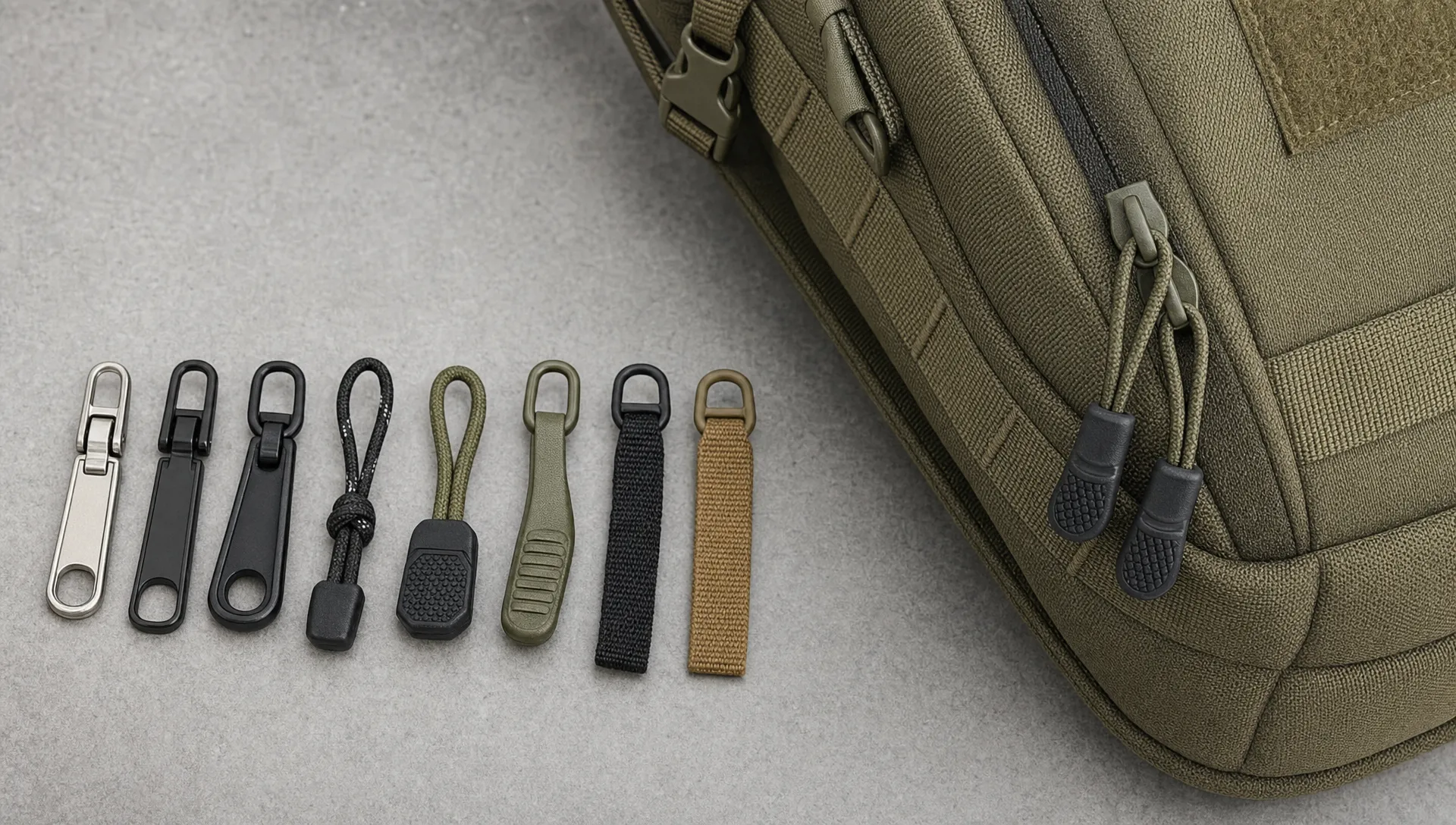
Shape matters too. Flat pulls are good for logos and clean branding. Rounded or textured pulls improve grip. Cord extensions are excellent for performance bags because they are easy to find by touch. If you need better grip without redesigning the entire zipper system, consider how zipper pull extensions can improve grip and style while keeping the original zipper functional.
Design for the hand, not just the product photo
Backpack zipper pulls are handled constantly. A pull that looks good in a product image can still feel wrong in use. Sharp corners, thin edges, slippery finishes, and awkward proportions all reduce satisfaction.
Good pulls usually share a few ergonomic qualities. They are easy to locate by touch, comfortable to pinch, and stable when pulled. They do not dig into fingers or rotate unpredictably. They also give enough leverage to move the slider even when the backpack is full.
Texture can help. Raised logos, ribbed rubber, woven surfaces, knotted cords, and matte finishes can make a pull easier to grip. For outdoor and travel bags, tactile feedback is especially useful because users may be opening the bag in low light, cold weather, or crowded spaces.
Make branding durable too
If the backpack carries a logo, the zipper pull can become a small but powerful branding element. It is visible when the bag is worn, handled during every use, and often repeated across multiple compartments. That repetition makes it memorable.
However, branding should never weaken the pull. A logo cutout that makes the metal too thin, an oversized molded mark that reduces flexibility, or a printed design that rubs off quickly can work against the brand.
For long-lasting branded backpack zipper pulls, keep these design principles in mind:
- Use simple artwork that stays legible at small sizes.
- Keep enough material around holes, edges, and attachment points.
- Match colors to the backpack trims, zipper tape, and labels.
- Choose raised, woven, molded, engraved, or debossed details based on the material.
- Avoid overly delicate shapes on bags that will see heavy use.
This is where custom development pays off. A standard pull may function, but a custom pull can reinforce the brand while improving usability. HiLabels offers a custom zipper pull option for brands that want zipper hardware designed around their own artwork and product style.
Look for proof of consistency
Durability is not only about the sample in your hand. It is about whether the full production run matches that sample. For brands, consistency matters because customers will not judge the best unit. They will judge the one they receive.
Ask suppliers how they manage material consistency, color matching, attachment strength, and finishing quality. If you are producing large quantities, request pre-production samples and check them against actual backpack prototypes. Pulls should be tested on the zipper sliders and compartments where they will be used, not just reviewed loose on a desk.
A useful mindset is to favor traceability over vague claims. In other industries, buyers rely on documentation such as published batch testing and traceability to verify that a supplier’s claims are backed by repeatable quality controls. Backpack components do not need the same type of lab documentation, but the principle is similar: the more clearly a supplier can explain materials, testing, and production standards, the easier it is to trust the final product.
Test pulls the way customers will use them
You do not need a full laboratory to catch many zipper pull problems. A simple hands-on review can reveal weak points before production. The goal is to simulate real use, not just confirm that the pull looks good.
Try these checks on samples:
- Pull repeatedly from different angles to see whether the attachment opens, stretches, or tears.
- Open and close a packed backpack several dozen times to test leverage and comfort.
- Rub the pull against fabric, webbing, and a hard surface to check for abrasion marks.
- Expose samples to water and let them dry to see whether color, finish, or hand feel changes.
- Test with bare hands and gloves if the backpack is meant for outdoor or winter use.
- Shake the backpack while walking to notice noise, swinging, or snagging.
If a sample fails during casual testing, it will almost certainly fail faster in the hands of customers. Early testing is cheaper than returns, complaints, or reputation damage.
Match pulls to backpack category
Different backpack categories call for different pull decisions. You can use the same brand language across a product line, but the actual construction should still reflect the bag’s use.
School backpacks
School backpacks need pulls that are easy to grip, safe, and resistant to rough handling. Rubber, soft PVC, woven tabs, and cord pulls often work well. Avoid sharp metal shapes or delicate decorative pieces on bags for younger users. Bright colors can help children identify compartments quickly.
Outdoor and hiking backpacks
Outdoor packs benefit from quiet, lightweight pulls that remain usable in rain, dirt, and cold weather. Cord pulls, rubberized tabs, and textured extensions are practical choices. Glove-friendly length is more important here than a sleek profile.
Travel backpacks
Travel bags need secure, sturdy pulls because they are frequently opened in airports, hotels, vehicles, and public spaces. Metal pulls, reinforced cord pulls, and strong split-ring attachments can work well. Consider whether the pull design interferes with lockable zipper sliders.
Commuter and business backpacks
For commuter bags, the pull should feel refined and quiet. Metal, leather, faux leather, or clean molded designs can add polish. The finish should coordinate with other trims, including buckles, logo labels, and hardware.
Fashion and lifestyle backpacks
Fashion backpacks can support more decorative shapes, colors, and branded details, but function still matters. If the pull is used on a main compartment, it must survive frequent handling. Decorative pulls are best when they add character without becoming fragile.
Avoid these common buying mistakes
Many brands choose backpack zipper pulls too late in the product development process. By then, the zipper slider, fabric, trim color, and price target may already be locked in. That can lead to compromises.
The most common mistake is choosing based on appearance alone. Another is using the same pull across every bag style even when the use case changes. A third is overlooking attachment compatibility. A pull that looks perfect may not fit the slider eyelet correctly or may sit at an awkward angle.
Also be careful with extreme cost-cutting. Zipper pulls are small, so the savings from a weaker component may be minor, while the impact on customer experience can be significant. A broken pull makes a backpack feel cheap even if the fabric, stitching, and main zipper are good.
If you are thinking about zipper pulls as part of a broader brand system, HiLabels’ article on how zipper pulls boost function and branding offers useful perspective on why these details affect both usability and perception.
A practical checklist before you order
Before approving backpack zipper pulls for production, review the design from both a user and brand perspective. The best pull should feel natural in the hand, work smoothly with the slider, and look consistent with the rest of the backpack.
Use this quick checklist:
| Decision point | What to confirm |
|---|---|
| Material | Matches the backpack’s environment, weight, and brand style |
| Attachment | Fits the slider securely and tolerates angled pulling |
| Size | Easy to grip without catching or swinging excessively |
| Shape | Comfortable edges and enough surface area for handling |
| Branding | Logo or artwork remains legible and does not weaken the pull |
| Finish | Resists fading, cracking, corrosion, or peeling for the intended use |
| Testing | Sample is reviewed on the actual backpack, not in isolation |
| Consistency | Supplier can reproduce the approved sample reliably |
A zipper pull that passes this checklist is far more likely to last in daily use.
Frequently Asked Questions
What are the most durable backpack zipper pulls? Metal, reinforced cord, and high-quality rubber or soft PVC pulls are often the most durable options, depending on the backpack type. The strongest choice is the one that matches the bag’s use, zipper slider, and environment.
Are metal zipper pulls good for backpacks? Yes, metal zipper pulls can be excellent for travel, commuter, and premium backpacks because they feel sturdy and polished. For lightweight outdoor packs or children’s bags, softer or quieter materials may be more practical.
How big should a backpack zipper pull be? It should be large enough to grip comfortably without snagging on clothing, straps, or surrounding objects. Outdoor and travel backpacks often benefit from slightly longer pulls, while sleek commuter bags may use slimmer designs.
Can zipper pulls be customized with a logo? Yes. Custom zipper pulls can include brand colors, shapes, logos, textures, and finishes. The key is to keep the design strong enough around the attachment point and simple enough to remain legible at a small size.
How do I know if a zipper pull will last? Test it on the actual backpack. Pull from different angles, open and close packed compartments repeatedly, check for fraying or cracking, and make sure the attachment stays secure.
Create backpack zipper pulls that feel built to last
The right zipper pull improves more than the zipper. It makes the backpack easier to use, strengthens the product’s visual identity, and signals quality every time someone opens a pocket.
If you are developing backpacks for retail, uniforms, events, outdoor use, or branded merchandise, HiLabels can help you create custom zipper pulls that fit your design and durability goals. With decades of experience in custom branding products, HiLabels makes it easier to turn small details into stronger, more polished products.


