When Custom Fabric Stickers Work for Temporary Branding
A logo does not always need to last as long as the garment beneath it. For pop-up events, photo shoots and short promotional campaigns, custom fabric stickers can provide temporary branding without sewing or heat application. They work best when you define the wear time, match the adhesive to the finished fabric and plan removal before application. They are a poor substitute for permanent labels when customers expect branding to survive regular washing.
First, identify what is actually adhesive
“Fabric sticker” describes several different products. A cloth-faced sticker has a textile surface with adhesive underneath, but that does not automatically make it suitable for clothing. Some are intended for packaging or other surfaces rather than flexible garments.
A pressure-sensitive garment sticker attaches through contact and pressure, following the supplier’s instructions. A sew-on label requires stitching. An iron-on label uses a heat-activated backing and needs compatible application conditions. These attachment methods are not interchangeable, even when the finished logos look similar.
Also separate three claims that often get confused: temporary, removable and washable. Temporary describes the intended period of use. Removable describes release under stated conditions. Washable describes performance during specified laundering conditions. None proves the others.
Before comparing prices, confirm the face material, adhesive type and intended fabric substrates. “Self-adhesive” alone does not tell you whether a product will release cleanly from your garment.
Use custom fabric stickers for branding with a clear end date
The strongest applications have a limited purpose and a planned removal point. A useful question is whether the logo needs to survive the event, the sales presentation or the life of the product.
| Branding situation | Why a sticker may fit | Main condition to verify |
|---|---|---|
| One-day event apparel | Adds campaign branding without stitching every garment | Adhesion during movement and removal afterward |
| Product photography | Allows a temporary logo or placement mockup | No visible residue or surface change after removal |
| Trade-show samples | Identifies a collection or promotional partnership | Compatibility with repeated handling |
| Pop-up merchandise display | Adds a short-term message to a displayed item | Clear removal instructions before wear or washing |
Event shirts and sample garments are especially useful candidates when the base item will be reused. However, a sticker on a shirt worn through a hot outdoor event faces different conditions from one on a stationary display.
For delicate or valuable merchandise, a branded hangtag, packaging band or ribbon may achieve the same temporary effect without putting adhesive directly on the textile. The least invasive option is often the better one when garment condition matters more than an integrated appearance.
Match the adhesive to the finished garment
Fiber content is only part of the decision. Custom fabric stickers also need to accommodate the fabric’s texture, stretch, surface treatments and expected movement.
A smooth, tightly woven surface generally offers more consistent contact than fleece, chunky knits or heavily textured fabric. Stretch garments create another challenge: the textile moves beneath the sticker, which can encourage lifting or wrinkling. A larger sticker is not automatically more secure if it bridges folds or sits across an area that stretches repeatedly.
Polyester, cotton and blends can all have finishes that change adhesive behavior. Water-repellent treatments, printing, fabric softener residue and surface lint may affect contact. Do not assume a successful test on one cotton shirt proves compatibility with every cotton garment.
Silk, velvet, leather, suede, loosely knitted wool and embellished surfaces deserve particular caution. Unless the supplier specifically supports the application and testing confirms it, choose an attachment-free alternative.
Ordinary vinyl promotional stickers are not a reliable shortcut. A sticker designed for a laptop or shipping carton may adhere poorly to clothing, leave residue or feel too rigid during wear. Look for suitability for the actual garment, not simply a claim that the sticker is durable.
Test the full use cycle before ordering
Reproduce application and wear
Use a spare garment from the actual production batch where possible. An offcut helps screen materials, but it will not reproduce the movement, seams and placement of a finished item.
Evaluate custom fabric stickers under the conditions they will actually encounter. Follow the supplier’s preparation, application and dwell-time instructions. Do not improvise surface preparation with alcohol or solvents unless both the adhesive supplier and garment requirements allow it.
Check appearance immediately, then repeat the intended handling. Bend the garment, stretch it as it would stretch during wear and rub the area lightly to represent normal contact. For event apparel, include realistic wear duration and exposure to warmth or perspiration. Inspect for edge lifting, wrinkling, adhesive transfer and discomfort.
Include removal in the approval test
A sample that looks good after five minutes has not passed a one-day campaign test. Leave it attached for the intended duration, remove it as instructed and inspect the fabric again after it has relaxed.
Record the garment style, fabric finish, sticker specification, placement and time attached. Photograph the result before application, during use and after removal. Approve the exact combination rather than a broad category such as “works on T-shirts.”
If washing is part of the intended use, test it separately using a supplier-approved laundering method that also follows the garment’s care instructions. One successful wash is not evidence of indefinite wash durability.
Design for a brief viewing window
Keep the artwork simple because custom fabric stickers often need to communicate a brand at a glance. A clear logo, strong contrast and a short message usually serve temporary campaigns better than dense text.
Review artwork at its actual finished size, not enlarged on a monitor. Check small lettering, thin lines and any required clear space. If you include a QR code, test the physical sample on the garment under realistic lighting and curvature. A code that scans on flat artwork may become difficult to read when the textile bends.
Choose placement with movement in mind. Avoid seams, ribbing, pockets and areas that repeatedly fold or stretch. Rounded corners may reduce opportunities for snagging, but shape cannot compensate for an unsuitable adhesive.
Ask the supplier for artwork requirements and a physical sample before committing to a large run. Allow time for testing, revisions, production and delivery rather than treating shipping speed as the entire schedule.
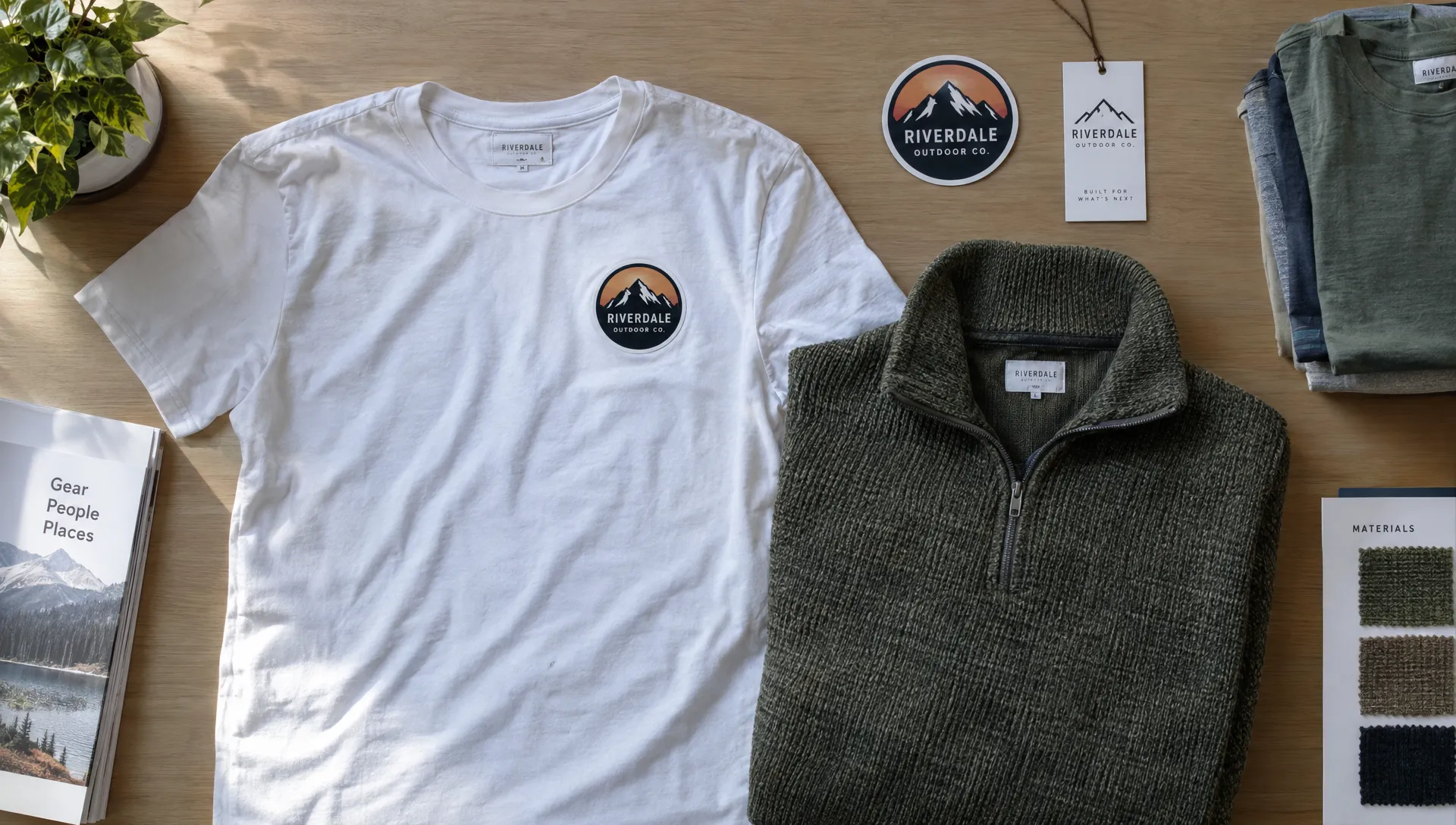
Plan removal before the campaign starts
Clean removal depends on the adhesive, fabric, attachment duration and conditions during use. It should be part of the purchasing specification, not an assumption made after the event.
Follow the supplier’s removal instructions and support the surrounding fabric as you peel. Work slowly rather than pulling sharply. Stop if the textile stretches, fibers lift or the garment surface changes. Do not assume that heat, steam or a household solvent is a safe way to release the adhesive.
If residue remains, avoid immediately rubbing it or applying a general-purpose adhesive remover. Check the garment care label and ask the supplier for a compatible method. Any permitted treatment should first be tested in a hidden area. Valuable or delicate garments may need professional cleaning advice.
For reusable event clothing, custom fabric stickers should pass a removal test after the full expected attachment period. If they do not, change the adhesive, shorten the use window or move the branding to a hangtag or packaging component. Repeatedly applying fresh stickers over residue is not a dependable replacement strategy.
Switch to permanent branding when the logo must last
A temporary application becomes the wrong choice when the logo is expected to survive repeated wear, washing and customer handling. At that point, evaluate sewn labels, patches or a compatible heat-applied option according to the garment’s construction and care requirements.
Custom fabric stickers can support a campaign alongside a permanent brand label, but they should not carry the entire identity of a product sold for long-term use. A removable collaboration logo on an event shirt and a sewn brand label inside it serve different purposes.
For the permanent component, this guide to choosing custom fabric tags for clothing brands explains considerations such as placement, material and comfort.
Keep promotional branding separate from compliance information, too. A removable campaign sticker is not a substitute for required permanent care information on covered U.S. apparel. The FTC’s Care Labeling Rule guidance explains those obligations and relevant exceptions.
Frequently asked questions
Will adhesive fabric stickers survive washing? Only rely on that claim when the supplier specifies laundering performance for the exact product and your garment test supports it. A cloth face does not make the adhesive washable. Unless explicitly approved otherwise, remove temporary stickers before washing, drying or ironing the garment.
Are custom fabric stickers the same as iron-on labels? No. A pressure-sensitive sticker attaches through contact and pressure, while an iron-on label requires specified heat, time and pressure. Some products have a temporary positioning adhesive before sewing or heat application, so check the complete attachment instructions.
Can the same sticker be moved between garments? Only if it is designed for repositioning or reuse. Removal can pick up lint, reduce adhesion or distort the sticker. Even a repositionable product needs testing on each relevant fabric type.
What should I ask a supplier before placing an order? Ask which finished fabrics the adhesive supports, how long it should remain attached, whether laundering is permitted and how removal should be handled. Also request sample availability, artwork specifications and production timing. Get performance claims tied to the specific product rather than relying on general descriptions such as “fabric-safe.”
Choose branding that matches its lifespan
Use a tested removable product for a short campaign and a lasting label for the garment’s ongoing identity. If your project needs a permanent woven component, explore HiLabels’ custom woven label options and upload your artwork to begin configuring it. For any temporary adhesive component, confirm fabric compatibility and removal performance with its supplier before placing the full order.


