Custom Patches for Brands, Teams, and Creators
Custom patches are small enough to fit on a sleeve, cap, bag, or jacket, but they can carry a surprising amount of brand meaning. For a clothing label, a patch can turn a blank garment into a finished product. For a team, it can create unity and recognition. For an independent creator, it can become the detail that makes merch feel collectible instead of generic.
The best patches do more than display a logo. They communicate quality, identity, belonging, and purpose at a glance. That is why custom patches remain popular across apparel brands, schools, clubs, sports teams, outdoor groups, artists, makers, and event organizers.
If you are planning custom patches for a product launch, team uniform, limited merch drop, or branded packaging, this guide will help you think through strategy, design, placement, and ordering so the final patch feels intentional.
Why custom patches still matter in a digital-first world
Branding may start online, but people remember what they can touch. A well-made patch gives your identity a physical presence. It adds texture, dimension, and permanence to items that people wear, carry, and keep.
For apparel and accessories, patches also solve a practical design problem. Printing directly onto every garment is not always the right choice, especially when you want a premium feel, a flexible branding element, or a logo treatment that can move across multiple products. A patch lets you create one branded component and apply it to jackets, hats, totes, uniforms, workwear, or packaging with a consistent look.
Custom patches are especially valuable because they can serve multiple roles at once:
- They reinforce your visual identity on finished products.
- They make team apparel look more official and cohesive.
- They turn creator merch into something fans want to collect.
- They add perceived value to simple garments and accessories.
- They create a tactile brand detail that lasts beyond a single campaign.
According to the U.S. Patent and Trademark Office, trademarks help consumers identify the source of goods or services. While a patch is not automatically a trademark strategy on its own, placing your logo, name, or emblem consistently on products can support recognition and make your brand easier to identify.
Custom patches for brands: product detail, not just decoration
For apparel brands, lifestyle labels, and product-based businesses, patches should be treated as part of the product design, not an afterthought. The right patch can help define where your product sits in the market, casual, technical, premium, playful, heritage-inspired, or performance-focused.
A minimalist woven patch on a hem can create a clean designer feel. A bold embroidered patch on the chest can give a jacket a vintage or varsity tone. A durable patch on a workwear item can signal utility and toughness. The patch becomes part of the product’s personality.
Brands often use custom patches for:
- Outerwear, including denim jackets, fleece, work jackets, and bombers.
- Headwear, including caps, beanies, bucket hats, and visors.
- Bags, including totes, backpacks, pouches, and travel gear.
- Uniform pieces, including polos, aprons, vests, and staff jackets.
- Limited edition collections, collaborations, and seasonal drops.
The most successful brand patches usually have a clear role. Some patches are meant to identify the maker. Others are meant to become the hero graphic. Some are subtle quality cues, while others are collectible design features. Before choosing size, color, and shape, decide what job the patch needs to do.
Custom patches for teams: unity, recognition, and pride
For teams, patches are about more than branding. They represent belonging. A patch can show membership, achievement, location, rank, event participation, or shared values.
Sports teams, school clubs, scouting groups, volunteer organizations, esports teams, and company teams all use patches to create a sense of connection. Unlike a printed logo, a patch feels official and earned. It has weight. It looks good in photos. It can be kept as a memento after a season, tournament, or event.
Team patches work especially well when they are designed for clear recognition from a distance. A team crest, mascot, initials, or simple emblem often performs better than a detailed layout with too many words. If the patch will be worn on sleeves, caps, or jerseys, readability matters more than squeezing in every detail.
For larger organizations, consider creating a small patch system. One main emblem can represent the team or group, while secondary patches can mark special events, roles, years, or achievements. This makes patches more meaningful and gives members a reason to keep adding to their collection over time.
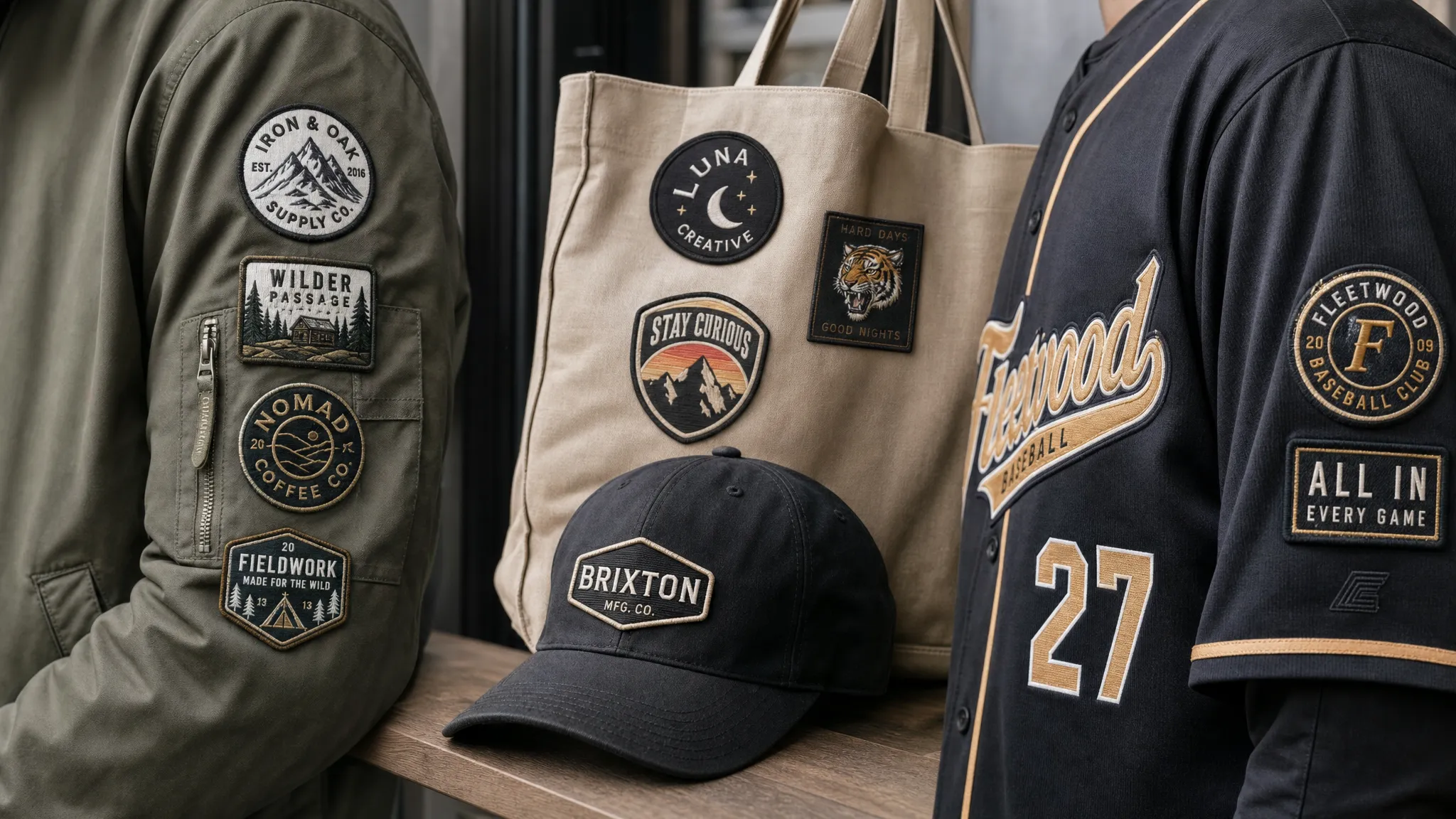
Custom patches for creators: merch people want to keep
Creators, artists, musicians, podcasters, streamers, and small community builders often look for merch that feels personal without requiring an overly complex product line. Custom patches are ideal because they are flexible, collectible, and easy to integrate into many items.
A creator can use one patch design across several products, such as a beanie, hoodie, tote, or standalone patch sold as a collectible. Patches can also support smaller drops because they give you a premium branding element without redesigning an entire garment from scratch.
For creator merch, the best patch ideas often come from community language. Inside jokes, symbols, mascots, short phrases, album art details, channel icons, and event-specific graphics can all become patches. The key is to make the design feel like something fans recognize and want to wear, not just a logo placed on fabric.
Creators can also use patches as loyalty items. A patch can be included with a limited release, sent as a bonus to supporters, used for event badges, or added to packaging as a surprise branded element.
Choosing a patch style based on the message
Different patch styles create different impressions. The best option depends on your artwork, your product, and the feeling you want the finished item to have.
| Patch style | Best for | Visual feel | Design tip |
|---|---|---|---|
| Woven patches | Fine details, small lettering, clean logos | Smooth, precise, refined | Keep contrast high so details stay readable. |
| Embroidered patches | Bold logos, mascots, classic team designs | Textured, dimensional, traditional | Avoid tiny text and overly thin lines. |
| Printed patches | Gradients, illustrations, complex artwork | Graphic, flexible, colorful | Use when artwork has details that cannot be simplified. |
| PVC or rubber-style patches | Outdoor, tactical, sporty, or weather-resistant looks | Modern, durable, raised | Best for bold shapes and limited color palettes. |
| Leather or faux leather patches | Denim, hats, bags, heritage apparel | Premium, rustic, minimal | Works well with debossed or simplified marks. |
HiLabels offers custom patches along with woven labels, care labels, ribbons, and other branding products, so you can think beyond a single item and build a more complete product identity. If your apparel line already uses woven labels, adding patches can give the outside of the garment the same level of branded detail as the inside.
For a deeper comparison of two popular options, you can also read HiLabels’ guide to custom embroidered patches vs woven patches.
Design principles that make custom patches look professional
A patch has different design constraints than a website header, social media avatar, or packaging label. It needs to be readable at a real-world size, produced in thread or material, and attached to a physical product. Strong patch design usually comes from simplifying, not adding.
Start by choosing one main visual idea. This might be your logo, initials, crest, mascot, icon, or wordmark. Then remove anything that does not support that idea. Small taglines, thin outlines, tiny dates, and complex background patterns often look good on a screen but become difficult to read when reduced to patch size.
Color also matters. High contrast helps patches stand out, especially on textured garments. If the patch will be placed on dark apparel, make sure the border and main artwork do not disappear. If the patch will go on multiple garment colors, test the design against each background before committing.
Shape is another branding opportunity. Circles and rectangles are versatile, but they are not the only options. Shields, ovals, tabs, arches, flags, and custom die-cut silhouettes can make a patch feel more distinctive. Just make sure the shape supports the design rather than making production or attachment unnecessarily complicated.
A practical pre-order design check includes:
- Is the main logo or symbol recognizable at the final size?
- Is the smallest text large enough to read?
- Do the patch colors contrast with the garment or product?
- Does the border help frame the design?
- Will the patch style match the product’s price point and audience?
- Is the artwork clean enough to upload or send for production?
If you are preparing a logo-based patch, vector artwork is often the easiest format to work from because it keeps lines and shapes clean. If you do not have vector artwork, use the highest-resolution version of your logo available and avoid compressed screenshots.
Placement ideas for apparel, accessories, and packaging
Patch placement changes how the final product feels. The same patch can look subtle, premium, sporty, or bold depending on where it sits.
A small patch near the hem of a T-shirt feels understated. A chest patch on a fleece or jacket feels more official. A sleeve patch can add a uniform-inspired detail without dominating the front of the garment. A front patch on a cap is highly visible and works well for logos, crests, and team marks.
| Product | Common patch placement | Branding effect |
|---|---|---|
| T-shirts | Hem, chest, sleeve | Subtle brand detail or small hero mark |
| Hoodies | Chest, sleeve, pocket, lower hem | Casual, streetwear, or team-focused look |
| Jackets | Chest, sleeve, back shoulder | Premium, uniform, outdoor, or heritage feel |
| Hats | Front panel, side panel, cuff | High visibility and strong recognition |
| Bags | Front pocket, corner, strap area | Practical, durable, and easy to notice |
| Packaging | Pouches, gift wrap, ribbon, insert cards | Collectible or premium unboxing detail |
For brands selling apparel, it is worth creating a placement standard. For example, you might decide that all outerwear gets a left chest patch, all hats use a centered front patch, and all limited editions include a secondary sleeve patch. Consistency helps customers recognize your products faster.
Building a complete brand system with patches, labels, and ribbons
Custom patches are powerful on their own, but they become even more effective when they work with your other brand details. A garment might use a woven neck label for identity, a care label for required information, a patch for exterior branding, and custom ribbon for packaging. Together, these elements create a complete experience.
This is especially important for small and growing brands. Customers often judge quality through details before they understand your full story. Clean labels, durable patches, and thoughtful packaging can make a product feel more established and trustworthy.
HiLabels supports multiple custom branding components, including custom woven labels, patches, ribbons, zipper pulls, and care labels. That makes it easier to coordinate the look of your branding across different touchpoints instead of treating each item as a separate decision.
If you are developing a full apparel branding system, start with your core identity colors and logo usage. Then decide which elements should be consistent across every product and which can change by collection, event, or season.
For example, a brand might keep the same woven label in every garment but create new patches for capsule collections. A team might use one main patch every year and add a dated event patch for tournaments. A creator might keep a consistent logo patch but release limited artwork patches for special drops.
How to plan your custom patch order
A smooth patch order starts before production. The more clearly you define your intended use, the easier it is to make good decisions about size, style, backing, and quantity.
Before ordering, prepare the following details:
- Your artwork or logo file.
- The patch size you want, or the product area where it will be applied.
- The garment or item type, such as hats, jackets, bags, or uniforms.
- Your preferred patch style, if you already know it.
- Any brand colors that need to be matched as closely as possible.
- Your timeline, especially for launches, events, or team deadlines.
HiLabels provides a user-friendly online ordering process and an upload artwork option, which can help simplify the process for brands, teams, and creators who already have a design ready. With more than 31 years of experience in custom branding products, HiLabels also brings the production knowledge needed to turn a design concept into a durable physical item.
If you are not sure whether your design is better suited for a woven, embroidered, or another patch style, start with the artwork. Detailed logos and small typography often need a different approach than bold mascots or simple icons. Choosing the right production method early helps avoid disappointment later.
Common mistakes to avoid
Most patch problems are preventable. They usually come from designing only for the screen, choosing the wrong size, or forgetting where the patch will be used.
One common mistake is making the patch too small for the amount of detail. A detailed crest, long phrase, and tiny date may look impressive in a large digital preview, but it can become crowded on a two-inch patch. Another mistake is choosing colors that do not contrast with the garment. A dark navy patch on a black jacket may look too subtle unless that is your intention.
Attachment should also be considered early. A patch for a hat may need different planning than a patch for a heavy jacket or tote bag. The surface, curve, fabric weight, and washing expectations all influence the final result.
Finally, avoid treating every patch as a one-time design. If you may reorder later, save your approved artwork, color notes, size, and placement details. This makes future orders faster and helps keep your branding consistent.
When custom patches are the right choice
Custom patches are a strong fit when you want your branding to feel durable, tactile, and memorable. They are especially useful for products that customers will wear repeatedly or keep for a long time.
They may be the right choice if you want to:
- Add a premium detail to apparel or accessories.
- Create team identity for uniforms or event gear.
- Offer collectible merch for a community or fan base.
- Brand products without printing directly onto every item.
- Build a consistent identity across multiple product categories.
- Make packaging feel more personal and giftable.
For brands, patches can support recognition. For teams, they can build pride. For creators, they can make merch feel more meaningful. In each case, the patch works best when it is designed with purpose and produced with care.
Frequently Asked Questions
What are custom patches used for? Custom patches are used to brand apparel, hats, bags, uniforms, accessories, packaging, and merch. They can display logos, team emblems, creator artwork, event graphics, achievement marks, or limited edition designs.
Are custom patches good for small brands? Yes. Custom patches can help small brands make simple products feel more finished and professional. They are also flexible because one patch design can often be used across multiple items, such as hats, jackets, totes, and hoodies.
What type of patch is best for detailed artwork? Woven patches are often a strong choice for fine details and smaller lettering because they can create a smoother, more precise look than heavily textured embroidery. The best option depends on your artwork and final size.
How do I make my patch design more readable? Use high contrast, limit small text, simplify detailed artwork, and test the design at the actual patch size. If you cannot read it clearly on screen at final size, it will likely be difficult to read as a physical patch.
Can patches be part of a full apparel branding system? Yes. Patches can work alongside woven labels, care labels, ribbons, zipper pulls, and packaging details. Coordinating these elements helps your products feel more consistent and professional.
Create custom patches that feel true to your brand
The right patch can turn a garment, uniform, accessory, or merch item into something people recognize and remember. Whether you are building a clothing brand, outfitting a team, or launching creator merchandise, custom patches give your identity a durable and tactile form.
HiLabels helps brands, teams, and creators create high-quality custom patches and related branding products with an easy online ordering process, artwork upload options, and experienced support. Explore custom patch options at HiLabels and start building the details that make your products stand out.


