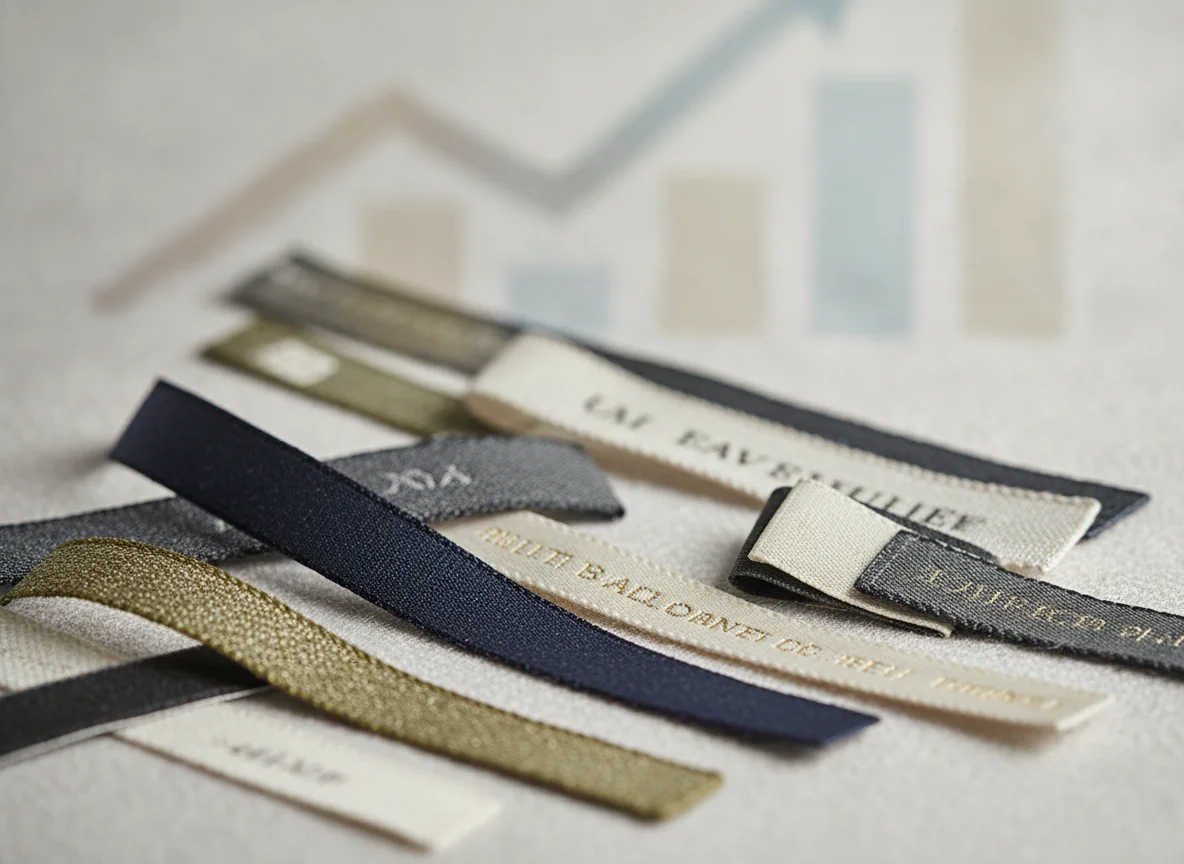
Understanding the intricacies of custom woven label pricing per unit is crucial for any brand. Whether you are a small startup or an established enterprise, managing manufacturing costs directly impacts your bottom line. Many factors influence the final price of each label. Therefore, understanding these variables helps you make informed decisions, optimize your budget, and achieve the best value.
Pricing for custom woven labels can seem complex at first glance. It involves much more than just the raw material cost. From design complexity to order volume, each element contributes significantly to the overall expense. We will explore these key components in detail. This guide provides clarity on how label manufacturers determine their prices, and how you can strategically plan your orders.
What Drives Custom Woven Label Pricing Per Unit?
Several critical factors collectively determine the custom woven label pricing per unit. These elements are interconnected, and a change in one often influences others. Knowing these drivers helps you predict costs and make design choices that align with your budget. Manufacturers consider quantity, label size, color count, and design intricacy among the primary factors.
Additionally, the specific finishing options, material choices, and even the weave type play significant roles. For example, a larger, multi-colored label with a complex design will inherently cost more per unit than a small, single-color label. Furthermore, rush orders typically incur higher charges due to expedited production and shipping. Understanding these foundational elements is the first step toward effective cost management for your brand's labels.
Quantity and Economies of Scale
The number of labels you order is perhaps the most significant factor affecting your unit price. Custom woven label production involves certain fixed costs. These costs include setting up the loom, creating the design file, and preparing the specific threads. Manufacturers must cover these initial setup expenses regardless of order size. Consequently, these fixed costs are spread across more units in larger orders. This significantly reduces the custom woven label pricing per unit.
Most manufacturers, including those specializing in high-quality European loom production like HiLabels, operate on an economy of scale model. This means that as your order volume increases, the cost per label decreases. For instance, ordering 10,000 labels will result in a much lower per-unit price than ordering only 500. Brands often find substantial savings by optimizing their order quantities, perhaps by combining similar labels or forecasting future needs accurately. Planning ahead can dramatically impact your budget.
Label Size and Design Complexity
The physical dimensions of your label directly influence material usage and loom time. Larger labels naturally require more thread and longer weaving times, increasing their unit cost. Similarly, the shape of your label can impact pricing. Standard rectangular or square labels are often more cost-effective to produce than unusually shaped or die-cut designs. These custom shapes demand specialized cutting techniques, which add to the production expense.
Design complexity also plays a crucial role. Labels with intricate details, fine lines, gradients, or very small text require higher thread counts and more precise weaving. This demands more loom time and potentially specialized programming. Simple, bold designs are generally more economical to produce. Conversely, highly detailed artwork pushes the boundaries of woven label capabilities and thus commands a higher price per unit.
Color Count and Thread Selection
The number of colors in your label design is another key determinant of pricing. Each additional color typically requires a separate set of threads to be loaded onto the loom. This increases setup time and material management. While modern weaving technology handles multiple colors efficiently, there's usually a threshold beyond which costs escalate. Manufacturers often offer a base price for a certain number of colors (e.g., up to 4 colors). Adding more colors beyond this base will incur extra charges per color.
The type of thread used also impacts cost. Standard polyester threads are typically the most economical. However, some brands opt for specialized threads such as metallic, fluorescent, or recycled threads for unique aesthetics or sustainability reasons. These specialized threads often come at a premium price. Therefore, carefully selecting your color palette and thread type can help manage your custom woven label pricing per unit.
The Impact of Finishing Options on Your Budget
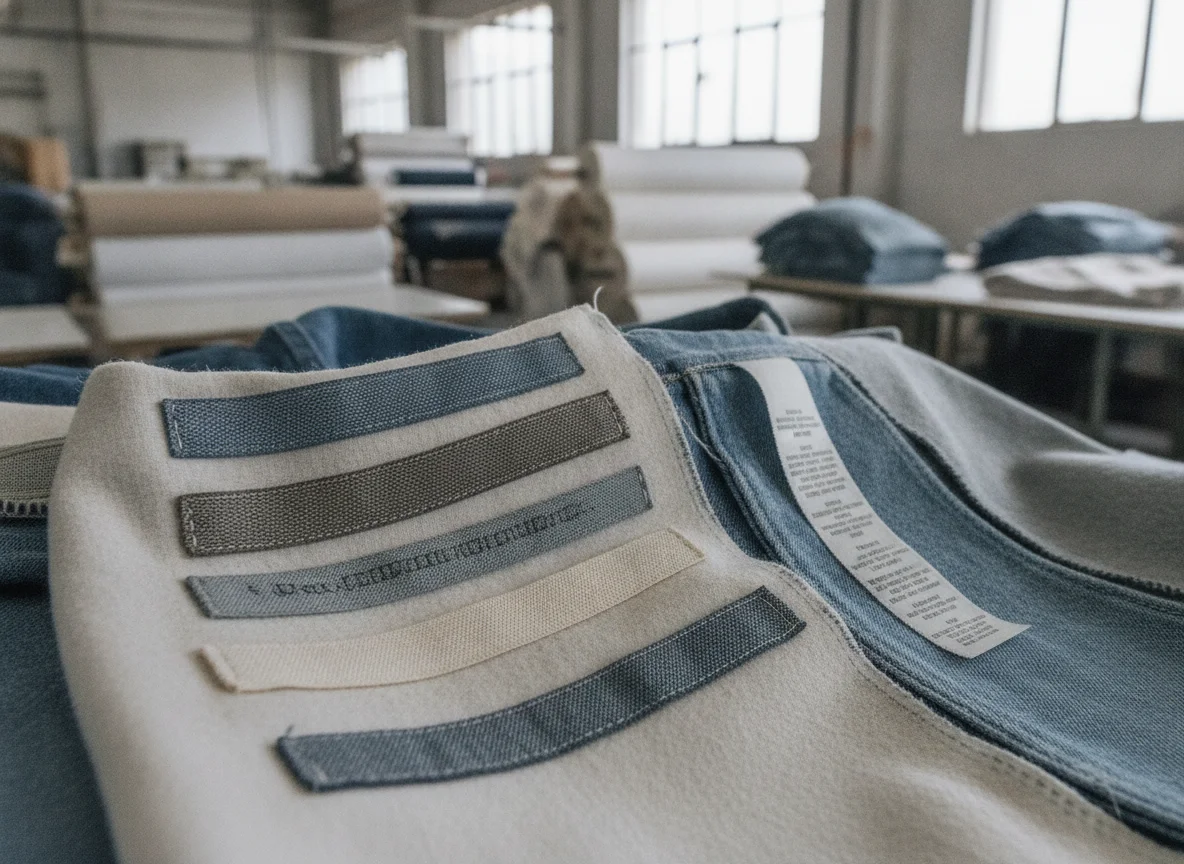
Once woven, labels undergo various finishing processes. These processes prepare them for attachment to your products. The chosen finishing options significantly influence the final custom woven label pricing per unit. These options include different cutting methods, folding styles, and special backings.
Understanding these choices allows you to select functional and cost-effective solutions. Basic finishing is often included, but advanced customizations will add to the overall expense. Each finishing step adds labor and machine time, directly affecting the final price tag for your labels.
Cutting and Folding Styles
How a label is cut and folded is an essential finishing detail. Woven labels can be hot cut, laser cut, or ultrasonic cut. Hot cutting is standard for most polyester labels, as the heat seals the edges, preventing fraying. Laser cutting offers precision for intricate shapes. Ultrasonic cutting provides a softer edge, preferred for delicate fabrics. Each method has different cost implications, with standard hot cutting usually being the most economical.
Folding styles also vary. Common options include:
- Straight Cut: No fold, typically sewn on all four sides. Simplest and often least expensive.
- End Fold: Sides folded under, creating a clean finish. Often sewn at the ends.
- Loop Fold: Folded in half, forming a loop. Ideal for sewing into a seam.
- Manhattan Fold: A loop fold with the top edge folded down. Creates a thicker, more structured label.
- Miter Fold: Corners folded at an angle. Provides a premium, tailored look.
More complex folds require additional machine time and precision. Consequently, they increase the per-unit cost compared to a simple straight cut or end fold. Consider the sewing method and desired aesthetic when choosing a fold. A simpler fold often helps in managing your budget.
Special Backings and Attachments
Beyond standard sew-in labels, many brands opt for special backings or attachments. These features enhance functionality or ease of application. Common options include iron-on, self-adhesive (peel & stick), or even pre-punched holes for tagging. Each of these special features adds to the manufacturing process and, therefore, to the custom woven label pricing per unit.
Iron-on backings, for example, involve applying a heat-activated adhesive layer to the back of the label. Self-adhesive labels feature a pressure-sensitive adhesive with a release liner. These processes require additional materials and machinery. While they offer convenience for the end-user or manufacturer, they also contribute to a higher cost per label. Evaluate whether the added convenience justifies the increased expense for your specific product and target market.
How to Optimize Your Custom Woven Label Budget
Effectively managing your budget for custom woven labels involves strategic planning and informed decision-making. By understanding the factors that influence pricing, you can implement strategies to reduce your per-unit cost without compromising quality. The goal is to find the perfect balance between cost-efficiency and achieving your brand's aesthetic and functional needs.
Many suppliers offer guidance on optimization. For example, experienced providers like HiLabels often consult with clients to help them navigate design choices and order volumes. These consultations help maximize value. Prioritizing quality remains paramount, especially for custom woven labels that represent your brand's identity.
Strategic Ordering for Cost Efficiency
The most straightforward way to reduce your custom woven label pricing per unit is to increase your order quantity. Analyze your historical usage and future projections. Consider placing larger orders less frequently, rather than small, frequent ones. This strategy leverages economies of scale, spreading fixed setup costs over more units. You achieve substantial savings per label.
Furthermore, planning your orders well in advance eliminates the need for rush production. Rush orders almost always incur additional fees. These fees compensate for expedited scheduling and potentially overtime labor. By maintaining a sufficient inventory of labels and anticipating your needs, you can avoid these surcharges. This allows for standard production timelines and more favorable pricing.
Design Simplification and Standardization
Review your label design for opportunities to simplify without losing brand impact. Reducing the number of colors to the manufacturer's standard offering (e.g., 4 or fewer) can often lead to immediate cost reductions. Consider if complex gradients or extremely fine details are truly necessary for your brand's message. Sometimes, a bolder, simpler design can be equally effective and more economical to produce.
Standardizing label sizes and shapes across different product lines also streamlines production. Custom sizes or unique die-cuts require more specialized setup and potentially more material waste. By sticking to common sizes and rectangular or square shapes, you can benefit from more efficient manufacturing processes. This contributes to a lower unit price for your custom woven labels. Remember, sometimes less is more, both aesthetically and financially.
Choosing the Right Supplier for Value and Quality
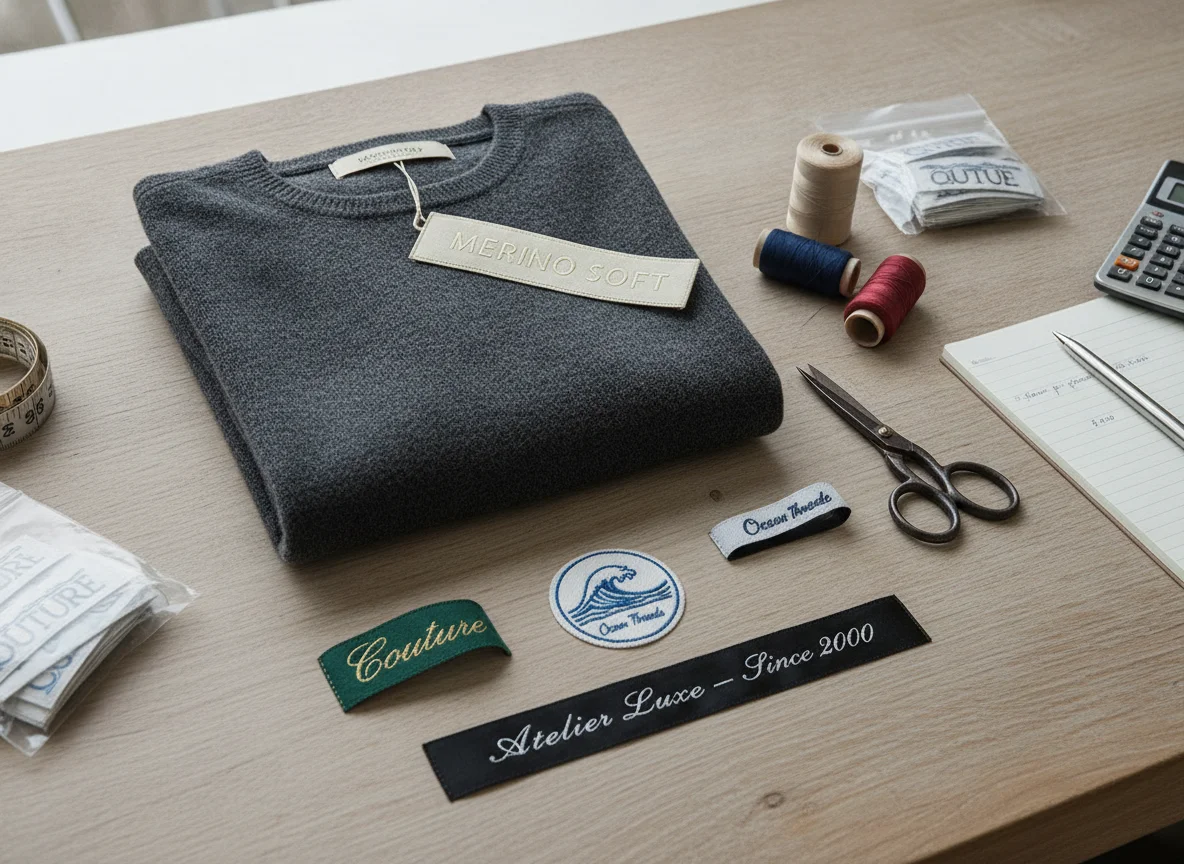
Selecting the right custom woven label supplier is paramount. It affects both your unit pricing and the overall quality of your brand's representation. A reputable supplier with extensive experience can offer insights into cost-saving measures. They will also provide consistent, high-quality products. It is important to look beyond just the lowest price per unit. Consider the supplier's track record, production capabilities, and customer service.
HiLabels, for instance, with over 30 years of experience and European loom quality, focuses on delivering exceptional woven labels. Their expertise allows them to guide clients through the options. This ensures that the final product meets both aesthetic demands and budget constraints. Ultimately, a reliable partner provides long-term value, which often outweighs minimal upfront savings from a less established provider. Therefore, always balance price with trust and proven quality.
Common Misconceptions About Custom Woven Label Pricing
Many brands hold common misconceptions about custom woven label costs. These misunderstandings can lead to unexpected expenses or missed opportunities for savings. Addressing these myths helps businesses approach label procurement with greater clarity and confidence. It is vital to separate fact from assumption. This ensures you make the most informed decisions for your brand's investment in labeling.
Myth: Small Orders Are Always Cheaper
While a smaller total invoice might seem appealing, the custom woven label pricing per unit is almost always higher for small orders. This is due to the fixed setup costs mentioned previously. Imagine setting up a complex machine. The initial effort is the same whether you produce 100 or 10,000 items. When those fixed costs are divided by only a few units, each unit bears a large portion of that initial expense. For this reason, a small order of 500 labels will have a significantly higher per-label cost than an order of 5,000 labels. Always consider the unit cost, not just the total bill.
Myth: All Label Materials Cost the Same
This is another common misconception. Standard polyester threads are generally the most affordable option. However, there's a wide array of specialized materials available. These include organic cotton, recycled polyester, or luxurious metallic threads. Each material comes with its own cost structure. Premium materials, while offering distinct aesthetic and tactile qualities, will increase the price per unit. Always specify your material preferences and understand the associated cost implications. This ensures you align your budget with your brand's material choices.
FAQ About Custom Woven Label Pricing Per Unit
Q1: Is there a minimum order quantity (MOQ) for custom woven labels?
A1: Yes, most manufacturers have an MOQ, which typically starts from a few hundred units. This allows them to cover fixed setup costs efficiently. Always check the specific MOQ with your chosen supplier.
Q2: Do more colors always mean a higher price for woven labels?
A2: Generally, yes. While a base number of colors (often 4-8) might be included, adding colors beyond that threshold usually increases the unit cost due to increased material management and loom setup time.
Q3: What's the cost difference between damask and taffeta weave types?
A3: Damask labels usually cost more than taffeta. Damask offers a higher thread count and finer detail, resulting in a superior quality and feel. Taffeta is more economical and durable for simpler designs.
Q4: Can I get a sample before placing a large custom woven label order?
A4: Most reputable suppliers, including HiLabels, offer sampling options. This allows you to approve the quality and design before full production. There might be a nominal fee for samples to cover setup costs, but it is a worthwhile investment.
Conclusion
Understanding custom woven label pricing per unit empowers you to make smarter purchasing decisions for your brand. By considering factors like quantity, size, color count, design complexity, and finishing options, you can effectively manage your budget. Strategic ordering, design simplification, and partnering with an experienced supplier are key to optimizing your costs without sacrificing the quality that defines your brand. Invest wisely in your labels, as they are a vital part of your product's identity.
Ready to explore custom woven label solutions that combine European loom quality with competitive pricing? Visit hilabels.com today to discuss your project and get a personalized quote. Our team helps you create the perfect label that fits your vision and your budget.


