Heat Shrink Zipper Pulls for Better Grip and Durability
A zipper pull is one of those details people notice only when it makes life easier, or when it fails. On a cold morning, with gloves on, or when a bag is packed tight, a thin metal tab can feel awkward fast. A heat shrink zipper pull solves that practical problem by adding a snug, grippy sleeve over a cord, tab or extension without making the zipper look bulky.
For brands, the appeal is simple: better handling, cleaner finishing and longer wear from a small component that gets touched every day. Heat shrink is not the right answer for every zipper pull design, especially when a large logo or premium metal detail is the goal. But for workwear, outdoor gear, bags, pouches and utility apparel, it can be one of the most practical ways to improve feel and durability.
What Are Heat Shrink Zipper Pulls?
Heat shrink zipper pulls are zipper pulls that use heat shrink tubing as the outer grip layer. The tubing is placed over a cord, wire, metal pull, molded insert or other pull extension, then heated so it contracts tightly around the base material.
The result is a compact sleeve that can add thickness, texture and protection. In many cases, the base pull provides the strength, while the heat shrink layer provides comfort and a finished surface.
This construction is common in products where the zipper needs to be easy to grab but not overly decorative. Think field jackets, backpacks, tactical pouches, travel organizers, soft cases, tool bags and uniform accessories. The look is usually clean and functional, which is why it works well on technical or minimalist products.
A heat shrink zipper pull is different from a molded rubber pull. Rubber or PVC pulls are typically formed into a custom shape and can carry raised logos, recessed details or more dimensional branding. Heat shrink pulls are usually more streamlined. They are especially useful when you want a grippy sleeve over an existing pull structure or when you want a low profile finish that feels better in the hand.
If you are comparing pull styles across a product line, it helps to understand how zipper pulls boost function and branding before deciding which construction fits each item.
How Heat Shrink Improves Grip
The biggest benefit of heat shrink is tactile. A flat metal tab can be slippery, especially if it is small, cold or wet. A cord without a finished end can be hard to pinch and may fray over time. Adding a heat shrink sleeve increases the contact area, giving fingers more surface to hold.
Grip improves in three main ways. First, the pull becomes thicker, which makes it easier to pinch between the thumb and finger. Second, many heat shrink materials have a matte or slightly textured finish that reduces slipperiness. Third, the sleeve can soften hard edges, so the pull feels more comfortable during repeated use.
That matters most when the user is not handling the zipper in ideal conditions. Gloves reduce finger sensitivity. Rain, sweat, sunscreen and dirt can make smooth surfaces harder to control. A packed bag can put tension on the zipper, requiring a firmer pull. Small improvements in grip can make the whole product feel more dependable.
Heat shrink can also help with accessibility. A zipper that is easier to locate and pull is useful for children, older customers, workers wearing gloves and anyone using gear in a hurry. It does not replace thoughtful product design, but it can make a noticeable difference without changing the zipper itself.
Durability Benefits and Where the Limits Are
Heat shrink tubing adds a protective layer to a part of the zipper system that takes frequent friction. When placed over cord, it can reduce fraying at the end of the pull. When placed over a metal or wire base, it can help prevent edge wear against fingers, fabric or nearby product panels.
It can also reduce noise. Metal pull tabs can clink against sliders, shells or hardware. A covered pull often feels quieter and less harsh, which is helpful for travel bags, hunting gear, camera pouches and workwear where rattling hardware can feel cheap or distracting.
Still, heat shrink is not a repair for a failing zipper. If the slider is bent, the zipper teeth are damaged or the attachment hole is cracked, covering the pull will not solve the underlying issue. Durability depends on the full construction: the zipper, slider, attachment method, base pull and sleeve material all need to work together.
| Durability factor | What to check | Why it matters |
|---|---|---|
| Base pull strength | Cord, metal, wire or insert should handle repeated pulling | Heat shrink improves the surface, but the core still carries the load |
| Sleeve fit | Tubing should shrink tightly without gaps or twisting | A poor fit can slide, wrinkle or wear early |
| Wall thickness | Thicker tubing usually adds more cushioning and abrasion resistance | Too much thickness can make small sliders feel bulky |
| Heat application | Heat should be even and controlled | Overheating can damage tubing, cord or nearby fabric |
| End finishing | Ends should be clean, sealed and comfortable | Rough edges can catch on fabric or irritate fingers |
The best heat shrink zipper pulls are designed as a system, not as an afterthought. A strong cord with a carefully sized sleeve will usually outperform a weak cord covered by heavy tubing.
Where Heat Shrink Zipper Pulls Work Best
Heat shrink zipper pulls are especially useful on products that are handled often and expected to last. They suit pieces where the user values control, speed and durability more than ornamentation.
They work well on outerwear because jacket zippers are often used with cold hands or gloves. A heat shrink sleeve can make the main zipper, pocket zippers and ventilation zippers easier to find by touch. For bags and backpacks, the added grip helps when compartments are full or when zipper tracks are under tension.
They also make sense for utility products such as tool rolls, medical pouches, field kits and tech organizers. On these items, users may open and close compartments many times in a day. A small improvement in comfort becomes more noticeable with repeated use.
Heat shrink can be a smart choice for color coding too. Different pull colors can identify compartments, sizes or departments without adding large labels. For example, a pouch system might use black pulls for general storage, red pulls for emergency items and blue pulls for electronics. This keeps the product clean while improving recognition.
Choosing the Right Heat Shrink Construction
The right construction starts with the base. Cord is lightweight and flexible, making it popular for bags, jackets and soft goods. Wire or metal bases can add strength but may feel more rigid. Flat tabs can be covered for comfort, although the final result depends heavily on shape and sleeve fit.
Tubing size is just as important. Heat shrink tubing is often described by shrink ratio, such as 2:1 or 3:1. A 2:1 tube shrinks to about half its supplied diameter, while a 3:1 tube can shrink more. The goal is to choose tubing that slides over the pull during assembly but grips firmly after heating.
Material choice affects feel. Flexible polyolefin is common for general use because it can provide a clean surface and good hand feel. Adhesive-lined tubing can create a stronger bond in some applications, but it may add stiffness and thickness. For apparel and bags, that added bulk is not always desirable, so samples should be tested on the actual zipper and product fabric.
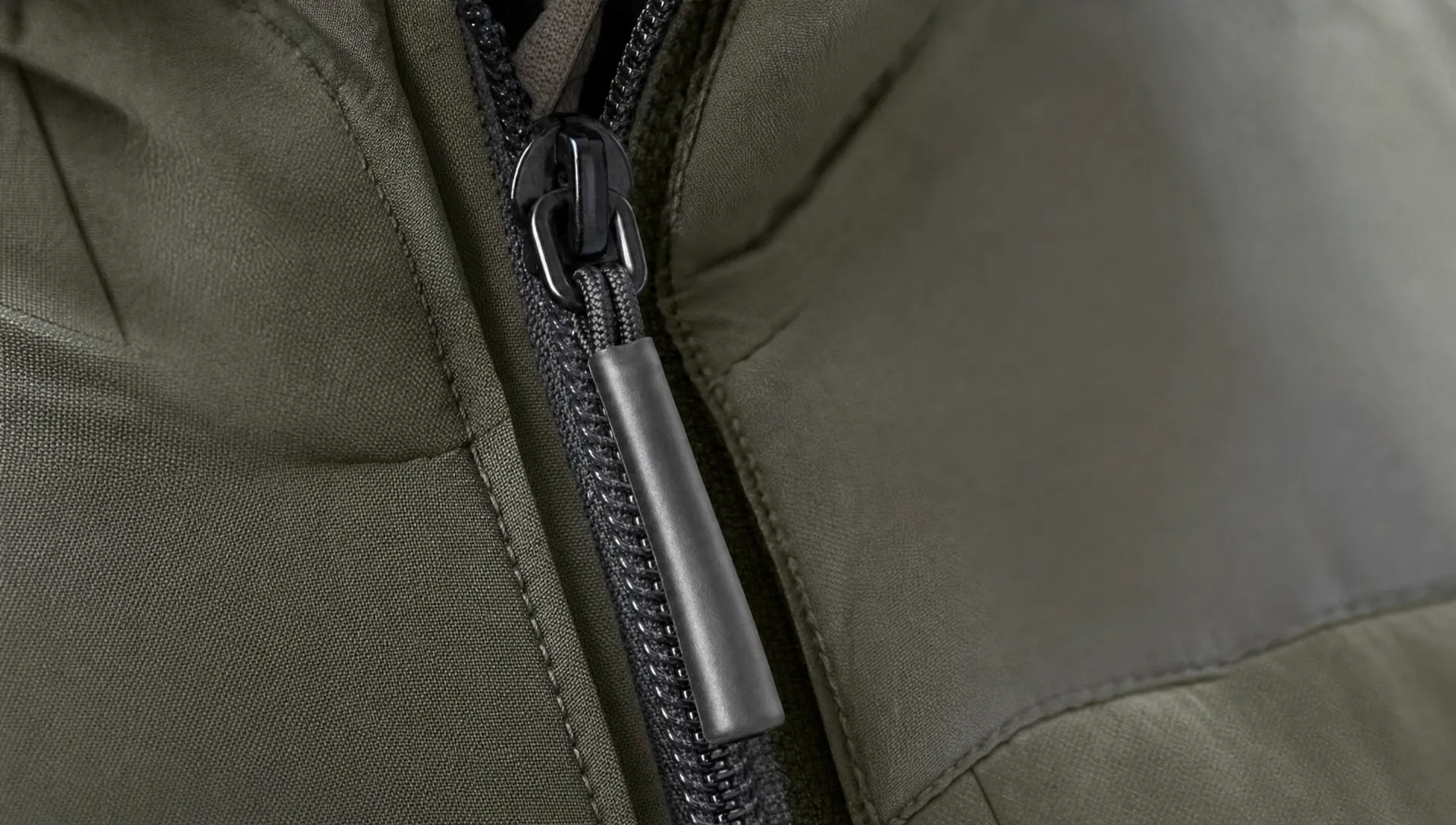
Color should be chosen with both function and branding in mind. A matching color creates a subtle finish. A contrast color can help the pull stand out and make the zipper easier to locate. For brands with a restrained visual identity, a tone-on-tone heat shrink pull can feel modern and technical without drawing too much attention.
Heat Shrink vs Rubber, Metal and Cord Pulls
Heat shrink is one option among several, and the best choice depends on the product's price point, use case and branding goals.
| Pull type | Best for | Strengths | Watchouts |
|---|---|---|---|
| Heat shrink zipper pull | Technical bags, workwear, outerwear, pouches | Better grip, clean finish, low profile, fray protection | Limited logo detail compared with molded options |
| Molded rubber pull | Sportswear, backpacks, kids gear, bold branded products | Soft feel, strong color options, more shape flexibility | Can look bulky if oversized |
| Metal pull | Premium bags, jackets, leather goods | Durable, polished, high perceived value | Can feel cold, noisy or slippery |
| Cord pull | Lightweight apparel, outdoor gear, casual bags | Flexible, simple, easy to grab when long enough | Ends need proper finishing to prevent fraying |
| Woven pull detail | Branded apparel and soft accessories | Soft hand feel, strong color identity, textile look | Not always suited for heavy pulling force |
For products that need clear logo visibility, a molded rubber, woven or metal custom pull may be a better fit. For products that need a durable functional grip with minimal visual weight, heat shrink often makes more sense.
Many brands use more than one type across a collection. A premium travel bag might use metal pulls on the main opening and heat shrink cord pulls on interior compartments. A technical jacket might use heat shrink pulls on pocket zippers and a branded custom pull on the center front zipper.
Installation Details That Affect Longevity
A heat shrink zipper pull looks simple, but installation quality determines how long it will stay neat. The tubing should be cut cleanly, placed evenly and heated with control. A heat gun is usually more consistent than an open flame, which can scorch the sleeve, weaken the cord or damage the surrounding fabric.
Before adding the sleeve, inspect the zipper slider and attachment point. The pull should move freely without binding, and the attachment hole should not have sharp burrs. If the base cord is used, the end should be trimmed neatly and positioned so the sleeve covers the area most likely to fray.
After heating, allow the pull to cool before testing it. Then tug it several times in the same direction a user would. Rotate it, bend it and check whether the sleeve shifts. If the product will be washed, exposed to rain or used outdoors, test it after moisture exposure too.
For retrofits or repairs, the attachment method matters as much as the sleeve. Split rings, cord loops and replacement tabs each behave differently under stress. If you are upgrading existing products, this guide to installing a zipper pull that stays secure is useful before you finalize the pull design.
For children's products, small detachable parts and long loops need extra care. In the United States, the federal small parts framework is outlined in 16 CFR Part 1501. Brands should confirm the applicable safety requirements for the product category, age range and market before production.
Branding: Useful, Minimal and Easy to Color Code
Heat shrink zipper pulls are not the loudest branding detail, but that can be an advantage. Some products need branding that feels integrated rather than decorative. A heat shrink sleeve in a brand color, paired with a woven label, patch or care label, can make the whole item feel more considered.
The main branding strength is consistency. When every compartment has the same grip shape and finish, the product feels intentional. If color coding is used, it should follow a clear system. Random accent colors can make the design look busy, but purposeful color choices can improve both navigation and brand recognition.
If the zipper pull needs to carry a detailed logo, slogan or custom shape, a different construction may be better. In that case, a dedicated branded pull can make the zipper itself a more visible design element. Heat shrink is best when the priority is touch, durability and a clean functional look.
Care and Maintenance Tips
For the end user, care is straightforward. Avoid pulling at extreme side angles, especially on small sliders. If dirt collects around the zipper, clean the area gently rather than forcing the pull. On apparel, follow the garment care label and avoid high heat if the product was not designed for it.
For brands, the better approach is prevention. Test samples in the conditions your product will actually face. A fashion pouch does not need the same validation as a field bag. A ski jacket pocket zipper has different needs than a cosmetics case. Realistic testing helps you choose the right sleeve thickness, color and base pull before production.
Frequently Asked Questions
What is a heat shrink zipper pull? A heat shrink zipper pull uses heat shrink tubing over a cord, tab, wire or pull extension. When heated, the tubing contracts tightly around the base, creating a thicker and more comfortable grip.
Are heat shrink zipper pulls durable? They can be very durable when the base pull is strong, the sleeve is correctly sized and the tubing is heated evenly. Heat shrink improves grip and surface protection, but it does not fix a damaged zipper slider or weak attachment point.
Can heat shrink zipper pulls be used on jackets? Yes. They are useful on jackets because they make zippers easier to grab with gloves or cold hands. They work well on pocket zippers, main zippers and technical outerwear details.
Do heat shrink zipper pulls look branded? They can support branding through color, consistency and a clean finish, but they are not ideal for detailed logos. If the pull itself needs to show a logo clearly, a custom molded, woven or metal option may be better.
Can I add heat shrink to an existing zipper pull? Often, yes, if the existing pull has a suitable cord, tab or extension and there is enough space for the tubing. The zipper should be inspected first, since a sleeve will not correct a broken slider or damaged teeth.
Create Zipper Pulls That Feel Good in the Hand
The best zipper pull is easy to grab, strong enough for daily use and consistent with the product's identity. Heat shrink zipper pulls are a smart option when you want better grip and a cleaner finish without adding bulky hardware.
If you are developing apparel, bags or accessories, HiLabels can help you create durable branded details that support the full product experience. Explore custom zipper pull options and build a finishing detail that feels as good as it looks.


