How Products With Label Build a Stronger Brand
A label is often the smallest branding element on a product, but it can carry the heaviest brand signal. Before a customer touches fabric quality, tests a zipper, or reads a full product description, the label tells them who made the item and what level of care went into it.
For apparel, accessories, gifts, uniforms, handmade goods, and packaged merchandise, products with label details feel more intentional. They give customers a name to remember, a standard to trust, and a reason to associate the product with a specific experience rather than a generic item.
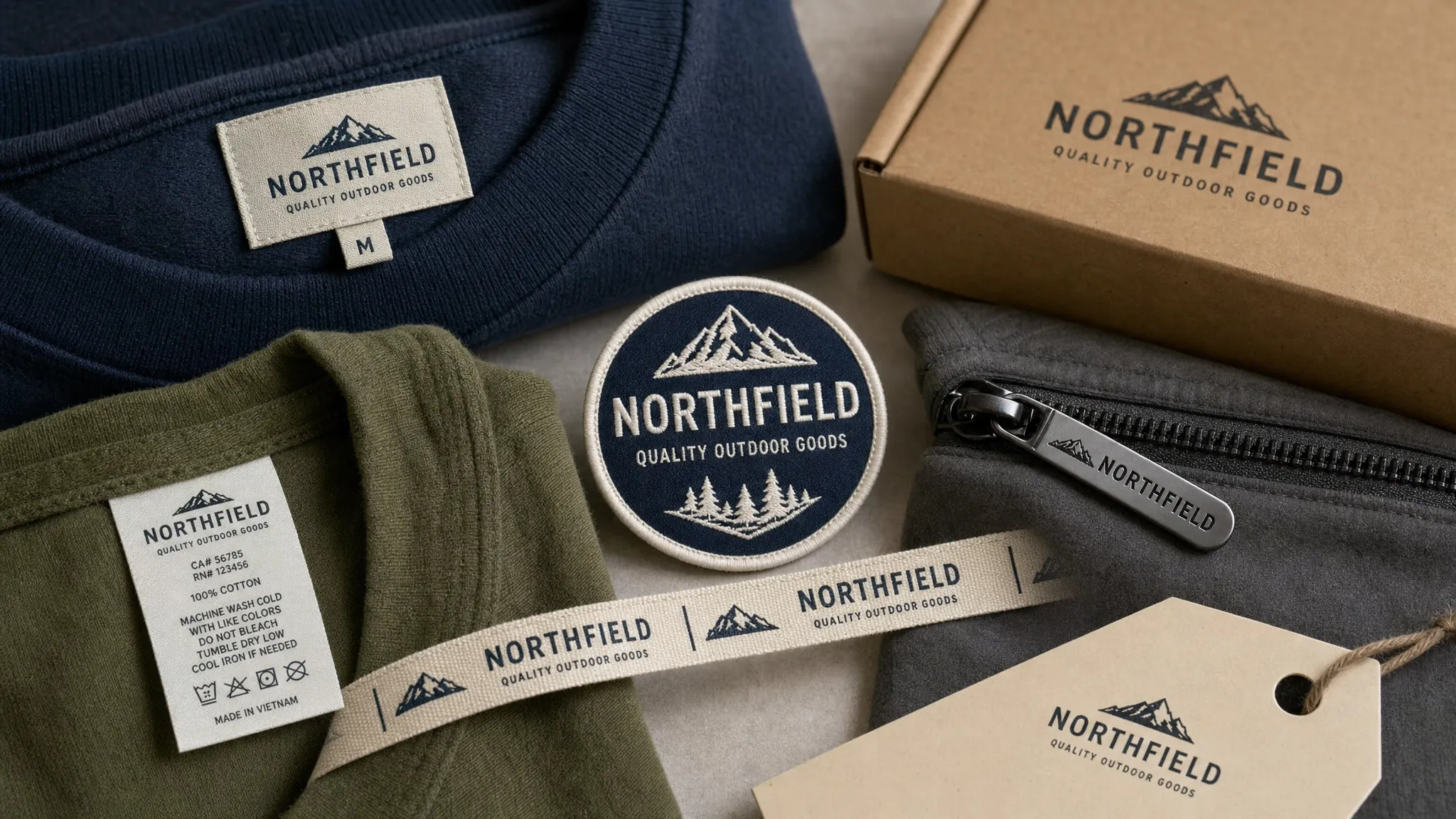
The strongest brands treat labels as part of the product, not an afterthought. A woven label, care label, patch, ribbon, or zipper pull can turn a simple item into a recognizable brand asset that keeps working long after the sale.
Why Products With a Label Feel More Valuable
Customers use shortcuts to judge quality. A clean, durable, well-placed label is one of those shortcuts. It signals that the maker cared enough to finish the product professionally and that the item belongs to a larger brand system.
This matters because brand strength is built through repeated, consistent impressions. A customer may first see your logo on a hangtag, then notice it again on a woven neck label, a sleeve patch, packaging ribbon, or care label. Each touchpoint reinforces memory. Over time, that consistency helps your product become easier to recognize and easier to recommend.
HiLabels has covered how woven labels can elevate brand recognition, but the broader point applies across every branded detail: labels create continuity. They connect the product, packaging, ownership experience, and after-use care into one cohesive impression.
When a label looks like it belongs, the product feels less like a commodity and more like something designed with purpose. That is a powerful shift for small brands, designers, merch teams, and growing product companies competing in crowded markets.
What a Label Communicates Before the Customer Reads Anything
A label is not only a logo holder. It communicates cues that customers often process in seconds.
| Label cue | What it tells the customer | Brand impact |
|---|---|---|
| Material quality | The product was made with care | Supports a premium perception |
| Clear logo placement | The brand is confident and established | Improves recall and recognition |
| Durable construction | The product is meant to last | Builds trust after repeated use |
| Consistent colors and typography | The brand has a defined identity | Makes product lines feel cohesive |
| Care or size information | The brand is useful and transparent | Reduces confusion and returns |
| Custom finishing details | The item is not generic | Encourages loyalty and word of mouth |
These signals work even when the customer is not consciously analyzing them. A woven label that holds its shape after washing, a patch that feels substantial, or a ribbon that makes packaging feel gift-worthy all contribute to perceived value.
The opposite is also true. A flimsy label, unreadable logo, mismatched color, or scratchy placement can make an otherwise well-made product feel less polished. Strong branding is not only what customers see at checkout. It is what they continue to experience every time they wear, use, wash, open, or gift the product.
How Labels Strengthen Brand Memory Over Time
Brand memory depends on repetition. The more often customers encounter your visual identity in meaningful places, the more likely they are to remember you later.
Labels are especially effective because they live with the product. An ad disappears. A social post gets buried. A product label stays in the collar, seam, pocket, bag, sleeve, packaging, or accessory. It becomes part of the ownership experience.
This long-term visibility can help in several ways:
- Repeat purchases: A clear label makes it easier for customers to find your brand again months later.
- Referrals: When someone compliments the product, the owner can identify the maker quickly.
- Social sharing: Branded details show up in unboxing photos, flat lays, product close-ups, and customer content.
- Retail recognition: Consistent labeling helps buyers and shoppers identify your line across multiple pieces.
- Brand family building: A shared label system makes different products feel connected, even when they vary in color, fabric, or style.
For emerging brands, this is critical. You may not have the budget for constant advertising, but you do have control over every product you ship. A label turns each unit into a small, durable brand touchpoint.
Choosing the Right Label for the Brand Experience You Want
Different label types create different impressions. The right choice depends on where the label appears, how the product is used, and what you want the customer to feel.
Woven labels are a strong choice for apparel, accessories, linens, handmade goods, and premium merchandise because the design is woven into the label rather than printed on the surface. They are durable, refined, and well suited for logos, brand names, sizes, and simple iconography.
Care labels support trust by giving customers practical information about washing, drying, materials, or compliance needs. They may be subtle, but they can reduce uncertainty and help the product last longer, which reflects well on the brand.
Patches create a bold identity moment. They work well for outerwear, hats, bags, uniforms, team merchandise, and creator merch where the brand mark should be visible and tactile.
Zipper pulls add branding where function matters. A custom pull can improve grip while making bags, jackets, pouches, and outdoor gear feel more distinctive.
Woven ribbons extend the brand into packaging, gifts, product bundles, events, and boutique presentation. They are especially useful when the unboxing experience is part of the purchase decision.
HiLabels offers custom woven labels, ribbons, patches, zipper pulls, and care labels, so brands can build a coordinated system instead of treating each detail separately. With more than 31 years of experience, online label creation, artwork upload options, and bespoke product choices, the ordering process can support both simple and more specialized branding needs.
Consistency Turns a Label Into a Brand System
One label can make a product look finished. A consistent label system can make a brand look established.
A brand system means your visual identity appears in a predictable way across multiple touchpoints. The neck label uses your main logo. The care label uses the same typography. The patch uses a simplified mark. The ribbon uses your brand color. The zipper pull repeats the shape or symbol customers already recognize.
This does not mean every element must be identical. In fact, strong brands often adapt their marks for different uses. A detailed logo may work on a large woven patch, while a simplified monogram may be better for a small side-seam label. The key is that every detail feels connected.
When planning a label system, think about these questions:
- Where will customers first notice the brand?
- Which label will remain visible during daily use?
- Which label needs to provide information rather than decoration?
- Which products should feel premium, rugged, playful, minimalist, or giftable?
- How can the same visual identity work across different sizes and materials?
If your labels answer those questions clearly, they do more than decorate. They guide the customer through the brand experience.
Trust Is Part of Brand Strength
A stronger brand is not built on looks alone. It is also built on trust. Customers need to believe the product is authentic, durable, responsibly presented, and consistent with what they expected to receive.
Labels support trust in practical ways. A care label helps customers maintain the item properly. A size label reduces friction when reordering. A branded patch or woven label makes the product easier to identify as genuine. Consistent finishing helps customers recognize legitimate products if your brand grows into wholesale, events, collaborations, or limited-edition drops.
Brand trust also extends behind the scenes. As companies scale, they often manage more suppliers, invoices, packaging runs, sample orders, and operational documents. Protecting the business from manipulated financial documents is another form of brand protection, and tools like invoice and receipt fraud detection software can help teams verify suspicious documents before fraud damages margins or operations.
For product brands, this bigger view matters. A customer-facing label protects perception, while good internal controls protect the company’s ability to keep delivering that experience.
Design Principles for Stronger Product Labels
A good label has to look attractive, but it also has to work in the real world. It may be washed, stretched, folded, rubbed against skin, sewn into a seam, handled in shipping, or photographed under inconsistent lighting.
Start with simplicity. Fine lines, tiny text, complex gradients, and overly detailed artwork may look good on a screen but lose impact when woven or stitched at small sizes. A cleaner mark often feels more premium and reproduces more reliably.
Color matters too. Choose label colors that support your product palette and brand identity. High contrast improves readability, while tonal color combinations can feel subtle and elevated. The best choice depends on whether the label should stand out or quietly reinforce the brand.
Size and fold are just as important. A center-fold label may work well for necklines, hems, and seams. A straight-cut label may suit packaging or exterior placement. A larger patch may be better for a visible brand statement. Before production, consider how the label will sit on the product, how it will feel to the user, and how much information it needs to carry.
If you are refining artwork, HiLabels’ guide to better custom woven label design covers useful considerations such as purpose, size, fold, color, and artwork simplicity.
Where to Use Labels Beyond the Obvious Spot
Many brands begin with a single main label, often inside a garment or on the product exterior. That is a smart start, but stronger branding usually comes from combining primary and secondary touchpoints.
For apparel, a neck label can carry the brand name while a side-seam label adds a subtle exterior cue. For bags, a patch may provide the main identity while a zipper pull reinforces it through touch and function. For candles, gifts, or boutique goods, a woven ribbon can make packaging feel more premium before the customer even opens it.
Labels can also help organize product lines. You might use one label color for core products, another for limited editions, and another for eco-conscious materials or special collaborations. This gives customers visual cues without requiring long explanations.
The goal is not to cover every product with branding. The goal is to place the right label in the right moment. When branding feels useful, beautiful, or natural, customers welcome it. When it feels excessive, it can distract from the product.
How to Measure the Branding Impact of Labels
Labels can feel like a small detail, but their impact can be tracked. You do not need an elaborate research program to understand whether your label strategy is working.
Look for changes in customer behavior and feedback after updating labels or packaging. Are customers tagging your brand more often in photos? Are they mentioning product quality, packaging, or presentation in reviews? Are wholesale buyers responding more positively to samples? Are repeat customers able to identify their size or reorder the same product more easily?
You can also compare product returns and support questions. Clear care labels may reduce confusion about washing or maintenance. Better size labels may reduce reorder mistakes. More consistent branding may reduce questions about authenticity, especially if you sell through multiple channels.
At a basic level, track:
- Customer reviews that mention quality, presentation, packaging, or brand details
- Social posts where labels, ribbons, patches, or packaging are visible
- Repeat purchase rates for products with updated labels
- Wholesale or boutique buyer feedback on samples
- Support questions related to sizing, care, and product identification
These signals help you treat labels as part of your brand strategy, not just a production cost.
Common Mistakes That Weaken Product Labeling
The most common mistake is waiting too long to think about labels. If labels are rushed at the end of production, they may not match the product’s quality or the brand’s visual identity.
Another mistake is designing only for the screen. A label needs to work at its final size, in its final material, on the actual product. Always consider readability, stitching space, color contrast, and how the label will feel during use.
Brands also weaken their impact when every product uses a different style with no clear connection. Variety is fine, but inconsistency makes it harder for customers to remember you. Even if your product line is diverse, your labels should share recognizable traits, such as color, typography, icon style, or logo placement.
Finally, avoid adding too much information to one small label. If you need branding, sizing, care instructions, origin details, and legal information, consider using multiple label types. A crowded label can look less premium and become harder to read.
Frequently Asked Questions
Do labels really matter for small brands? Yes. Labels help small brands look more professional, create recognition, and make it easier for customers to remember and recommend the business. They are especially valuable when every shipped product needs to work as a brand touchpoint.
What type of label is best for clothing? Woven labels are a popular choice for clothing because they are durable, polished, and suitable for brand names, logos, and size details. Care labels are also important when customers need washing or material information.
How can labels make a product feel more premium? Premium perception comes from material quality, clean design, good placement, and consistency. A well-made label tells customers the product was finished with care, which can raise the perceived value of the item.
Should my label show my full logo or a simplified mark? It depends on the label size and placement. Full logos can work on larger labels and patches, while simplified marks often perform better on small seam labels, zipper pulls, or subtle details.
How many branded labels should one product have? Use only what improves the experience. One primary label may be enough for a simple item, while apparel, bags, or premium packaging may benefit from a main label plus a care label, patch, ribbon, or zipper pull.
Make Every Product Carry Your Brand Better
A strong label turns a product into something customers can recognize, remember, care for, and recommend. It connects your design choices to the ownership experience and keeps your brand visible after the purchase.
If you are ready to create labels that feel professional from the first sample to the final production run, HiLabels can help you build custom woven labels, patches, ribbons, zipper pulls, and care labels with durable craftsmanship and a straightforward online process. You can also review the step-by-step guide to order woven labels with your own logo before preparing your artwork.


