Macramé Zipper Pull Ideas for Handmade Bags
A macramé zipper pull is one of those tiny handmade details that can change how a bag feels in the hand. It gives a pouch, tote, crossbody or project bag a softer grip than a bare metal tab, and it lets the maker repeat the same colors, textures and mood used in the rest of the design.
For handmade bag makers, that matters. A zipper pull is touched every time the bag opens. It sits at the edge of the product like a signature, so it should look intentional, survive regular use and never get in the way of the zipper itself.
Below are practical macrame zipper pull ideas you can adapt for cotton canvas bags, quilted pouches, crochet bags, denim totes, linen cosmetic cases and small-batch accessories.
Why macramé works so well on handmade bags
Macramé brings a tactile quality that fits naturally with handmade goods. A woven, knotted pull feels warmer than a molded plastic tab and less formal than polished metal. That makes it especially useful for bags with visible stitching, natural fibers, patchwork panels, hand-dyed fabric or boho-inspired styling.
It also solves a practical problem. Small zipper tabs can be hard to grab, especially on compact pouches or bags with recessed zippers. A short cord pull adds length and texture, making the zipper easier to find by touch. This is useful on everyday bags, but also on knitting project bags, toiletry pouches, camera cases and travel organizers where the user may be opening compartments frequently.
The key is balance. A macramé pull should add personality without becoming heavy, floppy or fragile. If you are comparing handmade options with other materials, HiLabels has a helpful guide to decorative zipper pulls that add style without sacrificing use, which is a good reminder that a beautiful pull still needs to function cleanly.
Choose the right cord before choosing the knot
The cord determines how the pull looks, how it ages and whether it feels right for the bag. Traditional macramé cord can work beautifully, but not every cord is suitable for a high-touch zipper detail.
Cotton cord gives the softest handmade look. It knots neatly, comes in many colors and works well for casual pouches, totes and market bags. Waxed cotton is firmer and better for smaller, cleaner knots. Hemp and jute bring a rustic texture, but they can feel scratchy and may shed fibers. Nylon or polyester cord is less traditional, but it resists moisture and abrasion better for bags that get rougher use.
| Cord type | Best look | Practical notes | Best for |
|---|---|---|---|
| Cotton macramé cord | Soft, natural, boho | Easy to knot, may fray with heavy use | Pouches, totes, craft bags |
| Waxed cotton cord | Clean, compact, slightly structured | Holds knots well and resists fuzzing | Crossbody bags, clutches, small purses |
| Hemp or jute cord | Rustic, earthy, textured | Can be scratchy and may shed | Market bags, natural fiber totes |
| Nylon or polyester cord | Sporty, durable, crisp | Less traditional, stronger for daily wear | Backpacks, travel pouches, outdoor bags |
| Recycled cotton cord | Soft, casual, eco-minded look | Texture can vary by supplier | Small-batch handmade lines |
For most handmade bags, a cord between 2 mm and 4 mm is enough. Thicker cord can look attractive, but it becomes bulky fast when you start knotting. If the zipper slider is small, use a split ring, jump ring or short connector loop rather than forcing thick cord through the slider hole.
Sizing rules for a comfortable macramé zipper pull
A zipper pull should be large enough to grip and short enough not to snag. On a small pouch, a finished pull around 2.5 to 3 inches usually feels proportional. On a tote or crossbody bag, 3 to 4 inches often works better. Backpacks and travel organizers can handle slightly longer pulls if they are slim and secure.
The finished width matters too. A flat square-knot tab may look polished, but if it is wider than the zipper tape or constantly brushes against the bag fabric, it can feel clumsy. A round spiral pull is more compact and slides into the hand easily. A tassel-style macramé pull gives movement, but it needs tightly finished ends so it does not unravel in the customer’s bag.
| Bag type | Suggested finished length | Best pull shape | Design caution |
|---|---|---|---|
| Coin purse or mini pouch | 1.5 to 2.5 inches | Slim loop or tiny knot tab | Avoid beads that overpower the pouch |
| Cosmetic pouch | 2.5 to 3.5 inches | Square-knot tab or tassel | Keep loose fringe short and sealed |
| Tote bag | 3 to 4 inches | Loop, spiral or flat tab | Match scale to the zipper opening |
| Crossbody bag | 3 to 4 inches | Waxed cord tab or loop | Avoid long pulls that swing while walking |
| Backpack pocket | 3.5 to 4.5 inches | Compact loop or durable cord pull | Prioritize abrasion resistance |
Before sewing several bags with the same design, attach one sample pull and use it for a day. Open the zipper with one hand, let the bag hang from your shoulder and check whether the pull catches on fabric, hardware or straps. That quick test saves time before batch production.
Macrame zipper pull ideas by style
The best macramé zipper pull idea depends on the bag’s personality. A quilted floral pouch needs a different detail than a minimalist canvas tote or a structured waxed cotton crossbody.
Simple square-knot tab
A square-knot tab is the most versatile option. It creates a flat, tidy pull that looks finished without being flashy. Use two center cords and two working cords, then make a short run of square knots. This style works well with cotton cord for soft bags and waxed cotton for a cleaner boutique look.
Try it in a tonal color for a subtle finish, such as cream cord on natural canvas or navy cord on denim. For a more playful handmade look, use two contrasting working cords so the edges of the knots show a stripe.
Spiral half-knot pull
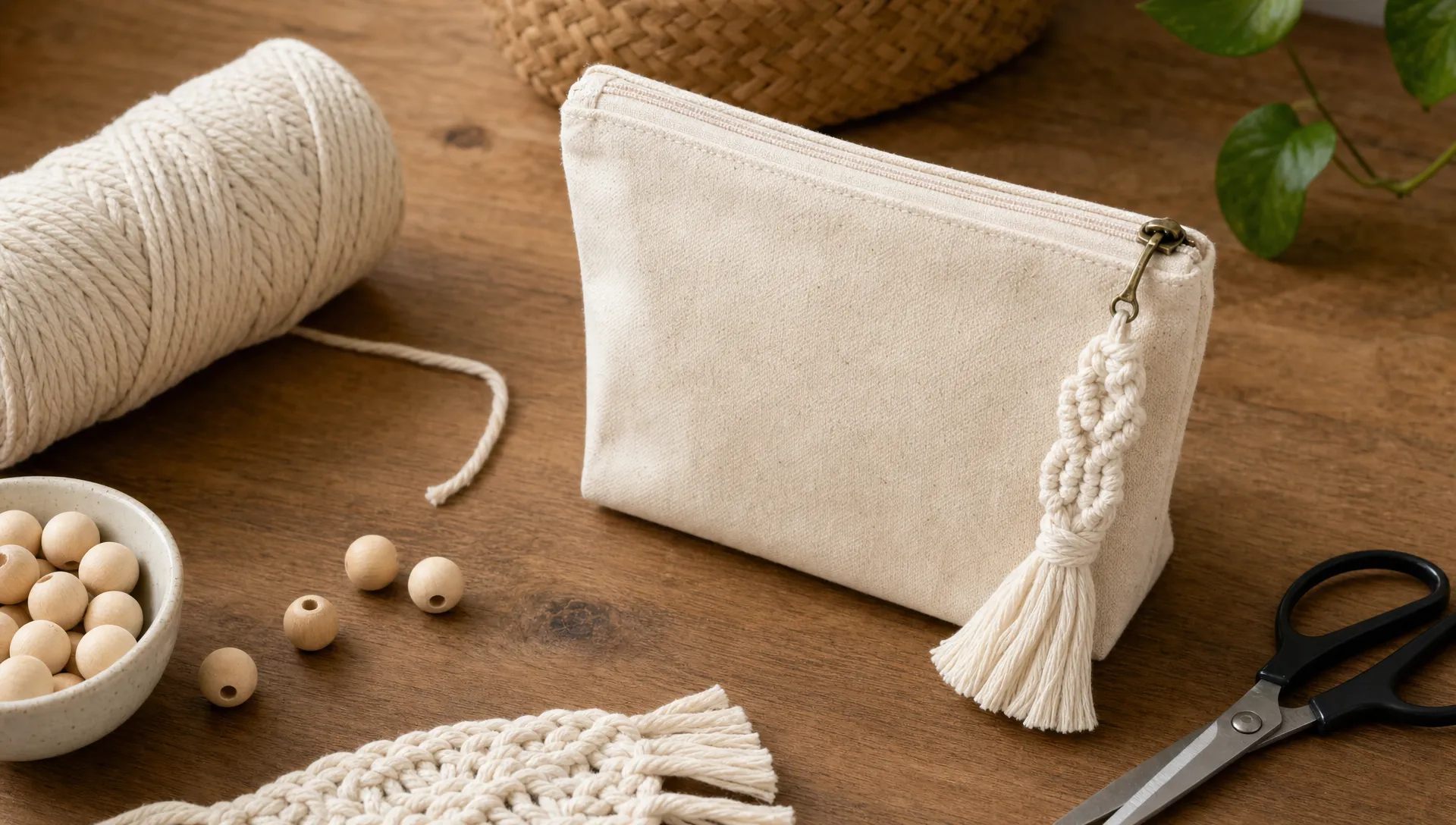
A spiral pull forms when you repeat half knots in the same direction. The result is rounded, easy to grip and a little more decorative than a square tab. It looks especially good on boho bags, crochet bags and linen pouches.
This is a good choice when the bag has curves or softer construction. The twist adds movement without needing beads or metal accents.
Lark’s head loop with wrapped ends
For a minimal pull, attach cord to the zipper slider with a lark’s head knot, fold the cords into a loop, then wrap the base tightly with thinner cord. This creates a clean finger loop that is easy to use on small bags.
A loop is often better than a long tassel for children’s pouches, travel cases or bags that will be packed tightly. Just keep the loop small enough that it cannot catch easily.
Mini tassel with macramé head
A tassel can look polished when the top is structured. Instead of tying loose cord directly onto the zipper, create a small square-knot or gathering-knot head, then trim the fringe evenly. This makes the tassel feel designed rather than improvised.
Use this style for cosmetic bags, bridal pouches, beach bags and soft handbags. If you sell your bags, test the fringe for shedding and make sure the customer can clean the bag without ruining the pull.
Beaded macramé pull
Wood, ceramic or acrylic beads can add color and weight, but they should be used carefully. One small bead at the end of a knotted pull is usually enough. Too many beads can clack against the bag, chip with use or make the zipper feel heavier than it needs to be.
Choose beads with holes large enough for your cord and avoid sharp-edged bead interiors that can cut fibers. On bags for babies or young children, skip beads entirely for safety.
Color-matched branding pull
A macramé pull can act like a soft brand cue. Choose cord colors that repeat your lining, zipper tape, logo colors or woven label palette. This works well for small shops because the detail looks intentional even when the bag shape is simple.
If you already finish your pieces with custom woven labels or care labels, matching the zipper pull to those details creates a more cohesive product. HiLabels offers custom woven labels, patches, zipper pulls and care labels for makers who want the branding side of a handmade bag to feel as considered as the sewing.
A beginner-friendly square-knot zipper pull tutorial
This simple design works for pouches, totes and small crossbody bags. It creates a flat pull that is easy to grip and easy to customize with color.
You will need 2 mm or 3 mm cord, scissors, a zipper slider with a pull hole or small split ring, a ruler and a small amount of fray sealant, clear fabric glue or wax for the ends. Cut two cords about 12 inches long each for a short pull. If your cord is thick or you want a longer finished piece, cut slightly longer cords.
- Fold both cords in half and attach them to the zipper slider or split ring with a lark’s head knot.
- Arrange the four strands so the two middle strands hang straight and the two outer strands become the working cords.
- Tie square knots until the pull reaches the length you want, usually around 2.5 to 3.5 inches for a pouch.
- Tighten each knot evenly, but do not pull so hard that the tab curls or twists.
- Finish with a secure overhand knot or gathering knot at the bottom.
- Trim the ends evenly and seal them with your preferred finishing method.
- Test the pull by opening and closing the zipper at least 20 times, watching for slipping, twisting or cord fuzz.
The final test is important. A zipper pull can look perfect on the worktable but behave differently once the bag is filled, worn and handled. If the pull flips into the zipper teeth or feels too soft to grip, shorten it or switch to a firmer cord.
How to match macramé pulls to different handmade bag styles
A good zipper pull should feel like it belongs to the bag, not like it was added at the last minute. Start with the bag’s materials. A heavy waxed canvas tote can handle darker waxed cord, leather accents or antique brass hardware. A soft quilted pouch usually looks better with cotton cord, small knots and gentle colors.
For minimalist bags, keep the pull simple. A single loop or short square-knot tab in a matching color often looks more refined than a tassel. For boho or festival-inspired bags, spiral knots, fringe and wood beads can feel right. For market totes or natural linen bags, hemp-toned cord can reinforce the earthy look, provided the texture feels comfortable in the hand.
Think about the zipper finish too. Brass zippers pair well with warm neutrals, olive, rust, cream and deep brown. Nickel or silver-toned zippers often work better with black, gray, navy, icy pastels or crisp white. Colorful nylon zippers can be matched exactly or contrasted intentionally.
If the main goal is easier grip rather than a handmade decorative accent, it may be worth comparing macramé with other zipper pull extensions that improve grip and style. Macramé excels when softness, texture and craft appeal matter most. Other pull types may be better for uniforms, technical bags or items that need a more standardized finish.
Durability tips for handmade bags you plan to sell
If you make bags for yourself, you can accept a little fringe or patina. If you sell bags, the zipper pull becomes part of the customer experience and needs more testing.
Start by checking knot security. Pull firmly on the finished piece from several angles. If the knot shifts, redo it with tighter tension or a cord that grips better. Waxed cotton often holds compact knots well, while very smooth synthetic cord may need extra securing.
Next, check abrasion. Rub the finished pull against the bag fabric, zipper tape and hardware. If it starts to pill immediately, choose a smoother cord or reduce the amount of loose fringe. On bags that will be washed, make a sample and wash it the same way you recommend to customers.
Finish the ends neatly. Depending on the cord, you can use fabric glue, clear fray sealant, wax, whipping or a tightly wrapped gathering knot. Synthetic cords can sometimes be heat sealed, but only do this with good ventilation and after confirming the fiber content. Cotton will not melt cleanly, so glue, wax or knotting is usually better.
For rugged bags, outdoor pouches or jackets, macramé may not be the strongest option. A more technical cord can be better for daily abrasion. HiLabels covers this angle in its guide to paracord zipper pulls you can make for bags and jackets, which is useful if your project needs extra strength.
Small details that make macramé zipper pulls look professional
The difference between a craft detail and a product detail usually comes down to consistency. If you are making one bag, small variations can be charming. If you are making a collection, keep length, cord thickness, knot count and finishing method consistent.
Create a sample card with your preferred cord colors, knot styles and finished measurements. When you produce multiple bags, this helps you repeat the detail accurately. It also makes reordering materials easier.
Pay attention to the attachment point. A thick knot forced directly through a small zipper slider can strain the slider or sit awkwardly. A small split ring can make the pull hang better and reduce friction. If you use jump rings, make sure they are fully closed so the cord cannot slip through the gap.
Finally, consider the care information. If the bag is washable but the pull includes wood beads, dyed cord or delicate fringe, your customer needs to know how to clean it. A care label can prevent confusion and protect the finished piece from avoidable damage.
Frequently Asked Questions
What is the best cord for a macrame zipper pull? Cotton cord is best for a soft handmade look, while waxed cotton is better for clean, compact knots. For bags that will get heavy use, nylon or polyester cord may last longer, though it has a less traditional macramé feel.
How long should a macramé zipper pull be? Most handmade pouches work well with a finished pull around 2.5 to 3.5 inches. Larger totes, backpacks and crossbody bags can use 3 to 4.5 inches, as long as the pull does not snag or swing too much.
Can macramé zipper pulls be washed? Many cotton and synthetic cord pulls can handle gentle washing, but beads, dyes, fringe and glue can change the care requirements. Always test a sample and give customers clear care instructions if you sell handmade bags.
How do I stop the ends from fraying? Use a secure finishing knot, then trim the cord evenly. Cotton ends can be finished with fabric glue, fray sealant or wax. Synthetic cord may be heat sealed if the fiber content allows it, but test first and avoid overheating.
Are macramé zipper pulls good for bags I sell? Yes, if they are secure, proportional and tested for regular use. Keep the design consistent across each batch and avoid fragile beads or long loops on products made for children or heavy-duty use.
Finish your handmade bags with details that feel intentional
A macramé zipper pull is small, but it can make a handmade bag feel more complete. Choose the cord for the way the bag will be used, match the knot style to the design and test the finished pull before adding it to a collection.
If you are building a handmade bag brand, pair those crafted details with professional finishing touches. HiLabels helps makers create custom woven labels, patches, ribbons, zipper pulls and care labels so every part of the finished product feels considered from the first touch to the final tag.


