Paracord Zipper Pulls You Can Make for Bags and Jackets
Paracord zipper pulls are one of the easiest ways to improve a bag or jacket without replacing the zipper. They add grip, make small sliders easier to find, reduce cold-metal contact in winter, and give you a simple place to bring in color or brand personality.
They are also practical. A broken metal tab on a backpack pocket can become usable again in minutes. A jacket zipper that is hard to grab with gloves can feel more responsive. A pouch with multiple compartments can become easier to navigate when each zipper has a different color pull.
This guide focuses on making paracord zipper pulls that look clean, stay secure, and work well on everyday bags, outdoor gear, jackets, pouches, and small accessories.
Why paracord works so well for zipper pulls
Paracord is popular because it balances strength, flexibility, and comfort. It is soft enough to grab without sharp edges, yet structured enough to hold a knot. It also comes in a wide range of colors, including reflective and high-visibility options.
For bags, paracord helps you find compartments quickly. On jackets, it gives your fingers more surface area, which is especially useful when your hands are cold or gloved. On kids' backpacks, color-coded pulls can make it easier to identify lunch pockets, pencil pockets, and main compartments.
Paracord zipper pulls are not meant to be load-bearing safety equipment. Even if the cord itself is strong, the zipper slider and fabric around it are not designed for heavy pulling. Think of the pull as a grip extension, not as a handle for lifting the bag.
If you are comparing DIY cord pulls with other styles, HiLabels has a useful guide on how zipper pulls boost function and branding across apparel, bags, and accessories.
What you need before you start
You do not need much equipment, but the right cord size makes a big difference. Thick paracord can overwhelm small jacket zippers, while thin cord can feel too flimsy on a backpack or duffel.
| Material or tool | Why it matters | Practical tip |
|---|---|---|
| 550 paracord | Best for backpacks, duffels, outdoor bags, and larger zipper sliders | Use when you want a chunky, easy-grip pull |
| 275 cord or micro cord | Better for jackets, pouches, and small sliders | Choose this when bulk or snagging is a concern |
| Scissors | Gives you clean cord ends | Use sharp scissors to reduce fraying |
| Lighter or heat source | Seals synthetic cord ends | Melt carefully in a ventilated area and avoid fabric |
| Needle-nose pliers | Helps tighten knots and thread small slider holes | Wrap jaws with tape if you want to avoid scuffing hardware |
| Ruler or tape measure | Keeps finished pulls consistent | Essential if you are making a matching set |
A good starting length is 10 to 14 inches of cord for a small loop pull, 18 to 24 inches for a cobra-style pull, and 6 to 8 inches for a very simple knot-and-loop jacket pull. It is better to cut slightly long at first, then trim after tightening.
Best knots and styles for bags and jackets
Different knots create different results. Some are compact and smooth, while others are chunky and tactical. Before making a full set, test one pull on the actual zipper and open and close it several times.
| Style | Best for | Feel and appearance | Difficulty |
|---|---|---|---|
| Simple loop with stopper knot | Jackets, small pouches, inner pockets | Slim, fast, minimal | Easy |
| Snake knot pull | Backpacks, gear bags, camera bags | Rounded, flexible, neat | Medium |
| Cobra weave pull | Backpacks, duffels, outdoor packs | Wide, textured, easy to grip | Medium |
| Diamond knot pull | Jackets and bags where you want a clean end knot | Decorative and compact | Medium to advanced |
| Cord loop with heat-sealed ends | Temporary repairs and utility gear | Fast and functional | Easy |
For jackets, avoid overly bulky knots that bounce, snag on seat belts, or catch on backpack straps. For bags, you can use a larger knot because the zipper is usually set away from the body and has more room to move.
How to make a basic paracord zipper pull
This is the simplest method and the best place to start if you are making paracord zipper pulls for the first time.
- Cut a piece of cord about 10 to 12 inches long for a bag, or 6 to 8 inches for a jacket.
- Seal both ends lightly with heat so the cord does not fray.
- Fold the cord in half to create a loop.
- Thread the folded loop through the hole in the zipper slider.
- Pass the two loose ends through the loop and pull snug to form a lark's head attachment.
- Tie an overhand knot or figure-eight knot near the loose ends, then trim and seal the tips.
This gives you a clean loop that is easy to replace later. It is also a good option for zipper sliders with small attachment holes because you only need to pass the folded cord through once.
The finished pull should be long enough to grab, but not so long that it swings into the path of the zipper teeth. For most jackets, 1.5 to 2.5 inches finished length works well. For backpacks, 2.5 to 4 inches is usually comfortable.
How to make a cobra weave zipper pull
A cobra weave is thicker and more textured than a simple loop. It works especially well on backpacks, gear bags, travel bags, and outer compartments that you open frequently.
- Cut 18 to 24 inches of paracord, depending on how long and thick you want the pull to be.
- Fold the cord in half and attach it to the zipper slider with a lark's head knot.
- Decide the finished length, then tie alternating cobra knots down the two center strands.
- Keep each knot snug and even so the pull does not twist.
- Stop when the woven section is long enough to grip comfortably.
- Trim the ends close and melt them carefully so they fuse against the weave.
Do not make the cobra section too stiff for jacket zippers. A rigid pull can feel awkward on curved zipper paths, especially around collars and pockets. On bags, stiffness is less of a problem and can even improve grip.
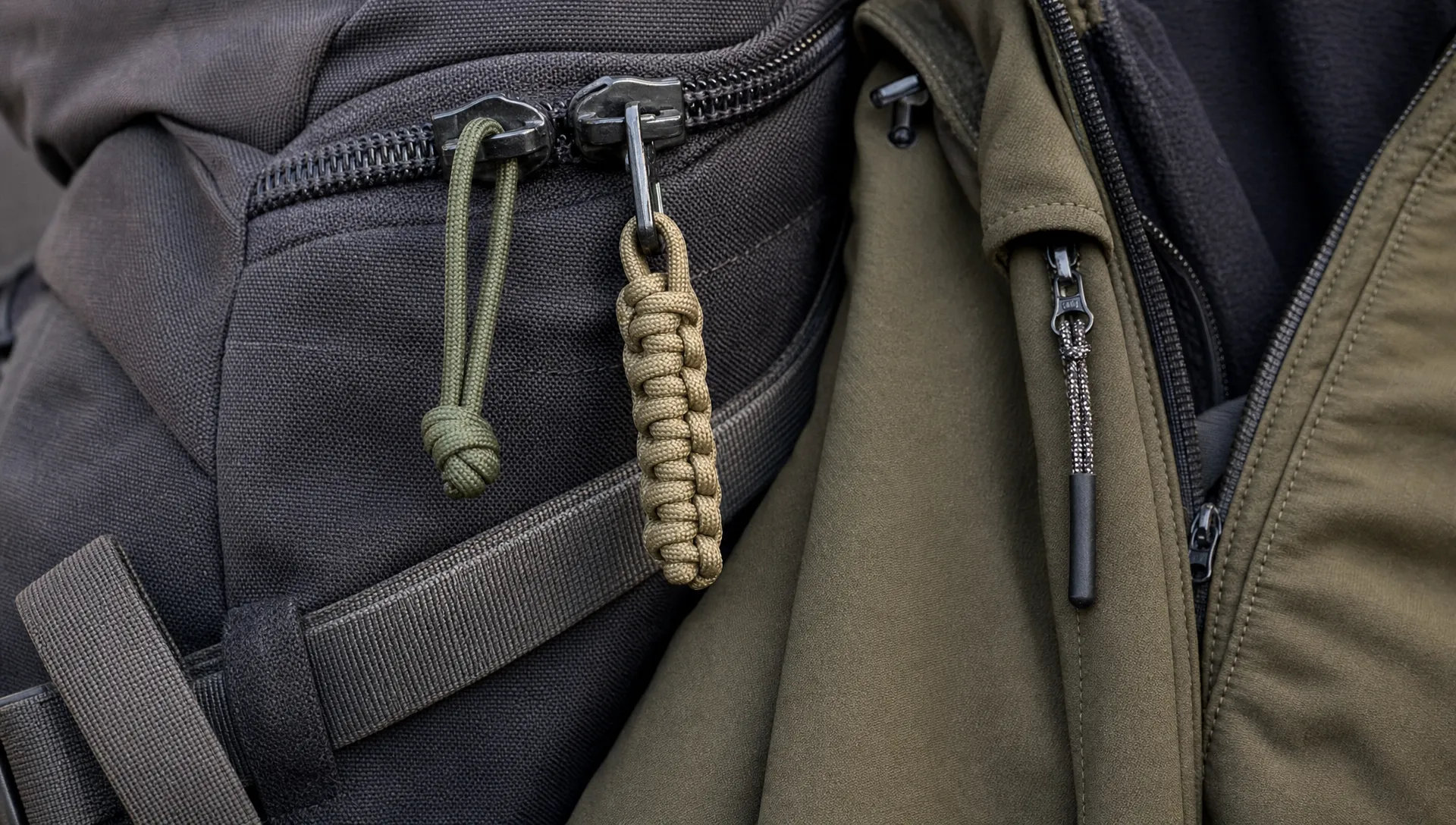
How to make a slim jacket zipper pull
Jackets need a different approach than backpacks. The pull should be easy to grab but low-profile enough to avoid snagging on scarves, straps, seat belts, and sleeve fabric.
For a slim jacket pull, use thinner cord if possible. Micro cord or 275 cord often looks cleaner than full-size 550 paracord on lightweight shells, fleece jackets, kids' jackets, and fashion outerwear.
Start with a short loop and a small stopper knot. Attach it with a lark's head knot, then tie a compact overhand, figure-eight, or small diamond knot at the end. The goal is not to create a large handle. The goal is to give your fingers just enough extension to control the zipper quickly.
If the jacket has a waterproof or coated zipper, test the pull gently. Do not yank at an angle, because small sliders can bend or separate from the zipper body. If you need help with attachment choices, the HiLabels guide on installing a zipper pull that stays secure covers practical checks before you commit to a style.
Color ideas for bags, jackets, and gear
Color is not just decorative. It can make the item easier to use. On a black backpack, bright orange, neon green, red, or reflective paracord makes zipper pulls easier to locate in low light. On a minimalist jacket, a matching black, navy, olive, or gray cord keeps the look subtle.
For multi-pocket bags, assign a purpose to each color. A red pull can mark a first-aid pocket, blue can indicate electronics, green can mark outdoor tools, and yellow can highlight a small pocket that is easy to miss. This is especially useful for travel bags, school bags, diaper bags, emergency kits, and work pouches.
Field bags and workwear have their own needs. If a crew works around job sites, restoration work, utility tasks, or emergency cleanup, zipper pulls should be visible, easy to grab with gloves, and simple to clean. A company providing 24/7 emergency response environmental services is a good reminder that small gear details can matter when teams need fast access in wet, dirty, or low-light conditions.
For branded products, color should also fit the overall identity of the item. A handmade paracord pull can be a useful prototype before moving into a more polished production detail.
Common mistakes to avoid
The biggest mistake is using cord that is too thick for the zipper. A large knot on a small jacket slider can look clumsy and may pull unevenly. If the zipper tab hole is narrow, use thinner cord or add a small split ring between the slider and cord.
Another common mistake is leaving the cut ends unfinished. Paracord frays quickly when the outer sheath is not sealed. Melt the ends just enough to prevent unraveling, then press them carefully with a tool, not your bare fingers.
Also avoid making the pull too long. Long pulls can slap against a bag while walking, catch on other gear, or get trapped in car doors and storage compartments. On jackets, long pulls can swing into your face or snag near the collar.
If you are repairing an existing item, inspect the zipper slider first. A new pull will not fix a slider that is cracked, bent, or separating from the zipper teeth. In that case, the pull may feel better for a while, but the zipper problem will remain.
When DIY is enough and when to choose custom zipper pulls
DIY paracord pulls are excellent for repairs, prototypes, outdoor gear, craft projects, and small-batch personalization. They are affordable, fast, and easy to modify. You can test colors, lengths, and knot shapes before making a larger set.
For retail apparel, branded bags, uniforms, merchandise, and product lines, custom zipper pulls often create a more finished impression. A handmade cord pull can look intentionally rugged, but it may not provide the consistency a brand needs across hundreds or thousands of items.
That is where professional finishing details matter. HiLabels helps brands create custom woven labels, patches, zipper pulls, ribbons, and care labels, with options to upload artwork and create durable branding products online. If your paracord prototype reveals the grip, length, or color direction you like, you can use that insight to develop a more production-ready zipper pull with HiLabels.
Care and durability tips
Paracord is generally low-maintenance, but a little care keeps pulls looking better longer. If a bag gets muddy, wipe the cord with mild soap and water, then let it dry completely before storage. On jackets, check that the pull does not interfere with washing instructions or heat-sensitive trims.
Inspect knots every few months on bags you use daily. If a knot loosens, retie it before the cord frays or slips out. For travel bags and backpacks, check the pulls before a trip, not after a zipper tab breaks in an airport or on a trail.
If you use reflective cord, remember that dirt can reduce visibility. Clean it occasionally so the reflective fibers remain useful. If the cord becomes stiff, melted in the wrong place, badly frayed, or contaminated with oil or chemicals, replace it rather than trying to salvage it.
Frequently Asked Questions
What size paracord is best for zipper pulls? Full-size 550 paracord works well for backpacks, duffels, and larger bags. For jackets, small pouches, and lightweight gear, thinner 275 cord or micro cord usually looks cleaner and moves better.
How long should a paracord zipper pull be? A finished jacket pull is often best around 1.5 to 2.5 inches long. Backpack pulls can be longer, usually around 2.5 to 4 inches, depending on the zipper size and how much grip you want.
Can I use paracord zipper pulls on waterproof jackets? Yes, but keep them slim and lightweight. Test the zipper gently and avoid bulky knots that may pull the slider at an angle or interfere with storm flaps and coated zipper tracks.
Are paracord zipper pulls washable? Most synthetic paracord can tolerate normal cleaning, but always follow the care instructions for the bag or jacket. Avoid high heat if the cord ends are heat-sealed, and check knots after washing.
Do paracord pulls work better than metal zipper pulls? It depends on the item. Paracord is quiet, soft, lightweight, and easy to grip in cold weather. Metal pulls can look more premium and structured. Many brands choose based on the product style, user experience, and desired finish.
Make your zipper pulls useful, comfortable, and intentional
The best paracord zipper pulls are simple, secure, and sized for the item they are attached to. Use thicker cord for bags that need grip, thinner cord for jackets that need flexibility, and color choices that help people find the right zipper faster.
If you are making one pull for a repair, a simple loop and stopper knot may be all you need. If you are refining a product or building a branded line, use DIY pulls as a test phase, then move toward a consistent custom solution that matches your labels, patches, care labels, and overall product identity.


