Name Tapes Explained for Uniforms and Workwear
Uniforms do more than make a team look organized. They help customers identify staff, help managers keep garments assigned correctly, and help workers feel part of a shared standard. Name tapes are one of the simplest ways to make that happen.
A well-designed name tape adds a person, role, unit, or company identifier directly to workwear. It can be subtle, bold, removable, permanent, woven, embroidered, printed, or patch-like depending on how the garment will be used. The best choice depends on your environment, your brand style, and the amount of wear and washing the uniform needs to handle.
What are name tapes?
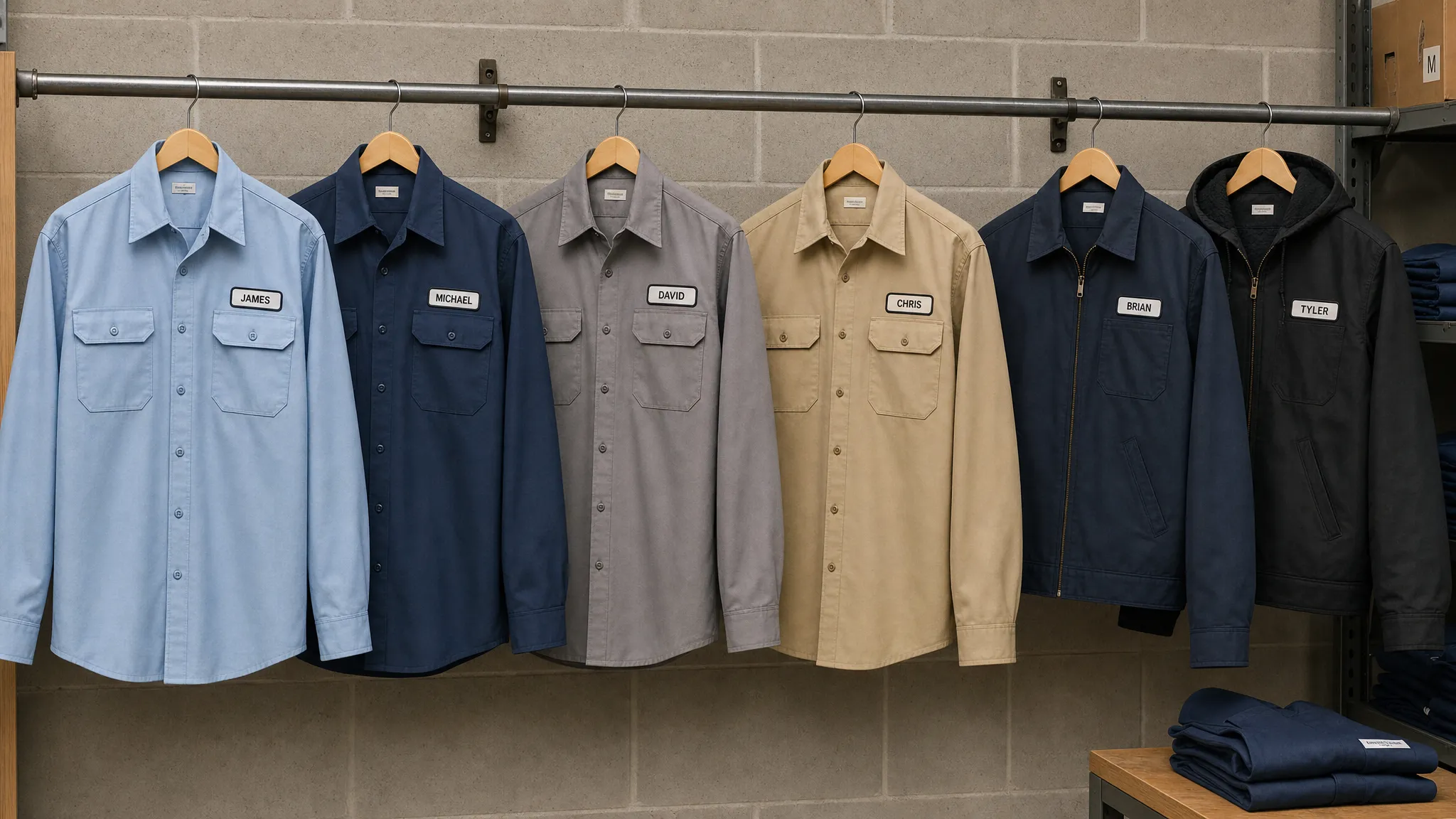
Name tapes are narrow fabric labels or patches that display identification on a uniform or piece of workwear. They most often show a first name, last name, department, role, unit, or company name. You will commonly see them on work shirts, coveralls, jackets, aprons, tactical-style uniforms, mechanic shirts, warehouse gear, hospitality uniforms, and team apparel.
Unlike a temporary paper sticker or removable plastic badge, a name tape is built to live with the garment. It is usually sewn on, heat applied, or attached with hook-and-loop backing so it can withstand regular movement and washing. In many uniform programs, there are two related tapes: one with the individual name and one with the company, team, or department name.
The term can overlap with custom woven labels, embroidered patches, and uniform ID strips. What makes a name tape distinct is its purpose: it identifies the person or group wearing the garment in a visible, practical way.
Why name tapes matter for uniforms and workwear
Name tapes may look like a small detail, but they solve several real operational problems. In customer-facing settings, they make it easier for customers to address employees by name. In field service, security, logistics, and industrial environments, they make it easier to identify team members quickly. In schools, camps, and clubs, they help prevent mix-ups and lost garments.
They also create consistency. A team wearing the same uniform with the same name tape placement looks more prepared than a team using mismatched badges, handwritten labels, or no identification at all. This kind of visual consistency supports brand recognition, especially when the tape coordinates with your logo colors, garment color, and other apparel details.
For customer-facing brands, name tapes are part of a bigger experience. A polished uniform helps start the interaction on the right note, but the same consistency should extend to support, follow-up, and service operations. Brands that are scaling customer communication often pair physical presentation with managed CX teams and consulting so customers receive the same level of care across in-person and digital channels.
Name tapes are also useful behind the scenes. They help managers track assigned uniforms, simplify laundry sorting, and reduce confusion when several employees wear the same size or style. For high-turnover roles, seasonal teams, or shared gear, choosing the right attachment method can make name changes much easier.
Name tapes vs. name badges vs. clothing labels
Name tapes are often confused with name badges and clothing labels, but each serves a different purpose. A name badge is usually removable and worn on the surface of the garment. A clothing label is often placed inside the garment to show branding, size, or care information. A name tape sits somewhere in between: it is visible like a badge, but integrated into the garment like a label or patch.
| Identification type | Common placement | Best use | Key advantage |
|---|---|---|---|
| Name tape | Chest, sleeve, pocket, jacket front, cap, bag | Permanent or semi-permanent uniform ID | Durable, professional, and consistent |
| Name badge | Shirt front, jacket lapel, lanyard | Events, retail, visitor-facing roles | Easy to remove or replace |
| Clothing label | Neck, side seam, hem, inside waistband | Brand, size, origin, and care details | Supports product identity and compliance |
| Patch | Sleeve, chest, shoulder, back panel | Logos, teams, ranks, departments, clubs | Highly visible and decorative |
If the goal is daily staff identification on apparel that is washed often, a name tape is usually more practical than a pin badge. If the goal is product branding inside a garment, a woven clothing label is a better fit.
Common types of name tapes
The right type depends on the garment, the work environment, and whether the name must be permanent or removable. Here are the most common options.
| Type of name tape | Best for | Notes |
|---|---|---|
| Woven name tapes | Work shirts, aprons, jackets, retail uniforms, branded apparel | Smooth finish, strong detail, and a refined look for text and simple logos |
| Embroidered name tapes | Outerwear, utility shirts, tactical-style apparel, heavy workwear | Raised thread texture with a bold, traditional appearance |
| Printed name tapes | Short-term uniforms, events, complex graphics, full-color needs | Can show detailed color artwork, but wash testing is important |
| Hook-and-loop name tapes | Shared uniforms, changing roles, seasonal staff, field gear | Removable and replaceable without changing the garment |
| Heat-applied name tapes | Quick application programs and select garment types | Application depends on fabric compatibility and care conditions |
Woven and embroidered options are especially common when the goal is a durable, professional finish. Woven tapes tend to be smoother and can handle smaller detail well. Embroidered tapes have a more textured, raised look that stands out on heavier garments.
Design choices that make name tapes easier to read
The most important design rule is simple: the name must be readable at a normal interaction distance. A name tape can be beautifully made and still fail if the letters are too thin, the color contrast is weak, or the placement is hidden by a pocket flap, apron strap, radio, or jacket zipper.
Start with contrast. Dark text on a light background or light text on a dark background is usually the easiest to read. If you need to match brand colors, test how the combination looks from several feet away, not just close up on a screen. A subtle tone-on-tone tape may look premium, but it is not always practical for workwear identification.
Typography matters too. Simple sans-serif fonts, block lettering, and clean uppercase letters often work well for uniforms. Decorative scripts can be hard to read once woven or embroidered, especially on small tapes. If you need to fit longer names, choose a slightly wider tape or use a condensed but still legible font.
The same principles that define a great woven clothing tag also apply here: readability, durability, comfort, and alignment with the garment. A name tape should feel like it belongs on the uniform, not like an afterthought.
You should also decide how much information belongs on the tape. A first name may feel more approachable in hospitality or retail. A last name may be better for field crews, security, transportation, or environments where professional distance matters. Department labels, roles, or unit names can be useful, but adding too much text can make the tape crowded.
Best placement for uniform name tapes
Placement is part branding and part usability. The left chest is a classic choice because it is visible during face-to-face conversation and works well on shirts, polos, jackets, and coveralls. Right chest placement is often used for a company tape when the person’s name appears on the opposite side.
Sleeves and shoulders are better for logos, departments, flags, ranks, or team patches than for individual names, since they are not always visible during conversation. Caps and bags can also use name tapes, especially for teams that need to identify gear quickly.
| Placement | Works well for | Consider before choosing |
|---|---|---|
| Left chest | Individual names on shirts, jackets, aprons, and coveralls | Check pocket seams, zippers, and apron straps |
| Right chest | Company name, department, or secondary ID | Keep balance with logo placement |
| Sleeve | Units, teams, departments, or role identifiers | Less readable during direct conversation |
| Back neck or lower hem | Subtle ownership or brand detail | Better for branding than quick identification |
| Cap or bag | Gear identification and team apparel | Choose a size that fits the smaller surface |
Materials, backing, and durability
Uniforms are not worn in perfect conditions. They are washed, stretched, rubbed by seat belts and tool belts, exposed to weather, and sometimes cleaned with stronger detergents than everyday clothing. Your name tape should be selected with those realities in mind.
For durable workwear, woven and embroidered options are often preferred because the identification is created with thread rather than sitting only on the surface. Sew-on application is a reliable choice for garments that will be washed frequently. Heat-applied backing can be convenient, but the garment fabric, temperature tolerance, and care routine should be considered before committing.
Hook-and-loop backing is useful when the person assigned to the garment may change. It is also common where uniforms need to display different names, roles, or unit identifiers depending on the shift or assignment. The tradeoff is that the base loop area remains visible when the tape is removed.
Before ordering, ask a few practical questions:
- Will the garment be washed at home or by a commercial laundry service?
- Will the tape face abrasion from tools, backpacks, harnesses, or seat belts?
- Does the employee name need to be permanent or removable?
- Is the garment fabric compatible with heat application?
- Should the tape match other labels, patches, or trim on the uniform?
These details are not just technical. They affect how long the name tape looks professional.
How to order custom name tapes without surprises
The best time to solve production issues is before the order is placed. Gather your names, spelling preferences, brand colors, garment details, and placement plan before finalizing artwork. If you are ordering for a team, standardize capitalization early. For example, decide whether tapes will use J. SMITH, JOHN SMITH, John Smith, or Smith.
It also helps to prepare a reorder plan. Uniform programs rarely stay static. New employees join, names change, departments expand, and garments need replacing. Keeping the same size, colors, font, and backing method makes future reorders more consistent.
If you want a woven solution that matches your garment branding, HiLabels lets you create and customize custom woven clothing labels online, including options to upload artwork and provide design notes. That can be especially useful when your name tape needs to coordinate with existing brand labels, care labels, patches, or ribbon details.
| Decision to make | Why it matters |
|---|---|
| Exact wording | Prevents spelling errors and inconsistent name formats |
| Tape dimensions | Affects readability, comfort, and placement |
| Background and thread colors | Determines contrast and brand alignment |
| Attachment method | Impacts durability, removability, and garment compatibility |
| Placement | Influences visibility and uniform balance |
| Reorder standards | Keeps future batches consistent |
A small proofing step can prevent a large uniform headache. Review names carefully, confirm the garment surface is large enough for the tape, and check that the selected colors remain readable in real lighting.
Where name tapes work best by industry
Name tapes are flexible enough for many settings, but each industry tends to use them differently.
| Environment | Typical need | Practical tip |
|---|---|---|
| Hospitality and food service | Friendly staff identification and brand consistency | Use readable first names and consider apron or chest placement |
| Construction and trades | Team ID on rugged workwear | Prioritize strong contrast and durable attachment |
| Healthcare and labs | Role and name visibility | Keep the design clean and easy to read quickly |
| Retail and field service | Customer trust and employee recognition | Coordinate name tapes with logo colors and shirt style |
| Schools, camps, and clubs | Preventing lost apparel and identifying groups | Use consistent placement across all garments |
| Security and public safety support roles | Clear unit or role identification | Consider removable tapes when assignments change |
If your uniform program also uses sleeve badges, morale patches, or team identifiers, name tapes can be paired with broader apparel branding. HiLabels’ guide to custom patches for clothing is a helpful next step if you are building a more complete uniform system.
Common mistakes to avoid
Most name tape problems come from decisions that looked fine on a screen but did not work on a garment. A digital preview can make small lettering seem clearer than it will be in real life. A low-contrast color combination can look stylish but become unreadable under fluorescent lighting or outdoor glare.
Avoid these common issues:
- Choosing letters that are too small for normal viewing distance.
- Using low-contrast thread and background colors.
- Placing the tape where straps, pockets, radios, or zippers cover it.
- Ordering different sizes or fonts across departments without a reason.
- Forgetting to account for wash conditions and garment fabric.
- Adding too much information to a narrow tape.
A good name tape is not trying to do everything. It should identify the wearer clearly, match the uniform style, and hold up to the conditions of the job.
Frequently Asked Questions
Are name tapes only for military uniforms? No. While name tapes are common on military and tactical-style uniforms, they are also widely used in hospitality, trades, retail, field service, schools, camps, clubs, warehouses, and branded workwear programs.
What is the best material for name tapes? The best material depends on the garment and use case. Woven name tapes work well for a smooth, detailed, professional look. Embroidered tapes are better when you want a raised texture. Printed tapes may be useful for detailed graphics or short-term needs.
Should name tapes use first names or last names? First names feel approachable and are common in customer service, hospitality, and retail. Last names or initials may be better for field crews, security, transportation, and environments where privacy or professional distance matters.
Can a name tape include a logo? Yes, but keep the size in mind. A simple logo or icon can work well, especially on a wider woven tape. Complex logos may need simplification so the name remains readable.
Is sew-on or heat-applied better? Sew-on application is a dependable choice for frequent washing and rugged use. Heat-applied options can be convenient, but they should be matched to the garment fabric and care routine.
How do I keep future name tape orders consistent? Save your approved size, colors, font, placement, attachment method, and name format. This makes it easier to add new employees or replace garments without creating a mismatched uniform set.
Create name tapes that make your uniforms look finished
Name tapes are practical, but they also shape how your team is perceived. The right design makes uniforms easier to manage, helps customers identify staff, and gives workwear a more intentional, professional finish.
HiLabels brings more than 31 years of experience to custom woven labels, patches, ribbons, zipper pulls, care labels, and bespoke branding products. If you are building a uniform program or refreshing existing workwear, start with a name tape design that is readable, durable, and aligned with your brand from the first shift to the final wash.


