When a Woven Label Patch Works Better Than a Standard Tag
A standard tag is a quiet brand signature. It identifies the maker, adds care information, and gives a garment or product a more finished feel. A woven label patch does something different: it turns the brand mark into a visible design element.
That distinction matters. If your label is hidden at the neckline, side seam, or inside a bag, a traditional woven tag may be perfect. But when the branding needs to be noticed, handled, photographed, or remembered, a woven label patch can work harder than a standard tag.
The best choice depends on the product, the fabric, the customer, and the role you want the branding to play. Here is how to know when a woven label patch is the smarter option.
What makes a woven label patch different from a standard tag?
A standard woven tag is usually small, flexible, and sewn into a seam, hem, neckline, waistband, or product edge. It may include a logo, size, brand name, website, country of origin, or other basic information. Its job is often to confirm quality without competing with the product design.
A woven label patch is typically more prominent. It is made to sit on the outside of a garment, accessory, or textile product as a decorative brand element. Because the design is woven rather than printed, the artwork is built directly into the fabric structure, creating a durable, textured finish.
If you are refining a traditional tag first, HiLabels has a helpful guide on what makes a great woven clothing tag in terms of readability, material, comfort, and fit. But if your label is expected to be part of the product's visual identity, a patch deserves serious consideration.
| Feature | Standard woven tag | Woven label patch |
|---|---|---|
| Typical placement | Inside neck, side seam, hem, waistband, product edge | Exterior chest, sleeve, pocket, bag front, hat front, blanket corner |
| Main purpose | Brand identification, sizing, care, finishing detail | Visible branding, decoration, recognition, collection identity |
| Visual impact | Subtle | Noticeable |
| Best for | Apparel interiors, minimal branding, compliance details | Outerwear, accessories, workwear, streetwear, bags, premium goods |
| Design space | Limited | More generous |
| Customer interaction | Often seen after purchase | Seen during wear, display, use, and photography |
Use a woven label patch when branding should be visible
The most obvious reason to choose a patch is visibility. A standard tag usually waits to be discovered. A patch introduces itself immediately.
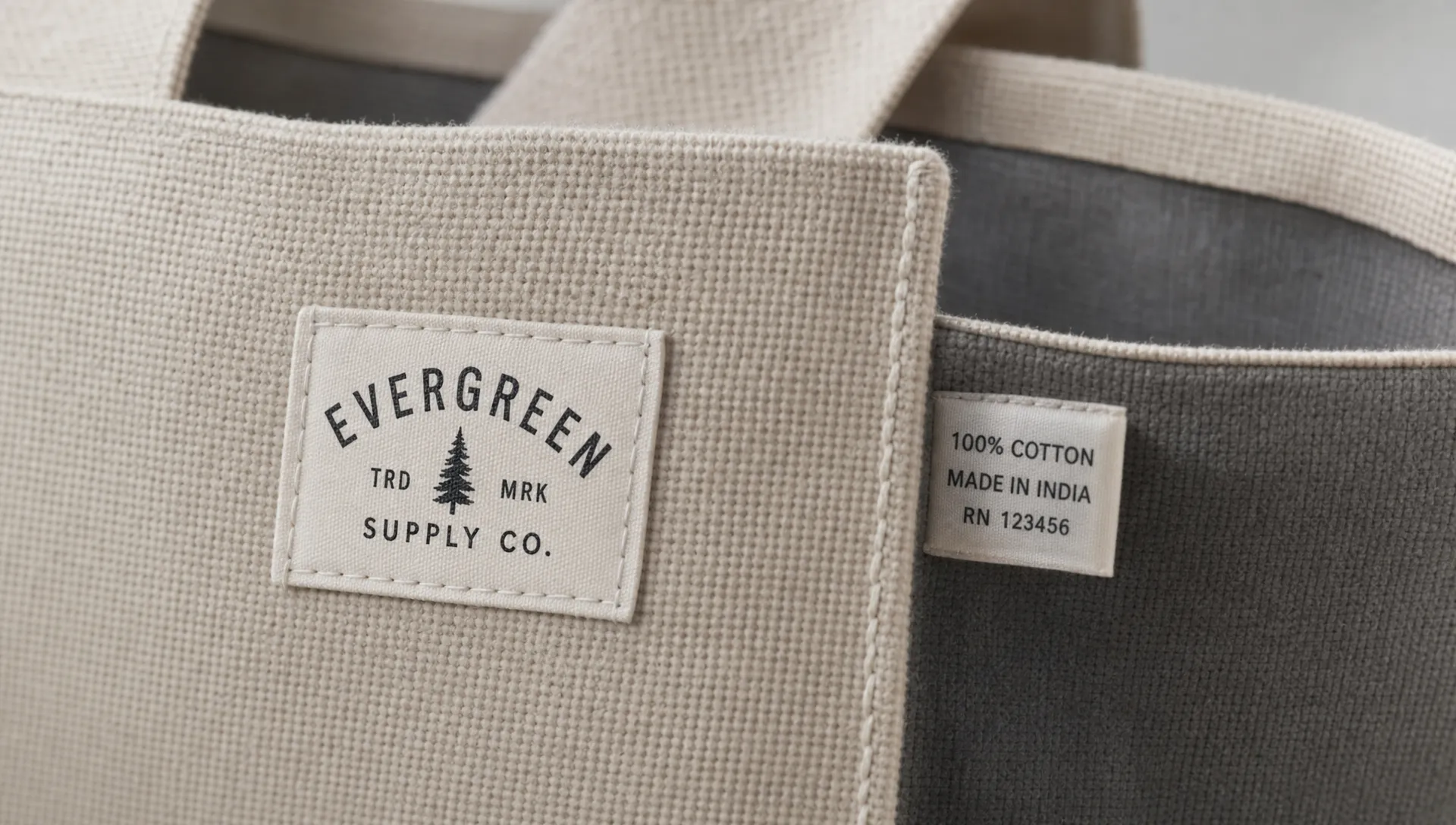
This is especially useful for products where the brand mark is part of the appeal. Think of a beanie with a front patch, a denim jacket with a sleeve badge, a tote bag with a woven mark on the front pocket, or an outdoor blanket with a branded corner patch. In each case, the label does not just say who made the product. It contributes to the product's style.
Visible branding can also help with recognition after the sale. When a customer wears or uses the item, the patch becomes part of every interaction with that product. It appears in mirror photos, social posts, store displays, market booths, and everyday use. For growing brands, that repeated exposure can be valuable.
A patch works particularly well when the customer is proud to display the brand. This is common in fashion, outdoor gear, handmade goods, lifestyle accessories, team merchandise, and limited-run collections. If the buyer sees the label as part of the identity of the piece, hiding it inside the garment may be a missed opportunity.
Choose a woven label patch when the product needs stronger visual weight
Some products need a label with more presence. A thin tag may look too delicate on heavy canvas, structured denim, thick fleece, waxed cotton, or rugged bags. A woven patch can visually balance heavier materials because it has a more substantial footprint.
This does not mean a patch needs to be oversized. Even a small patch can feel more intentional than a tiny tag if it is placed well. The difference is that a patch reads as a design feature, not an afterthought.
A woven label patch can add structure to products such as:
- Jackets, overshirts, and vests
- Beanies, caps, and bucket hats
- Backpacks, totes, and pouches
- Denim, canvas, and utility garments
- Aprons, blankets, and home textiles
- Pet accessories, gear bags, and outdoor products
For these items, a standard tag may still be useful inside the product, especially for care or sizing, but the patch can carry the outward-facing brand message.
Use a patch when your artwork needs more room
A small tag is not always the best canvas. If your logo includes fine lettering, a border, a symbol, a monogram, a location name, or a collection mark, a patch may give the design enough space to remain legible.
Woven construction can be especially useful for sharper artwork because it can capture clean edges and relatively fine detail compared with some bulkier decorative methods. If you are deciding between patch types, this comparison of custom woven patches vs embroidered patches explains why woven patches are often a better fit for detailed artwork, small typography, and flatter designs.
The key is not to fill every bit of available space. A good patch design still needs restraint. The most effective patches usually have clear hierarchy: one main logo or wordmark, enough contrast, and only the details that improve recognition.
Before finalizing artwork, it is worth asking a simple question: if someone sees the patch from a few feet away, what will they remember? If the answer is unclear, the design may need simplification.
Choose a woven patch for limited editions and product collections
Standard tags are often consistent across an entire brand. That consistency is useful, but sometimes you need a label element that changes from drop to drop.
A woven label patch is well suited for limited editions, collaborations, seasonal collections, local releases, and special product lines. It can identify a specific collection without changing the core construction of every garment or product.
For example, a brand might use the same interior woven tag across all products while adding a different exterior patch for a capsule collection. A maker might use a standard tag on every handmade bag but create a unique patch for a holiday release or artist collaboration. This creates collectability without requiring a complete rebrand.
Patches can also be useful for inventory planning. If the product itself stays the same but the patch changes, a brand may have more flexibility in how it presents different versions of a product. The exact production approach depends on the item and application method, but strategically, the patch can become a modular branding element.
Use a patch when the label is part of the product experience
Customers often judge quality through small tactile details. A woven patch can create a moment of interaction: the customer sees it, touches it, and connects it with the overall quality of the item.
This matters in retail environments, craft markets, pop-ups, and unboxing moments. A patch on the outside of a product can signal that the brand considered the finishing details, not just the main material. When the weave, color, edge, and placement feel intentional, the product can appear more complete.
This is one reason woven branding is often associated with a premium feel. The label is not sitting on the product like a temporary graphic. It feels integrated and durable. HiLabels covers this perception in more detail in its article on why woven fabric labels look more premium, especially compared with more temporary-looking alternatives.
A patch also creates a more collectible impression than a basic tag. A customer may remove a paper hangtag, overlook a small interior label, or forget a printed sticker. A woven patch remains attached and visible as part of the item.
When a standard tag is still the better choice
A woven label patch is not automatically better. It is better when visibility, structure, and design presence are part of the goal. In many situations, a standard tag is still the more practical and elegant option.
Use a standard tag when the label should be discreet. This is common for minimalist apparel, luxury basics, baby clothing, lingerie, sleepwear, and any product where exterior branding might distract from the design. A clean woven tag in the neckline, side seam, or hem can communicate professionalism without changing the visual character of the product.
A standard tag is also better for information that should not be treated as decoration. Size, fiber content, wash instructions, and compliance-related details usually belong on a care label or interior tag, not on an exterior patch. A patch can carry the brand identity, but it should not replace the information customers need to care for the product.
Comfort is another factor. A patch placed in the wrong location can rub, bend awkwardly, or feel stiff on lightweight garments. If the product is soft, close-fitting, or made for sensitive skin, a smaller tag or carefully selected care label may be the better solution.
A simple decision framework
If you are choosing between a woven label patch and a standard tag, start with the role of the label. Is it meant to identify the product quietly, or is it meant to be seen as part of the design?
| If your goal is... | Better choice | Why |
|---|---|---|
| Add basic brand identification | Standard tag | It is subtle, efficient, and easy to place inside a seam or edge |
| Make the logo visible during use | Woven label patch | It turns branding into an exterior design feature |
| Include care or size information | Standard tag or care label | Practical information is usually better inside the product |
| Add a premium badge to heavy fabric | Woven label patch | It has enough visual weight for structured materials |
| Keep a minimalist exterior | Standard tag | It preserves a cleaner product look |
| Create a limited-edition detail | Woven label patch | It can distinguish a collection or release at a glance |
This decision is also easier when you understand your customer. If your audience values visible logos, collectible details, or maker identity, a patch may strengthen the product. If your customer prefers quiet luxury, softness, or understated design, a standard tag may be more aligned.
Before committing, look at how customers talk about products in your category. Reviews, community discussions, and social comments can reveal whether people notice patches, dislike scratchy tags, or associate certain placements with better quality. Teams that already use audience research or lead-monitoring workflows, including tools such as Redditor AI, can turn those conversations into practical label decisions instead of relying only on guesswork.
Design tips for a woven label patch that works
A patch has more visual responsibility than a hidden tag, so design discipline matters. The patch should feel like it belongs on the product, not like it was added at the last minute.
Start with placement. Common locations include the left chest, sleeve, lower hem, pocket, hat front, bag exterior, or product corner. The best spot depends on how the item is worn or used. A patch on a tote should be visible when the bag hangs naturally. A patch on a jacket should not disappear under a strap, fold, or sleeve crease.
Next, simplify the artwork. Woven patches can handle detail well, but small lettering still needs enough space. If the patch will be viewed from a distance, prioritize the logo, icon, or brand name over secondary details.
Color is equally important. High contrast improves readability, especially on textured fabrics. A tonal patch can look refined, but it may lose impact if the logo and background are too close in value. If the product comes in multiple fabric colors, consider whether one patch colorway will work across all of them or whether different versions are needed.
Finally, think about the edge and attachment. A patch should look finished from every angle. The border, shape, and sewing method all affect how polished the final product feels. A clean rectangular patch may suit workwear or minimal goods, while a shaped patch may be better for a badge-style identity.
How brands can use both together
Many strong products use both a standard tag and a woven label patch. They simply give each label a different job.
The standard tag can handle brand confirmation, size, care information, or interior finishing. The patch can handle visible recognition. This combination is especially effective for apparel and accessories because it separates practical information from brand expression.
For example, a canvas apron might have a care label inside the waist seam, a small woven tag at the hem, and a woven patch on the front pocket. A beanie might have an exterior patch for recognition and an interior label for fiber or care details. A jacket might use a neck label for sizing and a sleeve patch for collection identity.
This layered approach creates a more complete brand system. It also helps every label do the job it is best suited for.
Frequently Asked Questions
Is a woven label patch the same as a woven tag? Not exactly. Both can be made with woven construction, but a standard tag is usually smaller and more discreet, while a woven label patch is often designed for exterior placement and stronger visual impact.
Can a woven label patch replace a care label? Usually no. A patch can display your logo or collection mark, but care instructions, size, and required product information are typically better placed on an interior care label or standard tag.
What products are best for woven label patches? Woven patches work especially well on jackets, hats, bags, denim, canvas goods, workwear, blankets, accessories, and products where visible branding adds value.
When should I avoid using a patch? Avoid a patch when the product needs a very soft, lightweight, or minimalist finish, or when exterior branding would distract from the design. In those cases, a standard woven tag may be more appropriate.
Does a woven label patch look more premium than a printed label? It often can, especially when the patch is well designed and properly placed. Because the design is woven into the material rather than printed on top, it can feel more permanent and integrated.
Create the right label for the job
A woven label patch works best when your branding deserves to be seen. It adds presence, durability, texture, and recognition, especially on products where the label becomes part of the design.
A standard tag still has an important role. It is ideal for subtle brand identification, care details, sizing, and interior finishing. The strongest choice is the one that matches the product's purpose and your customer's expectations.
HiLabels helps brands create custom woven labels, patches, care labels, ribbons, and other branding details with professional craftsmanship and an easy online ordering process. If your next product needs a visible badge, a discreet tag, or a complete label system, you can start building it with HiLabels at hilabels.com.


