When Should You Remove a Detachable Zipper Pull for Washing?
A detachable zipper pull should usually come off before washing if it contains leather, has delicate decoration, could snag other items or has no clear washing instructions. It can often stay attached when the manufacturer confirms that both the pull and its connector are suitable for the garment’s wash cycle. The key is to check the accessory separately from the clothing: a machine-washable jacket does not automatically have machine-washable trim.
A quick decision before you start the wash
Read the garment’s care label first, then check any instructions supplied with the pull. Removing an accessory does not make a dry-clean-only garment or a non-washable bag safe for machine washing.
Use this table as a starting point, not as a replacement for product-specific instructions.
| Pull or attachment condition | Recommended approach | Main concern |
|---|---|---|
| Leather or suede, without explicit wash approval | Remove before washing | Changes in texture, shape or color |
| Glued decoration or delicate surface finish | Remove unless washing is approved | Loose embellishments or damaged finish |
| Large charm, long loop or projecting hook | Remove before machine washing | Snagging and impacts against other items |
| Frayed cord or connector that does not close securely | Remove and inspect before reuse | Detachment or further damage |
| Plain textile or molded pull with compatible care instructions | Follow those instructions | Material and connector compatibility |
| Original tab that requires bending hardware to remove | Leave intact unless service instructions specify otherwise | Damage to the slider or locking mechanism |
When compatibility is unknown, removal is the safer choice if the accessory is designed to release easily. A detachable zipper pull should not need force, bending or slider disassembly simply to prepare it for laundry.
When to remove a detachable zipper pull
Leather, suede and mixed-material accessories
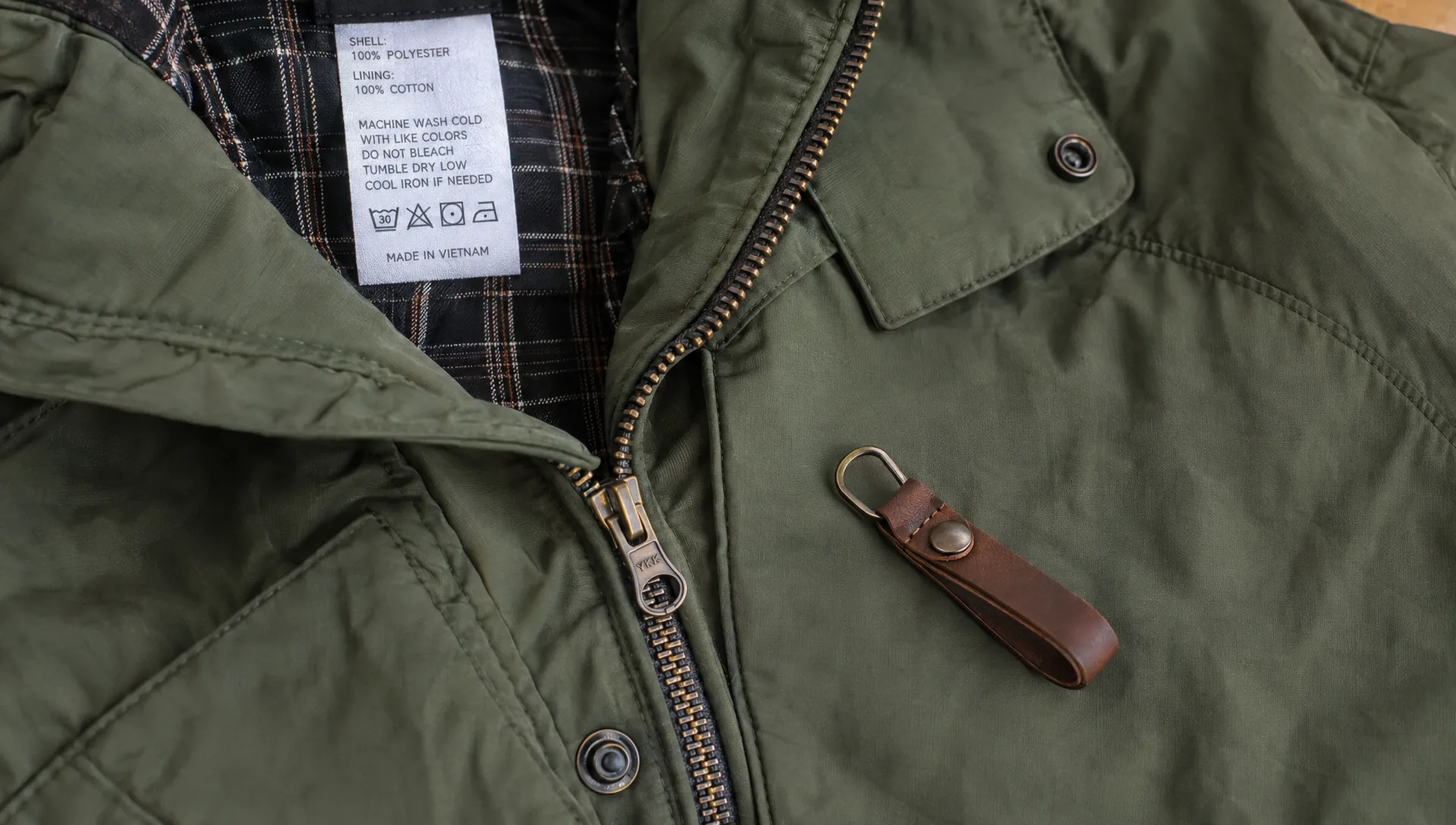
Leather and suede deserve particular caution. Water, detergent and drying conditions can change their feel, appearance or shape. A leather tab attached to a washable fabric jacket may therefore need different care from the jacket itself.
Mixed-material pulls are also worth checking closely. A washable cord might carry a glued logo badge, a painted charm or a metal connector with an unknown finish. The most vulnerable component can determine how the whole accessory should be cleaned.
Do not treat a quick spot check as proof that an accessory can survive a complete wash cycle. It may reveal immediate color transfer, but it does not establish resistance to agitation, repeated wetting or dryer heat.
Heavy, dangling or easily snagged designs
Remove long loops, oversized charms and accessories with protruding edges before machine washing unless the manufacturer specifically approves them. During tumbling, these parts can catch on knits, pocket openings or other hardware.
A mesh laundry bag can reduce contact with other garments, but it does not make a water-sensitive material washable. It also does not prevent every impact or protect an adhesive from unsuitable heat.
Uncertain materials or attachment condition
If you cannot identify the material or find care guidance, remove the accessory when its release mechanism allows you to do so safely. Check for cracks, fraying, loose decoration and a clasp that no longer closes fully.
Remove a detachable zipper pull before washing when its connector is already unreliable, then repair or replace the damaged component before using it again. Repeatedly clipping it back on does not fix a worn attachment.
What can usually stay attached?
A small, lightweight pull may stay attached if its manufacturer approves the planned washing method and the connector is secure. That approval should cover the actual cycle conditions, not just a general statement that the material is “durable.”
Check washing temperature, cleaning method and drying instructions. Permission to wash does not necessarily include permission to tumble dry. A pull that tolerates a cool wash may still have a finish or adhesive that requires air drying.
Metal is not automatically unsuitable, and textile is not automatically safe. Metal hardware can have coatings that need protection, while fabric loops can bleed color or include non-washable components. Molded rubber or plastic accessories also vary in their heat resistance.
Keep the original functional tab attached unless the zipper manufacturer provides a removal procedure. Some tabs interact with the slider’s locking mechanism. When deciding whether a detachable zipper pull can stay on, distinguish an add-on accessory from a part that is integral to the zipper.
How to prepare the item without damaging the zipper
Preparation should be simple. If removal becomes a repair job, stop and check the connector’s instructions rather than improvising with pliers.
- Check the release mechanism: Open a purpose-made clasp or release the removable loop according to its instructions. Do not pry open the slider bridge.
- Store the accessory separately: Put it in a small container so it cannot get mixed into the laundry or lost beside the machine.
- Prepare the garment: Empty pockets, secure other fasteners and follow any instructions about closing zippers or turning the item inside out.
- Choose the permitted wash method: Use the temperature, cycle and detergent allowed by the garment’s care label. Removing the pull does not override those limits.
If the attachment uses a split ring or another connector that is awkward to handle, the guide to replacing a zipper pull without damaging the slider explains the hardware precautions. Avoid repeatedly opening metal parts that were not designed for frequent removal.
Clean the removed accessory according to its own instructions. Do not assume it should soak alongside the garment. For an unknown material or finish, ask the supplier for guidance before applying detergent or a cleaning product.
Check drying instructions before reattaching
Washing and drying are separate decisions. A detachable zipper pull that can remain attached during washing may still need to come off before tumble drying if its care instructions exclude dryer heat.
If you removed it before washing, leave it off until the garment and attachment area are dry. Follow the accessory’s drying instructions as well, particularly for cords, folded tabs and layered materials that can hold moisture. Do not use a radiator, hair dryer or other direct heat source unless that method is expressly permitted.
Inspect the pull before reattaching it. Look for a distorted connector, peeling finish, loose decoration or new fraying. Check the garment’s attachment point too, especially if the accessory was removed because it had been catching or pulling awkwardly.
Reconnect it using the intended mechanism, then apply a gentle hand tug to confirm that the closure is seated. Open and close the zipper to check that the accessory does not obstruct movement. This is a basic usability check, not proof of long-term attachment strength.
For more detailed connector checks, follow the guidance on installing a zipper pull that stays secure. If the clasp will not close properly, replace or repair it rather than relying on the wash to have caused only cosmetic damage.
What apparel brands should tell customers
For clothing brands, removable trim needs clear instructions. Customers should not have to guess whether a branded accessory belongs in the washer or whether “remove before washing” means taking apart the zipper itself.
If a detachable zipper pull needs separate care, explain what to remove, how its release works and when to reattach it. Distinguish washing restrictions from drying restrictions, and make the guidance available where customers can find it before laundering.
For U.S. apparel businesses, the FTC’s guidance on the Care Labeling Rule explains care-label obligations and the need for a reasonable basis for care instructions. Accessory guidance should complement the garment’s instructions, not contradict them.
Evaluate the complete assembly under the conditions you plan to recommend. That includes the pull material, decoration, connector and attachment point. Useful checks include color transfer, finish changes, deformation, snagging and whether the connector still closes securely after repeated care cycles.
Avoid promising that an accessory is machine washable solely because its base material is commonly washable. Construction and finishing can change the appropriate care method.
Frequently asked questions
Do I need to remove every zipper pull before washing? No. Original zipper tabs commonly remain attached, and approved washable accessories may stay on too. Remove add-on pulls when their instructions require it or when their material, shape or condition presents an avoidable risk.
Can I wash a detachable zipper pull in a mesh laundry bag? Only if its own care instructions permit washing. A mesh bag helps limit contact with other laundry, but it does not protect leather, unsuitable coatings or adhesives from water, detergent or heat.
Should I remove the pull before hand washing? Remove it if the accessory is not approved for immersion. Hand washing reduces mechanical agitation, but the pull is still exposed to water and cleaning products. Do not immerse a non-washable accessory simply because the process is gentle.
What if removing it requires pliers? Stop unless the manufacturer specifies that procedure. You may be handling a fixed connector or an original zipper component rather than an easily removable accessory. Forcing it can damage the attachment or slider.
Should I remove it before dry cleaning? Tell the cleaner about the accessory and provide any separate care instructions. Ask which removable parts should come off, since dry-cleaning solvents and finishing processes may be unsuitable for certain trims.
Plan the pull and its care together
For branded apparel and bags, choose zipper accessories with the intended cleaning routine in mind. HiLabels offers custom zipper pulls and care labels, allowing you to discuss branding and care communication together. Before finalizing a design, confirm the material, attachment method and appropriate washing instructions for the finished product.


