Custom Woven Fabric Ideas for Distinctive Brand Details
Customers notice more than the main logo. They notice the tab at the side seam, the ribbon around the package, the feel of the label at the neckline and the small patch that turns a basic item into something collectible. Those details are where custom woven fabric earns its place in a brand system.
Because the design is woven into the material rather than printed on top, the result feels tactile, durable and intentionally made. For apparel, accessories, home goods and branded packaging, woven details can make a product feel more finished without changing the entire design.
The best uses are rarely loud. They are specific, consistent and placed where the customer naturally interacts with the product. Think of custom woven fabric as a set of small brand signatures that travel with the item long after the sale.
Start by deciding what the detail should do
Before choosing a label, ribbon or patch, define the purpose of the detail. A woven element can identify the brand, explain care instructions, add a premium finish, mark a limited release or make packaging feel more giftable. When the purpose is clear, the design choices become easier.
| Brand goal | Woven fabric idea | Why it works |
|---|---|---|
| Build recognition | Neck label, side tab or hem tag | Repeats your logo in a natural product touchpoint |
| Add perceived value | Woven patch, damask label or branded trim | Creates texture and craftsmanship customers can feel |
| Improve unboxing | Custom woven ribbon or product band | Extends branding beyond the product itself |
| Share product information | Care label or origin label | Keeps practical information durable and polished |
| Create collectibility | Limited edition patch or numbered woven tag | Makes a release feel intentional and memorable |
A good woven detail should support the product, not compete with it. If the garment or accessory is minimal, a quiet tonal woven label may be enough. If the brand is expressive, a high contrast ribbon or oversized patch may feel more aligned.
1. Signature interior labels that feel like part of the garment
The interior label is often the first woven detail a clothing buyer expects, but it does not have to be generic. A signature neck label, waistband label or lining label can carry your logo, size, collection name or a short brand phrase.
For premium apparel, simplicity usually wins. A clean logo with strong contrast is easier to weave clearly than a crowded design with tiny lettering. If you are refining a logo label, HiLabels has a helpful guide on custom woven labels that make your brand memorable that goes deeper into how label design supports recall.
Placement matters as much as the artwork. Neck labels work well for shirts, jackets and dresses. Waistband labels are better for denim, trousers, skirts and activewear. Lining labels can add a quiet luxury cue inside bags, coats and tailored pieces.
2. Exterior micro tabs for subtle brand recognition
A small woven tab on a side seam, sleeve edge, pocket or hem gives your product a recognizable signature without turning the item into a walking billboard. This idea works especially well for streetwear, children’s clothing, accessories, aprons, hats and soft goods.
Micro tabs need restraint. Because the surface area is small, use a short wordmark, icon or two color motif instead of a full message. A folded woven tab can also introduce a brand color in a way that is visible but not distracting.
For brands that sell multiple product categories, a consistent tab shape or color can become a recognizable detail across the line. The same woven tab might appear on a hoodie, tote bag, beanie and blanket, helping customers connect the items as part of the same world.
3. Custom woven ribbon for packaging that people want to keep
Packaging is often discarded, but a well designed woven ribbon can turn it into part of the product experience. Use custom woven ribbon to wrap boxes, bundle garments, finish gift sets or tie hangtags to premium items.
Unlike paper packaging, woven ribbon has a reusable quality. Customers may keep it, tie it around a drawer handle, reuse it for gifting or save it with the product. That gives your brand another touchpoint after the initial unboxing.
For a refined look, match the ribbon to your core palette and keep the repeat pattern balanced. A repeating logo, small icon set, brand phrase or border stripe can work beautifully. For seasonal drops, a limited colorway of the same woven ribbon keeps the brand consistent while making the release feel fresh.
4. Branded seam tape and binding for inside details
Some of the most effective brand details are only visible when the customer handles the product closely. Woven seam tape, binding or edging can finish the inside of jackets, bags, caps, robes and home textiles.
This is a strong idea for brands that care about craftsmanship. The outside may look minimal, but the inside tells the customer that every part of the product was considered. Branded seam tape also helps reinforce identity on items where a standard label would feel too obvious.
Use this approach where the construction naturally exposes seams or edges. Tote bags, travel pouches, lined jackets and blankets are good candidates. Keep the design simple enough that it still reads when folded or partially hidden.
5. Woven patches for drops, teams and collaborations
A woven patch can carry more personality than a small label. It can mark a collaboration, event, capsule collection, team uniform, fan product or limited run. Since patches have more surface area, they can hold an emblem, mascot, phrase or graphic badge.
Woven patches are especially useful when you want the branding to be removable in the customer’s mind, meaning it feels like a collectible detail rather than only a manufacturer’s mark. They can be placed on sleeves, chests, pockets, hats, backpacks, blanket corners or product sleeves.
If your brand uses patches across multiple releases, consider creating a patch system. Keep one consistent shape, such as a rectangle, circle or shield, then change the artwork for each release. Over time, customers start to recognize the format as part of your brand language.
6. Zipper pulls that turn hardware into branding
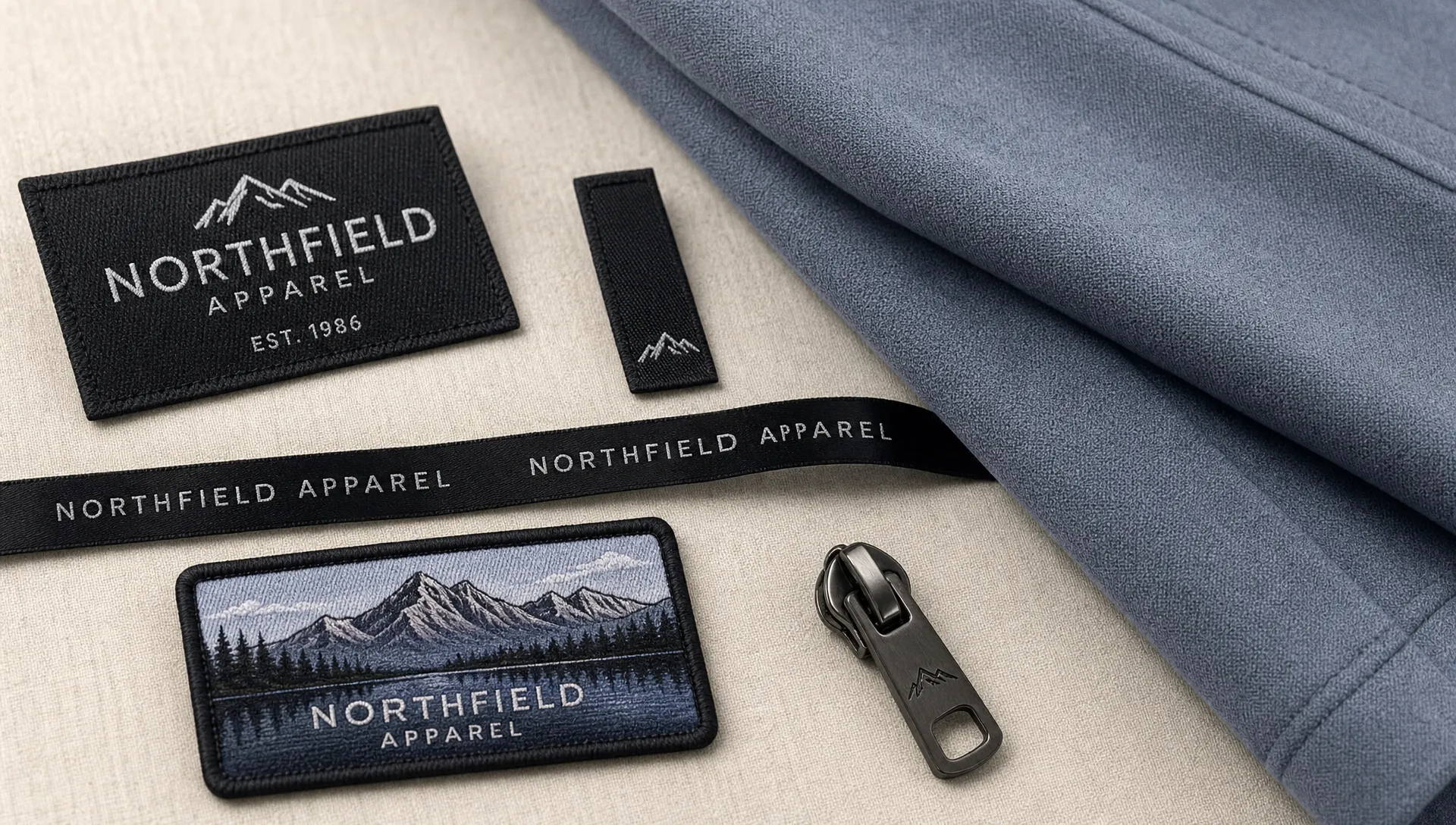
Zippers are functional, but they are also touched repeatedly. A custom zipper pull made with woven material can add softness, color and brand identity to jackets, bags, pouches, outdoor gear and children’s products.
A woven zipper pull works best when it improves usability as well as appearance. It can make a small zipper easier to grip, add a contrast color to a neutral product or bring the logo into a spot that customers interact with every day.
Design for movement. Since zipper pulls bend and swing, avoid overly detailed artwork. A short brand name, icon, stripe pattern or bold color combination will usually be more effective than small text.
7. Woven hang loops that feel intentional
Hang loops are practical, especially on coats, towels, robes, aprons, bags and children’s items. When made from custom woven fabric, they become a quiet brand detail that customers see during storage and everyday use.
This is a smart placement because the detail has a reason to exist. It is not decoration for decoration’s sake. The loop helps the product function better while reinforcing the brand.
For hang loops, choose a pattern that reads from both sides or keeps the reverse side clean. A repeating wordmark or stripe can be more forgiving than a centered graphic, especially if the loop twists during use.
8. Care labels with a more polished brand voice
Care labels are required for many textile products, but they do not have to feel like an afterthought. A well planned care label can combine washing instructions, fiber information, origin details and a small brand mark in a clean format.
In the United States, the Federal Trade Commission provides guidance on textile and care labeling, including rules for many apparel products. If you sell clothing, review the FTC’s Care Labeling Rule guidance so your practical information is handled correctly.
From a branding perspective, the opportunity is in the tone and layout. You might include a short line such as “Made to be worn often” or “Wash gently, wear proudly,” as long as the required information stays clear. The label should be comfortable against the skin, easy to read and appropriate for the product’s expected lifespan.
9. Pocket, cuff and waistband reveals
A reveal detail is hidden until the product moves or is handled. Examples include a woven strip inside a cuff, a branded tape inside a pocket, a waistband label visible when folded or a patterned trim under a collar.
These details work well for brands that value discovery. They reward the customer for noticing the product up close. They also create moments that feel shareable in product photography, lookbooks and social content.
For a reveal detail, contrast can be effective. A neutral jacket with a bright woven interior trim, or a simple tote with a patterned inner pocket tape, creates a small surprise without changing the product’s main look.
10. Product bands for bundles and retail displays
Woven product bands can wrap around folded garments, towels, scarves, socks, blankets or stationery-style textile goods. They are useful for retail presentation because they keep items tidy while adding a premium tactile element.
A woven band can include the logo, product line name, size range or a short story about the collection. For giftable items, the band can make the product feel finished even without a full box.
This is also a flexible option for small brands because the same band concept can be adapted across multiple items. A blanket, scarf and set of napkins could each use a different band length while keeping the same woven design language.
11. Dust bag and pouch trims for premium accessories
If your product includes a dust bag, pouch or storage sleeve, woven fabric details can make the accessory feel intentional rather than disposable. Add a woven label to the pouch, use custom ribbon as the drawcord or sew a branded tab into the side seam.
This idea works well for jewelry, handbags, shoes, leather goods, scarves, eyewear and special edition apparel. The storage piece becomes part of the ownership experience, which helps the brand remain visible between uses.
For luxury or boutique positioning, consider tone on tone colors, fine detail and soft contrast. For youth or streetwear brands, a bolder patch or high contrast ribbon may be more appropriate.
12. Custom woven fabric panels for statement branding
For brands ready to go beyond labels and trims, a small custom woven fabric panel can become a statement detail. This could be a patterned pocket, a back neck facing, a blanket corner, a bag gusset or a decorative stripe on a sleeve.
The key is scale. A full custom woven pattern can be powerful, but it should still serve the product. Use it where the fabric adds structure, contrast or storytelling. If you are exploring larger patterns, jacquard effects or more decorative applications, HiLabels also covers creative uses for custom woven jacquard fabric in apparel, packaging and accessories.
Statement panels are best when they connect to the rest of your brand system. Pull from existing logo shapes, repeat a small icon, use a house stripe or translate a seasonal graphic into a woven motif.
How to choose the right woven detail for your product
The right custom woven fabric choice depends on the product type, customer expectations and how the item will be used. A baby garment needs soft, unobtrusive labeling. A denim jacket can handle a bold exterior patch. A premium scarf may call for a subtle woven logo that does not interrupt the drape.
Use the product’s real life context as your guide. Will the detail touch skin? Will it be washed often? Does it need to bend, fold or resist abrasion? Is it meant to be seen in retail photos or only discovered after purchase?
A practical design review should include these checks:
- Readability: Make sure text, icons and borders are large enough to weave cleanly.
- Contrast: Choose color combinations that keep the logo visible without clashing with the product.
- Comfort: Use softer placements and finishes for details that touch skin.
- Durability: Match the woven detail to the product’s washing, wearing and handling conditions.
- Brand consistency: Repeat colors, shapes or motifs across labels, ribbons, patches and trims.
If you are working on label artwork specifically, this guide to better custom design woven labels is useful for simplifying artwork, improving legibility and choosing details that translate well into woven form.
Design principles that keep woven details premium
Custom woven fabric has texture, which means every design decision becomes physical. Thin lines, tiny letters and low contrast colors can lose clarity once translated into yarn. Strong woven branding usually starts with simplified artwork and a clear hierarchy.
A logo does not always need to appear in full. Sometimes an icon, monogram, stripe or repeat pattern is more flexible. This is especially true for small tabs, zipper pulls and narrow ribbons. Save longer messages for larger labels, bands or patches.
Color is another major decision. Woven details can look refined in tonal combinations, such as black on charcoal or cream on beige. They can also become a signature accent when you use one consistent contrast color across the product line. The goal is not to use every brand color at once. It is to choose the colors that make the detail recognizable and wearable.
Scale should be tested in context. A label that looks perfect on a digital proof may feel too large on a lightweight tee or too small on a heavy canvas bag. When possible, compare the proposed detail against the actual product dimensions before committing.
Building a small woven brand system
The most distinctive brands do not treat each woven element as a separate project. They build a small system. That system might include one main interior label, one exterior tab, one packaging ribbon and one seasonal patch format.
This approach keeps production more organized and helps customers recognize the brand across different products. It also gives you room to evolve. You can keep the core woven label consistent while changing ribbon colors for holidays, updating patches for collaborations or adding special woven bands for gift sets.
A simple woven brand system might look like this:
| Product touchpoint | Core design choice | Variation opportunity |
|---|---|---|
| Interior label | Main logo and size | Different background colors by collection |
| Exterior tab | Icon or short wordmark | Seasonal accent color |
| Packaging ribbon | Repeating logo pattern | Gift, launch or collaboration colorway |
| Patch | Consistent shape | New artwork for each limited release |
| Care label | Required product information | Short brand line or origin note |
The benefit is consistency without sameness. Customers see a familiar visual language, but each release can still feel new.
Preparing artwork before you order
Good preparation helps woven details come out cleaner. Start with your final logo file, color references and the exact placement idea. If the detail has to fit a seam, pocket, box or zipper, measure that space carefully.
Avoid sending artwork with effects that do not translate well into woven material, such as tiny gradients, complex shadows or extremely fine lines. Woven fabric has its own beauty, and it works best when the design respects the medium.
If you are not sure where to begin, HiLabels offers an online creation process where you can upload artwork and choose specifications for custom woven clothing labels. That is often the easiest starting point for turning a brand detail into a finished woven product.
Frequently Asked Questions
What is custom woven fabric used for in branding? Custom woven fabric is used for labels, patches, ribbons, zipper pulls, tabs, trims, product bands and packaging details. It gives brands a durable, tactile way to add identity to apparel, accessories and textile goods.
Is custom woven fabric better than printed branding? It depends on the use. Woven branding is often chosen when durability, texture and a premium feel matter. Printed branding can work well for complex artwork or full color imagery, but woven details usually feel more integrated into textile products.
Can small brands use custom woven fabric details? Yes. Small brands can start with one practical element, such as a neck label, side tab or packaging ribbon, then expand into patches, trims or special edition details as the product line grows.
What designs work best for woven labels and trims? Simple logos, clear wordmarks, bold icons, stripes and high contrast patterns usually work best. Very small text, gradients and delicate lines may lose clarity when woven.
Can care information be included on woven labels? Care information can be included on textile labels, but it must remain readable and compliant with applicable rules for your market. For many apparel products in the United States, sellers should review FTC care labeling requirements.
Make every detail feel intentional
Custom woven fabric is not only about putting a logo on a product. It is about deciding where your brand should be felt, seen and remembered. A soft interior label, a signature side tab, a reusable ribbon or a collectible patch can all help a customer understand the care behind your product.
If you want to turn those small moments into durable brand details, explore HiLabels for custom woven labels, ribbons, patches, zipper pulls and care labels created with experienced craftsmanship and a straightforward online ordering process.


