Custom Woven Labels That Make Your Brand Memorable
A great garment can win attention once. A great label can help customers remember who made it, recommend it, and come back for more.
That is the quiet power of custom woven labels. They sit at the intersection of branding, craftsmanship, and customer experience. Unlike a disposable hangtag or a printed insert, a woven label stays with the product through wear, washing, gifting, resale, and storage. It becomes part of the item’s identity.
For apparel brands, designers, makers, merch teams, and growing product businesses, the question is not simply, “Do we need a label?” The better question is, “What should our label make people feel and remember?”
Why custom woven labels make a brand easier to remember
Brand memory is built through repeated, consistent cues. Your logo, colors, typography, packaging, website, product photography, and customer service all contribute to recognition. But in apparel and textile goods, the woven label is one of the few brand touchpoints that remains physically attached to the product.
That matters because customers often interact with labels at key moments:
- When they first open the package
- When they try the garment on
- When they check the size or care details
- When they fold, wash, or store the item
- When someone else asks where the product came from
A well-made woven label can turn those moments into subtle reminders of your brand. It signals that the product was designed with care, not simply manufactured and shipped.
This is especially important for smaller brands competing against established names. You may not have the marketing budget of a global label, but you can still create a professional, memorable experience through details customers can see and touch.
What makes a woven label memorable?
A memorable label is not always the loudest one. In fact, many of the strongest labels are simple, clear, and carefully matched to the product.
The best custom woven labels usually share four qualities: clarity, consistency, texture, and purpose.
Clarity means your brand name, mark, or message is easy to read. Woven labels have physical thread limitations, so tiny text, overly thin lines, and highly detailed artwork may lose impact when translated into fabric. A simplified logo often works better than a complex one.
Consistency means the label feels connected to the rest of your brand identity. If your website, packaging, and product photography feel minimalist, your label should probably not look overly ornate. If your brand is playful and colorful, a plain black-and-white label might miss an opportunity to reinforce that energy.
Texture is where woven labels stand apart. Because the design is woven into the label rather than printed on top, it has a tactile quality that often feels more permanent and premium. If you are deciding between label types, it is worth understanding why woven fabric labels look more premium before finalizing your branding system.
Purpose means the label is designed for a specific role. Some labels are meant to be visible brand statements on the outside of a product. Others are discreet neck labels, hem tags, size markers, or care labels. A label that works beautifully for a denim jacket may not be right for a soft infant garment or a luxury scarf.
Design choices that influence brand memory
When customers remember a brand, they rarely remember every design detail. They remember a strong impression. Your label should help create that impression quickly.
Here are the most important design decisions to make before ordering.
| Design element | Why it matters | Practical tip |
|---|---|---|
| Logo or wordmark | Creates instant recognition | Use the cleanest version of your logo, especially for small labels |
| Color palette | Reinforces your visual identity | Choose thread colors that match or complement your brand colors |
| Label size | Affects readability and comfort | Make the label large enough to read, but appropriate for the garment |
| Fold style | Determines how the label is applied | Match the fold to the placement, such as end fold, center fold, or straight cut |
| Texture and weave | Shapes perceived quality | Choose a woven finish that suits the product’s price point and style |
| Placement | Controls how often customers see it | Use visible placements for brand statements and interior placements for subtlety |
If you already have artwork, keep in mind that label production is not the same as printing a logo on paper. The design has to work in thread. Fine details may need to be simplified, and color contrast becomes especially important. For practical preparation advice, HiLabels has a helpful guide with tips for better custom design woven labels.
Visible vs. hidden labels: which is better?
There is no universal answer. The best placement depends on how you want customers to experience your brand.
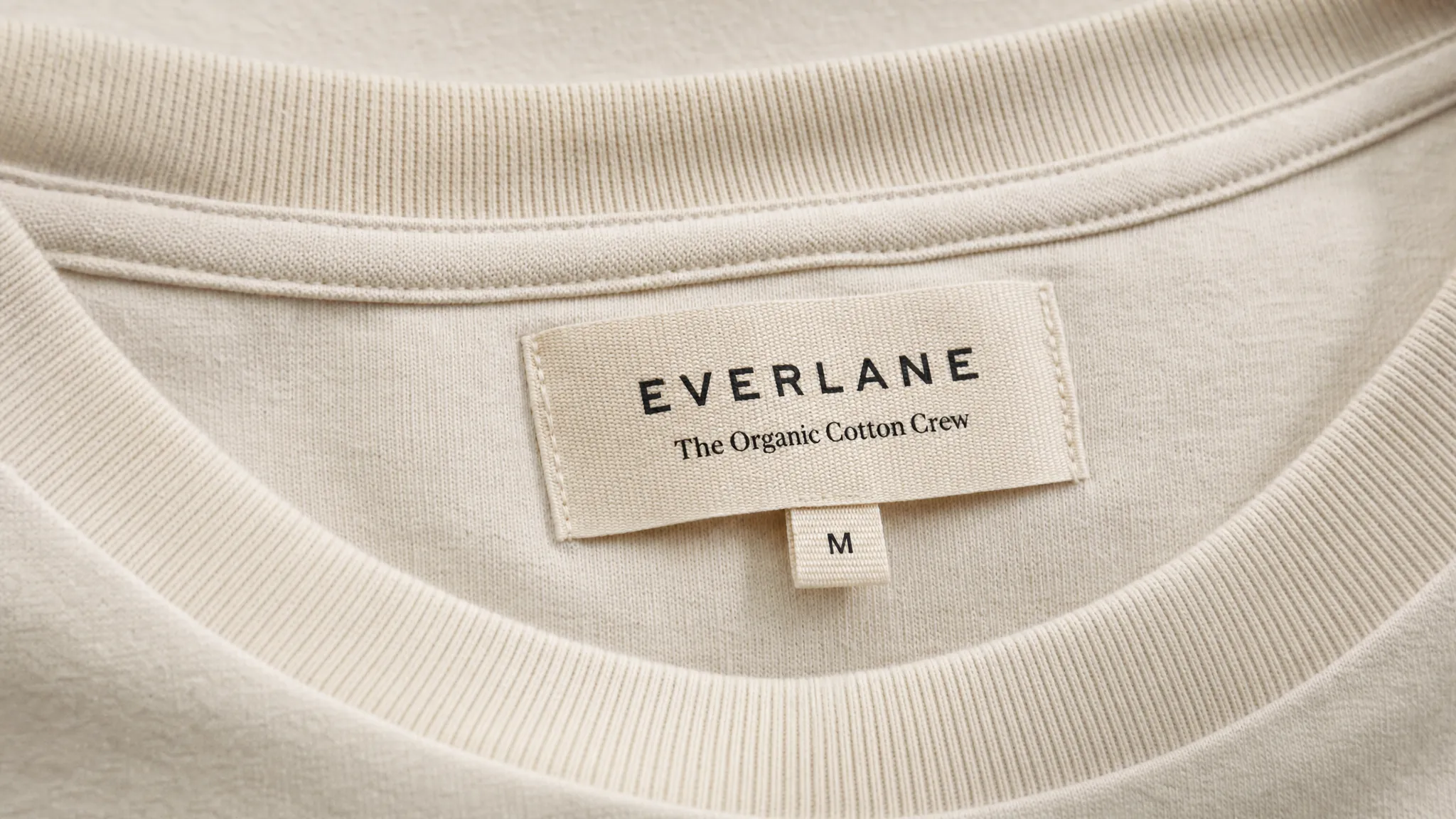
A visible label can become a signature. Think of a small hem tag on a T-shirt, a woven patch on a jacket, or a branded label on the outside seam of a tote bag. These placements create recognition beyond the buyer. They can make your product identifiable in photos, at events, or in everyday use.
A hidden or interior label creates a more private brand moment. Neck labels, waistband labels, and inside seam labels are often noticed by the customer during wear or care. This approach works well for brands that want a refined, understated feel.
Many brands use both. A visible label builds recognition in public, while an interior woven label reinforces quality and professionalism during ownership. If you sell apparel, accessories, home textiles, or handmade products, this layered approach can make your brand feel more complete.
How woven labels support perceived value
Customers often judge quality before they fully understand it. Stitching, fabric weight, finishing, packaging, and labeling all contribute to perceived value.
A custom woven label helps communicate that your product is not generic. It tells the customer that the item belongs to a brand with a point of view. This can be especially valuable when selling online, where buyers cannot touch the product before purchasing. Once the item arrives, the label becomes proof that the product was intentionally finished.
This does not mean every label needs to feel luxurious. A streetwear brand, children’s brand, outdoor maker, bridal designer, and handmade accessories shop may all need different label personalities. What matters is alignment. The label should feel like it belongs to the product and the customer’s expectations.
In that sense, custom woven labels are not just decorative. They are a small but durable brand investment. Just as business owners benefit from learning how to make smarter long-term financial decisions through resources like investing education and stock market guides, brands benefit from treating every customer-facing detail as part of a broader strategy, not a last-minute expense.
Building consistency across your product line
One of the easiest ways to make a brand more memorable is to repeat the same core identity across multiple products. A consistent woven label system can help customers recognize your work even when styles, fabrics, or collections change.
For example, your main label might stay the same across all garments, while supporting labels vary by collection, size, or product category. You might use a classic neck label for shirts, a side seam label for casualwear, and a woven patch for outerwear. The applications differ, but the brand language remains consistent.
This is where custom woven labels become more than a single product detail. They become part of a brand system.
A basic label system might include:
- A main brand label for recognition
- A size label for fit clarity
- A care label for product information
- A woven patch or exterior label for select pieces
- A ribbon or specialty trim for packaging and presentation
You do not need all of these at once. Many brands start with a main woven label, then expand as their product line grows. The important thing is to make early design decisions that can scale.
Common mistakes that make labels less memorable
Even a high-quality woven label can fall short if the design is not suited to the format. Avoiding a few common mistakes can make your finished label much stronger.
The first mistake is trying to include too much information. A woven label is not a brochure. If you add a logo, tagline, website, social handle, size, and care symbols all in one small space, the result can feel cluttered and hard to read.
The second mistake is using poor contrast. Thread colors that look beautiful separately may not be readable when woven together. If your brand palette is subtle, you may need to adjust contrast slightly for the label while preserving the overall feel.
The third mistake is choosing the wrong size for the placement. A large label can irritate the wearer or overwhelm a delicate product. A tiny label may lose detail or fail to communicate the brand clearly.
The fourth mistake is treating the label as an afterthought. If you wait until the end of production to consider labels, you may rush decisions that affect the customer’s lasting impression. It is better to think about label placement, sewing method, and design early in product development.
How to create custom woven labels with confidence
The best label process starts with a clear goal. Are you trying to make your products look more professional? Increase brand recognition? Add a premium finishing touch? Create a consistent identity across a growing line?
Once you know the goal, prepare the essentials: your logo or artwork, preferred colors, approximate size, application method, and any notes about the garment or product. If you are unsure, start simple. A clean brand name or logo in a strong color combination is often more effective than an overly complex design.
HiLabels makes it easy to create custom woven clothing labels online by choosing label options and uploading artwork. With custom woven labels, ribbons, patches, zipper pulls, care labels, and bespoke product options available, brands can build a more complete finishing system as they grow.
The advantage of working with an experienced label provider is that production details matter. Thread quality, loom precision, finishing, and customer support all affect the final result. HiLabels brings over 31 years of experience and focuses on durable, professional-quality branding products made for real use.
How to know if your label is working
A memorable label should support the broader customer experience. While it may be small, you can still look for signs that it is doing its job.
Pay attention to customer photos. Are your labels visible in user-generated content? Do they make products look more polished in close-up images? If people share unboxing videos or product reviews, does the label contribute to the impression of quality?
Listen to customer feedback. Comments like “beautifully finished,” “professional,” “premium,” or “love the details” often point to the impact of small branding choices. You can also ask wholesale buyers, boutique owners, or repeat customers what they notice first when handling your products.
Finally, evaluate consistency. If your products appear together at a market, in a store, or on your website, do they clearly feel like part of the same brand family? If the answer is yes, your woven labels are helping build recognition.
Frequently Asked Questions
Are custom woven labels better than printed labels? Custom woven labels are often preferred when durability, texture, and a premium feel are important. Printed labels can work well for detailed care information or certain budget needs, but woven labels tend to feel more permanent because the design is made with thread.
What should I put on a custom woven label? Most brands include a logo, wordmark, size, or short brand message. For small labels, keep the design simple and readable. If you need care instructions or detailed information, consider using a separate care label.
What size should my woven label be? The right size depends on the product and placement. Neck labels, hem tags, patches, and side seam labels all have different needs. The label should be large enough to read while remaining comfortable and proportional to the item.
Can woven labels help a small brand look more professional? Yes. A thoughtfully designed woven label can make handmade, boutique, and emerging-brand products feel more finished and recognizable. It is one of the most practical ways to add polish without changing the product itself.
When should I order labels during product development? It is best to plan labels early, before final production. This gives you time to choose placement, confirm sizing, prepare artwork, and ensure the label works with your garment construction.
Make every product carry your brand forward
Custom woven labels may be small, but they can have a lasting effect on how customers perceive and remember your brand. The right label adds credibility, reinforces your identity, and turns every finished product into a more complete brand experience.
If you are ready to create labels that feel intentional, durable, and memorable, start designing with HiLabels and build a finishing detail your customers will notice long after the first purchase.


