Custom Zipper Sliders for Branded Bags and Apparel
A custom zipper slider is one of the smallest branded details on a bag or garment, yet it is often touched more than the logo on the front panel. Every time a customer opens a backpack pocket, closes a jacket or grabs a pouch, the slider and pull become part of the product experience. That makes zipper hardware a practical place to add identity, improve grip and signal quality.
For brands, the challenge is choosing hardware that looks good without creating production headaches. The term “slider” is sometimes used loosely, so it helps to understand whether you need the moving zipper body, the pull tab attached to it, an added tag or a full branded zipper pull. The value of a custom zipper slider is strongest when the design supports both function and brand recognition, not just decoration.
Start with the parts of the zipper
A zipper is a system, and the slider is only one part of it. The slider body is the metal or molded component that travels along the zipper teeth. The pull tab is the part the user holds. Many branded upgrades focus on the pull tab or an attached puller because those parts are easier to customize, easier to replace and more visible in daily use.
This distinction matters when you request quotes or prepare artwork. If a supplier thinks you want the slider body and you actually want a branded pull tab, the estimate, lead time and technical requirements can change. For finished bags and apparel, brands often customize the pull element while keeping the slider body compatible with the zipper size already chosen by the factory.
| Component | What it does | Branding potential |
|---|---|---|
| Slider body | Opens and closes the zipper teeth | Limited, usually subtle marks or finish choices |
| Pull tab | Gives the user a grip point | Strong, good for logos, shapes and finishes |
| Added zipper pull | Extends the grip beyond the pull tab | Strong, ideal for tactile branding and easier use |
| Zipper tape | Holds the zipper teeth in the garment or bag | Moderate, mainly color coordination |
| Stopper and teeth | Keep the zipper aligned and secure | Low, mostly functional |
Why branded zipper hardware matters
Zippers sit at a useful intersection of branding and usability. They are not merely visual details. They affect how quickly someone can open a pocket with gloves on, identify a compartment or feel confident that a product was made with care. If you are designing travel bags, outerwear, uniforms or accessory pouches, a custom zipper slider can make the product feel more intentional from the first touch.
The branding benefit is especially clear on products with multiple compartments. A backpack may have a laptop section, front utility pocket, side pocket and hidden security pocket. Using distinct pull shapes, colors or markings can help customers find the right compartment faster. On apparel, branded zipper details can reinforce the same identity created by woven labels, patches and care labels.
If you are comparing hardware details across product types, HiLabels has a useful overview of how zipper pulls support both function and branding for jackets, bags and accessories.
Designing a custom zipper slider for brand visibility and grip
The best designs are clear at small scale. A zipper detail may be viewed from arm’s length, handled quickly or seen in motion, so tiny lettering and complex artwork often lose impact. A simple logo mark, initials, icon or distinctive shape usually works better than a full wordmark crowded into a narrow tab.
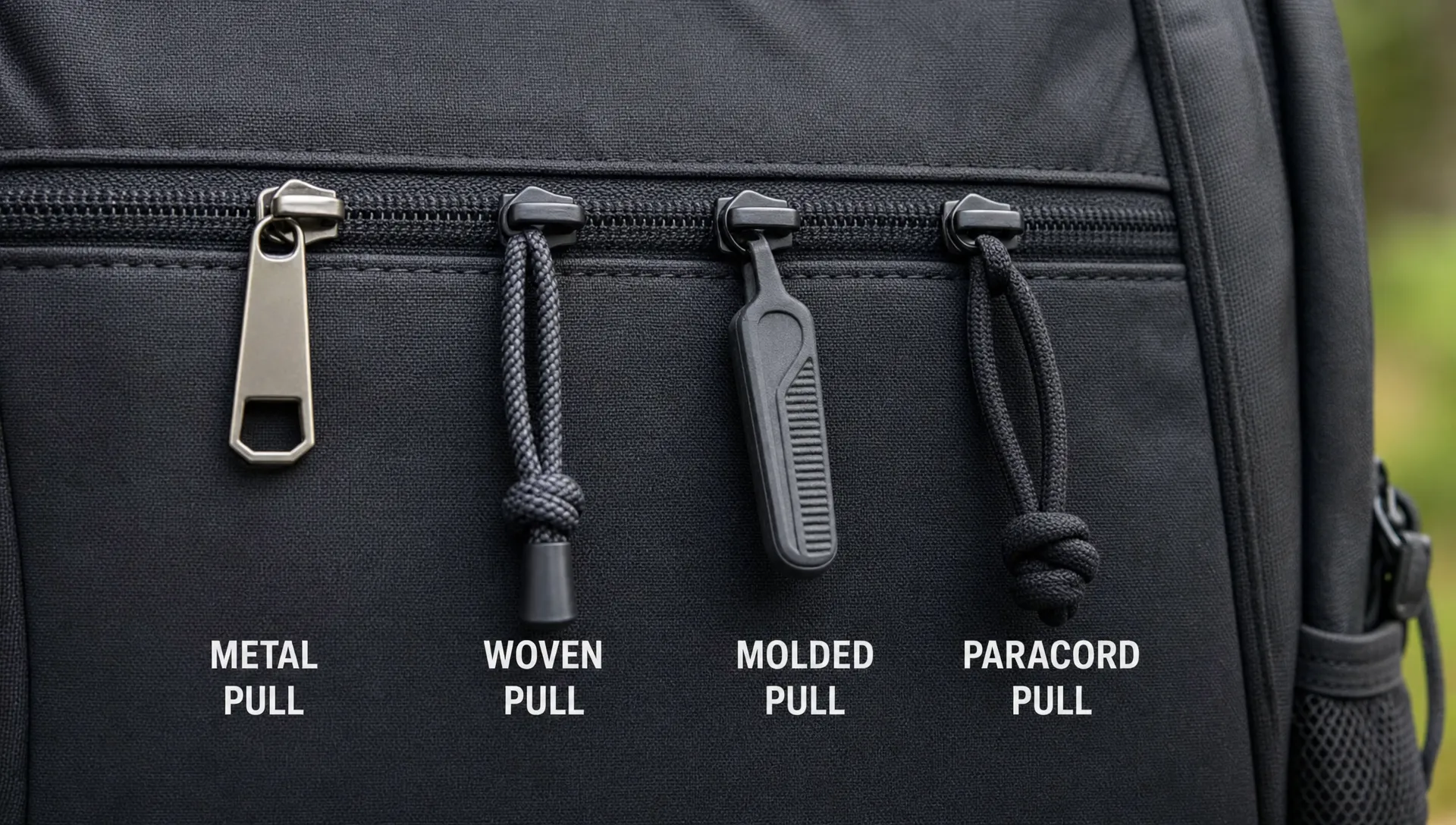
Grip is just as important as appearance. A polished metal pull can look premium, but it may feel cold or slippery in outdoor use. A woven or rubber-style extension can add traction and comfort, especially on performance bags, kids’ products and workwear. For bags, a custom zipper slider should be tested with the way the product is actually used, including one-handed opening, packed compartments and repeated pulls under tension.
Materials and finishes to consider
Metal is common for fashion bags, jackets and premium accessories because it feels substantial and can support plated finishes such as antique brass, nickel, matte black or gunmetal. Molded materials are often chosen for durability, color flexibility and grip. Woven or fabric pullers can coordinate with labels and patches, which is useful when a softer branded detail suits the product better than hard hardware.
For a more premium look, many brands explore metal hardware because it can add weight, shine and perceived value. HiLabels covers this in more detail in its guide to why custom metal zipper pulls add value to jackets and bags.
Size, proportion and placement
The pull should be large enough to use comfortably but not so large that it snags, swings too much or overwhelms the product. A compact jacket chest pocket may need a shorter pull than a travel duffel. A children’s backpack may benefit from a larger, softer grip. A luxury pouch may need a slimmer, quieter detail.
Logo placement should account for how the pull hangs when the zipper is closed. On some items, one side faces outward most of the time. On others, the pull twists during use, making double-sided branding worth considering. A custom zipper slider used on both left and right openings may also need artwork that reads well in either orientation.
Match the hardware to the product category
Different products place different demands on zipper details. A slider that works beautifully on a cosmetic pouch may be too delicate for a hiking backpack. A rugged puller that suits a tool bag may look too bulky on a tailored jacket. Matching hardware to the product category reduces returns, improves comfort and keeps the brand expression consistent.
| Product type | What matters most | Useful design direction |
|---|---|---|
| Backpacks | Grip, compartment recognition, durability | Larger pullers, strong attachment points, high-contrast details |
| Jackets | Comfort, movement, visual polish | Slim pulls, smooth edges, finish matching snaps or buttons |
| Travel bags | Strength, security, easy handling | Durable hardware, loop-friendly pull tabs, clear pocket identification |
| Pouches | Small-scale branding, neat proportions | Compact logo marks, soft materials, color coordination |
| Workwear | Glove-friendly use, toughness, consistency | Extended pulls, textured surfaces, high-visibility accents |
For travel products, security can also influence the decision. Lock-ready or lockable hardware may be relevant for luggage, tech compartments and commuter bags. If that is part of your product brief, review the practical considerations in HiLabels’ guide to lockable zipper sliders for travel gear.
Prepare specs before requesting production
Clear specifications help avoid mismatched samples and delays. Before placing an order, gather the basic zipper information from your product developer, factory or existing sample. The most important details are the zipper size, the slider type, the pull attachment method and the environment where the finished product will be used.
When you quote a custom zipper slider, include the product category, expected use case and artwork files. A supplier can give better guidance when they know whether the hardware is going on a fashion tote, school backpack, rain jacket or uniform. Use vector artwork when possible, and simplify the design before it reaches production.
Helpful details to prepare include:
- Zipper gauge or size, such as common coil or molded zipper sizes used by your factory
- Slider type, including non-locking, auto-locking or lock-ready options when relevant
- Pull material, such as metal, woven, rubber-style or fabric
- Logo artwork, preferably in vector format with clear color references
- Finish requirements, such as matte black, antique brass, nickel or brand-specific colors
- Quantity, timeline and whether samples are needed before bulk production
HiLabels offers custom branded details including woven labels, patches, ribbons, care labels and zipper pulls. If your goal is to add a branded pull element rather than replace the full slider body, the custom zipper pull option is a practical starting point.
Common mistakes to avoid
The most common mistake is treating zipper hardware as a purely decorative part. A pull that looks impressive in a mockup can disappoint if it is too sharp, too heavy, hard to grip or poorly matched to the zipper. Test the detail on the actual product rather than reviewing it only as a loose sample.
Another mistake is using a logo that is too detailed for the available space. Small debossed letters, thin strokes and low-contrast color combinations can disappear on a moving part. A custom zipper slider works best when the mark remains recognizable after finishing, plating, molding or weaving.
Avoid these issues early in the process:
- Choosing a pull that catches on fabric, straps or pocket edges
- Ignoring zipper gauge compatibility until after artwork is approved
- Using sharp corners on apparel hardware that touches the hand or skin
- Selecting a finish that clashes with snaps, rivets, buckles or label colors
- Ordering bulk production without testing the pull on a finished sample
When a branded pull is better than a full slider change
In many cases, changing the pull detail is more efficient than customizing the entire slider body. This is especially true when your factory already uses a reliable zipper system and you only need to improve branding, grip or compartment identification. A pull upgrade can preserve compatibility while still making the product feel custom.
A full slider change may make sense when the product requires a special function, such as lock-ready travel hardware, a specific auto-lock behavior or a fully matched metal finish across a premium collection. For most apparel and bag brands, though, the visible pull tab or attached puller delivers the biggest brand impact for the least disruption.
The decision should come down to use, not terminology. If customers mainly notice and touch the pull, focus your design energy there. If the slider mechanism itself affects security, movement or fit, involve your product developer early so the hardware works with the zipper tape and teeth.
How to keep zipper details consistent with the rest of your brand
Zipper hardware should not feel isolated from the rest of the product. It should coordinate with woven labels, patches, zipper tape, care labels, hang tags and packaging. Repeating the same logo shape, color accent or finish across these elements creates a more polished brand system.
A custom zipper slider can be subtle or bold depending on the collection. Outdoor and workwear brands may choose larger tactile details that prioritize grip. Premium fashion brands may prefer low-profile metal tabs with tonal engraving. Kids’ products may use brighter colors and softer materials. The strongest result is not always the loudest logo, but the detail that feels right for the product and customer.
HiLabels’ experience with custom labels and branded trim makes it easier to think about zipper details as part of a complete product presentation. When the label, patch, ribbon and zipper pull all speak the same visual language, the finished item feels more complete.
Frequently Asked Questions
What is the difference between a zipper slider and a zipper pull? The slider is the moving body that opens and closes the zipper teeth. The pull is the tab or added piece the user holds. Many branding projects customize the pull because it is more visible and easier to adapt.
Can a custom zipper slider be used on both bags and apparel? Yes, but the design should match the product. Bags often need stronger grip and durability, while apparel may need slimmer profiles, smooth edges and finishes that coordinate with other garment hardware.
What artwork works best for small zipper branding? Simple artwork works best. Use a clear logo mark, initials or icon rather than fine text. High contrast, balanced proportions and vector files help the final piece stay readable.
Do I need to replace the full slider to add branding? Not always. If the existing zipper works well, a custom pull tab or attached zipper pull may provide the branding benefit without changing the entire zipper mechanism.
Should I order samples before bulk production? Yes. Sampling helps confirm scale, grip, finish, logo clarity and compatibility with the finished bag or garment before you commit to a larger run.
A small zipper detail can change how a product feels in the customer’s hand. When you define the hardware correctly, simplify the artwork and test it on the finished item, a branded zipper component becomes more than decoration. It becomes a useful, durable part of the product experience.


