Fixing a Zipper Pull When the Tab Is Loose or Missing
Your zipper may still be perfectly usable even when the tab feels loose or has disappeared entirely. In many cases, fixing a zipper pull is simply a matter of securing a new grip to the slider without bending the slider body, damaging the teeth or replacing the entire zipper. That is good news for jackets, backpacks, purses, uniforms, sample garments and product prototypes where the zipper tape is still sewn in cleanly.
This guide focuses on the two most common tab problems: a loose pull tab that wobbles or slips out of position and a missing tab that leaves only the slider behind. The right approach depends on what is damaged, so start with a careful look before reaching for pliers.
Quick Diagnosis Before Fixing a Zipper Pull
A zipper pull has a few small parts that are easy to confuse. The slider is the metal or plastic body that moves along the zipper teeth. The tab is the piece you hold. The small bridge or loop on the slider that holds the tab is often called the bail, crown or attachment loop.
Before you repair anything, move the slider slowly up and down. If the zipper teeth still close evenly and the slider does not separate behind you, the main zipper mechanism is probably fine. If the teeth pop open after the slider passes, the problem may be the slider itself rather than the pull tab.
| What you see | Likely issue | Best next step |
|---|---|---|
| Tab is still attached but rattles loosely | Attachment loop is slightly open or tab hole is worn | Tighten carefully or replace the tab |
| Tab is gone but slider loop is intact | Pull tab broke off or fell out | Add a new pull, ring or cord |
| Slider loop is cracked or missing | Slider body is damaged | Replace the slider |
| Teeth separate after closing | Slider no longer grips correctly | Inspect slider size and wear |
The practical goal of fixing a zipper pull is to restore grip without crushing the slider. A slider that is squeezed too tightly can drag, scrape the teeth or stop moving altogether.
Tools and Parts That Make the Repair Easier
You do not need a sewing machine for most pull tab repairs. A clean work surface, good light and a few basic tools are usually enough. Smooth-jaw pliers are better than serrated pliers because they reduce scratches, especially on plated metal sliders.
For most small repairs, fixing a zipper pull takes 5 to 15 minutes once you have the right replacement part. If you are working on a finished product, a customer return or a branded bag, take extra care to protect the surrounding fabric with masking tape or a folded cloth.
| Tool or part | Use it for | Tip |
|---|---|---|
| Smooth-jaw pliers | Closing a slightly open slider loop | Squeeze gradually, not all at once |
| Split ring | Attaching a replacement tab | Choose one thin enough to pass through the loop |
| Lobster clasp | Removable pull attachments | Good for bags and pouches |
| Cord, ribbon or leather strip | Quick temporary pull | Avoid bulky knots that jam near zipper stops |
| Replacement pull tab | Permanent repair | Match the slider size and product style |
Avoid super glue as the main fix. It can stiffen fabric, gum up the slider and fail under repeated pulling. A mechanical attachment is usually more durable.
If the Zipper Tab Is Loose
A loose tab usually means one of two things. Either the slider loop has opened slightly, or the hole in the tab has worn wider over time. Start by checking whether the tab can slip out through a visible gap in the loop.
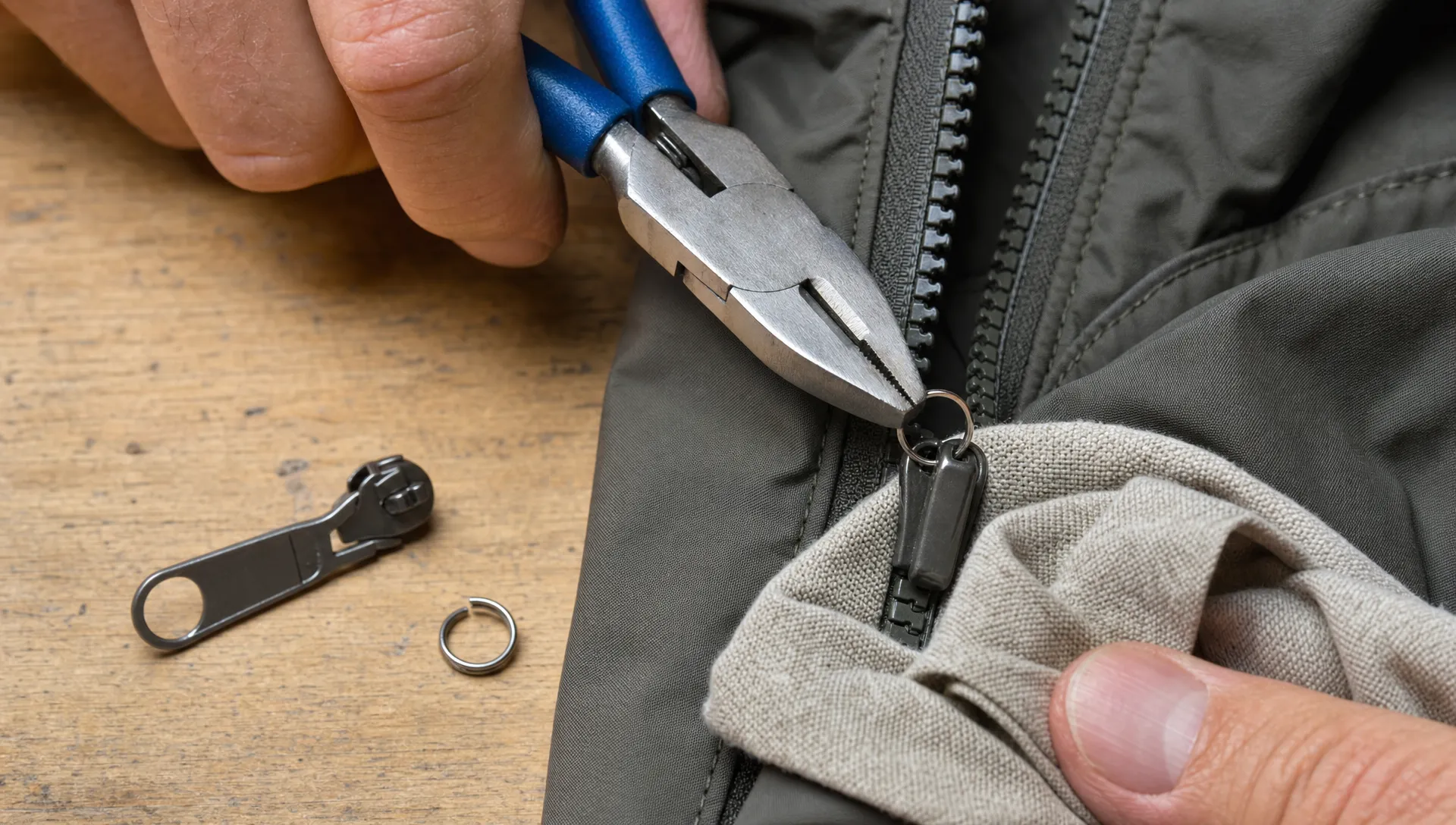
If the loop is open, wrap the slider in a thin cloth and use smooth-jaw pliers to press the loop closed. Make small adjustments and test the movement after each squeeze. Do not flatten the loop against the slider body. The tab still needs enough space to pivot when you pull it.
When fixing a zipper pull with a loose tab, pay attention to the tab material. Thin stamped metal can bend back into shape, but brittle plastic or decorative cast metal can snap if forced. If the tab hole is stretched, cracked or thinned out, replacing the tab is safer than trying to tighten everything around it.
A useful test is to hold the slider in one hand and tug the tab at the same angle you would use in daily wear. If it twists sideways, slips toward the opening or feels sharp at the attachment point, replace it before it falls off.
If the Zipper Tab Is Missing
A missing tab is often easier to handle than a loose one because you are not trying to save a damaged piece. First, inspect the slider loop. If it is intact, you can attach a new pull without removing the zipper or opening any seams.
For a temporary fix, thread a small split ring, cord loop, key ring, ribbon strip or narrow leather strip through the slider loop. This is useful on luggage, outdoor gear or workwear when you need the zipper working immediately. Keep the temporary pull slim enough to move past flaps, storm guards and zipper covers.
When fixing a zipper pull on a bag or jacket that will be used often, move beyond the emergency paperclip. Paperclips bend, scratch finishes and can snag fabric. A split ring, small clasp or purpose-made replacement pull gives better control and lasts longer.
If the slider loop is too small for a split ring, use a narrow jump ring or a thin cord first, then attach the larger pull to that connector. This keeps the repair flexible and reduces stress on the slider.
Choosing a Permanent Replacement Pull
A replacement pull should match both the function and the style of the item. Heavy jackets, duffel bags and boots need a pull that can handle force. Small pouches, cosmetic bags and apparel pockets can use slimmer hardware as long as the grip is comfortable.
For a clean repair, compare three measurements: the opening in the slider loop, the thickness of the connector and the length of the finished pull. If the connector is too thick, it may not fit. If the pull is too long, it may slap against the garment or catch on nearby hardware.
Fixing a zipper pull is also a good moment to improve usability. Larger pulls help when users wear gloves, handle wet gear or need quick access to compartments. If grip is the main problem, this guide to zipper pull extensions explains how longer pulls can improve both handling and product appearance.
For branded apparel, bags or accessories, a custom pull can make the repair look intentional instead of improvised. HiLabels offers custom zipper pulls along with woven labels, patches, ribbons and care labels, so brands can keep hardware and trims consistent across a product line.
If you are swapping hardware on a finished item, this guide on how to replace the pull without damaging the slider is helpful when the slider loop is tight or the original pull broke off unevenly.
How to Keep the New Pull From Coming Loose Again
A new pull fails when the connector is too soft, the slider loop remains open or the pull is yanked at a sharp sideways angle. After installation, inspect the attachment from all sides. There should be no visible gap wide enough for the ring or tab to slide out.
When fixing a zipper pull for long-term use, test it in the same conditions the item will face. Pull the zipper fully open and closed several times. Tug from the normal use angle, then from a slight angle. If the pull rotates smoothly without prying the loop open, the repair is more likely to last.
For production samples or customer-facing goods, consistency matters. A pull that looks fine on one piece may fail if the ring thickness changes in the next batch. Keep notes on the connector size, pull length and material that worked best.
You can also follow a more detailed installation process in this HiLabels guide on how to install a zipper pull that stays secure, especially if you are repairing multiple bags, uniforms or accessories.
When the Slider Should Be Replaced Instead
Sometimes the pull tab is not the real problem. Replace the slider if the attachment loop is broken off, cracked through or bent so badly that it cannot hold a connector. You should also suspect slider wear if the zipper teeth separate after the slider passes, even though the pull itself feels secure.
Fixing a zipper pull will not solve a slider that has lost its internal shape. On coil zippers, a worn slider may stop applying enough pressure to close the coil. On molded plastic or metal zippers, the slider may sit crooked or feel rough even after cleaning.
If the zipper tape is torn, teeth are missing or the bottom stop has pulled out, the repair becomes more involved. In those cases, replacing only the tab may give a short-term grip improvement, but it will not restore the zipper’s structure.
Small Habits That Prevent Future Pull Problems
Most pull tabs fail from repeated side stress. Try to pull in line with the zipper teeth rather than twisting the tab outward. On bags, avoid overstuffing compartments so the slider is not fighting constant tension.
Keep grit out of the zipper path, especially on outdoor gear, luggage and workwear. A soft brush can remove debris from the teeth. If the slider feels sticky, check for fabric caught near the teeth before forcing it.
For products you sell, choose a pull size that matches the real use case. A tiny pull may look minimal, but it can frustrate customers on gloves, jackets, tool pouches and travel bags. A slightly larger pull can reduce force on the slider and make the product feel easier to use.
Frequently Asked Questions
Can I fix a zipper pull without replacing the whole zipper? Yes. If the slider, teeth and zipper tape are still in good condition, you can usually attach a new tab, split ring, cord pull or custom pull without removing the zipper from the item.
What is the best temporary fix for a missing zipper tab? A small split ring or cord loop is usually better than a paperclip. It is less likely to scratch the slider, snag fabric or bend during normal use.
Should I squeeze the slider loop closed with pliers? You can, but do it gently. Protect the slider with cloth, use smooth-jaw pliers and test after each small squeeze. Too much pressure can deform the slider and make the zipper drag.
How do I know if the slider is the real problem? If the teeth separate after you zip them closed, the slider may be worn or bent. If the only issue is that you have nothing comfortable to hold, the pull tab is the more likely problem.
Is fixing a zipper pull worth it on branded products? Yes, especially when the fabric, zipper tape and slider still look good. A well-matched replacement pull can restore function and preserve the product’s finished appearance.
Finish the Repair With Hardware That Matches the Product
A loose or missing tab does not have to make a jacket, pouch or bag feel worn out. With the right connector and a pull that fits the slider, you can restore daily usability and keep the item looking intentional.
If you are repairing products for a brand, sample line or customer order, consider replacing generic emergency fixes with purpose-made zipper pulls. HiLabels helps brands create custom woven labels, patches, ribbons, care labels and zipper pulls with professional craftsmanship and an easy online ordering process.


