Are Embroidered Labels for Clothing Comfortable Against Skin?
Yes, embroidered labels for clothing can be comfortable against skin, but comfort depends on the finished construction, not just the softness of the thread. A smooth reverse, flexible edges and low-bulk attachment can make a label easier to wear. Exposed stitches, stiff backing or a thick border can make it scratchy, especially inside a neckline or waistband.
For clothing brands, the most useful question is: What will touch the wearer once this label is sewn into the garment? Evaluate that surface, its placement and its behavior during wear before committing to production.
Judge the surface that actually touches skin
An embroidered label has a design stitched into a supporting material. That construction can create texture on the front, while the reverse may contain stitch paths, thread ends or backing. Depending on how the label is attached, either surface could contact skin.
This differs from a woven label, where the design is formed within the weave rather than stitched onto an existing base. Sellers sometimes use these terms loosely, so confirm the construction rather than relying on the product name or photograph.
Direct embroidery is another separate option: the design is stitched into the garment itself. It removes the separate label, but the reverse stitching may still need attention wherever it touches skin.
A soft-looking logo is therefore not enough to judge comfort. Inspect both sides of a physical sample and check its edges while bending it. A label that feels acceptable lying flat may feel different when it curves around a neck.
What makes embroidered labels for clothing comfortable?
A smooth reverse with minimal exposed stitching
Check the back of the label for rough thread ends, hard spots and exposed construction materials. Run a fingertip across it in several directions rather than checking only the center.
A covering layer can separate embroidery stitches from skin, but it may also add thickness or stiffness. Ask what the backing is intended to do: stabilize the embroidery, support attachment or provide a smoother contact surface. Those functions are not interchangeable.
Also confirm whether any temporary stabilizer will remain in the finished product. The sample you approve should represent the label as delivered and installed, not an unfinished embroidery sample.
Flexible edges and low-bulk attachment
Edges can be more noticeable than the label face. A raised stitched border, rigid corner or firm cut edge may rub against skin even when the middle feels smooth.
Folded edges can conceal cut ends, although several layers of folded material can create a bulky ridge. Heat-sealed edges may resist fraying, but their feel depends on the material and finishing process. Neither method guarantees softness.
Attachment matters too. Dense stitching, overlapping seams or poorly trimmed thread ends can undermine an otherwise comfortable label. Check that the label lies flat without puckering the garment or lifting at the corners.
When comparing embroidered labels for clothing, evaluate the complete sewn-in sample rather than ranking loose labels by touch alone. The garment fabric, seam allowance and attachment stitches all contribute to the finished feel.
Placement that avoids repeated rubbing
A back-neck label can move against the skin when the wearer turns their head. A waistband label may sit under pressure from a close fit or belt. An internal side-seam label can rub during walking or exercise.
Think about how the garment will actually be worn. A label inside a loose overshirt may have limited skin contact if a T-shirt sits underneath it. The same label inside a fitted base layer could be much more noticeable.
Use the smallest practical footprint that keeps the design readable, but do not assume smaller always means softer. A tiny, thick label can still create a concentrated pressure point. Position, flexibility and edge construction need to work together.
Which placements deserve the most caution?
The table below highlights likely contact points, not guaranteed outcomes. Embroidered labels for clothing need closer comfort testing wherever movement or pressure keeps them against bare skin.
| Garment location | Main comfort concern | Practical design direction |
|---|---|---|
| Inside back neckline | Edges and reverse stitching can rub during head movement | Minimize bulk and compare with a smoother label construction |
| Inside waistband | A close fit can press the label into skin | Check the label while sitting, bending and wearing the waistband normally |
| Internal side seam | Repeated contact during walking or exercise | Keep exposed edges controlled and test on the intended fabric |
| Outside a sleeve or chest panel | Attachment stitches may still be felt inside | Inspect the garment reverse, not only the visible label |
| Outside a lined jacket | The lining can separate the label construction from skin | Confirm that attachment does not leave rough areas on the lining side |
Moving a textured brand label to the outside often reduces direct contact, but check where the attachment stitching ends up. A visually external detail can still leave an uncomfortable interior surface.
For sleepwear, underwear and close-fitting activewear, prioritize low-friction construction over a prominent embroidered texture. These garments leave less room for a label to sit away from the body.
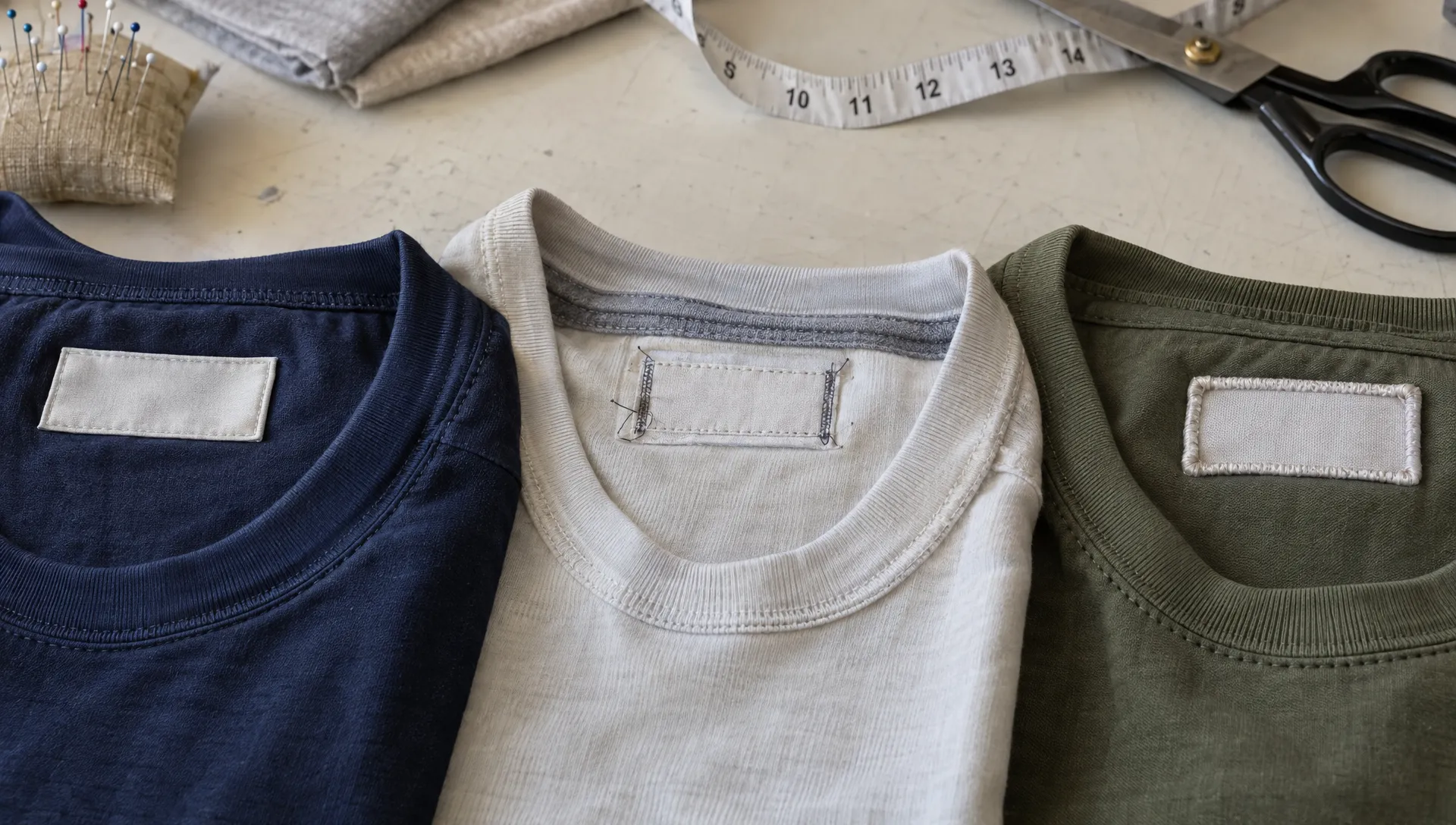
Test the finished garment before approving production
A loose label sample helps you screen materials. A sewn-in sample tells you whether the construction works in practice. Use the intended garment fabric, placement and attachment method so the test reflects what customers will receive.
Build a simple comparison around the same garment style. If possible, test more than one label construction rather than trying to improve a single option indefinitely.
- Inspect both sides: Look for exposed thread ends, rough corners, hard backing and raised attachment stitches.
- Wear during normal movement: Include sitting, reaching, bending and turning the head where relevant to the garment.
- Check expected conditions: Evaluate contact during the activity and layering conditions the garment is designed for.
- Wash and dry as intended: Follow the applicable care instructions, then inspect for curling, puckering and changes in stiffness.
- Record specific feedback: Note exactly where rubbing occurs and which part of the construction causes it.
There is no universal wear-test duration that proves a label will suit everyone. Set a practical protocol for your product and test enough movement to expose likely problems. Do not ask testers to continue wearing something that causes irritation.
For embroidered labels for clothing, post-wash testing matters because the garment and label may respond differently to laundering. Check whether the surrounding fabric has puckered or whether an edge now curls toward skin.
Treat feedback such as “scratchy at the upper-right corner” as actionable. “Does not feel premium” gives you much less guidance about what to change.
When a woven or printed label makes more sense
If the label must sit directly against skin, a flatter construction may be a better starting point than embroidery. A fine woven label can provide branding without the same raised stitched surface, although its edges and attachment still need testing.
HiLabels’ guide to custom damask woven labels explains another construction worth considering when smoothness and small design details matter.
Printed fabric labels can also suit care information or other text-heavy uses. Their feel depends on the base material, printing process and finishing, so “printed” alone does not establish comfort. The comparison of printed cloth labels and woven labels for apparel can help narrow those options.
You can also separate the branding roles: keep a textured emblem outside and use a flatter label inside for essential information. This preserves the embroidered look without requiring that texture to sit against bare skin.
Frequently asked questions
Do embroidered labels for clothing get softer after washing? Some materials may become more flexible, but washing is not a reliable fix for rough edges, bulky borders or exposed stitches. Approve the label based on its initial feel and its condition after laundering according to the intended care instructions.
Are iron-on labels more comfortable than sew-in labels? Not automatically. Iron-on attachment removes perimeter sewing in some applications, but the adhesive layer can affect flexibility. Sew-in labels can also be comfortable when their edges, backing and attachment are well controlled. Compare finished samples rather than assuming one method feels better.
Are embroidered labels suitable for sensitive skin? Some wearers may tolerate them, while others find even small tags irritating. Material names and “soft” descriptions do not establish that a finished label is hypoallergenic or irritation-free. For customers who are sensitive to tags, consider a smoother construction or placement away from direct skin contact.
Choose the label around the garment
Start with the contact point, then choose the construction. If embroidery creates unwanted texture inside the garment, moving it outside or selecting a flatter label may solve the problem more effectively than changing thread alone.
For an alternative, explore HiLabels’ custom woven labels and share your artwork, garment fabric and intended placement. Ask about the finished reverse, edge treatment and attachment requirements before making your choice.


