Printed Cloth Labels vs Woven Labels for Apparel
Choosing the right label is a small decision with a big effect on how customers experience your apparel. A neck label that scratches, fades, curls, or looks cheap can weaken the impression of an otherwise well-made garment. On the other hand, a clean, durable, well-placed label can make a product feel finished, trustworthy, and ready for retail.
For many apparel brands, the decision comes down to printed cloth labels vs woven labels. Both can work beautifully, but they solve different problems. Printed cloth labels are often chosen for fine text, care instructions, and soft informational labels. Woven labels are usually preferred for long-lasting brand identity, premium presentation, and garments meant to survive repeated wear and washing.
The best choice depends on your apparel category, design style, production volume, budget, and how much brand presence you want the label to carry.
What Are Printed Cloth Labels?
Printed cloth labels are fabric labels where the design, text, or care information is printed onto the surface of the material. The base fabric may vary, but the defining feature is that the artwork sits on top of the fabric rather than being built into it with thread.
This makes printed cloth labels especially useful when you need very small text, wash symbols, fiber content, country of origin details, QR codes, or multi-line instructions. Because printing can reproduce fine lines and small characters, it is often the practical choice for labels that need to communicate information clearly in a limited space.
Printed labels can also work well for soft, lightweight garments where the label should feel minimal against the skin. However, the long-term appearance depends heavily on the fabric, ink, print method, washing conditions, and friction. A printed label can be excellent for the right application, but it may not always project the same permanence or premium texture as a woven label.
What Are Woven Labels?
Woven labels are made by weaving threads together to create the design directly in the fabric. Instead of printing the logo on top, the logo, text, border, and background are formed with yarn. This construction is what gives woven labels their texture, depth, and durability.
Woven labels are commonly used as main brand labels, hem tags, sleeve labels, size labels, and decorative branding elements on apparel and accessories. They are especially strong when your label needs to stay attractive through repeated use, laundering, handling, and resale.
For a more polished apparel presentation, many brands choose custom woven clothing labels because they feel integrated into the garment rather than added as an afterthought. When designed with the right size, contrast, and fold style, a woven label can become part of the product’s identity.
Printed Cloth Labels vs Woven Labels: Quick Comparison
| Factor | Printed cloth labels | Woven labels |
|---|---|---|
| Best use | Care details, fiber content, instructions, small text | Main branding, logos, premium garment labels |
| Durability | Good when produced well, but print may fade over time | Excellent because the design is woven into the label |
| Detail level | Strong for tiny text and intricate printed information | Strong for clean logos, bold type, and simplified artwork |
| Texture | Usually flat and lightweight | Textured, dimensional, and more tactile |
| Brand perception | Practical, clean, and informational | Premium, permanent, and retail-ready |
| Color handling | Good for complex graphics or many printed colors | Best with planned thread colors and strong contrast |
| Common placement | Side seam, inside care label, size label | Neck, hem, sleeve, waistband, outside branding |
This does not mean one option is universally better. A high-quality apparel line may use both: a woven label for brand identity and a printed cloth label for required product information.
Durability: Which Label Lasts Longer?
Durability is one of the biggest reasons apparel brands choose woven labels for visible branding. Since the design is created with thread, it is not sitting on the surface waiting to be rubbed away. A well-made woven label can keep its logo and structure through many washes, which matters for clothing that customers wear often.
Printed cloth labels can also be durable, especially when used inside garments and produced with appropriate materials. But printed designs may be more vulnerable to fading, cracking, or softening over time depending on the print method and how the garment is washed. Heat, abrasion, detergent, and repeated drying cycles can all affect the printed surface.
For main brand labels, durability is about more than survival. It is about how the garment looks months or years later. If the label is still crisp after repeated laundering, the whole product feels better maintained. This is why woven labels are frequently used on premium apparel, outerwear, denim, uniforms, children’s clothing, and accessories.
If you want a deeper look at the premium appearance side of this choice, HiLabels has a helpful guide on why woven fabric labels look more premium, including the role of texture, depth, and permanence.
Design Detail: Which Is Better for Your Artwork?
Printed cloth labels are excellent when the design includes very fine details. If your label needs tiny care instructions, complex illustrations, ingredient-style text, or multiple rows of information, printing often gives you more flexibility.
Woven labels work best when the artwork is adapted for thread. Clean logos, strong shapes, readable lettering, and limited color palettes usually translate beautifully. Very thin lines, tiny serif fonts, gradients, and photographic artwork may need simplification to weave clearly.
That design limitation is not necessarily a downside. In apparel branding, simpler often looks stronger. A clean woven mark can feel more intentional than a cluttered printed label. The key is to design for the production method rather than forcing the same artwork into every label type.
For brands with detailed logos that still want a refined woven result, damask is often considered because it can support finer detail than many other woven styles. If you are comparing woven options, this guide to custom damask woven labels explains when that type of label makes sense.
Comfort and Feel Against the Skin
Comfort matters most for labels that touch the wearer directly. A beautiful neck label will not help your brand if customers cut it out after the first wear.
Printed cloth labels are often thin and flexible, which can make them comfortable for intimate apparel, activewear, children’s clothing, lightweight knits, and base layers. They are also useful when the label’s primary job is to provide information without adding bulk.
Woven labels can be very comfortable too, especially when the right material, fold, edge finish, and placement are chosen. The design should account for the garment type. A label inside a structured jacket can be more substantial than a label inside a soft T-shirt. A hem tag may be allowed to feel more textured because it is not directly against sensitive skin.
The right question is not simply, “Which label is softer?” It is, “Where will this label sit, how will the customer experience it, and what job does it need to do?”
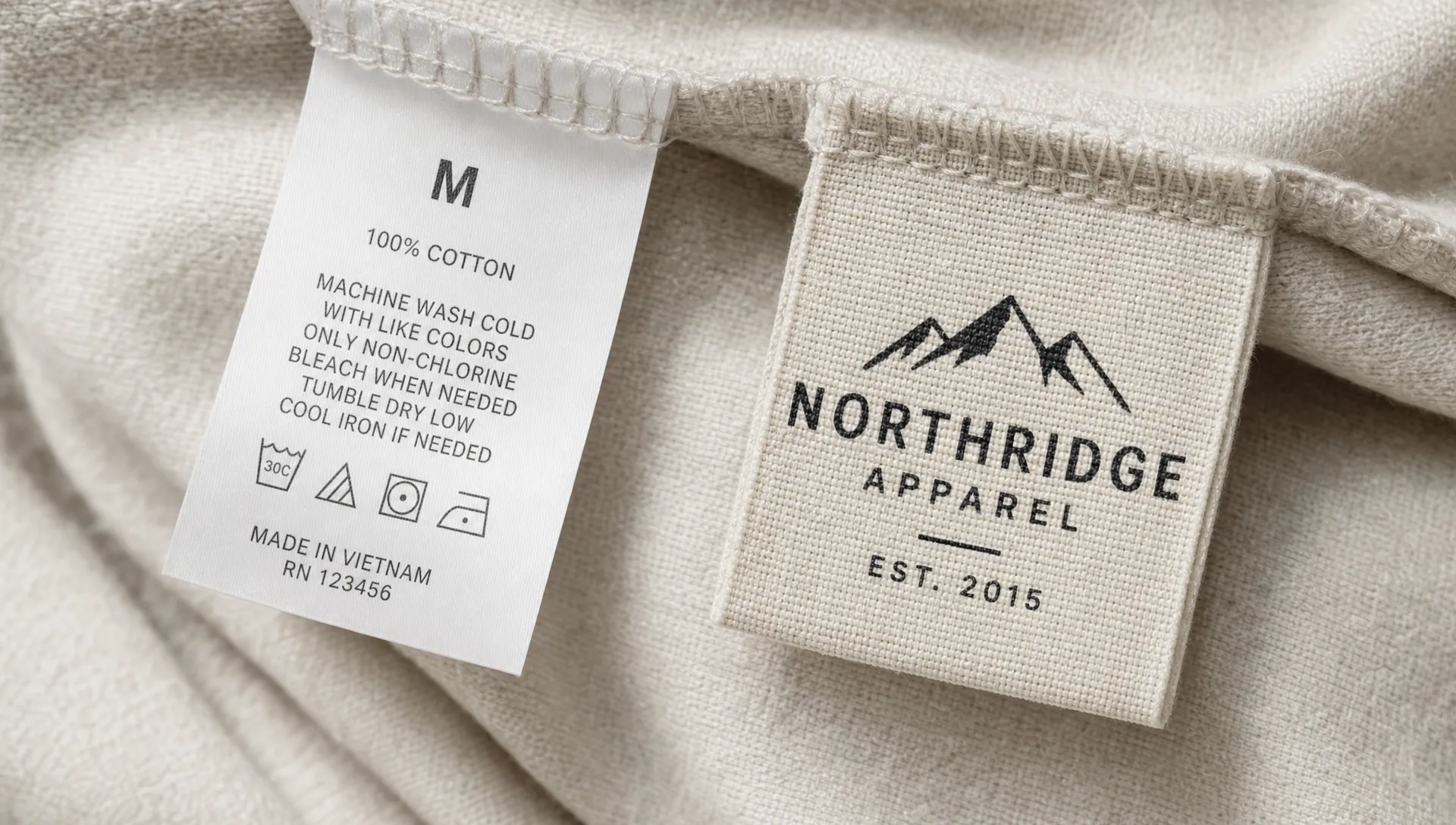
Brand Perception: Practical vs Premium
Printed cloth labels usually feel clean, functional, and understated. That can be exactly right for care instructions, children’s garments, basics, and products where the label should disappear into the garment.
Woven labels tend to feel more premium because they add texture and permanence. Customers may not consciously analyze the label, but they notice the overall finish. A woven label can make a handmade product look retail-ready, help a startup apparel brand appear more established, and reinforce the value of a higher-priced garment.
This matters because apparel branding does not happen only on hangtags, websites, or packaging. It happens every time someone puts on the garment, folds it, lends it, resells it, photographs it, or recommends it. A woven label keeps the brand present long after the first purchase.
Physical branding works best when it matches the rest of your customer experience. If your label, product photography, packaging, and website all communicate the same level of quality, buyers are more likely to trust the brand. For small businesses that need their online presence to match their product quality, working with conversion-focused website optimization and local SEO specialists can help turn that polished brand impression into more visibility and customer inquiries.
Cost and Production Considerations
Cost depends on label size, materials, colors, complexity, order quantity, finish, and production method. In general, printed cloth labels can be cost-effective for information-heavy labels because printing can handle small text efficiently. Woven labels may require more planning because the design is translated into thread, but they often provide greater long-term value when used as the primary brand label.
The important thing is to compare cost by purpose, not just unit price. A care label and a main brand label are doing different jobs. A slightly more premium woven label may be worth it if it increases perceived value, improves resale presentation, and makes the garment feel more professional. A printed cloth care label may be the smarter choice if the customer simply needs clear washing instructions inside the side seam.
When evaluating cost, consider these practical factors:
- How visible the label will be to customers
- Whether the label must survive frequent washing
- How much text or detail needs to fit
- Whether the garment is positioned as budget, mid-market, or premium
- Whether the same label design will be used across multiple products
A label is not just a production expense. It is a small brand asset attached to every item you sell.
When Printed Cloth Labels Make the Most Sense
Printed cloth labels are often the better choice when the label’s main job is communication rather than decoration. They are especially practical for detailed information that would be difficult to weave at a small size.
Common uses include care instructions, size details, fiber content, compliance information, batch details, and multi-language text. They can also be useful for brands that want a soft, minimal label inside lightweight garments.
Choose printed cloth labels when you need:
- Very small text or wash symbols
- A lightweight label with minimal bulk
- Detailed care or compliance information
- A flat, subtle appearance
- Complex printed artwork that does not need a raised texture
The main caution is visibility over time. If the label is central to your brand identity, make sure the print quality and material match the garment’s expected lifespan.
When Woven Labels Make the Most Sense
Woven labels are usually the stronger choice when the label represents the brand itself. If the customer will see it often, if it sits at the neck or hem, or if it needs to make the product feel more premium, woven is hard to beat.
A woven label is also useful when you want consistency across a collection. The same woven logo label can appear in shirts, jackets, bags, hats, blankets, or accessories, creating recognition across different product categories.
Choose woven labels when you need:
- A premium main brand label
- Strong durability through washing and wear
- A tactile, dimensional finish
- Long-term brand recognition
- A retail-ready look for apparel or accessories
Woven labels are especially effective for brands that want customers to remember the maker, not just the garment.
Best Label Choice by Apparel Type
| Apparel or product type | Recommended approach | Why it works |
|---|---|---|
| T-shirts and basics | Woven neck or hem label plus printed care label | Balances brand presence with comfort and clear instructions |
| Activewear | Soft printed care label or heat-transfer information, with selective woven branding | Reduces irritation while keeping branding intentional |
| Denim and workwear | Woven brand label or patch plus printed care label | Supports durability and a rugged, long-lasting brand feel |
| Luxury apparel | High-quality woven label plus discreet care label | Reinforces premium value and craftsmanship |
| Children’s clothing | Soft printed informational label plus carefully placed woven branding | Prioritizes comfort while maintaining brand identity |
| Accessories and bags | Woven label, patch, or zipper pull | Adds visible branding where skin contact is less of a concern |
| Handmade goods | Woven sewing label plus simple care information | Creates a professional finish and improves giftability |
The Best Solution Is Often Both
For many apparel brands, the smartest answer is not printed cloth labels or woven labels. It is printed cloth labels and woven labels, each used in the right place.
A woven label can carry the brand name, logo, or collection identity. A printed cloth label can carry care instructions, size information, and fiber content. This combination keeps the garment professional, compliant where applicable, and comfortable without sacrificing brand impact.
Think of the woven label as the signature and the printed label as the instruction card. One builds recognition. The other helps the customer care for the garment correctly.
Design Tips Before You Order
Before choosing a label type, review your artwork and ask how it will perform in real life. Labels are small, so clarity matters more than complexity.
For woven labels, simplify fine details, increase contrast, and make sure lettering is large enough to read. Avoid relying on subtle gradients or delicate lines unless the artwork has been adapted for weaving. For printed cloth labels, make sure the text remains legible at the final label size and that the label material suits the garment.
It also helps to think about placement early. A center-fold neck label, end-fold hem label, straight-cut patch label, and side-seam care label all create different experiences. The label style should match the garment construction, not fight it.
If you are developing a full apparel line, create a simple label system rather than treating each product separately. For example, you might use one woven logo label across the collection, one size label format, and one care label format. This keeps the brand consistent and makes future ordering easier.
So, Which Label Should You Choose?
Choose printed cloth labels if your priority is small text, detailed care information, soft structure, or a flat informational label. Choose woven labels if your priority is premium branding, durability, texture, and long-term recognition.
For most apparel brands, the strongest setup is a woven brand label paired with a printed care or information label. That way, your product looks polished while still giving customers the practical details they need.
If your label will represent your brand every time the garment is worn, handled, photographed, or resold, woven is usually the better investment. If your label needs to communicate detailed information clearly and discreetly, printed cloth is often the practical choice.
Frequently Asked Questions
Are printed cloth labels cheaper than woven labels? They can be, especially for information-heavy labels with small text, but cost depends on size, material, order quantity, colors, and finishing. The better comparison is value by use: printed labels are practical for care details, while woven labels are often worth the investment for main branding.
Do woven labels last longer than printed cloth labels? In many apparel applications, yes. Woven labels tend to last longer because the design is made with thread rather than printed on the surface. Printed labels can perform well too, but their appearance may depend more on print method, washing, and abrasion.
Can I use a printed cloth label as my main brand label? Yes, especially if your brand style is minimal or if comfort is the top priority. However, if you want a more premium, textured, and permanent brand presentation, a woven label is usually stronger.
Which label is best for care instructions? Printed cloth labels are commonly preferred for care instructions because they can reproduce small text, symbols, fiber content, and multi-line information clearly in a compact space.
Which label looks more premium on apparel? Woven labels generally look more premium because of their texture, depth, and durability. They are a strong choice for neck labels, hem tags, outer branding, and garments where perceived quality matters.
Can I order woven labels if I already have artwork? Yes. HiLabels offers an upload artwork option and an online label creation process for custom woven labels, making it easier to turn your existing brand artwork into a finished apparel label.
Create a Label That Fits Your Brand
Your label should match the quality of the apparel it represents. Printed cloth labels are excellent for clear information and lightweight comfort, while woven labels give your brand a durable, polished, and memorable finish.
If you are ready to elevate your garments with professional woven branding, HiLabels makes it simple to create custom labels online with quality craftsmanship, personalized service, and decades of label-making experience.


