Create Your Own Label for Clothing and Packaging
Your label is a small surface with a big job. It tells customers who made the product, helps them understand how to use or care for it, and creates a finishing detail that can make a handmade item, small-batch collection, or growing apparel brand feel complete.
When you create your own label for clothing and packaging, the best results come from thinking beyond a logo file. A label has to match the product, survive the way it will be handled, remain readable at a small size, and feel consistent with the rest of your brand experience.
This guide walks through the practical decisions that matter most, from choosing label formats and preparing artwork to connecting garment details with packaging, ribbons, patches, and care information.
Start with what the label needs to accomplish
Before choosing colors, folds, or materials, define the label's role. A label on the inside neck of a T-shirt is not doing the same job as a ribbon around a gift box or a patch on a backpack. They may share the same logo, but they need different specifications.
Most brand labels serve one or more of these purposes:
- Identification: showing the brand name, logo, size, collection, or product line.
- Information: communicating care instructions, fiber content, origin details, or handling guidance.
- Presentation: making the product feel finished, premium, giftable, or retail-ready.
- Durability: staying attached and legible after wear, washing, shipping, and handling.
- Recognition: helping customers remember your brand after the first purchase.
For apparel brands, the main concern is often durability and comfort. For packaging, the focus is usually presentation and first impression. The strongest brands make those two worlds feel connected without forcing the exact same label design into every use case.
Clothing labels and packaging labels do different jobs
A common mistake is designing one label and using it everywhere. That can work for a simple logo mark, but clothing and packaging have different constraints. The table below shows how the priorities shift.
| Label context | Main purpose | Key design priority | Common mistake to avoid |
|---|---|---|---|
| Neck or waist label | Brand identification | Comfort, readability, size | Making the label too large or scratchy |
| Side seam or hem label | Subtle branding | Placement and fold style | Using text that is too small to read |
| Care label | Required product information | Accurate content and durability | Treating compliance text like decoration |
| Patch | Visible brand detail | Shape, contrast, attachment method | Overloading the design with fine detail |
| Packaging ribbon | Unboxing and presentation | Repeat pattern, color, texture | Choosing a design that only looks good flat |
| Gift or product packaging label | Retail clarity | Quick recognition and hierarchy | Crowding the label with every detail |
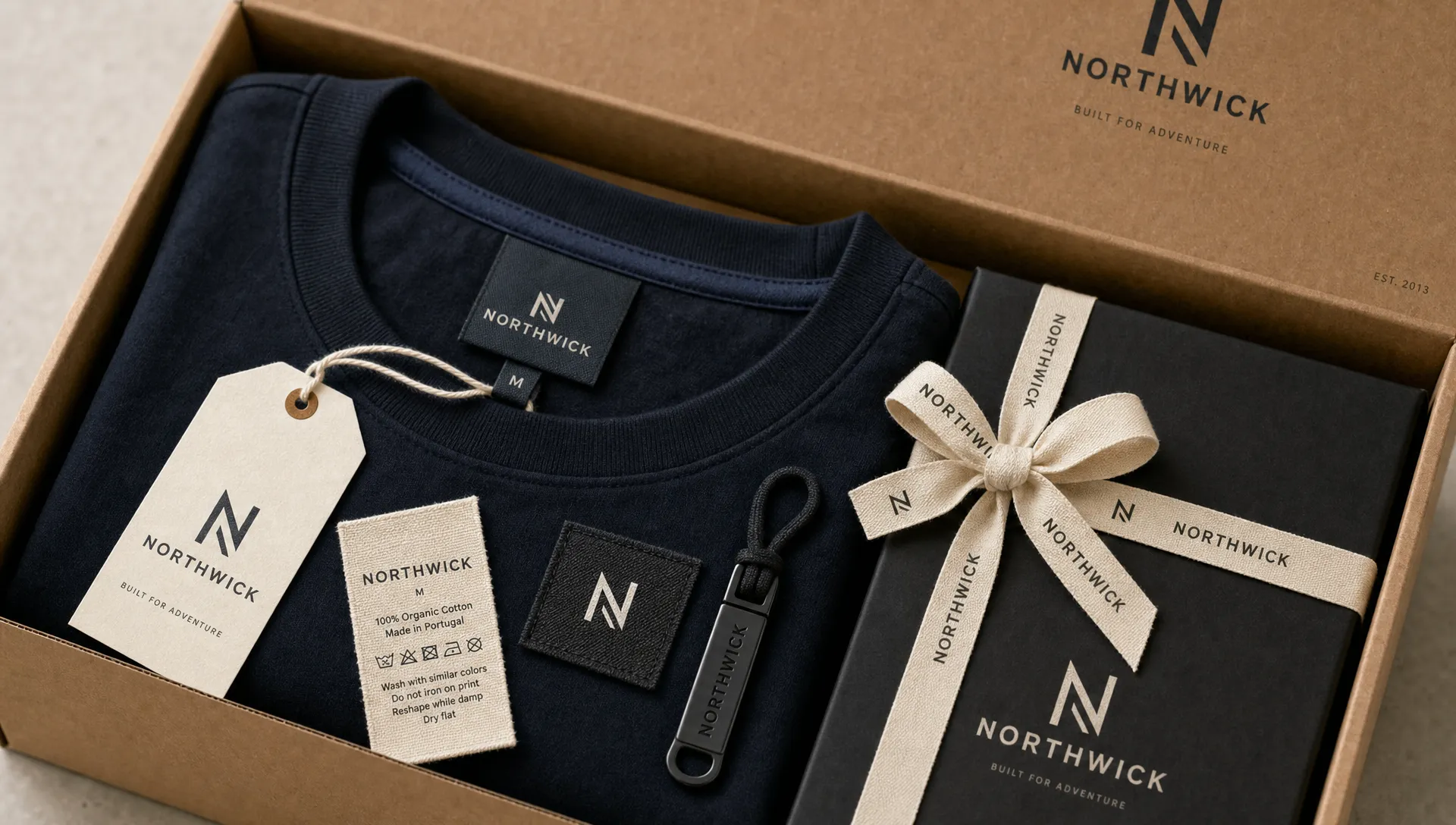
This is why it helps to build a label system rather than a single label. Your main woven label, care label, patch, ribbon, and packaging detail can each do one job well while still sharing the same visual language.
Choose the right label format for your product
The label format should follow the product's use, price point, and brand personality. A minimalist basics brand might need a clean woven neck label and a simple care label. A streetwear label might rely on patches, zipper pulls, or exterior woven details. A gift-focused brand may get more value from custom ribbon and packaging details that make the product feel special before it is even opened.
| Format | Best for | Why it works |
|---|---|---|
| Custom woven label | Apparel, accessories, handmade goods | Durable, polished, and suitable for long-term brand identification |
| Care label | Clothing and textile products | Communicates care and product information in a compact format |
| Patch | Jackets, hats, bags, uniforms, statement pieces | Adds visible branding with texture and structure |
| Custom ribbon | Gift boxes, retail packaging, product bundles | Creates a premium packaging moment and reinforces brand colors |
| Zipper pull | Bags, jackets, outerwear, accessories | Adds a small functional brand detail customers interact with |
| Fabric tag | Clothing, home goods, accessories | Offers a softer branding option for textile products |
If your priority is a durable garment branding detail, you can start with HiLabels' custom woven clothing label configurator to choose options such as label type, finish, size, colors, and artwork upload.
Build a design that still works at label size
A label is not a business card. It is often much smaller, made from thread or fabric, and viewed while attached to a moving or folded product. That means your artwork needs to be simplified for real-world production.
Keep the logo readable
If your logo has thin lines, gradients, tiny text, or detailed illustrations, it may need a simplified label version. A woven label is created with threads, so high contrast and clear shapes usually work better than delicate detail.
This does not mean your label has to be boring. It means every element should earn its place. A strong label may use only a wordmark, a small icon, or a shortened brand mark. For a deeper look at this process, HiLabels has a helpful guide on how to turn a label logo into a strong brand detail.
Use color with restraint
Brand colors matter, but labels often look better when the palette is focused. Two or three colors are usually easier to read than a complex full-color design, especially at small sizes. High contrast combinations, such as dark thread on a light background or light thread on a dark background, improve legibility.
For packaging, you may have more room to use color expressively. A ribbon can repeat a logo or brand phrase, while a woven label can stay clean and subtle. The key is consistency, not sameness.
Match size and fold to placement
A center-fold neck label has different requirements than a straight-cut patch or an end-fold hem tag. If the label will be sewn into a seam, you need space for stitching. If it will sit against skin, comfort becomes critical. If it will wrap packaging, the design needs to look good from multiple angles.
Think about where the label will live before finalizing the design. Placement affects size, fold style, logo orientation, and how much information can fit.
Connect clothing and packaging into one brand experience
Customers do not experience your label in isolation. They might first see your packaging, then touch the ribbon, then open the item, then notice the neck label, care label, patch, or zipper pull. Each detail either strengthens the brand impression or makes it feel inconsistent.
A simple way to create consistency is to define a small set of brand rules:
- Use the same logo version across labels unless a smaller version is needed for readability.
- Keep thread colors close to your core brand palette.
- Repeat one recognizable detail, such as an icon, tagline, border, or woven pattern.
- Use packaging to create emotion and garment labels to create lasting recognition.
- Make sure care labels and technical labels feel clean, not like an afterthought.
For premium brands, the environment around the product can also affect perception. Product launches, showroom appointments, content shoots, and pop-up retail spaces all shape how customers experience the brand. If you are building a more complete presentation space, resources on acoustic solutions for studios and showrooms can be useful when thinking about sound control as part of the overall customer experience.
Prepare your artwork before you order
Good label production starts with clean information. The clearer your artwork and specifications are, the easier it is to create a label that matches your expectations.
Prepare these details before placing an order:
- Logo artwork in the best available format, preferably vector when possible.
- Exact brand spelling, capitalization, and any tagline text.
- Preferred colors or brand color references.
- Intended label size and placement.
- Fold style or application method.
- Notes about whether the label touches skin, sits outside the garment, or is used for packaging.
- Care label text, size details, or product information if needed.
- Quantity and any product variants, such as sizes, collections, or colorways.
If you are unsure where to begin, it helps to decide the specifications before designing the final artwork. HiLabels covers this in more detail in its guide to create your label online with the right specs first.
Think through care, comfort, and compliance
For clothing, labels are not only about branding. Care labels and product information can affect customer satisfaction, returns, and product longevity. A beautiful garment can still disappoint customers if the care information is missing, hard to read, or uncomfortable.
In the United States, textile and apparel labeling may involve requirements around fiber content, country of origin, and care instructions depending on the product. Requirements can vary by product type and market, so brands should verify what applies before producing care labels at scale.
Comfort also matters. Labels placed at the neck, waistband, or side seam should be sized and finished with the wearer in mind. If the item is intended for children, athletic wear, loungewear, or delicate fabrics, the label should feel soft and unobtrusive. For outerwear, bags, and packaging, a more structured label or patch may be appropriate.
Use packaging labels to increase perceived value
Packaging is often the first physical touchpoint after purchase. Even if the product is excellent, a plain package can make the brand feel less considered. A well-planned packaging label, ribbon, or fabric detail can add perceived value without redesigning the product itself.
For example, a small apparel brand might use a woven label on the garment, a care label inside the seam, and a branded ribbon around the package. A handmade accessories brand might use a patch on the product and a matching ribbon for gift packaging. A boutique retailer might use one logo version across garment labels and packaging details, but vary the size and color for each application.
Packaging labels should be clear and easy to understand. If a customer needs to identify size, color, collection, scent, style, or limited edition status, that information should be visible without competing with the brand mark. Use hierarchy: brand first, product detail second, supporting information last.
Confirm the right specs before production
Once the design direction is set, specifications determine whether the final label works in practice. Small decisions can have a big impact on comfort, durability, and presentation.
| Specification | Why it matters | Practical tip |
|---|---|---|
| Label size | Affects readability and comfort | Print the design at actual size before ordering |
| Fold style | Determines how the label is sewn or displayed | Choose the fold based on placement, not preference alone |
| Attachment method | Impacts durability and appearance | Match the method to the product material and use |
| Thread colors | Controls logo clarity | Prioritize contrast over exact color complexity |
| Text size | Affects legibility | Avoid tiny taglines or long wording on small labels |
| Placement | Changes how the customer experiences the label | Test the label position on a sample garment or package |
| Quantity | Affects planning and consistency | Order with upcoming product runs in mind |
If possible, evaluate the label in context. Place it on the garment, fold it into a seam area, lay it on the packaging, or wrap the ribbon around the actual box. A design that looks perfect on a screen may need small adjustments once it becomes a physical object.
Common mistakes when creating your own label
The first mistake is adding too much information. A label is not the place to explain your entire brand story. If the design includes a logo, tagline, website, social handle, collection name, and multiple icons, it may become unreadable. Focus on the information customers actually need in that moment.
The second mistake is ignoring production reality. Very thin lines, small letters, gradients, and low-contrast colors can lose clarity when translated into woven or fabric formats. Always design for the label type, not only for the screen.
The third mistake is treating packaging as separate from the product. If the garment label looks premium but the packaging feels generic, the experience is uneven. The reverse is also true: beautiful packaging cannot compensate for a scratchy or poorly placed clothing label.
The fourth mistake is using the same specifications for every product. A baby garment, denim jacket, tote bag, gift box, and zipper pull each need a different approach. A flexible brand system lets you adapt while staying recognizable.
Frequently Asked Questions
What is the best way to create your own label for clothing? Start by deciding where the label will be placed, then choose the right format, size, fold, colors, and artwork. For most apparel brands, a custom woven label works well for the main brand mark, while a care label handles washing and product information.
Can the same label design be used for clothing and packaging? Sometimes, but it is usually better to adapt the design. Clothing labels need to be comfortable, durable, and readable at small sizes. Packaging labels and ribbons can be more expressive because they are part of the unboxing experience.
What file type should I use for custom label artwork? Vector artwork is usually best when available because it keeps the logo clean and scalable. If you do not have a vector file, use the highest-resolution artwork you have and make sure the design is simple enough for the chosen label type.
How small can text be on a woven label? It depends on the label size, thread colors, font style, and production method. As a rule, avoid tiny text, thin scripts, and long taglines on small labels. Print the design at actual size to check whether it can be read easily.
Do I need both a brand label and a care label? Many clothing brands use both because they serve different purposes. The brand label identifies the maker and adds polish, while the care label communicates practical information that helps customers maintain the product.
Create a label system your customers remember
A strong label system makes your products feel intentional from the first glance to the final wear. Your clothing label should support comfort, durability, and recognition. Your packaging label or ribbon should create anticipation and make the product feel ready to gift, sell, or ship.
HiLabels helps brands create custom woven labels, ribbons, patches, zipper pulls, and care labels with an online process built for clear specifications and high-quality results. Start with your product, simplify your artwork, choose the right format, and build labels that make every item feel unmistakably yours.


