How to Choose a Reliable Ribbons Website
Choosing where to order branded ribbon is not just a purchasing decision. It affects how your packaging feels, how your logo appears in customers’ hands, and how easily you can reorder consistent materials as your brand grows.
A reliable ribbons website should do more than display a product photo and a checkout button. It should help you understand material options, upload artwork confidently, confirm production details, and receive a finished ribbon that matches your brand standards. Whether you are ordering ribbon for apparel packaging, gift boxes, retail bags, events, or product launches, the right online supplier makes the process smoother and the result more professional.
Below is a practical framework for evaluating a ribbons website before you place an order.
Start with the purpose of your ribbon
Before comparing suppliers, define what the ribbon needs to do. A ribbon used to tie luxury gift boxes has different requirements than a ribbon sewn into a garment, wrapped around candles, or used for event favors.
Start by clarifying the basics: where the ribbon will be used, how customers will handle it, how visible the logo should be, and whether the ribbon needs to feel soft, structured, subtle, or decorative. A reliable website should make it easy to match those goals with product options.
For example, packaging ribbons often need a polished look from a distance, while apparel or craft applications may require closer attention to texture, durability, and edge finish. If your main goal is memorable presentation, it can also help to study how logo ribbons elevate packaging and unboxing so you can choose design details that support the customer experience.
The best ribbons website will not assume that every buyer has production knowledge. It should guide you through the decision without making the process feel overwhelming.
Look for clear material and construction information
Ribbon quality depends heavily on material, weaving or printing method, thread quality, edge finish, and color accuracy. If a website does not explain what you are buying, it is harder to predict the result.
A reliable supplier should clearly describe the ribbon type and available customization options. For custom woven ribbons, look for information about how the design is integrated into the ribbon, not simply applied on top. Woven details tend to feel premium and durable because the design becomes part of the fabric structure.
This matters because ribbon is tactile. Customers touch it, untie it, photograph it, and sometimes keep it. A flimsy ribbon with uneven edges or unclear branding can make even a strong product feel less refined.
If you are comparing multiple suppliers, pay attention to whether they explain:
- Available widths and sizes
- Logo and artwork requirements
- Color selection or color matching process
- Edge style and finish
- Production method, such as woven or printed
- Intended use cases for different ribbon types
When a site provides this information upfront, it usually signals better production control and fewer surprises after checkout.
Evaluate the artwork upload and proofing process
Custom ribbon success often comes down to artwork preparation. A logo that looks crisp on a website header may need adjustment before it can be woven or repeated across a narrow ribbon. Fine lines, tiny text, gradients, and complex icons can lose clarity if they are not adapted to the production method.
A trustworthy ribbons website should offer a simple way to upload artwork and should make proofing expectations clear. Ideally, the process gives you a chance to verify placement, scale, spacing, and repeat pattern before production begins.
Proofing is especially important for logo ribbons because small layout differences can change the final look. A logo that repeats too closely may feel crowded. A logo that repeats too far apart may disappear once the ribbon is tied into a bow. A good supplier helps you avoid both issues.
| What to check | Why it matters | Sign of a reliable website |
|---|---|---|
| Artwork upload option | Prevents errors from recreating files manually | The site accepts your logo or design file during ordering |
| Proof or confirmation step | Helps catch layout and spelling issues | You can review design details before production |
| Clear design guidance | Improves logo readability on fabric | The site explains size, color, and detail limits |
| Repeat pattern clarity | Affects how the ribbon looks when tied or wrapped | The supplier helps position the logo at practical intervals |
| Support access | Reduces uncertainty for first-time buyers | You can contact a real team with design questions |
If the website offers customization but gives no guidance on artwork quality, treat that as a warning sign. Custom ribbon production involves real technical decisions, and the supplier should help you make them.
Check whether the ordering process is transparent
A reliable ribbons website should make the buying process feel predictable. You should understand what you are ordering, what is included, what may cost extra, and what happens after checkout.
Look closely at the product page and ordering flow. Does the website clearly show the product type? Does it explain whether shipping is included or separate? Does it give you a path to upload artwork? Does it offer support if your project is not standard?
Transparency does not mean every project will be instant or simple. Custom production often requires review, setup, and careful manufacturing. But the website should not leave you guessing about the next step.
For online business purchases, payment clarity is part of that trust. Secure payment handling, clear order records, and organized reconciliation matter across industries. In sectors with complex financial workflows, platforms such as Elia Pay show how specialized payment systems can simplify transactions and improve operational confidence, a useful reminder that a supplier’s checkout experience should feel professional and secure.
When ordering ribbon for a brand launch or seasonal packaging run, uncertainty can cause delays. A clear ordering process helps you plan around production, shipping, and launch timelines.
Prioritize customer service, not just automation
Online ordering is convenient, but custom ribbon still benefits from human expertise. A polished website should make the process fast, while a reliable supplier should be available when your order needs judgment.
Good customer service is especially useful when you are choosing between widths, adjusting artwork, planning a reorder, or ordering ribbon for multiple product lines. If you are unsure whether your logo will reproduce well, a responsive team can save you from ordering a ribbon that looks good on screen but underperforms in real life.
Strong support may include help with artwork questions, recommendations for product use, clarification on production steps, or guidance for bespoke needs. HiLabels, for example, combines online ordering with personalized customer service and offers options across custom woven labels, ribbons, patches, zipper pulls, and care labels, which is helpful when brands want consistent details across multiple touchpoints.
The key question is simple: if something about your ribbon order is unclear, can you get a helpful answer before production begins?
Study experience and manufacturing standards
Experience matters in textile branding. Ribbon production is not only about printing a logo on a strip of fabric. It requires understanding how colors, fibers, edges, widths, and repeated patterns behave once the ribbon is cut, tied, handled, or sewn.
A long-standing supplier is more likely to have seen common mistakes and developed processes to prevent them. HiLabels has more than 31 years of experience and emphasizes superior European loom quality, which are meaningful trust signals for brands that want durable, professional branding materials.
When reviewing a ribbons website, look for credibility markers such as:
- Years of experience in custom textile branding
- Detailed product categories rather than generic listings
- Clear examples of custom work
- Defined production capabilities
- Consistent branding across the site
- Easy ways to contact the company
Do not judge by aesthetics alone. A beautiful website can still have weak production processes, while a reliable supplier should show evidence of product knowledge, not just marketing polish.
Match ribbon options to your brand use case
The best website for one brand may not be the best for another. A small handmade shop, a fashion label, a cosmetics brand, and an event planner may all need ribbon, but not in the same way.
If you sell apparel, ribbon may be one part of a broader identity system that includes woven labels, care labels, hang tags, patches, and packaging details. In that case, it is practical to work with a supplier that understands multiple brand trims, not only ribbon.
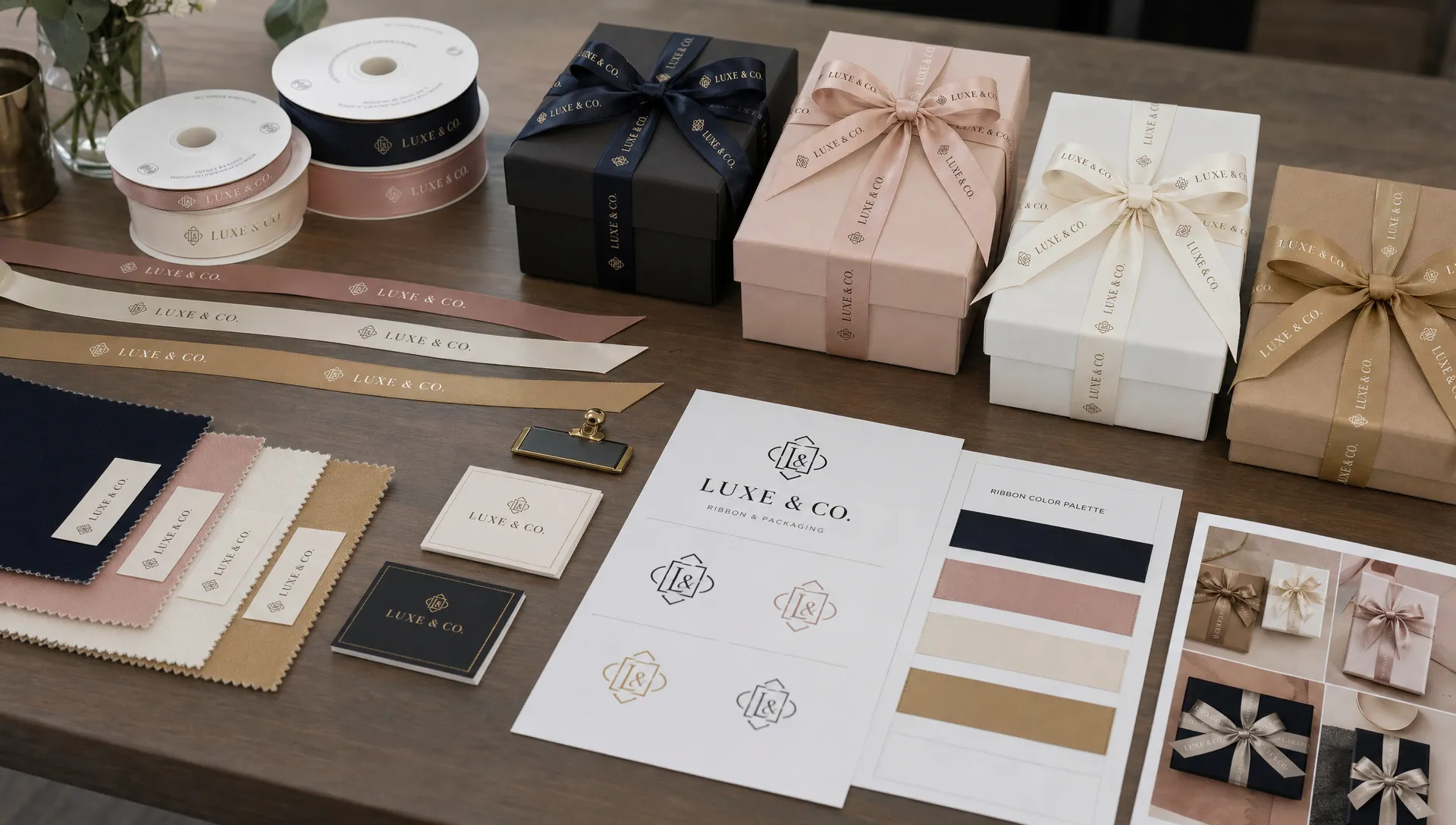
If you sell gifts or premium products, ribbon may be central to the unboxing experience. You may want woven ribbon with a repeating logo, carefully selected width, and a color combination that matches your box, tissue paper, or product label. If you are exploring options, HiLabels’ custom ribbons page is a useful starting point for creating ribbon that supports your packaging or product presentation.
For event brands, ribbon may need to coordinate across favors, invitations, décor, and merchandise. In that case, consistency and reorder reliability become just as important as the first production run.
Consider durability and real-world handling
Ribbon is often pulled, tied, folded, shipped, stored, and photographed. A reliable ribbons website should account for how the product will behave beyond the moment it is made.
Ask yourself how the ribbon will be handled. Will it be tied tightly around boxes? Will it be exposed to moisture or friction? Will it be sewn into an item? Will it be used for a premium presentation where wrinkles, fraying, or dull color would be noticeable?
Durability is one reason many brands choose woven ribbon for long-term brand presentation. When the design is integrated into the ribbon, it can retain a refined appearance through handling. Still, every project is different, and your supplier should be able to guide you toward the right option for your intended use.
A good website should also help you think about practical details such as edge finish, repeat spacing, and ribbon width. These details affect not only appearance but also usability. A ribbon that is too narrow may not show your logo clearly. A ribbon that is too wide may overpower small packaging.
Make sure reorders will be easy
Your first ribbon order is important, but your second and third orders may matter even more. If your packaging becomes part of your brand identity, you need consistency over time.
A reliable supplier should be able to reproduce your design with dependable quality. This is especially important for retail brands, subscription boxes, boutiques, hospitality gifting, and seasonal campaigns. If ribbon color, width, or logo spacing changes from order to order, your packaging can start to feel inconsistent.
Before choosing a website, consider whether the supplier seems organized enough to support repeat orders. Do they specialize in custom branding products? Do they make it easy to create and reorder online? Do they offer customer service if you need to adjust a previous design?
Consistency is one of the main advantages of choosing a specialist instead of a generic marketplace seller. Specialists understand that ribbon is part of a larger brand system, not just a decorative accessory.
Watch for red flags before you buy
Some ribbon websites look convenient at first but create risk once you inspect the details. A low price alone does not guarantee value, especially if poor quality forces a reorder or delays a launch.
Be cautious if you notice vague product descriptions, no clear customization process, missing contact information, unrealistic promises, unclear shipping details, or no way to verify artwork before production. Also be careful with suppliers that treat every ribbon as interchangeable. Branded ribbon is not a commodity when it represents your business.
Another red flag is a website that does not explain limitations. Every production method has practical constraints. A trustworthy supplier will help you understand what will work best rather than promising that every logo, color, and detail can be reproduced perfectly at any size.
Compare total value, not only price
Price matters, but it should not be the only decision factor. The cheapest ribbon may cost more in the long run if it arrives late, looks inconsistent, or does not match your packaging plan.
When comparing websites, weigh the full value of the order: product quality, design support, clarity of the process, production experience, customer service, reorder consistency, and the range of related branding products available. A supplier that can support custom ribbons, woven labels, patches, zipper pulls, and care labels may help you build a more cohesive brand presentation over time.
If you want more inspiration for using ribbon as a brand detail, HiLabels also shares ideas on how custom woven ribbons can help products and gifts stand out.
Frequently Asked Questions
What should I look for in a reliable ribbons website? Look for clear product information, artwork upload options, proofing or design confirmation, transparent ordering details, responsive customer service, and evidence of manufacturing experience.
Are custom woven ribbons better than printed ribbons? It depends on the use case. Woven ribbons can feel more premium and durable because the design is integrated into the fabric, while printed ribbons may suit certain designs or budgets. The right choice depends on your artwork, timeline, and intended use.
How do I know if my logo will work on ribbon? Simple, high-contrast logos usually reproduce best. Very small text, thin lines, gradients, and complex details may need adjustment. A reliable supplier should help you review artwork before production.
Why is proofing important for custom ribbon? Proofing helps confirm logo size, spacing, orientation, and repeat pattern. It reduces the risk of receiving ribbon that technically matches the order but does not look right when tied or wrapped.
Can I use custom ribbon for more than packaging? Yes. Custom ribbon can be used for apparel details, gift wrapping, event favors, retail displays, product bundles, and decorative brand accents.
Choose a ribbons website that protects your brand impression
A reliable ribbons website should make custom ordering feel clear, professional, and brand-focused from the first click to the finished product. Look for strong material information, artwork support, transparent ordering, experienced production, and customer service that helps you avoid costly mistakes.
If you are ready to create ribbon that feels polished and consistent with your brand, HiLabels offers custom woven ribbons along with labels, patches, zipper pulls, and care labels through a streamlined online ordering process backed by decades of textile branding experience.


