Logo Ribbons That Elevate Packaging and Unboxing
Packaging is often the first physical conversation a customer has with your brand. Before they touch the product, read the care card, or try on the garment, they notice how the package opens, how it feels in their hands, and whether the presentation seems thoughtful. Logo ribbons turn that moment into a subtle but powerful brand impression.
A plain box can feel practical. The same box tied with a well-designed logo ribbon feels intentional, giftable, and more premium. For apparel brands, boutiques, gift shops, beauty businesses, event planners, and makers, ribbon is one of the easiest ways to add a branded finishing touch without redesigning the entire packaging system.
The best logo ribbons do more than display a name. They guide the eye, create anticipation, and make an order feel worthy of sharing. When customers post unboxing photos, reuse the ribbon, or remember the detail later, that small strip of branded material continues working long after delivery.
Why logo ribbons make packaging feel more valuable
Unboxing is emotional because it slows the customer down. A ribbon creates a small pause before the product is revealed. That pause matters. It turns a routine transaction into a moment of discovery, which can make the product feel more considered and more desirable.
Logo ribbons also add tactile value. Packaging that includes fabric texture, woven detail, or a smooth printed finish feels more dimensional than paper alone. This is especially important for soft goods, accessories, luxury gifts, wedding items, and handmade products where craftsmanship is part of the promise.
Brand recall is another advantage. A customer may discard outer shipping materials quickly, but a ribbon tied around tissue paper, a garment box, or a gift bundle is more likely to be noticed, photographed, or saved. When the logo, color, and placement are consistent with your other brand elements, ribbon becomes part of a larger identity system.
That is why many brands use logo ribbons alongside woven labels, care labels, hang tags, and patches. Each detail reinforces the same visual language from a different angle. If you are still defining the full packaging experience, this guide to creating labels online for apparel, gifts, and packaging can help you think through label type, artwork, and placement before you finalize your ribbon.
What makes a logo ribbon look premium?
A ribbon looks premium when the artwork, material, width, and finishing choices work together. The goal is not to make the logo as large as possible. The goal is to make the brand feel clear, balanced, and appropriate for the product.
For most packaging applications, readability is the first requirement. If the logo becomes distorted when the ribbon is tied, folded, or viewed from a distance, the design needs more breathing room. Simple marks, clean type, and strong contrast usually perform better than detailed artwork.
The repeat pattern also matters. A logo that appears too often can feel busy, while a logo that appears too far apart may disappear once the ribbon is tied into a bow. A good repeat gives you flexibility, so the branding remains visible whether the ribbon wraps a small jewelry box or a larger apparel package.
| Ribbon decision | What it influences | Practical guidance |
|---|---|---|
| Width | Visual weight and tying style | Narrow ribbons feel delicate, while wider ribbons suit larger boxes and bold branding |
| Logo scale | Readability and elegance | Keep enough space around the logo so it remains clear when tied or folded |
| Color contrast | Brand visibility | Use strong contrast for small logos and softer tone-on-tone effects for understated luxury |
| Finish | Texture and perceived quality | Woven effects feel durable and crafted, while smooth finishes can feel sleek and modern |
| Repeat spacing | Usability across package sizes | Test how often the logo appears on both small and large packages |
Premium ribbon design is usually restrained. A single brand color, a refined logo repeat, or a monochrome woven effect can look more upscale than a complicated design with too many colors or messages.
Where logo ribbons have the biggest impact
Logo ribbons are flexible because they can be used across many packaging formats without requiring a complete redesign. They work with boxes, tissue wrap, pouches, bags, gift sets, product bundles, and event favors. This makes them useful for seasonal campaigns, limited editions, and everyday brand presentation.
For apparel brands, ribbon can secure tissue paper around a folded garment or tie together a premium package for a wholesale buyer. For boutiques, it can make every purchase feel gift-ready. For beauty and wellness brands, ribbon adds softness and elegance to jars, kits, and subscription boxes. For wedding and event businesses, it creates consistency across favors, welcome bags, menus, and keepsake packaging.
That same logic applies beyond retail. A service business that delivers documents, samples, maintenance kits, or client gifts can use ribbon to make the handoff feel more polished. For example, a local trade company such as a Twin Falls fencing contractor could wrap a project folder, gate hardware packet, or thank-you gift with branded ribbon so the final touch feels as intentional as the work itself.
| Use case | Best ribbon application | Brand benefit |
|---|---|---|
| Apparel orders | Around tissue-wrapped garments | Adds boutique-level presentation and reinforces the label inside the garment |
| Gift boxes | Tied around rigid boxes | Makes products feel ready to give without extra wrapping |
| Event favors | Wrapped around small bundles or bags | Creates a consistent visual theme across many items |
| Subscription boxes | Used as an interior reveal detail | Adds anticipation after the shipping box is opened |
| Corporate gifting | Around notebooks, samples, or welcome kits | Makes practical items feel curated and memorable |
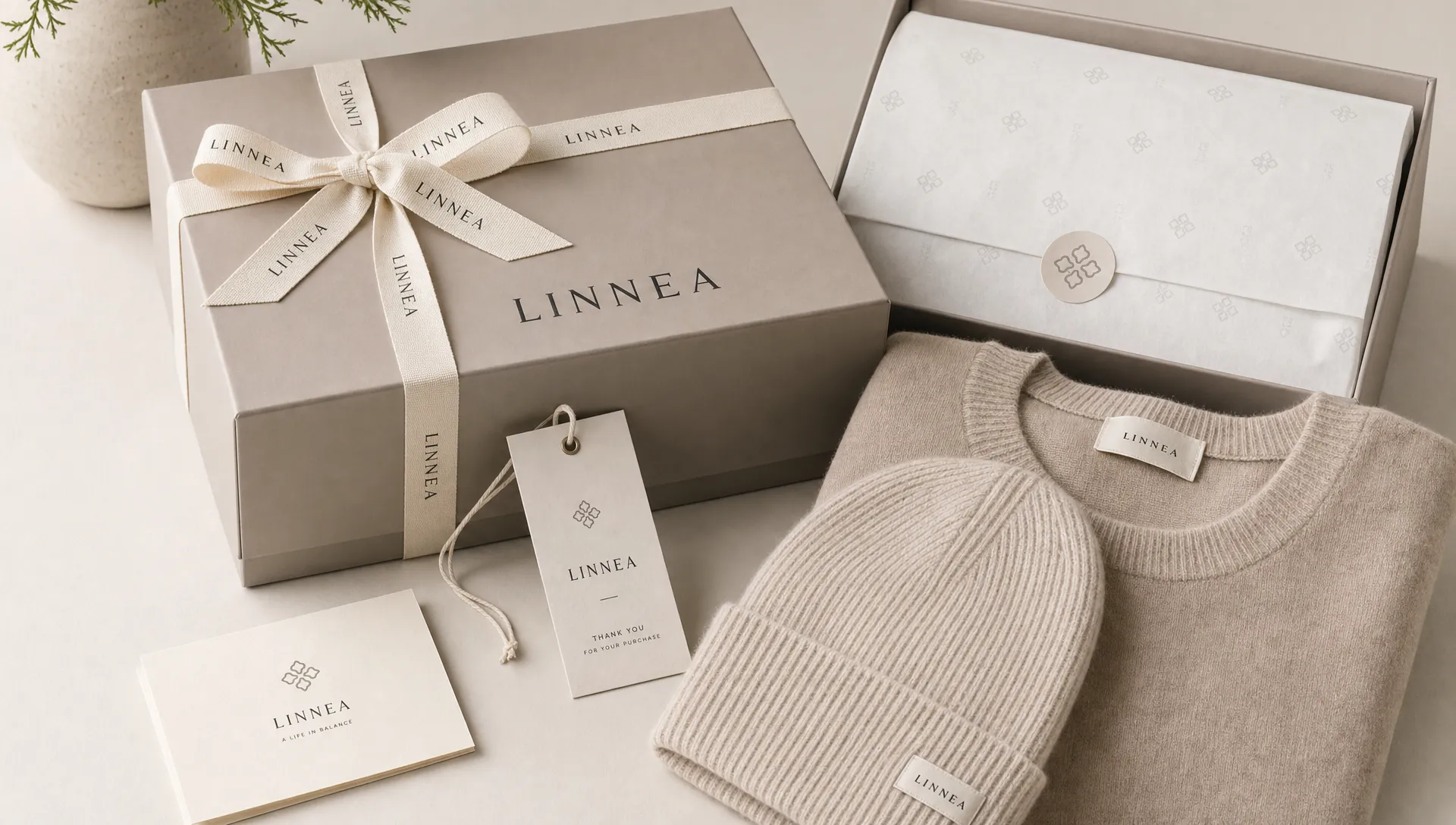
Design rules for better unboxing
The strongest logo ribbons are designed around real use, not just a flat digital preview. A ribbon may look perfect on screen, then lose impact when it is tied into a bow, wrapped around a corner, or cut to a short length. Before placing a larger order, think through how the ribbon will actually behave in your packaging workflow.
Start with the package size. A small box may need a narrower ribbon and tighter logo repeat. A large garment box may support a wider ribbon and more generous spacing. If you use multiple box sizes, choose a design that remains readable across all of them.
Next, consider the tying method. A bow feels celebratory, but it can hide part of the logo. A flat band feels clean and modern, but it depends heavily on repeat spacing. A ribbon loop through a hang tag can create a premium detail with less material. None of these options is automatically better. The right choice depends on your product, shipping process, and desired customer experience.
Color should connect to your brand system. Matching your exact brand color can look cohesive, but contrast may be more important for legibility. If your logo is intricate, a simple ribbon color with a clean mark often works best. If your logo is minimal, a tone-on-tone approach can feel refined and elevated.
If you want more inspiration for how ribbon changes the mood of packaging and presentation, HiLabels has a helpful article on how ribbons add elegance and charm to your products, including creative uses across products, gifts, and decor.
Logo ribbons versus stickers, tags, and plain ribbon
Stickers, tags, and plain ribbon all have a place in packaging. Logo ribbons stand out because they combine decoration, closure, and branding in one element. They are especially useful when you want the packaging to feel finished without adding too many separate components.
A sticker is efficient, but it is usually removed or torn during opening. A hang tag can carry more information, but it may not create the same gift-like feeling. Plain ribbon adds beauty, but it does not build brand recognition on its own. Logo ribbons sit between function and emotion, which is why they are so effective for unboxing.
| Packaging element | Strength | Limitation |
|---|---|---|
| Logo ribbon | Adds branding, texture, and a premium reveal | Requires careful sizing and artwork spacing |
| Sticker | Fast and cost-effective for sealing | Often discarded quickly during opening |
| Hang tag | Great for product details and storytelling | May feel separate from the package presentation |
| Plain ribbon | Decorative and versatile | Does not reinforce brand recognition |
| Printed box | High visual impact | Less flexible for seasonal or small-batch changes |
For many brands, the best approach is a combination. A woven label can identify the product, a care label can provide practical instructions, a hang tag can tell the story, and a logo ribbon can make the reveal feel special.
How to build a more memorable unboxing sequence
A good unboxing experience has rhythm. It should feel easy to open, but still create anticipation. Logo ribbons can help structure that sequence.
First, decide what the customer sees immediately after opening the shipping box. If the inner product is wrapped in tissue and tied with ribbon, the brand moment appears before the product itself. This makes the reveal feel deliberate.
Second, keep the ribbon easy to remove. Customers should not need scissors or feel frustrated by knots that are too tight. A beautiful ribbon loses its charm if it slows the experience in the wrong way.
Third, match the ribbon to the value of the purchase. A simple accessory may only need a small branded tie. A premium gift set may deserve a wider ribbon, a bow, and a coordinated tag. The packaging should feel elevated, but not wasteful or excessive.
Fourth, create consistency across touchpoints. If your woven garment label, thank-you card, and logo ribbon all use the same core colors and logo style, the experience feels more professional. Inconsistent details can make even expensive packaging feel improvised.
Finally, think about photography. Customers often share packaging that looks clean, balanced, and easy to capture. A visible logo ribbon can make user-generated photos more recognizable, especially for social media, influencer mailers, and giftable products.
Choosing logo ribbons for your brand
When ordering logo ribbons, prepare your artwork carefully. Vector artwork is ideal because it helps preserve crisp edges and accurate shapes. If your logo includes small lettering, thin lines, or detailed illustrations, simplify where possible. Packaging is often viewed quickly, so clarity matters more than complexity.
You should also decide whether the ribbon will be used year-round or for a specific campaign. Evergreen logo ribbons should feel timeless and coordinate with most packaging colors. Seasonal ribbons can be more playful, using limited colors, event wording, or campaign-specific accents.
HiLabels offers custom woven ribbons for brands that want durable, professional presentation details with a crafted look. With long experience in custom branding products, an online ordering process, and options to upload artwork, HiLabels makes it easier to create ribbon that fits your packaging needs without guesswork. You can explore custom ribbons from HiLabels when you are ready to turn your logo into a branded packaging detail.
Common mistakes to avoid
One common mistake is treating ribbon as an afterthought. If the ribbon color clashes with the box, the logo is hard to read, or the width does not suit the package, the result can feel less polished than intended. Logo ribbons work best when they are planned as part of the full packaging system.
Another mistake is overloading the ribbon with information. A ribbon is not a brochure. It should usually carry a logo, brand name, simple pattern, or short message. Save detailed product information for tags, inserts, or care labels.
Brands should also avoid choosing a ribbon only because it looks good in a flat sample. Always consider how it will look when tied, cut, wrapped, stacked, and shipped. The real test is not the ribbon by itself. The real test is the full unboxing moment.
Frequently Asked Questions
What are logo ribbons used for? Logo ribbons are used to add branded detail to packaging, gifts, apparel orders, event favors, subscription boxes, corporate gifts, and product bundles. They can secure wrapping, decorate boxes, and reinforce brand recognition during unboxing.
Are logo ribbons better than plain ribbons? Logo ribbons are better when brand visibility matters. Plain ribbons can look beautiful, but logo ribbons add identity and make the package more memorable. Many brands use logo ribbons when they want packaging to feel both decorative and recognizable.
What width should a logo ribbon be? The right width depends on the package size and tying style. Small boxes and delicate products usually suit narrower ribbons, while larger boxes and premium bundles can support wider ribbons. Always test readability once the ribbon is tied or wrapped.
Should my logo be woven or printed on ribbon? Both approaches can work depending on the look you want. Woven ribbons often feel textured, durable, and crafted, while printed ribbons can support certain smooth or graphic effects. The best choice depends on your artwork, brand style, and packaging goals.
Can logo ribbons help with customer retention? They can support retention by making the purchase feel more thoughtful and premium. A strong unboxing experience can encourage repeat purchases, gifting, social sharing, and stronger brand recall, especially when the product experience also meets expectations.
Make every package feel intentional
Logo ribbons are a small detail with a large emotional effect. They add texture, structure, and brand recognition to the moment customers remember most: opening the package. Whether you are building a boutique apparel brand, elevating gift packaging, or preparing a special launch, the right ribbon can make your presentation feel complete.
If you want packaging that feels polished from the outside in, start with a ribbon design that fits your product, your colors, and your customer experience. HiLabels can help you create custom ribbon that turns ordinary packaging into a branded unboxing moment worth remembering.


