How to Design Handmade Sewing Labels Customers Remember
Handmade sewing labels do more than identify who made an item. They give customers a small, repeatable brand moment every time they put on a garment, open a quilt, zip a pouch or gift something you made. When the label is clear, comfortable and visually tied to your style, it helps your work feel finished and easier to remember.
For makers, small apparel brands and sewing businesses, the goal is not to cram every detail onto a tiny tag. The goal is to design a label that reinforces your identity in a second or two. A customer should be able to glance at it and think, yes, this is from that maker I loved.
Why memorable handmade sewing labels matter
A handmade product often carries more emotion than a mass-produced item. Customers may buy it because it feels personal, limited, thoughtful or local. Your label should protect that feeling, not interrupt it.
Without a label, even a beautiful handmade piece can become anonymous over time. A customer may remember they bought a linen dress at a craft market, but forget the shop name. A parent may love a handmade baby blanket, then lose track of who made it when they want to order a second one. A label gives that memory a physical anchor.
That is why handmade sewing labels work best when they are treated as part of the product experience. They are not only for branding. They help customers care for the item, recognize your work later and talk about it more easily when someone asks where it came from. If you are still deciding what role labels should play in your products, HiLabels has a practical guide to custom sewing labels for handmade items that expands on how labels support sales and product presentation.
Start with the memory you want to create
Before choosing colors, fonts or label folds, decide what customers should remember. Handmade brands often skip this step and jump straight into making a label look pretty. A pretty label is useful, but a recognizable label is more valuable.
Ask yourself what your product should feel like in the customer’s mind. Is it cozy and nostalgic? Minimal and modern? Playful and bright? Elegant and heirloom quality? The label should repeat that idea in a compact form.
A strong label usually communicates one primary impression at a time. If your brand is calm and natural, a simple woven label in muted colors may work better than a busy tag with multiple graphics. If your brand is bold and youthful, higher contrast and a distinctive icon may make sense.
| Brand feeling | Label design direction | What to avoid |
|---|---|---|
| Soft and handmade | Warm neutrals, rounded type, simple motif | Overly corporate typography |
| Modern and minimal | Clean lettering, strong spacing, limited colors | Tiny decorative details |
| Premium and refined | Tonal colors, elegant logo, high quality woven texture | Crowded layouts or novelty fonts |
| Playful and colorful | Bright contrast, memorable icon, casual type | Too many colors competing at once |
| Rustic or heritage inspired | Earth tones, classic typography, simple emblem | Distressed details that reduce readability |
This does not mean every label has to be subtle. It means every choice should support the same memory. When the logo, color, texture and placement all point in the same direction, the label feels intentional.
Choose the right label format for the product
Customers remember labels they actually notice, but they also remember discomfort. A scratchy or bulky label in the wrong place can damage the experience of an otherwise beautiful piece. The right format depends on the item, the fabric weight and the moment when the customer is most likely to see the brand.
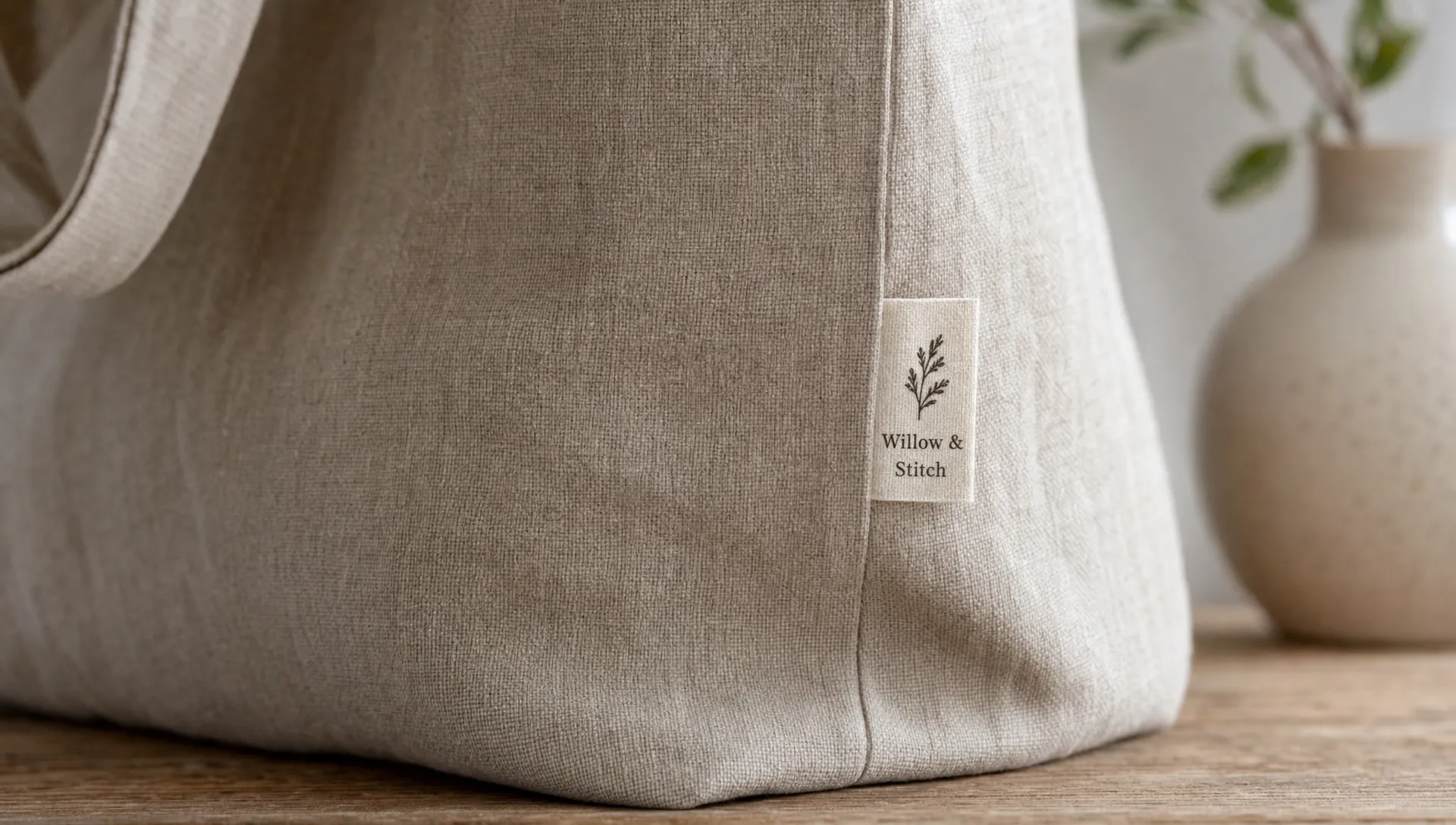
A neck label on a shirt or dress is often noticed when the customer gets dressed. A side seam label may be more subtle, but it can become a signature detail. A hem label can add a visible branded touch without overpowering the item. For bags, quilts and accessories, a larger centerfold or patch-style label may give enough space for the brand to stand out.
| Product type | Label placement to consider | Why it helps memory |
|---|---|---|
| Shirts, dresses and jackets | Inside neck, side seam or hem | Reinforces brand identity during wear and washing |
| Bags and pouches | Exterior side seam, interior lining or zipper area | Keeps the maker name visible during daily use |
| Quilts and blankets | Corner label or backing label | Preserves the maker story over years of use |
| Kids clothing | Neck, side seam or care label area | Helps with identification and repeat purchases |
| Scarves and soft accessories | Small edge label or folded seam label | Adds identity without distracting from the fabric |
Woven labels are especially useful for items that will be washed or handled often because the design is created with thread, not surface ink. For a deeper look at the finish and durability advantages, this article on woven sewing labels explains why they often give handmade pieces a more polished result.
Keep the design simple enough to recognize fast
A handmade sewing label has limited space, so it needs to work quickly. Customers will not study it like a business card. They may see it for one second while folding laundry or unwrapping a purchase. That short glance should be enough to catch your brand name or visual mark.
The most common label mistake is trying to include too much. A full logo, long tagline, website, social handle, care symbols and decorative artwork can turn into visual noise. When text gets too small, it becomes harder to weave, harder to read and easier to ignore.
Start with the essentials. Most brand labels need the maker name or logo. If your name is long, consider a simplified wordmark, initials or a small symbol customers can learn to associate with you. A secondary line, such as handmade in Vermont or slow sewn goods, can work if the label size allows it, but it should not compete with the brand name.
Contrast matters more than many makers realize. Low contrast can look beautiful in a digital mockup but disappear in thread, especially on small labels. A dark logo on a light background, a light logo on a dark background or a carefully chosen tonal contrast will usually be more readable than colors that sit too close together.
If you are preparing artwork for woven production, remember that thread behaves differently from pixels. Very thin lines, tiny script fonts and detailed illustrations may lose clarity. The HiLabels guide to better custom design woven labels covers useful ways to simplify artwork so it translates well into woven form.
Make it feel handmade without looking unfinished
Customers buy handmade because they want character. That does not mean the label should look improvised. A memorable label can feel personal and polished at the same time.
One way to do this is to include a small signature element. It might be a tiny flower, needle, mountain, moon, animal, monogram or abstract mark that reflects your work. The key is restraint. A small icon repeated across products becomes more memorable than a different decorative idea on every label.
Color can also carry a signature. If your packaging, website and market booth use sage green, cream and charcoal, your label should probably live in that same world. Repetition builds recognition. Customers may not consciously remember your exact logo after one purchase, but they may remember the combination of color, texture and mood.
You can also use wording to make the label feel personal. Short phrases like handmade for everyday wear, stitched in small batches or made with rescued fabric can add meaning. Use them only when they are accurate and still readable. A phrase should support the brand, not crowd it.
Use practical information without crowding the brand label
Some information belongs on the product, but not always on the main brand label. Care instructions, fiber content, size and compliance details often need more space than a small logo label can provide. Separating brand labels from care labels can make both easier to read.
For apparel sold in the United States, the Federal Trade Commission provides guidance on textile labeling and care information. The FTC’s business guidance on textile, wool and fur labeling requirements is a useful starting point if you sell clothing or textile products and need to understand your obligations.
For handmade sellers, a clean system often works best. Use one main label for brand recognition, then add a separate care label when needed. This prevents the brand label from turning into a tiny instruction manual. It also gives customers the practical information they need without weakening the visual identity of the item.
If your products come in sizes, size labels can reduce confusion during purchase and use. If your items are often gifted, a clear brand label helps the recipient find you later, even if they never saw the original packaging.
Think about placement from the customer’s point of view
Label placement should fit how the product is handled. A label that looks great in a product photo may not be the one the customer notices most in real life.
For clothing, inside neck labels are familiar and easy to find, but comfort is critical. If the garment touches sensitive skin, consider softer materials, a different fold or a side seam placement. For children’s clothing, avoid bulky placements that rub or irritate. For accessories, exterior labels can help your brand travel in public, but they should still feel like part of the design.
For quilts, blankets and heirloom items, labels can carry more story. A corner label with the maker name, date or short note can become part of the item’s long-term meaning. For bags and pouches, a small exterior label can act almost like a quiet signature, especially when customers use the item daily.
The best placement often balances three questions: Will the customer notice it? Will it feel comfortable? Will it survive normal use and washing? A label that answers all three is more likely to be remembered for the right reasons.
Test your label before ordering a large batch
Even experienced makers can be surprised by how a label feels on the finished product. A design that looks balanced on screen may feel too large on a baby garment or too subtle on a heavy canvas tote. Testing helps you catch those issues before the label becomes part of your inventory.
Use a simple review process before committing to a final design:
- Print the label design at actual size and place it on the product.
- Check whether the brand name is readable from normal handling distance.
- Compare the label colors against your most common fabrics.
- Sew a sample into one item and test comfort, placement and proportion.
- Photograph the product with the label visible to see how it appears online.
This small step can save time and material later. It also helps you make better design decisions because you are judging the label in context, not just as a standalone graphic.
If possible, ask someone who does not know your brand to look at the sample for five seconds, then tell you what they remember. If they can recall the name, color or icon, your label is doing its job. If they remember only that there was a tag, the design may need more clarity or contrast.
Build a label system, not just one label
As your handmade business grows, one label may not cover every product. You might need a main brand label, a care label, a size label, a hem tag or a patch. The goal is to make these pieces feel related, even when they serve different purposes.
A label system does not need to be complicated. Use the same brand colors, type style or icon across different labels. Keep the main logo consistent. Decide when to use a visible label and when to use a subtle interior one. This consistency helps customers recognize your work across categories.
For example, a maker who sells linen clothing, aprons and tote bags might use the same small woven logo label on every item, then add separate care labels only where needed. A quilter might use a larger backing label for quilts and a smaller folded label for small sewn gifts. The format changes, but the brand remains familiar.
This is where handmade brands begin to feel more mature. Customers may not notice the system consciously, but they feel the consistency. It tells them the maker has thought through the details.
A quick checklist for handmade sewing labels customers remember
Before finalizing your design, review it like a customer would. The label should be easy to understand, pleasant to touch and aligned with the product’s personality.
- The brand name or logo is readable at actual size.
- The colors have enough contrast for woven or printed production.
- The label style fits the product’s fabric, use and wash needs.
- The placement is visible enough without causing discomfort.
- Any care, size or fiber information is clear and not forced into the logo label.
- The design matches your packaging, product photos and overall brand style.
- The label still feels right when sewn into the finished item, not just in a mockup.
A memorable label is rarely the loudest detail on a handmade product. More often, it is the detail that feels exactly right.
Frequently Asked Questions
What should I put on handmade sewing labels? Most handmade sewing labels should include your brand name, logo or maker name. Depending on the product, you may also need a separate care label, size label, fiber content or origin information. Keep the main brand label simple so it stays readable.
Are woven labels better for handmade items? Woven labels are a strong choice for many handmade items because the design is made with thread and can hold up well to regular use. They also add texture and a professional finish, which can make clothing, bags and accessories feel more complete.
How big should a handmade sewing label be? The best size depends on the product and placement. Small garments and delicate accessories usually need smaller labels, while quilts, bags and outerwear can handle larger labels. Always test the design at actual size before ordering.
Where should I sew labels on handmade products? Common placements include the inside neck, side seam, hem, bag lining, pouch side seam or quilt corner. Choose a location the customer will notice naturally, but avoid places that rub, scratch or interfere with use.
Can I use the same label for every handmade product? You can use one consistent brand label across many products, but some items may need different sizes, folds or separate care labels. A small label system often works better than forcing one label to do every job.
Create labels as thoughtful as the products you sew
Your label is one of the few brand details that stays with the product after packaging is gone. When it is clear, durable and true to your style, it helps customers remember your work long after the first purchase.
With HiLabels, makers and small brands can create custom woven labels, care labels, patches, ribbons and other branding details with a user-friendly online process, artwork upload options, personalized service and professional European loom quality. Start with a simple design, test it on the product and choose a label that feels as carefully made as the item itself.


