Sewing Name Labels for School Clothes and Handmade Items
A missing cardigan, a swapped gym shirt or a handmade tote that loses its maker tag all create the same problem: the item becomes harder to identify, return or remember. Sewing name labels are a simple fix, especially for school clothes, uniforms, jackets, blankets, bags and handmade pieces that need a permanent identity.
Unlike marker ink that fades or adhesive labels that can peel, a sewn-in label becomes part of the item. It can show a child's name, a maker's brand, initials, a class number, a phone number or a short message. For parents, that means fewer lost items. For makers, it means a more polished finish and a clearer connection between the item and the person who made it.
This guide focuses on practical choices: what to put on a name label, where to sew it, which label style works best and how to make labels look intentional rather than tacked on.
Why Sewing Name Labels Work So Well
School clothes and handmade items both go through heavy handling. They get washed, packed, folded, borrowed, stored and sometimes left behind. A label needs to stay readable through all of that. Sewn labels are popular because the stitching holds the label in place even when the fabric stretches, wrinkles or goes through frequent laundering.
For school clothing, name labels help teachers, parents and children identify items quickly. This is especially useful for uniforms, sportswear, jackets, hats, scarves and outerwear that look almost identical. In younger classrooms, a clear label inside the garment can make the morning coat-rack rush much easier.
For handmade items, name labels serve a slightly different purpose. They identify the owner or recipient, but they can also carry your maker name, a small logo or a heartfelt note. If you sell handmade goods, a label adds professionalism and makes your work easier to remember after the sale. If you sew gifts, a name label can turn a useful object into a keepsake.
For broader back-to-school routines, home organization and lifestyle planning, resources like lifestyle organization ideas from Haley Marie Blog can be helpful alongside the more specific labeling decisions covered here.
What Makes a Good Sewing Name Label?
A good name label is readable, durable, comfortable and suited to the item. That sounds simple, but small design choices make a big difference once the label is sewn into a collar, waistband or seam.
Start with the purpose. A label for a school sweater may need only a first name and last initial. A label for camp clothing might need a full name and phone number. A label for a handmade quilt could include a name, date and short message. A label for products you sell may need your brand name, size information or a separate care label.
Woven labels are often a strong choice for garments because the design is created with thread rather than printed on top of the fabric. That gives the label a finished, textile feel and helps it blend naturally into clothing and accessories. HiLabels offers custom woven clothing labels that can be created online, including options to upload artwork and choose details such as label type, size, colors and finish.
Comfort matters, too. A label at the back neck of a shirt should be soft and low-profile. A label on a backpack or lunch bag can be larger and more visible. For children's clothing, avoid oversized labels in areas that rub against skin.
What to Put on School Clothing Name Labels
The best information depends on the child's age, the item and where the label will sit. The goal is to help the item come back without displaying more information than necessary.
| Label use | Good information to include | Better to avoid |
|---|---|---|
| Inside school uniform | First name, last initial or full name | Large visible personal details on the outside |
| Sports kit or camp clothing | Name plus class, team or phone number | Too much text in a tiny label |
| Coat, hoodie or sweater | Name and optional grade or room number | High-contrast exterior placement if privacy matters |
| Bag or lunch tote | Name or initials, possibly a contact number | Full address or sensitive information |
| Handmade gift for a child | Name, date or short personal phrase | Long messages that become hard to read |
For younger children, readability is more important than decorative detail. Choose clear lettering, strong color contrast and enough label width for the name to breathe. For older children, initials, a monogram or a more discreet inside label may feel less childish and more likely to stay in the garment.
If the item will be worn outside the home, think carefully about visibility. A full name on the inside neck label is usually more practical than a full name displayed on the outside of a jacket. For bags, an interior label or a smaller initials-based design may be the better option.
Choosing the Right Label Style for Each Item
Not every item needs the same label. A school blazer, knitted hat and handmade pouch all have different fabric thickness, washing needs and comfort concerns. Matching the label style to the item makes the finished result cleaner.
| Item | Label style that works well | Best placement |
|---|---|---|
| Shirts and polos | Small woven name label | Back neck, side seam or lower inside hem |
| Sweaters and hoodies | Woven fold label or flat label | Neck seam, inside side seam or lower hem |
| Coats and jackets | Larger woven label or name patch | Inside facing, lining or inner pocket |
| Hats and scarves | Small folded label | Inner edge or side seam |
| Backpacks and sports bags | Sewn label, patch or zipper pull | Inner pocket, front panel or zipper tab |
| Quilts and blankets | Larger personalized fabric label | Back corner or binding area |
| Handmade pouches | Small brand or name label | Side seam, lining or outer corner |
For items that are washed often, sew the label on all sides when possible. For thicker accessories, a folded label caught in the seam can look especially neat. For bags, jackets and school gear, a name tag does not always have to be a sewn fabric label. A personalized zipper pull can make identification faster, especially on backpacks, pencil cases and sports bags. HiLabels has a helpful guide to personalized name tag zipper pulls if you want an option that is visible without being sewn into clothing.
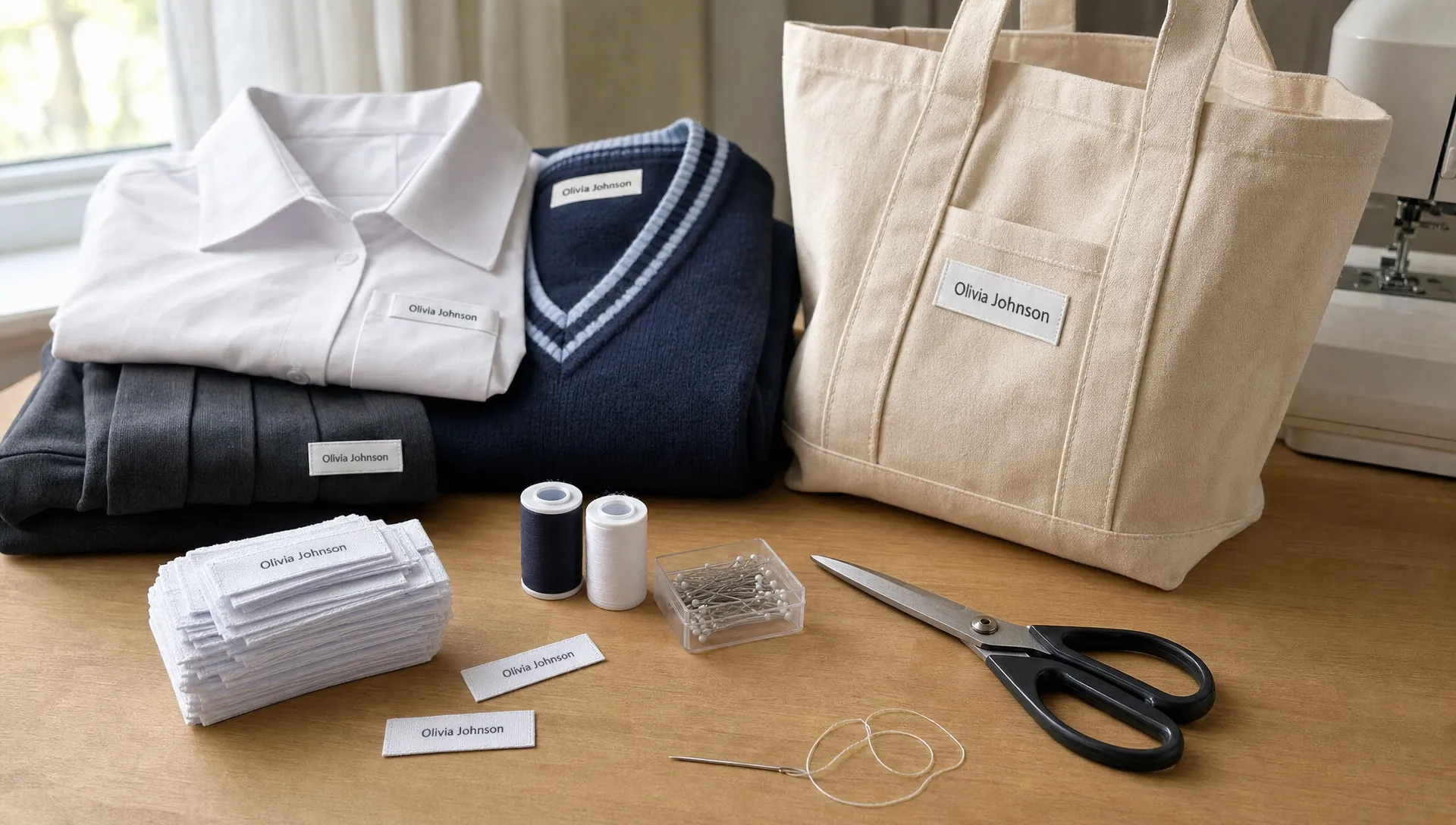
How to Sew Name Labels Neatly
You do not need advanced sewing skills to attach name labels well. The cleanest method depends on the label format and the item, but the same basic principles apply: position first, secure the label and use stitching that suits the fabric.
Before sewing, place the label on the garment and check how it looks when the item is worn, folded or zipped. Pin or clip it in place. If the fabric is delicate, use clips rather than pins to avoid holes. Make sure the label is straight and not stretched.
For a flat label, stitch close to the edge on all sides. This keeps the corners from curling after washing. Use thread that matches either the label border or the garment, depending on whether you want the stitching to blend in or look decorative. A straight stitch is usually enough for woven labels on stable fabric.
For a fold-over label, align the fold with the garment edge or seam, then stitch through the open ends. This style works well for side seams, hems and accessory edges because the label looks integrated into the construction.
For thick coats, bags or quilts, use a slightly longer stitch length so the stitches do not bunch the fabric. If sewing by hand, use small backstitches around the corners and along the sides. The goal is secure attachment without stiff, bulky stitching.
Sewing Name Labels for Handmade Items
Handmade items benefit from labels even when they are not for school. A name label can mark ownership, celebrate the recipient or turn your project into something that feels finished. Think of it as the final detail that says the item was made with care.
For gifts, personalize the label around the story of the item. A baby blanket might include the child's name and birth year. A quilt could include the maker's name, date and occasion. A tote bag might need only initials or a short phrase. Small labels work best on small items, while blankets and quilts can carry larger, more detailed labels.
For makers who sell, the label should support recognition without overwhelming the product. A small woven label with a brand name can make a pouch, garment, soft toy or accessory look more professional. If you want to explore the selling side in more depth, this HiLabels article on custom sewing labels for handmade items explains how labels can improve presentation and memorability.
If you sell clothing or textile products, remember that a decorative name or brand label may not replace required product information. Depending on what you sell and where you sell it, you may also need care, fiber content, country-of-origin or size information. A separate care label is often the cleaner solution because it lets your name label stay attractive while the care label handles practical details.
Design Tips for Readable, Attractive Labels
The best sewing name labels are simple enough to read at a glance. Tiny type, thin script fonts and low-contrast colors can look pretty on a screen but become hard to read once woven or sewn into fabric.
Choose one main message. For school labels, that is usually the name. For handmade goods, it may be your maker name. For gifts, it may be the recipient's name. Secondary details should be shorter and smaller, such as a grade, year or short phrase.
Keep these design basics in mind:
- Use high contrast, such as dark text on a light label or light text on a dark label.
- Keep names short when possible, especially for small clothing labels.
- Choose clean lettering for young children's items and frequently handled garments.
- Leave enough blank space around the text so the label does not feel crowded.
- Match the label color to the garment, school colors or your handmade brand palette.
If you already have artwork, simplify it before using it on a small label. A detailed logo may need a cleaner version for woven production. Simple shapes, bold initials and clear wordmarks usually translate better than fine lines.
A Practical Ordering Checklist
Before ordering sewing name labels, gather the details you need so the process is smooth. This is especially useful if you are labeling several school uniforms or preparing a batch of handmade items for gifts or sale.
Check the following before you finalize your label:
- The exact spelling of every name, brand or phrase.
- The label size needed for the smallest item in your batch.
- The placement area on each garment or product.
- The color contrast between label background and text.
- The fold style, such as flat, end fold or center fold.
- Whether you need only name labels or matching care labels, patches, ribbons or zipper pulls.
Ordering a versatile label size can make sense if you plan to use the same label across shirts, sweaters, bags and handmade accessories. If you are labeling items with very different uses, such as school polos and quilted blankets, consider two sizes so each item looks balanced.
Frequently Asked Questions
Are sewing name labels better than iron-on labels? Sewing name labels are often the better choice for items that need long-term durability, frequent washing or a more professional finish. Iron-on labels can be convenient, but sewn labels are physically attached to the fabric, which makes them a strong option for uniforms, coats, handmade goods and heirloom items.
Where should I sew name labels on school clothes? The most common placements are the back neck, inside side seam, lower inside hem or waistband. For jackets and coats, the inside facing or inner pocket is often easier to see. Choose a place that is accessible but not uncomfortable against the skin.
Should I put my child's full name on clothing labels? It depends on where the label will be seen. For inside labels, a full name may help with returns at school. For visible labels on bags or outerwear, many parents prefer first name only, initials or a classroom identifier for privacy.
Can I use sewing name labels on handmade gifts? Yes. Name labels work beautifully on quilts, blankets, baby items, bags, pouches, aprons and soft accessories. They can include the recipient's name, the maker's name, a date or a short message that makes the gift feel personal.
What size should a name label be? The label should fit the smallest item without crowding the text. Small clothing labels need concise wording, while blankets, coats and bags can handle larger labels. If you plan to use one design across many items, choose a balanced size that works for shirts, sweaters and accessories.
Create Sewing Name Labels That Last
The right label makes everyday items easier to identify and handmade pieces easier to remember. Whether you are preparing school uniforms, organizing camp clothes or finishing handmade products, a well-designed sewn label adds clarity, polish and personality.
HiLabels makes it easy to create custom woven labels, care labels, patches, ribbons and zipper pulls online, backed by more than 31 years of experience and European loom quality. Start with the name, choose the format that fits your item and create labels that feel like they belong from the first stitch.


