How to Keep an Invisible Zipper Pull Discreet on Dresses
An invisible zipper pull should let you open and close a dress without drawing attention away from its shape, fabric or neckline. Yet even when the zipper teeth are concealed, the small pull tab can catch the light, sit sideways or stand out against the fabric. Keeping it discreet takes more than choosing the smallest hardware available.
The best approach combines a compatible, low-profile pull with accurate seam alignment and a clean finish at the top of the opening. Start by identifying what is actually visible before changing the hardware or adding a cover.
Identify what is making the zipper noticeable
An invisible zipper conceals its coil within the garment seam when installed correctly. The slider, which joins and separates the coil, and the pull tab attached to it are separate components. Depending on the zipper and dress construction, a small amount of hardware may remain visible near the top.
Look at the dress while it is being worn, not only while it lies flat. A tab that looks unobtrusive on a table may turn outward when the wearer moves. Equally, what appears to be a hardware problem may actually be a gap caused by tight fit or uneven sewing.
| What you notice | Likely area to check | Best starting point |
|---|---|---|
| A bright spot at the top of the seam | Pull color or reflective finish | Compare the hardware with the dress under different lighting |
| A tab sticking outward | Resting position or interference | Check whether fabric, lining or another closure obstructs it |
| Zipper tape showing along the opening | Installation or garment fit | Inspect seam alignment and tension |
| A bulge at the neckline | Finishing layers or hardware placement | Check the facing, lining and top of the zipper |
If the invisible zipper pull is the only visible detail, focus on its finish and resting position rather than rebuilding an otherwise smooth closure.
Choose a pull that blends with the dress
Match the surrounding fabric, not just the zipper tape
A pull can match its zipper tape perfectly and still contrast with the dress. Compare it with the fabric immediately surrounding the closure, especially when the dress has a print, lace overlay or contrasting neckline.
For a solid-colored dress, a close tonal match usually attracts less attention than contrasting metal. For a print, judge the color against the area where the zipper ends rather than the dominant color elsewhere in the garment.
Reflectivity matters too. A shiny surface may create a noticeable highlight against matte crepe even when the colors are similar. Where suitable options are available, compare less reflective finishes before deciding.
Keep the profile compact but usable
An invisible zipper pull needs enough grip to operate comfortably, particularly on a fitted dress or a center-back opening. Making the tab extremely short can leave the wearer pinching the slider or pulling on surrounding fabric.
Look for a compact shape that rests close to the seam without sharp edges or unnecessary attachments. Added charms, split rings and thick cords often make a concealed closure more conspicuous.
If you are considering replacement hardware, check compatibility first. HiLabels’ guide to matching an invisible zipper slider to your zipper explains why appearance alone is not enough. A different pull tab also needs an attachment that suits the existing slider; some tabs are not designed for straightforward removal.
Help the pull rest flat without forcing it
Close the dress normally, then release the tab and observe where it settles. On many dress zippers, it hangs down along the seam. The goal is to let it follow its intended movement, not force it into an unusual position.
Check the area around the slider for loose threads, caught lining or a facing that pushes the tab outward. A small obstruction can make otherwise suitable hardware stand away from the garment. Clear accessible loose threads carefully, but do not cut into the zipper tape or structural stitching.
An invisible zipper pull should remain free to move through its normal range. Do not bend the tab with pliers, glue it against the fabric or wedge it behind the zipper tape. Depending on the slider design, restricting the tab can interfere with operation or its locking mechanism.
For special occasions, a removable dressing aid can help someone reach a back zipper without adding a permanent, visible extension. Remove it before wearing the dress. If the wearer needs an extension throughout the day, prioritize accessibility and comfort rather than treating complete concealment as the only acceptable result.
Finish the neckline around the invisible zipper pull
Position the closure for the finished edge
The top of the zipper should work with the completed neckline, not just the raw fabric edge. Facings, lining and seam allowances change the space available once the dress is finished.
When sewing a new dress, follow the pattern and zipper supplier’s placement guidance. Before completing the neckline, check that the slider can reach its closed position without hitting a thick fold or becoming trapped beneath the facing.
Do not lower the zipper arbitrarily to hide the hardware. That can leave an unsupported opening above it. The neckline finish and any supplementary closure need to work together so the top edges meet neatly.
Use a hook and eye when the construction calls for it
A small hook-and-eye closure above the zipper can help hold the neckline edges together. It may also make fastening easier by bringing the upper edges into alignment before the zipper is raised. It is not a substitute for correcting a dress that is too tight.
Position the hook and eye so they do not obstruct the slider or snag the tab. Support them with the appropriate facing or seam allowance rather than relying on a fragile outer layer alone.
For some designs, a small fabric overlap can screen the top hardware. This is a construction choice, not a universal fix: on lightweight fabric, the extra layer may create a more obvious bump than the pull itself. An invisible zipper pull is often less noticeable when left neatly exposed than when covered by a bulky flap.
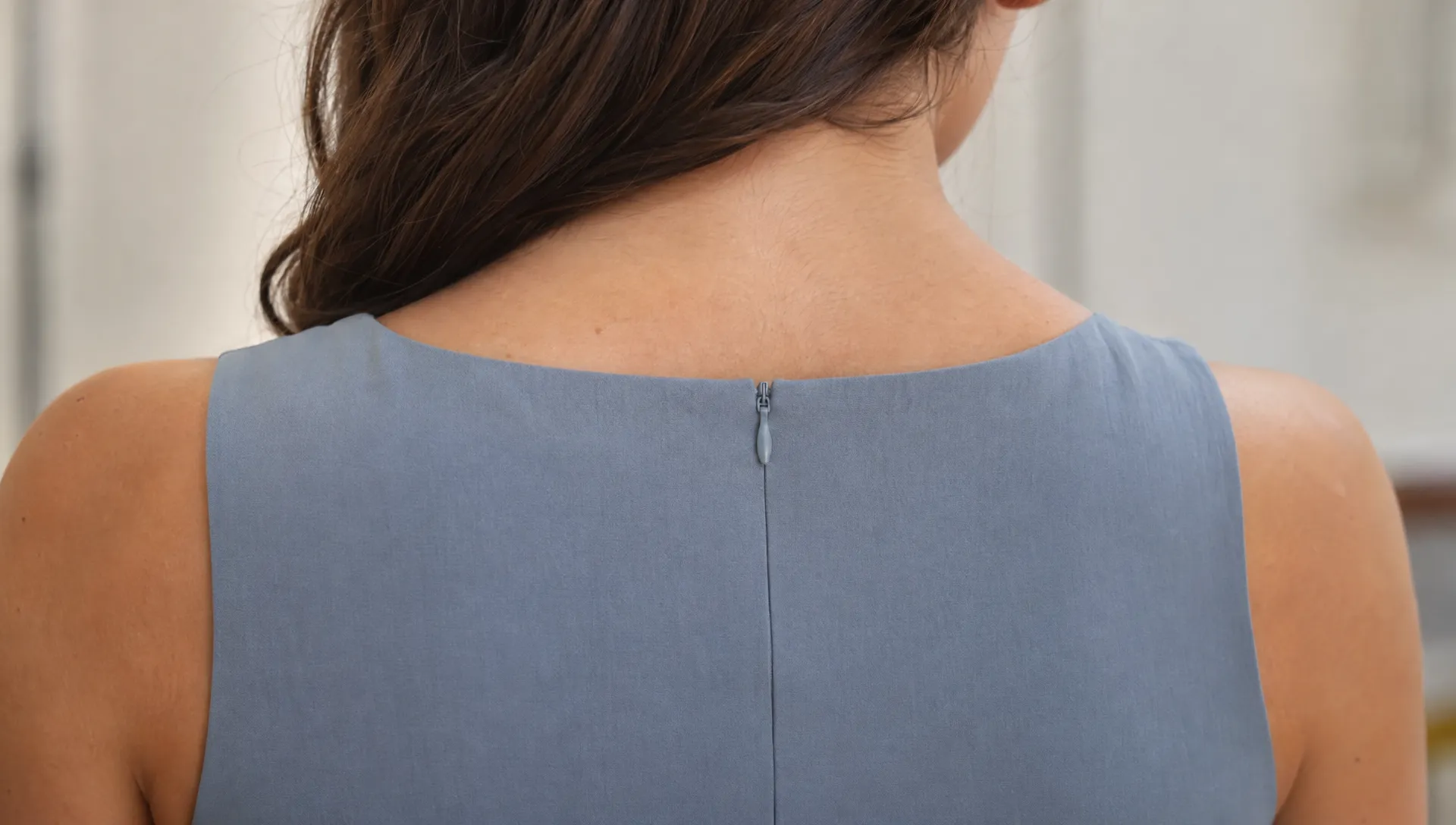
Address seam tension before hiding more hardware
Check the dress fit
A concealed zipper becomes more visible when the fabric is under excessive tension. If the seam spreads across the waist or upper back, a smaller tab will not solve the underlying problem.
Try the dress on and check the opening while standing, sitting and moving the arms naturally. Look for fabric pulling sideways from the closure, visible tape or strain at the top. These signs call for a fit or construction assessment, potentially by a tailor, rather than additional concealment.
Close-fitting clothing still needs enough room for movement. Avoid using the zipper or hook and eye to force together edges that do not comfortably meet.
Check sewing and pressing
Uneven seam alignment can expose the zipper tape or make the closure ripple. On a newly sewn dress, inspect the stitching position and whether the zipper was installed without stretching the surrounding fabric. Correcting installation may require unpicking and resewing rather than pressing alone.
Press only within the limits recommended for both the dress fabric and zipper. Use a suitable pressing cloth where needed, and avoid applying excessive heat directly to the coil or hardware.
An invisible zipper pull looks more discreet against a smooth, aligned seam. A fabric shield behind the zipper may improve skin comfort, but it does not necessarily hide the external tab. Keep that distinction in mind when deciding which alteration will actually help.
Test the closure in real wearing conditions
A mirror check under one light source is not enough for an evening dress, bridal garment or photographed outfit. Examine the closure in daylight and indoor lighting, then check it from a normal viewing distance. Close-up inspection can make a tiny detail seem more prominent than it is in use.
For sheer, satin or very lightweight fabric, look for shadows and impressions as well as exposed hardware. A concealed tab that presses against the outer layer can still leave a visible outline.
Use this short final check before accepting the finish:
- Appearance: The tab blends with the surrounding fabric and does not create a distracting highlight or bulge.
- Operation: The zipper opens and closes without catching the lining, facing or supplementary closure.
- Comfort: The hardware does not scratch the wearer or press uncomfortably against the skin.
- Movement: Sitting and moving do not expose the tape or pull the neckline edges apart.
Test the invisible zipper pull several times without forcing it. If it catches repeatedly, investigate the obstruction or compatibility problem before wearing the dress. Cosmetic changes should never make the closure unreliable.
Keep branding subtle on concealed dress closures
For apparel brands, a concealed dress zipper serves a different purpose from a prominent bag zipper. A large logo tab may suit an accessory but interrupt the clean seam of a formal dress.
Consider whether branding belongs on the pull at all. An interior woven label can carry the brand identity while allowing the closure to remain visually quiet. If branded hardware is part of the design, evaluate its dimensions, attachment and visibility on the actual garment rather than judging the artwork alone.
Compare any proposed pull with the existing closure and assess a physical sample where available. Do not assume that a custom tab will suit every invisible zipper slider or fabric weight.
Frequently asked questions
Can an invisible zipper pull be completely hidden? Sometimes the garment construction can screen it, but an invisible zipper primarily conceals the coil. A small tab may remain visible at the top. Tonal hardware and a neat neckline often make it unobtrusive without requiring complete coverage.
Should I tuck the pull inside the dress? Do not force it behind the tape or through the closed seam. That can strain the opening, catch fabric or make the zipper difficult to access. Let the tab rest naturally unless the garment has a purpose-designed cover or pocket for it.
Can I paint the pull to match the fabric? DIY paint may chip, transfer to the dress or enter moving parts. A compatible pull with a suitable factory finish is generally a better choice. Do not apply coatings to the slider mechanism or zipper coil.
Will a hook and eye hide the pull? Not necessarily. Its main role is to hold the upper edges together. Whether it reduces visibility depends on the neckline construction and hardware placement, and it must leave enough clearance for the zipper to function.
Choose hardware that supports the dress design
Keep the closure smooth and comfortable first, then refine its color, profile and visibility. For branded garments, explore HiLabels’ custom zipper pull offering and ask about dimensions and attachment compatibility before selecting hardware for a concealed dress zipper. The right choice should preserve the dress’s clean finish without making it harder to wear.


