How to Match an Invisible Zipper Slider to Your Zipper
An invisible zipper slider must match the zipper’s construction, not just the number stamped on the old hardware. Two sliders can look almost identical yet guide the coils differently, causing one to jam or leave the zipper unfastened behind it.
The safest replacement is a slider specified for the same manufacturer and zipper series. When that information is unavailable, you need to compare the concealed-coil construction, size markings, chain dimensions and locking mechanism before buying. This guide focuses on identifying a compatible replacement, rather than removing stops or installing the hardware.
Confirm that your zipper is actually invisible
An invisible zipper, also called a concealed zipper, hides its coil behind the fabric when properly sewn into a seam. It is common on dresses, skirts and other garments where the closure should blend into the seam line.
Open a short section and inspect both sides. The coil sits on the underside of the tape, with the tape edges rolling around it. From the garment’s outside, a properly installed closure shows little more than the seam and pull tab.
Do not identify the construction solely by the absence of visible teeth. A reverse-coil zipper is not automatically an invisible zipper. Reverse-coil closures also place the coil toward the back, but their tape construction and compatible slider geometry can differ from a concealed zipper.
A standard coil, molded-tooth or metal-tooth slider is therefore not a substitute simply because it appears to fit the same opening. Establish the zipper type before comparing sizes.
An invisible zipper slider must match more than its size
Treat compatibility as a combination of construction, manufacturer series, dimensions and function. Color is a finishing choice, not evidence that the hardware will work.
| Check | What to look for | Why it matters |
|---|---|---|
| Zipper construction | A confirmed invisible or concealed-coil zipper | Different constructions require different guiding geometry |
| Manufacturer and series | Packaging, supplier records, brand marks or product codes | These provide the strongest basis for identifying a replacement |
| Size designation | Numbers or letters on the existing slider and original specifications | Markings narrow the search but may not establish compatibility alone |
| Chain dimensions | Width across the joined coils, excluding the tape | Measurements help a supplier distinguish possible matches |
| Locking mechanism | The original slider’s specified locking style | The replacement should suit how the garment holds its closure |
| Pull and finish | Clearance, grip, color and attachment style | These affect usability and appearance after mechanical compatibility is established |
Find the manufacturer and original specification
Start with the information that accompanied the zipper. For a garment maker, that might be an invoice, bill of materials, sample card or packaging label. For a repair, inspect the original slider and pull for markings, then ask the garment maker whether the zipper specification is available.
When selecting an invisible zipper slider, a confirmed manufacturer series is more useful than a visual resemblance. A brand name narrows the search, but the brand may produce several zipper constructions and slider options.
Photograph every marking before removing anything. Include the slider’s front, underside and side profile, plus a clear view of the open coil. A pull tab may carry a logo without identifying the complete zipper series, so send the supplier all available evidence.
If there are no markings, say so. Guessing a manufacturer or interpreting an unfamiliar code as a size can lead to an unsuitable recommendation.
Read size markings without assuming they are universal
A number such as 3 or 5 often relates to a zipper size category. It does not guarantee that every slider carrying that number fits every zipper with a similar designation.
Size labels are useful within a known product system. Across manufacturers or zipper families, nominal sizes and actual geometry can differ. Letters and additional numbers may identify other details rather than chain width.
Do not interpret a size number as an exact millimeter measurement unless the manufacturer’s specification says that it is. Also avoid measuring the slider’s outside width and using that as the zipper size: its outer shell does not tell you the dimensions of the internal channels.
For an invisible zipper slider, use the marking as one piece of evidence alongside the zipper type and manufacturer information. A listing that says only “size 3 slider” leaves an important question unanswered: size 3 for which zipper construction and series?
Measure the chain, not the fabric tape
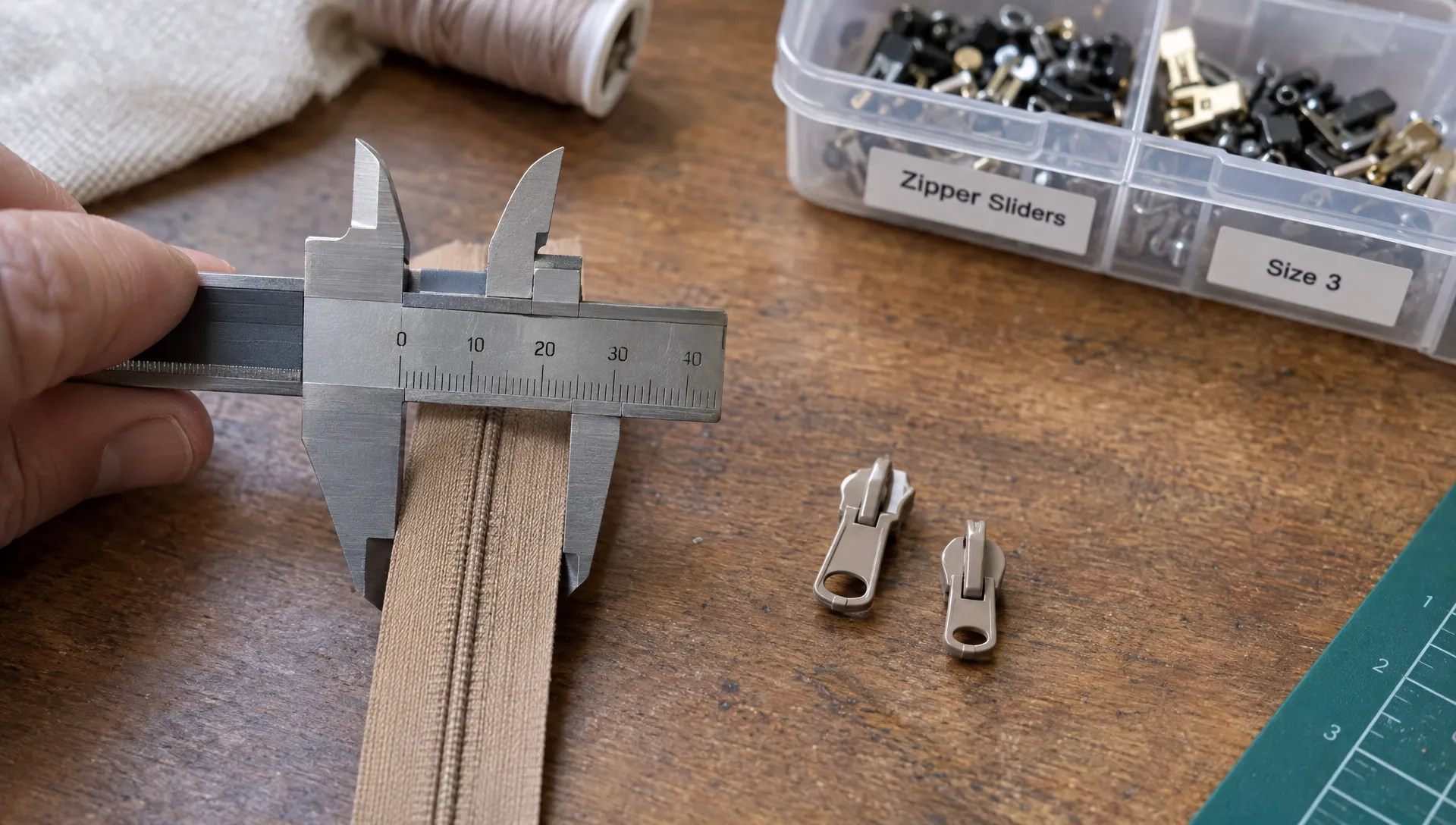
If the original specification is missing, measure the joined chain across the coils with the zipper closed and lying flat. Exclude the fabric tape on either side. Take the measurement from the side where the coil is accessible, without stretching the tape or compressing the chain.
A caliper can make small differences easier to read than a ruler. Record the measurement as observed rather than rounding it to the size you expect. If the chain is difficult to access in the garment, send a clear photograph with a ruler for scale and explain the limitation.
This measurement helps a supplier narrow the possibilities, but it is not a complete compatibility test. Coil thickness, shape and the way the tape enters the slider also matter. A slider can accept the chain at its entrance yet fail to join it correctly during travel.
Check the locking mechanism and pull clearance
Many garment zippers use an auto-lock slider to help hold the closure in position when the pull is released. Match the original locking style or ask the zipper manufacturer which option belongs with that chain.
An auto-lock mechanism is different from hardware designed to accept a padlock. For a concealed garment closure, the relevant question is whether the slider holds its position during normal wear, not whether its pull has a lockable opening.
The replacement invisible zipper slider should also leave enough clearance for the pull to move without rubbing against the seam allowance or getting trapped under nearby fabric. Compare the pull’s position and the slider’s side profile with the original, while remembering that appearance alone cannot confirm a match.
Do not pry at the locking parts to inspect them or squeeze the body to make an uncertain replacement fit. Either action can damage the hardware and obscure whether the original problem was incompatibility.
Give the supplier enough information to confirm a match
A useful inquiry describes the zipper rather than asking for “a small replacement slider.” Include the manufacturer and series if known, the original markings, chain measurements and photographs of the concealed-coil construction.
Ask directly: “Is this slider specified for this invisible zipper chain?” That is more precise than asking whether the sizes look similar. If the supplier cannot confirm the combination from photographs, ask whether they can identify it from a physical sample.
Before ordering an invisible zipper slider in quantity, have the proposed combination checked on a sample from the same zipper specification. For production work, keep the approved zipper and slider details together so future purchases do not depend on someone remembering what looked right.
Finish and pull shape should come after this confirmation. A close color match will not compensate for channels that guide the coil incorrectly. If the seller supplies sliders only as part of complete zippers, replacing the entire zipper may be the more practical route.
Test compatibility before committing to the repair
The lowest-risk test uses a spare zipper of the exact same specification. Testing on a garment may require opening a stop or gaining access to a chain end, so arrange that work carefully rather than forcing the slider onto an inaccessible section.
Once the replacement is correctly fitted for testing, move it slowly through a short, unobstructed section. The coils should join evenly behind it without unusual resistance, separation or distortion. Keep fabric clear of the slider so a seam snag does not disguise the result.
A compatible invisible zipper slider should close the chain consistently, but a successful short pass is not enough. Check the usable length, repeat the opening and closing movement and verify the locking function according to the zipper’s specification.
If the chain separates behind the slider, stop testing. Possible causes include incompatible hardware, a damaged coil or a worn slider. Do not keep pulling harder to make the result improve.
Once compatibility is established, follow a suitable installation method. HiLabels’ guide to replacing a zipper slider covers the broader replacement process; concealed zippers still require attention to their specific construction and access points.
Know when the slider is not the problem
Before buying hardware, inspect the coil and tape along the affected area. Broken coil sections, torn tape or damaged stitching that holds the coil to the tape will not be corrected by changing the slider. Replacing the zipper is usually more appropriate when its chain or supporting tape is damaged.
Also distinguish the slider body from the pull tab. The slider joins and separates the chain; the pull gives you something to grip. If the closure works correctly but the tab is missing, you may only need a pull repair.
The guide to replacing a zipper pull without damaging the slider explains that distinction. Avoid dismantling a functioning slider just to change its appearance, particularly when the pull attachment is not designed to open.
Frequently asked questions
Can I use a regular coil slider on an invisible zipper? Do not assume compatibility. Concealed zippers require hardware suited to their coil and tape geometry. Use a replacement specified for the zipper series rather than a standard coil slider that merely looks similar.
Does the number on an invisible zipper slider guarantee the right replacement? No. A size marking helps narrow the search, but the zipper construction, manufacturer series and locking style still need checking. Matching numbers alone are not a reliable purchasing rule.
What if my zipper has no identifiable brand or code? Provide a specialist supplier with clear photographs and chain measurements. A physical sample may be needed. If compatibility cannot be established, replacing the complete zipper avoids relying on a guessed match.
Should I replace the whole zipper if it opens behind the slider? First inspect the chain and identify the slider. A worn or incorrect slider can cause separation, but damaged coils can produce a similar symptom. Replace only the slider when the chain is sound and a compatible replacement is confirmed.
Add branding after the hardware is matched
For apparel brands, establish the functional zipper specification before choosing decorative details. A custom pull should suit the confirmed attachment design and remain easy to use without catching the surrounding fabric.
If you are planning coordinated garment branding, explore HiLabels’ custom zipper pulls and woven labels. Keep the approved zipper specification alongside your branding choices so function and appearance are considered together.


