Is a Zipper Slider the Same as a Puller?
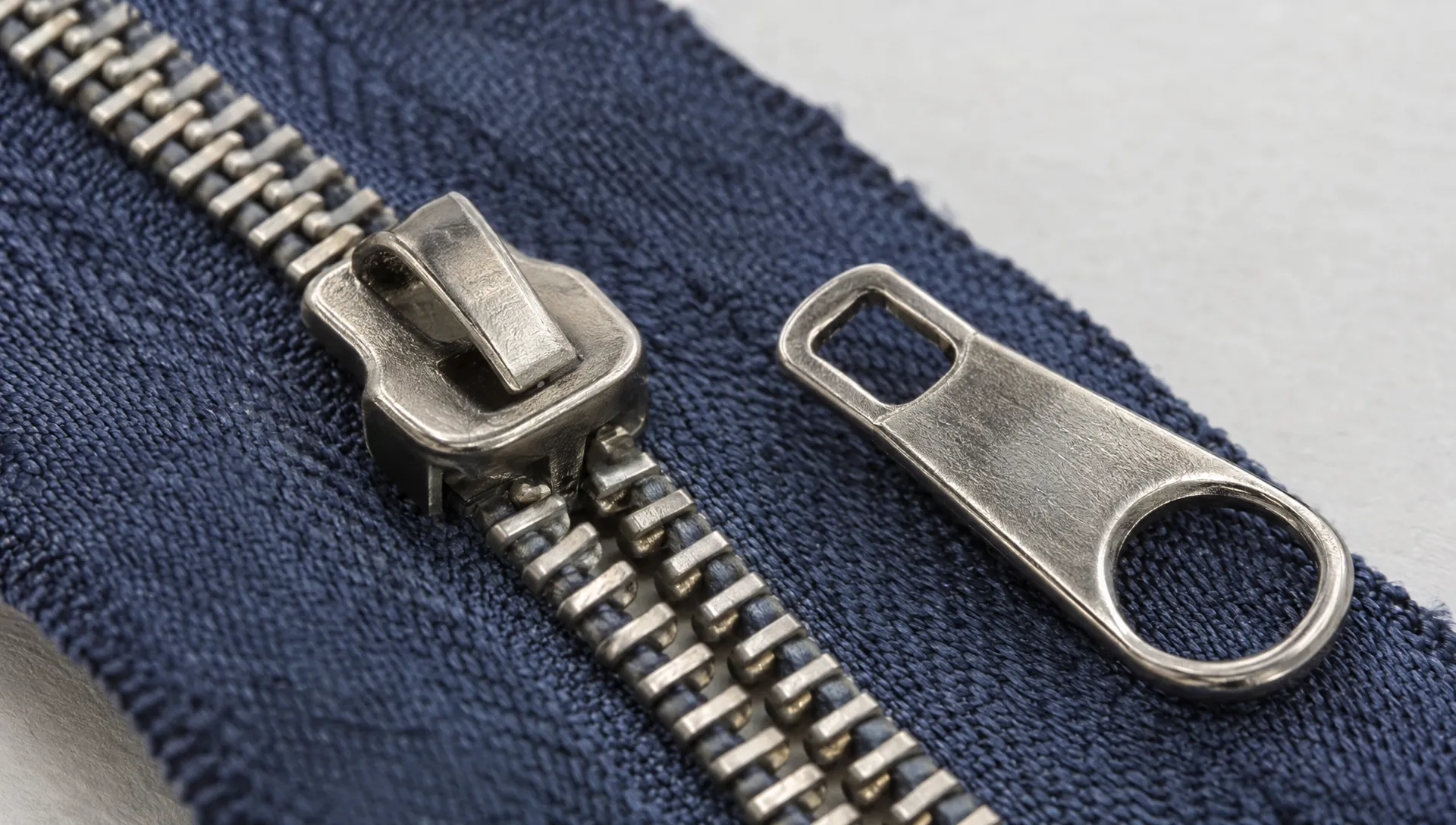
No. A zipper slider and a puller are different parts, although they work together and are often sold as one assembly. The slider moves along the zipper and brings its two sides together or separates them. The puller, also called a pull tab, is the part you hold. If you encounter a “zipper slider puller” listing, check whether it includes the slider body, the pull tab or both.
That distinction matters when ordering replacement parts, discussing garment hardware with a supplier or adding branded pulls to bags and apparel.
The difference between a zipper slider and a puller
The simplest way to identify the two components is to separate the part that operates the zipper from the part your fingers grip.
What is a zipper slider?
The slider is the shaped body that travels along the zipper chain. Its internal channels guide the teeth or coil elements into engagement when you close the zipper and separate them when you open it.
A slider must match the zipper it operates. Metal teeth, molded plastic teeth and coil constructions require compatible slider designs. Size also matters, but a size number alone does not establish compatibility across every manufacturer and zipper series.
What is a zipper puller?
The puller is the tab attached to the slider that gives you something to grasp. Depending on the design, it may be metal, plastic or another material. A cord, fabric loop or leather strip can also act as a grip extension attached to an existing tab.
When a seller uses “zipper slider puller” as a product name, those different components can become difficult to distinguish. Use the following comparison rather than relying on the name alone.
| Component | What it does | How to recognize it |
|---|---|---|
| Slider body | Guides the zipper elements together or apart | Sits directly around the zipper chain |
| Puller or pull tab | Provides a grip for moving the slider | Hangs from or connects to the slider body |
| Pull extension | Adds reach, grip or decoration | Attaches to an existing tab or suitable attachment point |
How the slider and puller work together
Pulling the tab transfers force to the slider, which moves along the zipper. The slider's internal shape does the work of engaging or separating the zipper elements. The tab itself does not mesh the teeth.
There is one useful complication: some pull tabs also interact with a locking mechanism. On many auto-lock sliders, lifting the pull tab releases the lock so the slider can move. Releasing it allows the locking mechanism to engage again.
This does not make the puller and slider the same part. It means that their connection can serve more than one purpose. A replacement tab for a locking slider may need a particular attachment geometry, not merely a hole that appears to fit.
Likewise, a zipper can have an intact tab but a damaged slider. Having something to pull does not prove that the body or locking mechanism still works correctly.
What does a zipper slider puller listing actually include?
Product terminology is not consistent across retailers. One listing may show a complete slider with its pull tab already attached. Another may sell only a replacement tab. A third may offer a decorative extension intended to attach to an existing pull.
Read the contents, not just the product name
Look for an explicit description such as “slider with attached pull tab,” “replacement pull tab only” or “cord pull extension.” These descriptions tell you more than a broad title.
Product photos should also show the attachment point. A tab with a clip, ring or cord loop is different from a complete slider with channels for the zipper chain. If a photo shows several pieces, confirm which ones are included in the order rather than assuming the entire pictured assembly arrives together.
Check what the measurements describe
A listed measurement might refer to the tab's length, the slider body's width or the zipper size. Those measurements answer different questions.
Before buying a zipper slider puller replacement, ask which component each dimension describes and whether the supplier has confirmed compatibility with your existing hardware. A long pull tab may improve grip, but its length says nothing about whether a slider fits your zipper.
For an unfamiliar part, clear photographs and a supplier confirmation are more useful than a product title alone.
Which component do you actually need?
The correct term helps you describe the problem without ordering more hardware than necessary. Start by identifying what is missing, damaged or being changed.
You have lost the tab but the zipper still operates
If the slider body remains intact, the missing component may be only the pull tab. However, the slider must have an attachment point that accepts the intended replacement. Not every factory-installed tab is designed for easy removal or replacement.
Our guide to replacing a zipper pull without damaging the slider explains that attachment check in more detail.
The tab is intact but the zipper does not close properly
A zipper that separates behind the slider can have a worn or damaged slider, damaged zipper elements or another alignment problem. Changing the pull tab alone does not address those causes.
In this situation, searching for a zipper slider puller without identifying the faulty component can lead to buying a decorative part when you need a compatible slider or a broader repair.
You want a different grip or branded detail
If the zipper functions normally, changing the tab or adding a compatible extension may provide the grip or appearance you want. There may be no reason to replace the slider body.
The decision should start with the existing attachment design, followed by the desired size, material and branding.
How to describe zipper parts to a supplier
For replacement or production orders, describe the assembly in separate terms. “Slider body,” “pull tab” and “pull extension” communicate more clearly than “zipper piece” or “zipper handle.”
A useful request identifies the zipper construction, any visible manufacturer or size markings and the component you need. Include clear photographs of the slider from above and below, plus a view of the pull attachment.
For example: “I need a replacement pull tab for this existing slider. The slider body will remain in place. Please confirm that the attachment is compatible.”
If you need the entire assembly, say so explicitly: “I need a compatible slider body with an attached pull tab.” This avoids treating a zipper slider puller description as proof that both parts are included.
Keep functional and visual specifications separate
For a branded product, specify the tab's appearance separately from the slider's mechanical requirements. Color, logo placement and grip shape describe the pull. Zipper construction, size and locking requirements describe the slider assembly.
Specialized constructions need additional care. For example, matching an invisible zipper slider to its zipper requires checking more than a similar appearance or size marking.
Before approving production, confirm both the supplied components and their compatibility with the intended zipper.
Frequently asked questions
Is a zipper pull the same as a zipper puller? Usually, yes. Both commonly refer to the part you grasp to move the slider. However, some sellers use “zipper pull” for an accessory attached to the original tab, so check the description.
Does a new zipper slider always include a pull tab? No. Some sliders arrive with an attached tab, while others are supplied without one or are designed for a separately attached pull. Confirm the package contents before ordering.
Can a zipper slider work without a puller? Some non-locking sliders can still move without a tab, though they are harder to operate. An auto-lock slider may require the correct tab or actuator to release its lock. Do not force a slider that will not move.
Does “zipper slider puller” mean a universal replacement? No. The wording does not establish compatibility. Slider fit depends on the zipper's construction and specifications, while pull-tab fit depends on the attachment design and, where relevant, the locking mechanism.
Can a custom pull fit any slider? No. A custom pull needs a compatible attachment and sufficient clearance to move as intended. Its dimensions and weight should also suit the product.
Choose the right part before customizing
A slider operates the zipper; a puller gives you a grip. Knowing which one you need makes replacement and customization discussions much clearer.
If you are exploring branded finishing details, HiLabels offers custom zipper pulls alongside woven labels, patches and ribbons. Identify your existing slider and attachment requirements first, then discuss the pull design that suits your product.


