Leather Zipper Pulls That Refresh Worn Purses
A purse can look tired long before it is truly worn out. The leather may still be supple, the lining may still be clean, and the shape may still suit your wardrobe, but a missing, cracked, or flimsy zipper pull can make the whole bag feel neglected. That is why leather zipper pulls are such a small upgrade with such a visible payoff.
For purse owners, they restore grip and polish without replacing the entire zipper. For accessory brands, repair shops, and upcycling sellers, they offer a practical way to extend product life while adding a more intentional design detail. The key is choosing the right leather style, attachment method, size, and finish so the pull looks like it belongs on the bag.
Why leather zipper pulls work so well on worn purses
Leather has a natural softness that suits handbags, totes, crossbody bags, wallets, and clutches. Unlike a bare metal zipper tab, it feels warmer in the hand. Unlike a plastic pull, it can look more refined and age attractively when cared for. On a purse that already has leather trim, a matching pull can make a repair look original rather than improvised.
Leather zipper pulls for purses also solve a very practical problem: small zipper tabs can be hard to grasp, especially on compact interior pockets or bags with recessed closures. A longer pull gives the user more leverage, making the zipper easier to open without tugging at the slider or stressing the teeth.
This matters because many purse “zipper problems” are not actually zipper failures. The slider may still move smoothly, but the original tab has snapped, tarnished, loosened, or become uncomfortable to use. In those cases, replacing the pull can refresh the bag without the cost or complexity of replacing the full zipper. If the tab, ring, or slider needs more troubleshooting first, HiLabels has a practical guide on how to fix a broken zipper pull without replacing the zipper.
The style effect: subtle repair or visible accent?
Before choosing a leather zipper pull, decide whether you want it to disappear into the purse design or become a small decorative feature.
A subtle repair usually means matching the purse color, hardware tone, and original pull shape as closely as possible. This is ideal for classic black handbags, structured work totes, luxury-style purses, or vintage bags where you want the repair to feel seamless.
A visible accent works differently. You might choose a tan leather pull on a navy purse, a burgundy pull on a brown leather satchel, or a textured pull on a canvas tote. This approach can make an older purse feel styled rather than simply repaired. It is especially useful for boutiques, makers, and resale sellers who want to give upcycled bags a recognizable finishing touch.
If your goal is more decorative than restorative, it can help to compare leather with other accent materials. HiLabels’ guide to decorative zipper pulls that add style without sacrificing use explains how zipper pull details can change both appearance and usability.
Choosing the right leather zipper pull for a purse
A good purse zipper pull should look proportional, feel comfortable, and stay secure under daily use. The best choice depends on the purse size, zipper location, and the visual weight of the bag.
| Purse type | Recommended pull style | Why it works |
|---|---|---|
| Small clutch or wallet | Short, narrow leather tab | Adds grip without overwhelming the design |
| Crossbody bag | Medium leather loop or folded tab | Easy to find and pull while wearing the bag |
| Tote or shopper | Longer leather pull with reinforced attachment | Suits larger hardware and heavier use |
| Vintage purse | Slim pull in a matching or aged tone | Preserves the original look of the bag |
| Upcycled or boutique purse | Custom-shaped or branded leather-style pull | Creates a more finished, intentional appearance |
Color is the first thing most people notice, but proportion is just as important. A pull that is too short may not improve function. A pull that is too long can swing excessively, catch on clothing, or look out of scale. For most purses, the pull should be long enough to pinch comfortably between thumb and forefinger, while still staying close to the bag.
Thickness also matters. Thin leather can feel elegant on delicate bags, but it may stretch or curl if used on a heavy daily tote. Thicker leather has more presence and durability, but it may look bulky on a small zipper. When in doubt, match the pull weight to the purse hardware: fine hardware pairs best with refined pulls, while larger rings and sliders can carry a sturdier tab.
Attachment methods that look clean and last
A leather pull is only as good as its attachment. If the connection is loose, awkward, or mismatched, the repair can look temporary even when the leather itself is beautiful.
The most common attachment methods include split rings, loop-through tabs, small lobster clasps, riveted tabs, and cord-style connectors. Split rings are easy to install and remove, making them useful for quick repairs. Loop-through tabs look cleaner because the leather itself wraps through the zipper slider. Riveted options feel more permanent and can suit branded or handmade goods.
For worn purses, the existing zipper slider will determine what is possible. Some sliders have a wide opening that easily accepts a folded leather loop. Others have only a small hole, which may require a ring or connector. Do not force thick leather through a small slider opening, since that can bend the slider or create friction when the zipper moves.
A helpful rule is to test movement before committing. Attach the pull, open and close the purse several times, and check whether the pull twists, catches, or rubs against the bag. A good zipper pull should make the zipper easier to use, not introduce a new annoyance.
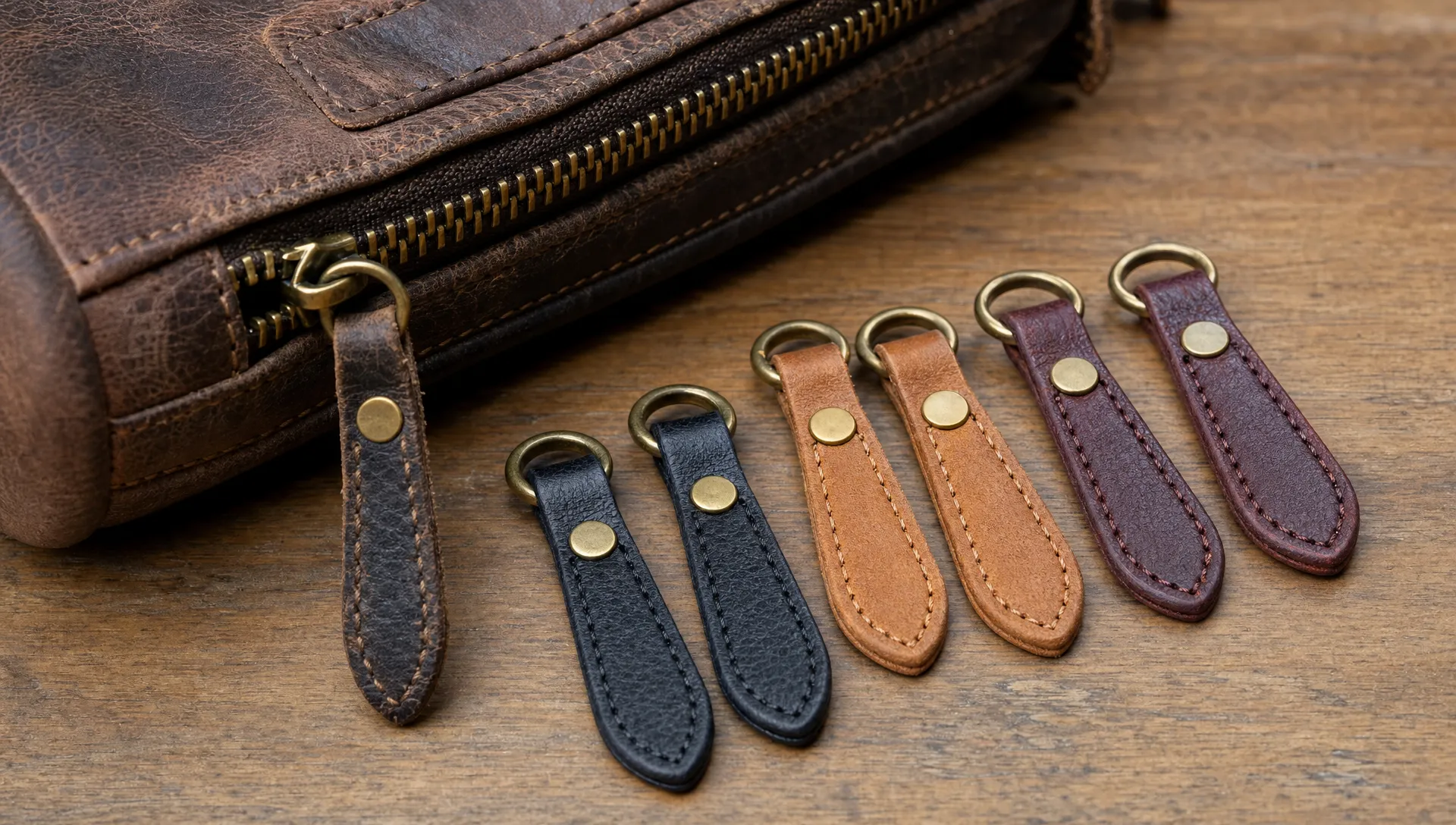
Matching leather pulls to hardware and purse materials
The most polished repairs consider the whole purse, not just the zipper. Look at the hardware finish, stitching color, handle trim, edge paint, and lining before choosing a pull.
Gold-tone hardware often pairs well with warm leather shades like cognac, chestnut, caramel, and oxblood. Silver-tone hardware usually works with black, charcoal, navy, cool brown, and gray. Antique brass can look especially good with distressed leather or vintage-style pulls.
Texture is another important detail. Smooth leather feels sleek and dressy. Pebbled leather is forgiving because it hides small scratches and coordinates well with many everyday handbags. Suede or nubuck can look soft and premium, but they are more vulnerable to oils, moisture, and dirt, so they are usually better for occasional-use purses than daily bags.
For non-leather purses, such as canvas, nylon, woven fabric, or vegan leather bags, a leather pull can still work if the color and scale make sense. On casual canvas totes, tan or dark brown pulls add warmth. On sporty nylon bags, a slim black leather pull can look cleaner than a frayed cord. On vegan leather purses, be careful with product descriptions if you sell the bag, since “leather” and “leather-like” are not the same claim.
When leather is the right choice, and when it is not
Leather zipper pulls are versatile, but they are not ideal for every purse or every use case. They are strongest when the purse needs a tactile, refined, repair-friendly detail. They are less suitable when the bag is regularly exposed to heavy rain, mud, harsh chemicals, or constant abrasion.
For travel backpacks, outdoor gear, or athletic bags, rubber, cord, or metal may be better depending on the use. For fashion purses, work totes, small leather goods, and boutique accessories, leather often provides the best balance of comfort and style.
Here is a simple comparison to help narrow the choice:
| Pull material | Best for | Considerations |
|---|---|---|
| Leather | Purses, totes, wallets, boutique accessories | Comfortable, stylish, may need care around moisture |
| Metal | Jackets, structured bags, premium hardware looks | Durable and polished, can feel cold or heavy |
| Cord or paracord | Backpacks, utility bags, casual repairs | Strong grip, more sporty than refined |
| Rubber or silicone | Outdoor, kids’ items, performance bags | Weather-friendly, less classic on dress purses |
| Woven or fabric | Branded accessories, soft goods, lightweight bags | Flexible and customizable, may fray depending on construction |
If you are comparing materials for branded accessories, HiLabels also explains how zipper pulls boost function and branding across different product categories.
Leather zipper pulls for purse brands and upcycled goods
For individual purse owners, a replacement pull is a quick refresh. For brands, repair shops, and resale businesses, it can become part of a larger product strategy.
A consistent zipper pull style can make a collection feel cohesive even when the bags vary in color or shape. For example, an upcycled purse seller might use a signature leather pull shape on every restored bag. A boutique brand might coordinate zipper pulls with woven labels, patches, or care labels to create a more complete identity. A repair studio might offer pull replacement as a small add-on that makes the finished repair feel more premium.
This is where customization becomes useful. Shape, color, attachment type, debossing, and artwork all influence how a pull supports the overall bag design. HiLabels offers custom zipper pulls and related branding products, including woven labels, patches, ribbons, and care labels, so brands can build a more cohesive finish across accessories and apparel.
If you sell repaired, upcycled, or private-label purses, also pay attention to material claims, country-specific requirements, and care information. Teams managing documentation across multiple products can benefit from AI-powered compliance workflow support when organizing policies, evidence, and regulatory tasks.
Simple installation tips for a cleaner result
Many leather zipper pulls can be installed at home, but a few small details make the result look more professional.
Start by cleaning the zipper area. Dust, lint, old adhesive, and metal residue can make a new pull look out of place. Use a soft cloth and avoid soaking the leather around the zipper. If the purse is vintage or delicate, test any cleaner on an inconspicuous area first.
Next, inspect the slider. If the slider is bent, cracked, or no longer closes the zipper teeth properly, a new pull will not solve the underlying problem. But if the slider moves normally and only the pull tab is missing or unattractive, replacement is usually straightforward.
When attaching the new pull, make sure it hangs in the direction the hand naturally moves. On a top zipper, the pull should lie comfortably along the zipper line. On a side pocket, it should not dangle so far that it catches on the strap, clothing, or bag edge.
Finally, check the sound and feel. A good leather pull should reduce clanking compared with metal-only tabs and provide a quieter, softer user experience. If it clicks loudly, twists, or scrapes hardware, try a smaller connector or different attachment angle.
Caring for leather zipper pulls
Leather zipper pulls are handled often, so they collect oils, dust, and moisture faster than many other purse details. Regular light care keeps them looking intentional rather than worn down.
Wipe the pull occasionally with a dry or slightly damp soft cloth. Avoid over-conditioning, especially on small pulls, because too much product can darken leather, soften the structure, or transfer residue to the purse. If the pull gets wet, blot it gently and let it air dry away from direct heat.
For light-colored pulls, be mindful of denim dye, makeup, hand lotion, and sanitizer. These can stain or dry out leather over time. For dark pulls, watch for edge wear, especially where the pull bends through the slider or ring.
If a pull begins to crack, stretch, or tear near the attachment point, replace it before it breaks completely. A fresh pull is inexpensive compared with the inconvenience of a zipper that suddenly becomes difficult to open while you are using the bag.
Common mistakes to avoid
The biggest mistake is choosing a pull for looks alone. A beautiful leather tab that is too thick for the slider, too long for the purse, or too delicate for daily use will not feel satisfying over time.
Another mistake is ignoring hardware color. A new pull can match the leather perfectly but still look wrong if the ring, rivet, or clasp clashes with the zipper hardware. If your purse has antique brass hardware, a bright silver connector may make the repair stand out in the wrong way.
A third mistake is using vague or inaccurate language when selling leather-look accessories. If a pull is genuine leather, say so only when that is accurate. If it is synthetic, vegan, faux, or leather-like, describe it clearly. Honest material descriptions build trust and help customers care for the product correctly.
Frequently Asked Questions
Can I put a leather zipper pull on any purse? In many cases, yes, as long as the zipper slider has an opening that can accept a ring, loop, or connector. Very tiny sliders may need a thinner pull or small split ring.
Are leather zipper pulls durable enough for everyday bags? Quality leather pulls can work well on everyday purses, especially when they are properly sized and reinforced at the attachment point. For heavy outdoor or wet conditions, another material may be more practical.
How do I choose the right color for a replacement pull? Match the purse trim for a seamless repair, or choose a complementary accent color for a styled update. Also consider the hardware finish, stitching, and overall bag tone.
Can leather zipper pulls make a purse look more expensive? They can make a purse look more finished, especially when the pull is proportional, cleanly attached, and coordinated with the bag. The improvement is subtle, but it affects both appearance and touch.
Should purse brands use custom zipper pulls? Custom pulls can help brands create a consistent look across collections and improve daily usability. They are especially effective when coordinated with labels, patches, care labels, and other branding details.
Give worn purses a small detail that feels new
A purse refresh does not always require new hardware, new lining, or a full repair. Sometimes the most noticeable improvement is the detail your hand touches every day. A well-chosen leather zipper pull can restore grip, soften the look of worn hardware, and make an older bag feel cared for again.
For brands, makers, and repair professionals, that same small detail can support a more polished customer experience. If you are creating custom pulls for purses, bags, or accessories, HiLabels can help you explore custom zipper pulls and complementary branding products designed to bring a finished look to every piece.


