Brand Woven Labels That Build Recognition With Every Sale
A sale is not the end of the branding journey. For apparel, accessories, handmade goods, and lifestyle products, it is often the first time a customer lives with your brand in a personal, repeated way. The tag at the neckline, the small mark on a hem, the patch on a bag, or the label stitched into packaging becomes a quiet reminder of who made the product and why it felt worth buying.
That is where brand woven labels do more than identify a garment. They help build recognition every time the product is worn, washed, photographed, gifted, packed for travel, or recommended to someone else. Unlike a disposable hang tag or a digital ad that disappears after a click, a woven label stays with the item and reinforces your brand through use.
For small brands, independent designers, merch teams, and growing apparel companies, this matters. Recognition is rarely built through one big moment. It is built through dozens of consistent impressions that feel intentional, premium, and memorable.
Why woven labels keep working after the sale
Most marketing channels are temporary. Social posts get buried. Packaging is thrown away. Ads stop when the budget stops. A woven label, however, remains part of the product itself.
When a customer reaches for your hoodie, folds your scarf, checks the size of a shirt, or washes a handmade piece, the label is there. It is not loud, but it is persistent. Over time, that repeated exposure helps customers associate your logo, name, color palette, and quality standard with the product experience.
This is especially useful for brands that rely on repeat purchases or word of mouth. If someone loves a product but cannot remember where it came from, the path back to your brand becomes harder. A clear, well-made woven label makes that connection easier.
A woven label also signals permanence. Because the design is woven into the fabric rather than simply printed on the surface, it feels more integrated and durable. That tactile quality can elevate the perceived value of the item, especially for clothing, bags, accessories, home textiles, and premium merchandise.
Recognition is built through consistency, not size
A brand label does not need to be large to be effective. In fact, some of the most recognizable labels are small, restrained, and consistent. The key is to make the same visual cues appear across enough products and touchpoints that customers start recognizing them instinctively.
Those cues may include your logo, a signature color, a distinctive type style, a woven icon, a border, or even a specific label shape. The goal is not to overwhelm the product. The goal is to create a branded detail that feels like it belongs.
For example, a minimalist childrenswear brand might use a soft cream woven label with a simple wordmark and rounded edges. A streetwear label might choose a high-contrast damask label, a side seam tag, and a woven patch. A sustainable basics brand might use a small center-fold label with understated colors and clear care information.
Each approach can work if it is repeated with intention.
If you are still defining the visual foundation of your labels, HiLabels has a helpful guide on how custom woven labels can make your brand memorable without relying on overly complicated design.
What makes brand woven labels feel premium
Customers may not consciously analyze every label, but they notice quality signals. A scratchy, unreadable, or poorly placed label can make a product feel unfinished. A clean, comfortable, durable woven label can make the same product feel more complete.
Several details influence that perception.
| Label detail | How it supports recognition | Practical tip |
|---|---|---|
| Clear logo or wordmark | Helps customers remember and search for the brand | Keep small text simple and avoid overly thin lines |
| Consistent colors | Makes products feel connected across collections | Choose brand colors that still have enough contrast when woven |
| Quality weave | Adds texture and durability | Use a weave type suited to your design complexity |
| Comfortable finish | Improves the customer experience | Consider placement and edge softness for garments worn against skin |
| Repeatable placement | Trains customers where to look for your brand | Use consistent label positions across product categories |
A premium label does not have to be complicated. It has to be legible, durable, comfortable, and aligned with the product’s price point and audience.
Where woven labels create the most brand value
The best label placement depends on the product, but the most effective placements share one thing: they appear naturally during ownership.
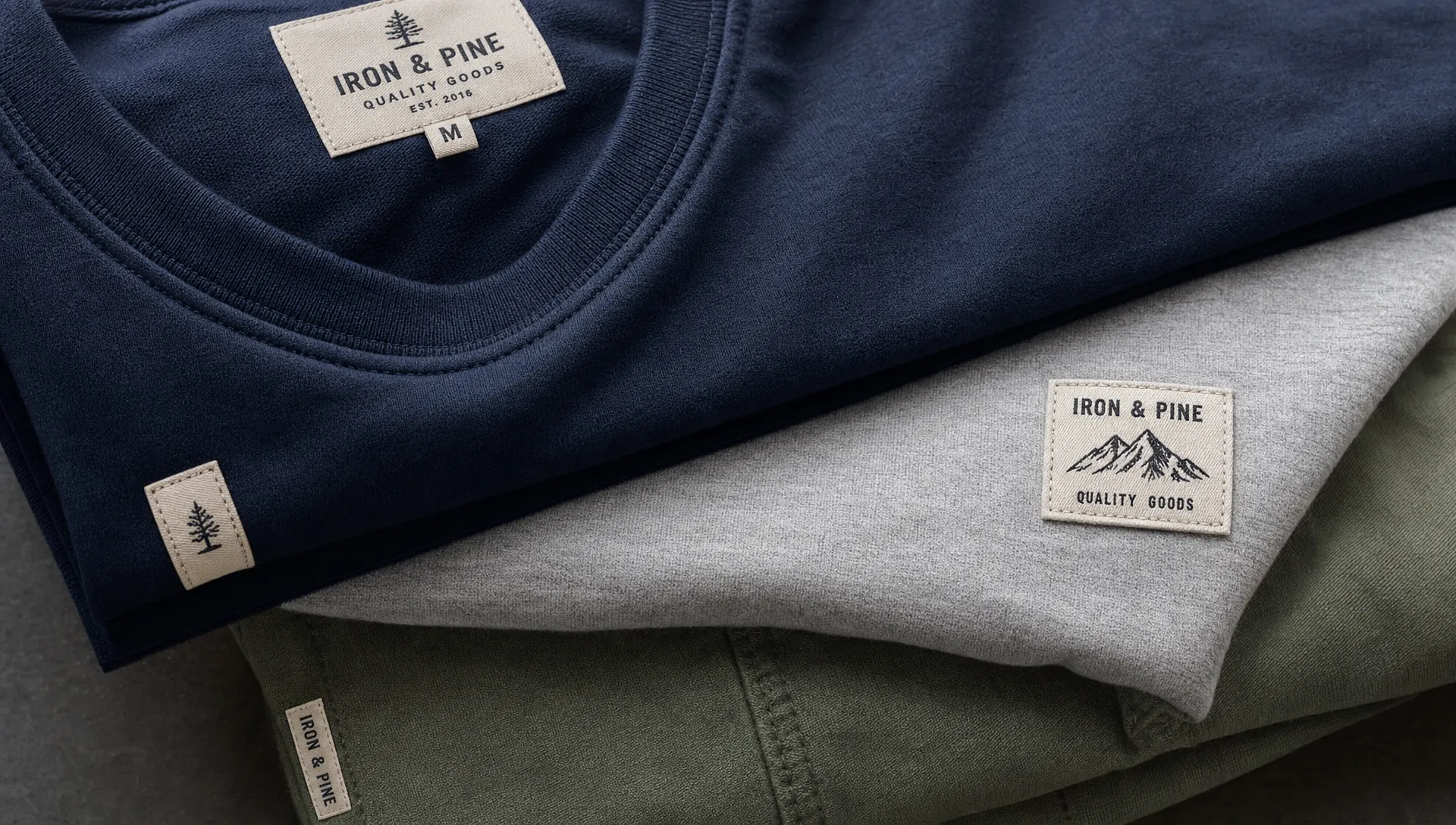
A neck label on a shirt is useful because it is seen when the garment is put on, removed, folded, or checked for size. A hem tag works well when you want a subtle external brand marker. A woven patch can turn the label into a visible design feature. A care label supports trust by giving customers useful product information. Zipper pulls and ribbons can extend recognition into bags, accessories, packaging, and giftable items.
For clothing brands in particular, the label should support both identity and usability. Customers often check labels for size, care instructions, and brand name, so clarity matters. If your labels look beautiful but are hard to read, they miss part of their purpose.
HiLabels covers this product-specific angle in more depth in its guide to woven labels for clothing that look premium and last.
How labels help customers find you again
One of the most underrated functions of brand woven labels is recall. A customer may discover your product through a boutique, a market, a subscription box, a gift, an influencer, or an online marketplace. Months later, the product itself may be the only remaining link back to your brand.
That is why the label should make the brand name easy to identify. If your logo is abstract, consider including a readable wordmark. If your brand name is long, test how it looks at actual woven-label size. If your product is often gifted, make sure the recipient can understand who made it without relying on the original packaging.
This is especially important in multi-brand environments. Whether your products appear in local shops, pop-up events, curated subscription boxes, or a broad retail platform like a UAE online shopping marketplace, customers are surrounded by choices. A consistent woven label helps your product remain connected to your brand after the initial purchase moment.
Designing woven labels for repeat recognition
A strong woven label starts with strategy, not decoration. Before choosing colors and folds, ask what the label must accomplish.
Does it need to make your brand name visible? Add a premium finishing detail? Help customers identify size and care information? Reinforce a luxury feel? Create a signature external marker? Support a handmade or small-batch story?
Once the purpose is clear, the design decisions become easier. A main brand label may need the clearest logo treatment. A side seam tag may need bold contrast because it is small. A care label may need practical readability. A patch may allow more visual presence and texture.
For most brands, the best recognition system includes a few coordinated label types rather than one label trying to do everything. A garment might have a main woven label, a size tab, and a care label. A bag might have a woven patch and a branded zipper pull. A gift product might use a woven ribbon or branded packaging accent.
The result is a more complete brand experience, where every detail feels connected.
Common label mistakes that weaken recognition
Even well-made products can lose impact when the label is treated as an afterthought. The most common issues are usually simple to avoid.
- Making the logo too detailed for the final label size
- Choosing low-contrast colors that reduce readability
- Changing label styles too often between collections
- Placing labels where they irritate the wearer
- Using a label that feels cheaper than the product itself
- Forgetting size, care, or origin information when customers expect it
The biggest mistake is designing for the screen rather than the finished label. Artwork that looks sharp on a monitor may not translate well when woven at a small scale. Fine lines, gradients, tiny lettering, and subtle color differences should be simplified before production.
If you want a smoother design process, you can use HiLabels’ guidance on how to design your own woven labels online and prepare artwork with the final woven result in mind.
How to make woven labels part of your brand system
A label should not be a one-off decision. It should become part of your brand standards, just like your logo files, packaging rules, photography style, and tone of voice.
Start by documenting the details you want to repeat. This may include label dimensions, background color, thread colors, logo version, fold type, placement, and which product categories use which label formats. Having this system in place makes reordering easier and keeps future collections consistent.
A simple brand label system might include a main woven label for apparel, a care label for washing and fiber information, a woven patch for outerwear or bags, and ribbon for packaging. As your brand grows, these elements create familiarity across different products without making every item look identical.
This consistency is especially helpful for wholesale buyers and repeat customers. It tells them your brand has standards, and that your products belong together as a collection.
Matching label style to brand positioning
Different brands need different label treatments. A luxury apparel line and a playful handmade accessories shop should not necessarily use the same label style.
A refined label might use a restrained palette, crisp lettering, and a soft finish. A youth-focused streetwear brand might lean into bold contrast, external tags, and patches. A heritage-inspired brand may choose classic woven textures and muted colors. A children’s brand may prioritize softness, rounded shapes, and friendly iconography.
The right choice is the one that makes the customer feel, “This detail fits the product.” That alignment is what turns a label into a brand asset rather than just a requirement.
HiLabels offers custom woven labels, ribbons, patches, zipper pulls, and care labels, which gives brands room to build a complete identity across multiple product details. With an online creation process, artwork upload options, bespoke product possibilities, and experience in durable woven branding, the label can be developed as part of the product experience rather than an afterthought.
Measuring whether your labels are working
Brand recognition can feel abstract, but there are practical signals to watch. Customers may mention packaging or finishing details in reviews. Wholesale buyers may comment that the product feels retail-ready. Repeat buyers may identify your brand faster at events. Social posts may show your external tags, patches, or label details without you asking.
You can also look at customer service patterns. Are people asking where they bought an item because the label is unclear? Are care questions increasing because care labels are missing or hard to read? Are customers tagging your brand in photos where the label is visible? These signals can help you refine the next label order.
For small brands, even a modest improvement in recall can matter. If a customer remembers your name, finds you again, and buys another item, the label has helped turn one sale into a longer relationship.
Frequently Asked Questions
What are brand woven labels? Brand woven labels are custom fabric labels with a brand name, logo, icon, or product information woven directly into the material. They are commonly sewn into clothing, accessories, bags, handmade goods, and textiles.
How do woven labels build brand recognition? They stay attached to the product and create repeated exposure every time the customer wears, uses, washes, folds, or shares the item. This helps customers remember the brand beyond the first purchase.
Are woven labels better than printed labels? Woven labels often feel more premium and durable because the design is created with thread rather than surface printing. Printed labels can still be useful for certain applications, especially when very detailed information is needed.
What should I put on a woven brand label? Most brands include a logo, wordmark, symbol, size, or simple brand message. The best choice depends on the label’s purpose, size, and placement. For small labels, clarity is more important than adding many details.
Where should I place woven labels on clothing? Common placements include the neckline, waistband, side seam, sleeve, hem, pocket, or exterior patch area. Choose a placement that supports visibility, comfort, and the way customers interact with the product.
Turn every product into a repeat brand impression
Brand woven labels help your products keep speaking for your brand long after checkout. They add polish, improve recall, support customer trust, and make every sale part of a larger recognition strategy.
With HiLabels, you can create custom woven labels, care labels, patches, ribbons, and zipper pulls designed for durable, professional branding. Whether you are launching your first collection or refining an established product line, thoughtful labels can help every item feel more recognizable, memorable, and complete.


