Woven Labels for Clothing That Look Premium and Last
A premium garment does not feel premium because of one big detail. It feels premium because every small detail works together, from fabric handfeel and stitching to the label the customer touches when they pick it up. That is why woven labels for clothing matter so much. They are small, but they carry a lot of responsibility: brand identity, perceived quality, comfort, care information, and long-term durability.
Unlike paper hang tags or printed packaging, a woven label stays with the garment. It is seen after purchase, after washing, after resale, and often after years of wear. If it frays, curls, fades, scratches the skin, or looks visually crowded, it can quietly reduce the perceived value of the entire product. If it looks clean, feels soft, and holds its shape, it reinforces the idea that the garment was made with care.
This guide focuses on how to choose and design woven clothing labels that look elevated and last in real-world conditions, not just in a product mockup.
Why woven labels make clothing feel more premium
Woven labels are made by weaving threads together to form the logo, text, border, and background. That construction gives them a dimensional texture that printed labels usually cannot match. Instead of ink sitting on top of a surface, the brand mark becomes part of the label itself.
That difference affects how customers perceive quality. A woven label feels more permanent, which matters for apparel, accessories, uniforms, home textiles, children’s clothing, and merchandise. When the label looks intentional and durable, it suggests that the maker cared about the finishing details as much as the main product.
There is also a practical benefit. A well-made woven label can keep its color and structure through regular handling and washing. Printed details may crack or fade depending on the process and fabric, but woven thread creates a more integrated mark. For brands that want a deeper comparison, HiLabels has a dedicated article on why woven fabric labels look more premium.
The key is that woven does not automatically mean premium. The result depends on design, weave quality, size, finishing, placement, and how well the label matches the garment.
What makes a woven clothing label look high-end?
Premium labels are usually simple, balanced, and easy to read. They do not try to fit every brand message into a one-inch space. The strongest woven label designs understand scale.
Clear artwork and readable details
Fine woven labels can reproduce impressive detail, but thread still has physical limits. Tiny letters, ultra-thin strokes, complicated gradients, and detailed illustrations may lose clarity when reduced to label size. A premium label often uses a simplified logo, clean typography, and strong contrast.
Before placing an order, zoom out on your artwork until it is close to the final label size. If the design becomes hard to read on screen, it will probably be hard to read in thread. For more detailed design guidance, HiLabels’ article on what makes a great woven clothing tag covers readability, comfort, color, and garment fit in more depth.
A restrained color palette
More colors do not always make a label look more expensive. In many cases, two or three well-chosen colors feel cleaner and more refined than a busy multicolor label. Contrast matters more than quantity. A dark logo on a light background, or a light logo on a dark background, will often read better than several similar tones placed together.
Color should also support the garment’s overall brand world. A minimalist linen brand may need a soft neutral label. A streetwear brand may need high contrast. A children’s apparel brand may need warmer, brighter tones. Premium does not mean plain. It means intentional.
The right size for the job
A label that is too small can make a brand look like an afterthought. A label that is too large can feel bulky, uncomfortable, or visually distracting. The right size depends on the use case.
A neck label on a T-shirt needs comfort and readability. A hem label can be smaller because it acts more like a subtle brand accent. A patch on outerwear can be larger and more expressive. A care label may need enough space for fiber content and laundering details, but it should still be legible and neatly finished.
Finish and fold that match the garment
Fold type affects both appearance and application. Center fold labels are common for necklines and side seams. End fold labels create a clean look when sewn flat onto a surface. Straight cut labels can work well for certain patches, packaging accents, or flat applications. Miter fold and loop fold options can also create distinct finishes depending on placement.
A premium finish is not only about aesthetics. It also helps prevent rough edges, curling, or awkward sewing lines. The best fold is the one that fits how the label will actually be attached.
Design choices that affect durability
A label can look beautiful on day one and still fail the premium test if it does not hold up. Durability depends on the relationship between materials, construction, placement, and garment care.
| Design choice | Premium effect | Durability effect |
|---|---|---|
| Simplified logo | Looks cleaner at small scale | Reduces lost detail in woven threads |
| Strong contrast | Improves readability | Keeps branding recognizable over time |
| Appropriate size | Feels proportional to the garment | Reduces pulling, curling, and discomfort |
| Soft edge finish | Feels better against skin | Helps prevent irritation and fraying |
| Correct placement | Supports the garment design | Minimizes abrasion and stress |
| Quality weaving | Gives a refined texture | Helps the label maintain shape and detail |
The most durable label is not always the thickest or boldest one. For clothing, durability must be balanced with comfort. A heavy label may work on a jacket, workwear piece, tote, or cap, but it may feel too stiff on lightweight knitwear or a soft baby garment. Matching the label to the fabric is one of the biggest signs of a professional brand.
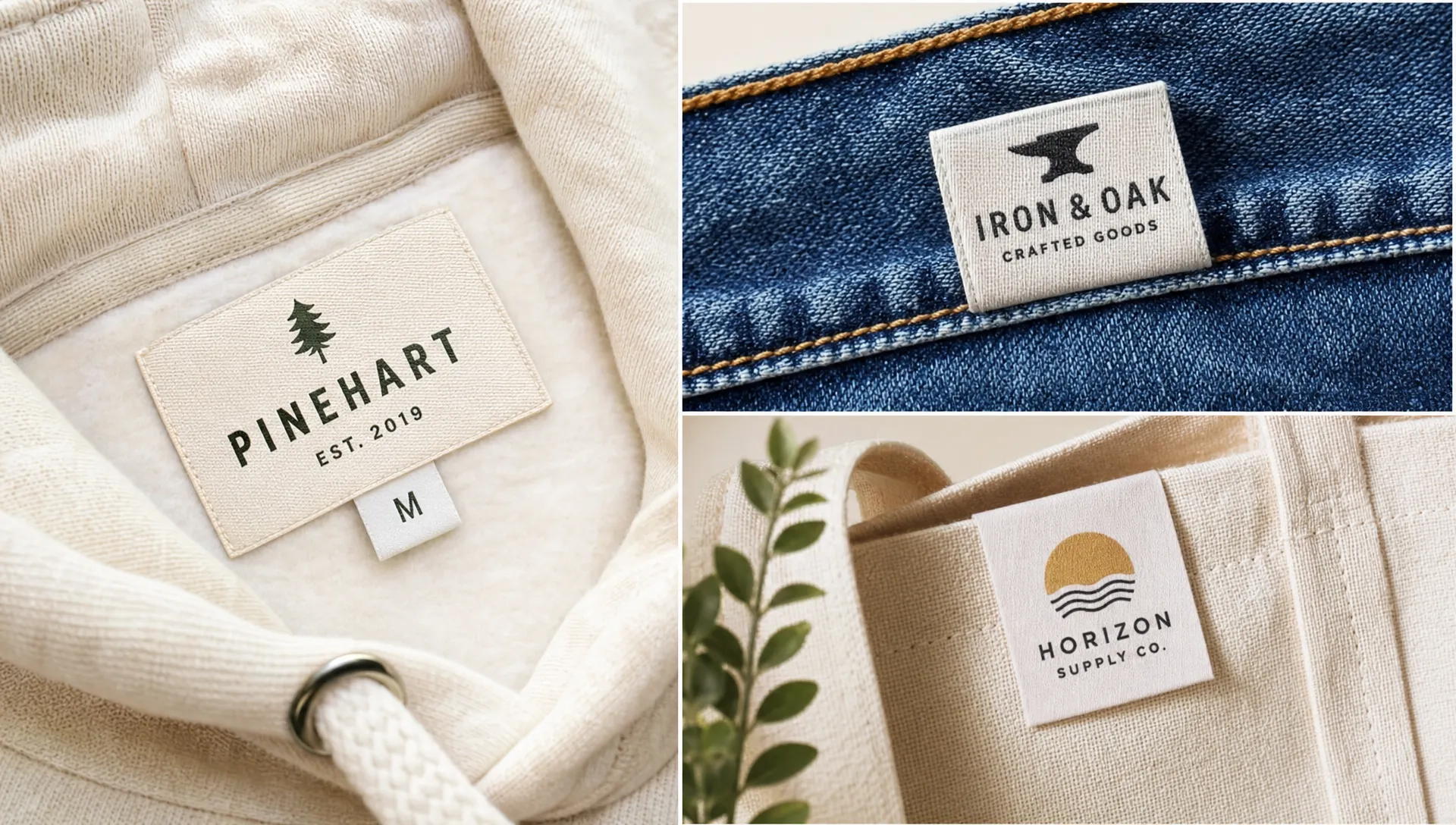
Choosing the right woven label for different clothing products
Different garments ask different things from a label. The same label that works beautifully on a canvas jacket may not work on an athletic top or a delicate blouse.
For T-shirts, sweatshirts, and casual apparel, comfort is often the deciding factor. The label should feel smooth at the neckline or be placed somewhere that does not rub the skin. For outerwear, denim, and bags, the label can be more visible and structured because those items can support a stronger branding detail.
For boutique fashion, limited-run collections, and designer pieces, the label may act as a signature. It should match the design language of the collection and help customers remember the brand. If you are building a more recognizable identity across multiple product lines, the article on custom woven labels that make your brand memorable is a useful next step.
Woven labels are not only for fashion labels. They also work well for uniforms, school apparel, sportswear, volunteer gear, events, handmade products, and community merchandise. For example, organizations focused on daily activities, learning, work, sport, and relaxation, such as Ons Plekske, may use branded apparel or textile items to create a sense of belonging and professionalism. In those contexts, a durable woven label helps the item feel more official and long lasting.
Common mistakes that make woven labels look less premium
Many label problems start before production. They come from artwork or planning decisions that do not translate well into woven form.
One common mistake is using artwork that is too detailed. A label is not a poster. It does not need every slogan, date, icon, and design element. If a customer has to squint, the label is doing too much.
Another mistake is choosing a label size before deciding where it will be sewn. Placement should come first. A center-back neck label, sleeve label, waistband label, side seam label, and hem label all have different size and fold requirements.
Brands also sometimes overlook the garment’s fabric weight. A structured woven label on a structured garment can look excellent. The same label on a thin, stretchy fabric may pull, pucker, or feel uncomfortable.
Color selection can create problems too. Low-contrast combinations may look subtle in a digital mockup, but they can become hard to read once woven. If the label carries your brand name, clarity should be a priority.
Finally, do not ignore sewing method. Even a high-quality label can look cheap if it is attached unevenly, placed too close to a seam, or sewn with thread that clashes in the wrong way. Premium finishing requires both a good label and thoughtful application.
How to order woven labels that match your brand
The ordering process is smoother when you know what your label needs to accomplish. Start with the purpose. Is the label meant to identify the brand, provide size information, display care instructions, create a decorative accent, or add authenticity to a handmade product?
Next, prepare artwork that is clean and production-ready. Vector artwork is ideal when available because it keeps lines crisp and scalable. If your logo has small details, consider creating a simplified version specifically for labels.
Then choose the label format, size, fold, colors, and application method. HiLabels offers a user-friendly way to create and order custom woven clothing labels online, including the ability to upload artwork and specify details for your project. With more than 31 years of experience and European loom quality, HiLabels is positioned for brands that want labels to feel professional, durable, and well made.
Before final approval, review the label as a real product detail, not just as a standalone design. Ask yourself these questions:
- Is the brand name readable at the final size?
- Does the label suit the fabric weight and garment style?
- Will the edge or fold feel comfortable where it is placed?
- Are the colors clear enough to hold their impact over time?
- Does the label look like part of the product, rather than an afterthought?
A strong label should pass both tests: it should look good in close-up product photography and still make sense after months of actual wear.
Premium does not mean complicated
Some of the best woven labels are extremely simple. A wordmark in the right thread color. A small hem tag with strong proportions. A soft neck label that feels barely noticeable but looks polished. A woven patch that gives outerwear a recognizable signature.
The goal is not to make the label louder. The goal is to make it more believable. Customers notice when details feel consistent. If the garment is minimal, the label should support that. If the brand is bold, the label can carry more contrast and presence. If the product is built for daily use, the label should be comfortable and tough.
Premium woven labels for clothing work because they combine design discipline with physical quality. When the artwork is clear, the weave is refined, the placement is thoughtful, and the finish matches the garment, the label becomes a quiet proof point for the brand.
Frequently Asked Questions
Are woven labels better than printed labels for clothing? Woven labels are often preferred when a brand wants a more permanent, textured, and premium finish. Printed labels can work well for certain uses, especially when very fine details or soft tagless applications are needed, but woven labels usually offer stronger tactile quality and long-term brand presence.
What size should woven clothing labels be? The best size depends on placement and garment type. Neck labels need enough room for readability while staying comfortable. Hem labels are usually smaller and more subtle. Patches and outerwear labels can be larger because the fabric can support more structure.
Can small text be woven into a clothing label? Yes, but there are limits. Very small letters, thin strokes, and dense layouts may lose clarity. For premium results, simplify the design, use strong contrast, and test the artwork at actual label size before ordering.
How do I make woven labels last longer? Choose quality weaving, use a label size and finish suited to the garment, avoid overly delicate details, and attach the label correctly. Durability also improves when the label placement avoids high-friction areas unless the label is specifically designed for that use.
What information should be included on a woven label? A brand label usually includes the logo or brand name. Size, fiber content, country of origin, and care information may be placed on separate care labels depending on the product and regulatory requirements. Keeping the main woven brand label clean often creates a more premium look.
Create clothing labels that feel as good as your products
A premium garment deserves a label that can keep up with it. Whether you are producing a small batch, refining your brand presentation, or preparing a full apparel line, the right woven label can make your clothing look more finished, recognizable, and durable.
HiLabels helps brands create custom woven labels, patches, ribbons, zipper pulls, and care labels with a fast online process, artwork upload options, bespoke product support, and personalized service. Start with a clear design, choose the right finish, and create a label that stays with your product for the long run.


