Double Pull Zipper vs Two-Way Zipper for Product Designers
A double pull zipper and a two-way zipper are not necessarily the same thing. One may describe a single slider with a pull tab on each face. The other generally describes a zipper with two sliders that control the opening. For product designers, that difference affects access, ventilation, assembly and the details that belong in a supplier specification.
The complication is that sellers do not use these names consistently. Some listings call any two-slider zipper “double pull,” while others use that phrase for reversible access to one slider. Ordering by name alone can produce a closure that looks right but operates incorrectly.
Before choosing hardware for a jacket, backpack or reversible product, define what the user needs to open, from which side and whether the zipper must separate completely.
What does a double pull zipper mean?
The term can describe two different arrangements, so the first step is to count slider bodies, not just pull tabs.
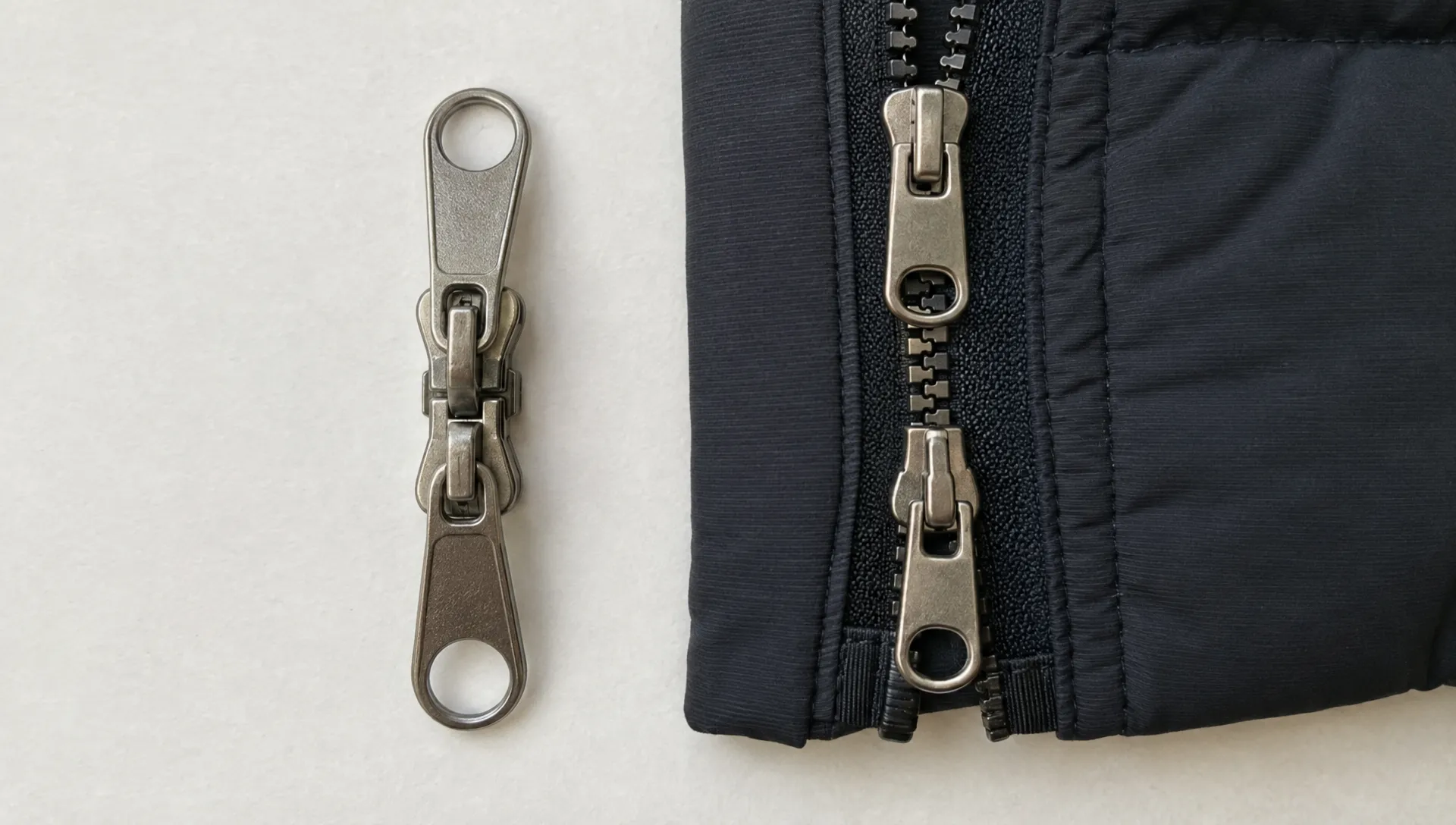
A slider is the moving mechanism that joins or separates the zipper elements. A pull tab is the piece the user grips to move that mechanism. One slider can have a tab on each face, allowing operation from either side of a reversible garment or enclosure. Those two tabs still move the same mechanism.
Alternatively, a seller may use the term for a zipper carrying two separate sliders. Depending on their arrangement and the end construction, those sliders can provide bottom-opening ventilation on a coat or access from either end of a bag opening.
If your team uses “slider,” “pull” and “puller” interchangeably, clarify the difference between a slider and a puller before approving drawings.
The other components matter too: tape is the textile strip sewn into the product, elements are the interlocking teeth or coil and stops limit slider travel. Separating zippers also use insertion and retaining hardware that allows the two sides to detach.
Compare configurations, not just names
A double pull zipper listing should always be checked against a drawing or working sample. The following configurations solve different design problems, even when product listings use overlapping language.
| Configuration | Slider and pull arrangement | What it enables | Common design application |
|---|---|---|---|
| Single slider with tabs on both faces | One slider body, with a pull accessible from each face | Operation from either side of the zipper | Reversible garments or two-sided access |
| Two-way separating zipper | Two sliders with hardware that permits full separation | Opening a coat from the top or bottom while keeping a section closed | Long coats and outerwear |
| Two-slider nonseparating zipper, arranged to meet when closed | Two slider bodies on a zipper whose ends remain attached | Opening a bag from either end of its access path | Backpacks, luggage and equipment bags |
| Single slider with an added extension | One slider with an extra grip attached to its pull | Easier grasping, without changing the opening mechanism | Apparel, pouches and accessories |
Pull count does not determine opening behavior. Adding another tab or a longer extension changes how a user grips the zipper, not how the chain opens.
Also distinguish a separating zipper from a nonseparating construction. A coat front normally needs its two sides to detach completely. A bag opening generally does not. Two sliders alone do not establish either capability.
Choose the opening behavior your product needs
Coats: bottom access without opening the whole front
A two-way separating zipper lets the wearer raise the lower slider to create an opening at the hem while leaving the upper front fastened. This can improve comfort when sitting, walking or accessing clothing underneath, particularly on longer garments.
If a supplier proposes a double pull zipper for this application, ask them to demonstrate bottom-opening operation and complete separation. A single reversible slider with two tabs will not provide those functions.
Evaluate the closure in the intended garment length. A mechanism that works on a loose zipper sample may become awkward when installed behind a storm flap or under tension across the hips.
Bags: access from either end of the opening
A common bag arrangement uses two sliders that meet to close the opening. Moving them apart provides access between them. This lets users position the opening where it is convenient rather than moving one slider around the entire path.
Specify where the sliders should park when the bag is closed and how they should behave at corners. If the design includes a lock interface, consider interlocking zipper pulls separately from the basic two-slider mechanism. Two ordinary pulls do not automatically provide a suitable locking interface.
Reversible products: access from both faces
For reversible apparel, the priority may be reaching the same slider from either face. A double-sided slider can address that requirement without adding a second slider body.
A product that needs both reversible operation and two-way opening requires both functions to be specified. Neither should be assumed from the other.
Turn the choice into a supplier-ready specification
Do not make “double pull zipper” the entire description on a purchase order. Pair the commercial name with a functional statement, a drawing and an approved sample reference.
For a long coat, a useful starting description is:
Two-way separating front zipper with two slider bodies. The zipper must open from the neckline and upward from the hem, retain a closed section between the sliders and separate completely for garment removal. Confirm slider orientation, operating sequence and compatibility of all separating components before sampling.
Then document the details that determine whether the assembly will work in production:
- Construction: Coil, molded plastic or metal elements, with the supplier’s exact chain designation and size.
- Finished dimensions: Zipper length measured between agreed reference points, plus tape width and end allowances needed for sewing.
- Slider arrangement: Number of slider bodies, intended opening movement and a drawing showing open and closed positions.
- Pull access: Which face each tab must be accessible from, including reversible-operation requirements.
- Operating requirements: Locking behavior, grip needs and any use with gloves.
- Finishing and compatibility: Tape color, hardware finish, pull attachment dimensions and relevant care or environmental requirements.
A nominal zipper size is not a universal compatibility standard. Sliders must match the chain construction and supplier system, not merely carry a similar number.
For a bag, replace the separating-coat description with the required access behavior: two sliders that meet to close, with the opening created between them when moved apart. Include the installed path, especially if it runs around tight corners.
Validate the installed zipper, not only the loose sample
A loose sample confirms basic operation. A sewn prototype reveals whether fabric tension, seam placement and surrounding components interfere with it.
Test a double pull zipper in the actual product construction before approving bulk production. Use the intended fabric, lining, reinforcement and pull attachments so the evaluation reflects the finished item.
| Check | How to evaluate it | What to look for |
|---|---|---|
| Opening sequence | Operate every intended opening mode from fully closed | Clear movement without forcing or confusing slider positions |
| Separating function | Fully detach and reconnect the zipper, if required | Reliable insertion and engagement using the supplier’s procedure |
| Installed movement | Operate the zipper while the coat is worn or the bag is realistically packed | Resistance caused by tension, curves or distorted tape |
| Grip and clearance | Use the intended tabs or extensions with any relevant gloves | Secure grasp without collision between pulls or surrounding hardware |
| Snagging | Move sliders past lining, flaps and seam junctions | Fabric capture, restricted travel or inaccessible tabs |
| Care exposure | Apply the product’s intended care process and retest | Changes in operation, tape condition or hardware finish |
Set acceptance criteria with the manufacturer rather than borrowing an arbitrary cycle count from an unrelated product. An occasional-use pouch and a frequently operated work jacket have different demands.
On a coat, include seated and walking evaluations. On a bag, test the intended packed shape, not just an empty shell. Record problems by location so the team can distinguish a slider issue from a sewing or pattern issue.
Avoid these sourcing and production mistakes
The most expensive error is approving an ambiguous name without approving the function. A double pull zipper may be correctly described in a seller’s terminology and still be wrong for your design.
Another mistake is assuming that two sliders from separate sources will work together. Slider geometry, chain construction and end components must be compatible. Mixing parts because their sizes appear similar can create unreliable operation.
Keep branded pull development separate from mechanism approval. First confirm that the zipper opens correctly. Then validate the final pull tab or extension for attachment fit, clearance and grip. A larger branded component can collide with the second pull or make a recessed slider harder to reach.
Finally, retain the approved zipper sample and installed prototype as production references. Written specifications explain the requirement, while physical references show the accepted operating feel, orientation and finish.
Frequently asked questions
What is the purpose of a double zipper on a coat? A two-way coat zipper allows the wearer to open the front from the bottom while keeping an upper section closed. This provides room for sitting or movement and can provide ventilation without opening the entire coat. The zipper must have the appropriate two-slider separating construction.
Is a double pull zipper always a two-way zipper? No. The term may describe one slider with a pull tab on each face, or it may be used for a two-slider assembly. Confirm the number of slider bodies, the opening direction and whether the zipper separates completely.
Can you turn a regular zipper into a two-way zipper? Sometimes an existing zipper can be modified with compatible components, but adding a pull tab alone cannot do it. A two-way separating coat zipper requires suitable sliders and separating hardware. Replacing the complete assembly is often more practical than attempting a retrofit, particularly when compatibility is uncertain.
How do you fix a misaligned two-way zipper? Stop pulling and remove tension from the fabric. If the zipper is not damaged, return the sliders to the starting position specified by the manufacturer and reconnect it using the correct insertion sequence. Do not force the sliders or pin. Persistent misalignment, damaged elements or bent components require assessment by a repair professional or the supplier.
Finish the mechanism with appropriate branding
Choose the zipper assembly for its opening behavior first, then develop the branded details around the approved mechanism.
HiLabels offers custom zipper pulls alongside woven labels, patches and ribbons for coordinated product branding. When planning a custom pull, provide the approved attachment dimensions and test the finished component on your selected zipper. This keeps the branding decision connected to the grip, clearance and operating requirements established during development.


