Embroidered Badges for Uniforms, Events, and Clubs
Embroidered badges have a practical job: they make people, teams and organizations recognizable at a glance. They also add something harder to measure, a sense of belonging. A stitched badge on a uniform sleeve, event jacket or club cap feels intentional in a way a plain garment rarely does.
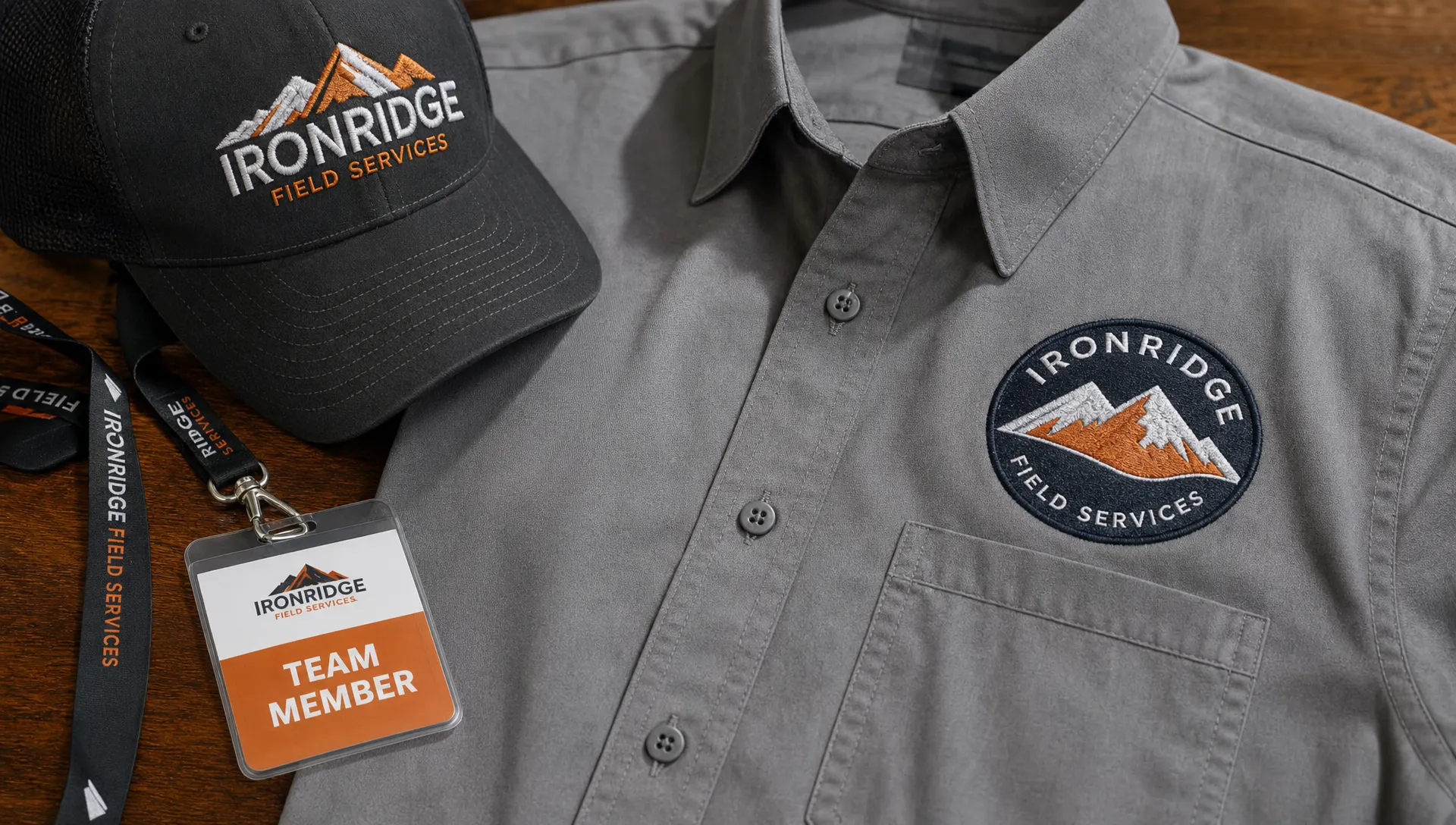
For uniforms, embroidered badges help organize teams and reinforce a professional identity. For events, they turn staff apparel and merchandise into visible branding. For clubs, they become symbols of membership, achievement and shared history. The same badge can be functional, decorative and collectible depending on how it is designed and used.
The key is choosing the right construction, size, backing and placement before production begins. A badge that looks great on a mockup may not work on a curved cap, heavy jacket or high-wash uniform if those details are ignored.
What Makes Embroidered Badges Different?
An embroidered badge is made by stitching thread onto a fabric base to create a raised, textured design. That stitched surface is what gives embroidered badges their familiar depth and traditional look. They are especially effective for bold logos, initials, mascots, shield shapes, club crests and simple symbols.
Compared with printed decoration, embroidery feels more dimensional. Compared with woven patches, it usually has a thicker texture and stronger visual presence. That makes it a natural fit for uniforms, outerwear, bags, caps and event apparel where the badge needs to stand out from a distance.
The trade-off is detail. Very small lettering, thin lines, gradients and tiny icon details can be harder to reproduce cleanly in embroidery because thread has physical thickness. If your artwork includes fine detail, it may be worth comparing embroidered and woven construction before you order. HiLabels has a helpful breakdown of custom embroidered patches vs woven patches if you are deciding which finish suits your design.
Why Embroidered Badges Work So Well on Uniforms
Uniforms need to be consistent, durable and easy to recognize. A badge helps with all three. It can show a company logo, department, role, rank, location or name in a repeatable format across shirts, jackets, aprons, hats and bags.
For customer-facing teams, badges make staff easier to identify. In workplaces where multiple teams share the same space, they can help distinguish maintenance, front desk, security, catering, production or volunteer groups without changing the whole uniform system. A small badge can do the work of a much more complicated garment design.
Embroidered badges are also useful when uniforms need to last. Instead of printing directly onto every garment, an organization can produce badges separately and attach them to approved apparel. That is helpful for seasonal teams, role changes, replacement garments and branded outerwear that may be issued over time.
Name patches are a related option when accountability and personal identification matter. If that is your main goal, this guide to embroidered name patches for uniforms and gear explains how names, roles and departments can improve clarity without making uniforms feel cluttered.
Event Badges That Do More Than Decorate
Events move quickly. Staff, vendors, speakers, volunteers and guests all need visual signals that are easy to understand in crowded spaces. Embroidered badges can support that system while also giving the event a more polished identity.
For event uniforms, badges can identify roles such as crew, production, hospitality, media, security or VIP support. For merchandise, they can turn a simple hoodie, tote, cap or jacket into a keepsake. For sponsors and partners, a badge can be a subtle premium detail that feels more valuable than a disposable sticker or paper pass.
Embroidered badges are especially strong for recurring events. If you host an annual conference, tournament, festival, retreat or charity event, a dated badge can become collectible. Attendees may keep it because it marks a specific year, location or milestone. Staff may also appreciate badges that distinguish first-time volunteers from long-term contributors.
Because event apparel is often produced on tight timelines, design simplicity helps. A bold shape, clean border and limited thread palette are easier to read and easier to reproduce consistently. When the badge needs to work on several items, such as a cap, polo and backpack, a compact design will usually be more versatile than a wide or highly detailed layout.
Club Badges Build Identity Over Time
Clubs use badges differently from businesses. The badge is not only branding. It is often a sign of membership, pride or achievement. Sports clubs, outdoor groups, motorcycle clubs, school societies, maker communities, music groups and alumni associations all use badges to make belonging visible.
A club badge can represent the whole organization, a chapter, a role or a specific accomplishment. Members might receive one badge when they join and additional badges for events, service years, competitions or leadership positions. This makes embroidered badges especially useful for clubs that want identity to grow over time rather than remain static.
The best club badges are recognizable even when they are small. A strong central symbol, readable initials and a consistent color system matter more than packing every detail into the design. If your club has a crest or historic emblem, consider simplifying it for embroidery rather than shrinking a complex artwork file.
| Use case | Best badge approach | Design priority | Common placement |
|---|---|---|---|
| Work uniforms | Logo or department badge | Clear recognition | Chest, sleeve or cap |
| Event staff | Role-based badge | Fast identification | Jacket, lanyard, polo or vest |
| Event merchandise | Commemorative badge | Collectible appeal | Hoodie, tote, cap or sleeve |
| Clubs | Crest, chapter or achievement badge | Belonging and tradition | Jacket, bag, cap or sash |
| Youth groups and teams | Rank, role or participation badge | Easy sorting by level or activity | Sleeve, front chest, bag or banner |
Design Choices That Affect the Final Badge
Good embroidered badge design starts with restraint. Thread can create beautiful texture, but it rewards bold shapes and clear contrast. If the design relies on tiny details, the badge may look crowded once stitched.
Start with the viewing distance. A uniform badge may need to be readable from several feet away. An event souvenir badge might be handled up close, so it can include more decorative detail. A club achievement badge might sit beside several other badges, which means consistent sizing and shape are important.
Color count also matters. More thread colors can add depth, but too many can make a small badge feel busy. High contrast between the background and lettering is usually more important than matching every shade in the original logo. If your brand has strict colors, prepare reference values and ask for guidance on the closest thread options.
Borders deserve attention too. A merrowed border gives a classic raised edge and works well on round, oval, square and shield-shaped badges. A heat-cut or laser-cut edge can suit more complex shapes, depending on the supplier and material. For clubs and uniforms, borders protect the edge visually and help the badge feel finished.
Backing and Attachment Options
The way a badge attaches to a garment changes how it will be used. A sew-on badge is the most traditional choice and is well suited to permanent uniform decoration, jackets, bags and club apparel. Once sewn properly, it can handle frequent wear and washing.
Iron-on backing can be convenient for simple application, though the result depends on the garment fabric, heat settings and use conditions. For high-wash workwear, heavy outerwear or items that see rough handling, sewing is often the safer long-term choice even when heat application is available.
Hook-and-loop backing is useful when badges need to be removable or interchangeable. Teams may use removable badges for changing roles, temporary assignments, rotating event credentials or tactical-style gear. If removability is central to your project, the HiLabels article on custom Velcro patches for teams, gear and events covers practical use cases and design considerations.
Adhesive options are best treated as temporary unless your supplier confirms they are suitable for the surface and use case. For uniforms, clubs and events where the badge needs to stay attached through movement, moisture or washing, permanent stitching or a more robust backing is usually more dependable.
Choosing the Right Size and Placement
Badge size should be chosen for the garment, not just the artwork. A 3-inch badge may look balanced on a jacket sleeve but oversized on a polo chest. A small crest may work on a cap but become unreadable if it includes too much text.
Before ordering, test the size with a paper mockup. Print the badge at actual scale, cut it out and place it on the garment. This simple step can reveal problems that a digital preview misses. It also helps you compare placements across different apparel items.
Common placements include the left chest for logos, the sleeve for department or club affiliation, the back yoke for larger statement badges and caps or bags for smaller identity marks. Event badges often work well on outer layers because they remain visible when staff move between indoor and outdoor spaces.
For uniforms, consistency matters. Decide whether badges will sit in the same location across all garment sizes or whether placement will shift slightly to maintain proportion. If multiple badges appear on one garment, give each one enough space so the layout does not feel crowded.
Artwork Tips Before You Order
Clean artwork leads to cleaner badges. Vector files are usually easiest for production teams to interpret, but high-resolution artwork can also be useful if vector files are not available. The most important thing is that the design shows clear shapes, accurate colors and readable text.
Before submitting artwork, check these basics:
- Remove tiny details that will not be readable when stitched.
- Use strong contrast between text and background.
- Keep lettering thick enough for thread reproduction.
- Decide whether the badge needs a classic border or a shaped edge.
- Confirm the intended garment, placement and attachment method.
If you are ordering for an organization, get approval from the people who manage brand, uniforms or event operations before production. It is easier to adjust a proof than to explain why a finished badge uses the wrong shade, title or placement.
Common Mistakes to Avoid
The most common mistake is trying to reproduce a full-size logo in miniature without simplifying it. Embroidery is not a printer. Thin lines, small taglines and complex shading can lose clarity. A simplified badge version of your logo is often more effective than an exact copy.
Another mistake is choosing a badge before considering the garment. Heavy badges can pull on lightweight fabric. Large badges may not bend comfortably on sleeves or caps. A badge that works beautifully on a canvas jacket may not suit a thin performance polo.
Organizations also underestimate quantity. Uniformed teams need extras for new hires, damaged garments and last-minute replacements. Events need spares for staff changes, sponsors and merchandise opportunities. Clubs may need inventory for new members throughout the year. Ordering a few more than the exact headcount can prevent a second small order later.
Finally, do not leave attachment decisions until the end. Sew-on, iron-on and hook-and-loop options each affect production, garment prep and long-term use. Decide early so the badge is built for the way it will actually be worn.
How HiLabels Fits Into a Badge and Branding System
A badge rarely works alone. It is usually part of a larger branding system that may include garment labels, care labels, ribbons, zipper pulls, packaging details and other custom patches. Keeping these pieces visually consistent helps a brand or organization look more established.
HiLabels supports custom branding products such as woven labels, patches, ribbons, zipper pulls and care labels, with online ordering and artwork upload options for teams that want a straightforward production process. That makes it easier to coordinate the details that sit on apparel, merchandise and packaging without treating each item as a separate afterthought.
For brands, clubs and event organizers, the advantage is consistency. A uniform badge can match the woven label inside the garment. A merchandise patch can use the same colors as a ribbon or hangtag detail. A club jacket can carry a badge on the outside and a custom label on the inside, giving the piece a more finished feel.
Frequently Asked Questions
Are embroidered badges the same as embroidered patches? In everyday use, the terms often overlap. A badge usually refers to a patch with an identity, role, membership or achievement purpose, while a patch can be decorative, branded or functional. The construction may be very similar.
What are embroidered badges best used for? They work well for uniforms, clubs, event staff apparel, merchandise, jackets, caps, bags and achievement systems. They are strongest when the design is bold, readable and suited to textured stitching.
Can embroidered badges include small text? Yes, but small text has limits. Lettering needs enough height and thickness to stitch cleanly. If your design depends on tiny words or fine line art, a woven patch may be a better option.
Should badges be sewn on or made removable? Sew-on badges are best for permanent placement and long-term wear. Removable hook-and-loop badges are better for changing roles, rotating team assignments or gear that needs flexible identification.
How do I choose the right badge size? Print the design at actual size and place it on the intended garment before ordering. Check readability, proportion and comfort, especially for sleeves, caps and lightweight fabrics.
Bring Your Badge Idea to Life
Embroidered badges are small details with a visible impact. They help teams look organized, events feel more memorable and clubs build a stronger shared identity. The best results come from matching the design, size, backing and placement to the real-world use of the garment.
If you are planning custom badges, patches or coordinated apparel branding, explore HiLabels to upload artwork and create high-quality custom branding products for uniforms, events, clubs and merchandise.


