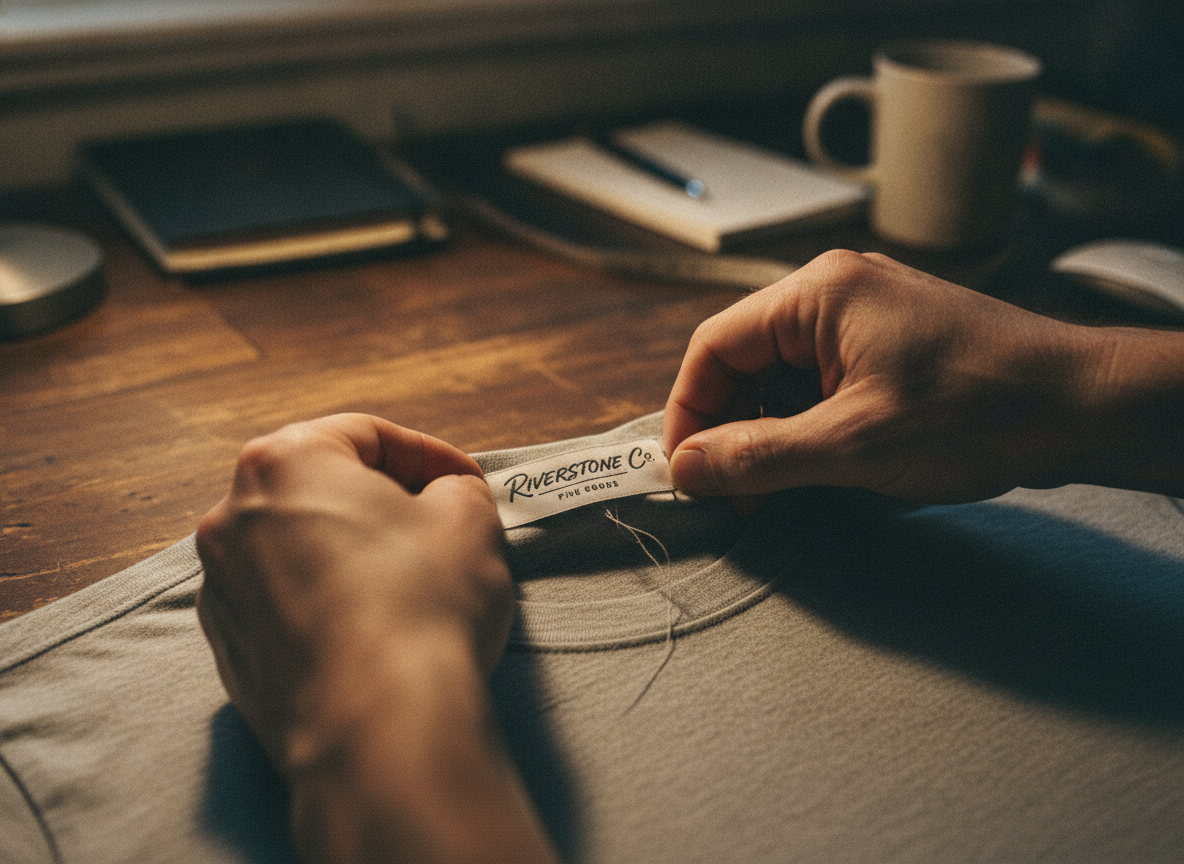
Selecting the right label for your product presents a crucial decision for brand identity and consumer perception. Many textile businesses grapple with the fundamental choice between different woven label types. Understanding the nuances of taffeta vs damask woven labels quality helps you make an informed decision for your brand. This detailed comparison explores each option, highlighting their unique characteristics and ideal applications.
High-quality woven labels enhance your product's appeal and communicate your brand's commitment to excellence. They are not merely functional items; instead, they serve as miniature billboards that speak volumes about your product. Furthermore, the material and weave of your label significantly impact both its aesthetic and its tactile experience for the customer. Therefore, careful consideration of label type remains essential for successful product presentation.
Understanding Woven Labels: The Foundation of Brand Identity
Woven labels represent a cornerstone of textile branding. Manufacturers create these labels by weaving threads together on a loom, much like weaving fabric. This process makes the design an integral part of the label itself, ensuring exceptional durability and longevity. Unlike printed labels, which can fade or crack over time, woven labels maintain their crispness and color through countless washes and wears. Consequently, they offer a permanent and high-quality branding solution for garments and other textile products.
The choice of weave, thread type, and finishing techniques dramatically influences the label's final look and feel. Different weaving methods produce distinct textures and capabilities for design reproduction. Understanding these fundamental differences empowers you to select a label that perfectly aligns with your brand's image and your product's specific needs. For instance, some weaves excel at intricate details, while others prioritize strength and cost-effectiveness. Therefore, consider your brand's aesthetic goals when exploring label options.
The Allure of Damask Woven Labels: Precision and Softness

Damask woven labels stand as the benchmark for intricate detail and luxurious feel in the labeling industry. Manufacturers create these labels using a high-density, jacquard weaving process. This technique allows for a significantly greater thread count per square inch compared to other weaving methods. Consequently, damask labels boast a very smooth, soft texture that feels comfortable against the skin, making them ideal for items worn close to the body, like lingerie or baby clothing.
The elevated thread count directly translates into superior design resolution. Damask labels can faithfully reproduce very fine details, small text, and intricate logos with remarkable clarity. This precision means that complex brand artwork, including gradients or very thin lines, appears sharp and defined. Additionally, the tight weave makes them incredibly durable, resisting fraying and maintaining their appearance over time. However, this premium quality comes with a higher cost per label, reflecting the specialized weaving process and increased material usage. Brands often choose damask for high-end apparel, fashion accessories, and luxury goods where a sophisticated look and soft touch are paramount.
Exploring Taffeta Woven Labels: Durability and Value
Taffeta woven labels offer a robust and cost-effective alternative, particularly favored for their strength and utilitarian appeal. Unlike damask, taffeta utilizes a simple plain weave, resulting in a crisp, slightly stiffer texture. This straightforward weaving method makes taffeta labels more economical to produce, providing excellent value for brands working within tighter budgets or producing high volumes. Moreover, taffeta's inherent durability ensures that these labels withstand demanding conditions and frequent washing cycles.
While taffeta labels do not achieve the same level of fine detail as damask, they excel at reproducing clear, legible text and bolder graphics. They are perfectly suited for care labels, size labels, or main brand labels with simpler logos. Their slightly firmer hand makes them a practical choice for outerwear, heavy-duty garments, bags, and industrial textiles where softness against the skin is less critical than robustness and clarity. Many brands choose taffeta for its reliable performance and straightforward aesthetic, finding it an excellent balance between quality and cost. This option particularly suits brands that prioritize functionality and longevity.
Taffeta vs Damask Woven Labels Quality: A Detailed Comparison

When evaluating taffeta vs damask woven labels quality, several key factors come into play. These distinctions significantly influence the final product's appearance, feel, and suitability for various applications. Understanding these differences helps you make the most appropriate selection for your brand. Both types offer unique advantages, yet they cater to different needs and aesthetic preferences in the textile industry.
| Feature | Taffeta Woven Labels | Damask Woven Labels |
|---|---|---|
| Weave Type | Plain weave | Jacquard weave (high-density) |
| Texture & Feel | Crisp, slightly stiff, less smooth | Very soft, smooth, fine |
| Design Detail | Good for clear text, simple logos; limited intricacy | Excellent for fine details, intricate logos, small text, gradients |
| Durability | High; resistant to fraying, stands up to washing | Very high; excellent longevity and resistance to wear |
| Cost | More economical, budget-friendly | Higher cost, premium pricing |
| Applications | Outerwear, heavy garments, care labels, industrial items, cost-sensitive lines | High-end apparel, lingerie, babywear, delicate fabrics, luxury goods, detailed branding |
| Thickness | Generally thinner, can feel papery | Slightly thicker due to higher thread count |
Consider first the level of detail your design requires. Damask labels handle intricate artwork, minute text, and subtle color variations with unmatched precision. This high resolution comes from their significantly higher thread count, allowing more threads to define each tiny element of your design. Conversely, taffeta labels offer clear readability for simpler designs and text but struggle with highly complex graphics. Their plain weave restricts the level of detail achievable, often leading to a slightly coarser reproduction of intricate elements. Therefore, if your logo features very small typefaces or fine lines, damask provides a superior visual outcome.
Next, evaluate the tactile experience your product demands. Damask labels are remarkably soft and smooth, feeling gentle against the skin. This characteristic makes them ideal for garments like baby clothing, intimate wear, or any item where comfort is paramount. In contrast, taffeta labels possess a crisp, somewhat stiffer hand. While still comfortable, they might not offer the luxurious softness desired for premium next-to-skin items. However, their robust feel often makes them preferable for outerwear or accessories where durability and a structured feel are beneficial. Consequently, the garment's direct contact with the wearer's skin heavily influences this choice.
Finally, durability and cost represent significant factors in the taffeta vs damask woven labels quality debate. Both label types offer excellent durability compared to printed alternatives; they resist fading and fraying effectively. However, damask's denser weave often contributes to a longer lifespan and maintains its pristine appearance even through extensive use. From a cost perspective, taffeta labels are generally more economical due to their simpler manufacturing process and lower thread count. Damask labels, reflecting their intricate production and superior finish, command a higher price point. Your budget and desired brand positioning will therefore play a large role in your ultimate selection.
Making Your Choice: Practical Considerations for Your Brand
Choosing between taffeta and damask woven labels involves more than just aesthetics; it requires a strategic alignment with your brand's overall vision and product line. Consider your target audience and your brand's perceived value. Does your brand project luxury and exclusivity, or does it focus on durable, accessible, and practical goods? A luxury brand often benefits significantly from the premium feel and detailed reproduction offered by damask. Conversely, a brand emphasizing ruggedness or affordability might find taffeta a more suitable and practical choice.
Furthermore, analyze the specific type of product you are labeling. For delicate fabrics, intimate apparel, or children's clothing, the superior softness of damask labels ensures comfort and prevents irritation. This commitment to comfort enhances the perceived quality of your product. For heavier textiles like denim, canvas bags, or industrial uniforms, the durability and crispness of taffeta provide a functional and long-lasting solution. It's also important to consider the placement of the label. A main neck label for a high-end dress shirt might call for damask, while a care label sewn into a utility jacket could perfectly utilize taffeta. HiLabels offers exceptional custom woven labels, crafted with European loom quality, to meet these diverse needs.
Your budget, naturally, plays a vital role in this decision. Taffeta labels offer a cost-effective solution for mass production or when you require a large volume of labels without compromising on essential woven quality. Damask labels, while more expensive per unit, deliver an elevated brand experience that can justify the investment for premium product lines. Consider the long-term value: a high-quality label, whether taffeta or damask, reinforces your brand's identity and contributes to customer loyalty. By carefully weighing these practical considerations, you can confidently select the woven label type that best serves your brand's objectives.
FAQ: Frequently Asked Questions
Q1: Can I use both taffeta and damask labels within the same product line?
A: Absolutely. Many brands strategically use damask for their primary brand labels or those requiring intricate detail and a soft touch, while employing taffeta for care labels or secondary branding where durability and cost-effectiveness are priorities. This allows for a blended approach, optimizing both aesthetic appeal and budget.
Q2: Which type of woven label is better for very intricate logos or small text?
A: Damask woven labels are unequivocally superior for intricate logos, fine details, and small text. Their high-density weave allows for a much greater level of precision and clarity compared to taffeta, ensuring your detailed artwork is reproduced faithfully.
Q3: How do taffeta and damask labels compare in terms of overall durability?
A: Both taffeta and damask woven labels offer excellent durability, significantly outperforming most printed labels. Damask, with its tighter, denser weave, generally provides a slightly more refined and longer-lasting appearance. Taffeta remains very strong and resistant to fraying, making it highly durable for many applications, especially where a crisp, sturdy label is desired. To ensure your labels meet rigorous textile standards, refer to relevant industry guidelines, such as those provided by ASTM International.
Q4: Is the price difference between taffeta and damask significant?
A: Yes, there is a noticeable price difference. Taffeta labels are generally more economical due to their simpler weave and lower thread count, making them a cost-effective choice for large orders or budget-conscious brands. Damask labels are more expensive per unit, reflecting their intricate weaving process, higher thread density, and premium finish.
Q5: Are there any specific care instructions for woven labels based on their type?
A: The care instructions for a woven label usually align with the garment it's attached to. Both taffeta and damask woven labels are typically colorfast and machine washable. However, always refer to the specific care instructions for the garment itself, which are often dictated by the FTC's Care Labeling Rule, to ensure the longevity of both the product and its label.


