What to Do When a Zipper Pull Breaks on Your Favorite Bag
A snapped zipper tab can make a favorite bag feel suddenly unusable, especially when it happens on the way out the door. The good news is that a broken zipper pull usually does not mean the whole zipper is ruined. In many cases, the slider, teeth and stitching are still fine, which means you can restore the bag with a simple temporary fix or a more polished replacement.
The key is to slow down before you tug harder. A zipper pull is only the part your fingers hold. If the slider still moves and the teeth still close, the repair is usually straightforward. If the slider is cracked, jammed or separating the zipper teeth, the issue is bigger than the pull itself.
Here is how to inspect the damage, keep using the bag safely and choose a replacement that looks like it belonged there all along.
First, figure out what actually broke
Before you grab pliers or thread a key ring through the slider, look closely at the zipper. A broken zipper pull can mean a few different things, and each one calls for a different repair.
The pull tab might be missing, which is the easiest fix. The small bridge on the slider might have snapped, which gives you nowhere secure to attach a new pull. The slider itself might be bent, making the zipper hard to open or close. In some cases, the fabric tape or teeth are the real problem and the missing pull is only what you noticed first.
| What you see | What it likely means | Best next step |
|---|---|---|
| The tab is gone but the slider still moves | The pull tab broke off | Attach a temporary or replacement pull |
| The loop or bridge on the slider is cracked | The slider cannot hold a pull securely | Replace the slider or ask a repair shop |
| The zipper opens behind the slider | The slider may be worn or bent | Repair or replace the slider, not just the pull |
| The teeth are missing or warped | The zipper chain is damaged | Professional repair is usually best |
| Fabric is caught in the slider | The pull may have broken from forced tugging | Free the fabric before adding a new pull |
If the zipper still opens and closes smoothly when you pinch the slider carefully, you can focus on replacing the pull. If it catches, separates or feels gritty, fix the mechanism first. REI’s guide to basic zipper repair is a useful reference for understanding common slider and tooth problems on bags and outdoor gear.
Make a safe temporary fix if you need the bag today
When you are dealing with a favorite purse, tote, backpack or travel bag, you may need a quick solution before you can make a cleaner repair. A temporary pull should do one thing well: help you move the slider without bending it or cutting your fingers.
Good temporary options include a small split ring, a key ring, a sturdy ribbon, a short cord loop or even a smooth paper clip in an emergency. Avoid anything sharp, rusty or bulky enough to twist the slider every time you pull.
If the bag carries weight, such as a laptop tote or weekender bag, choose a temporary pull that lets you pull straight along the zipper path. Sideways pressure can stress the slider bridge and turn a minor repair into a bigger zipper replacement.
Use these quick checks before you leave the house:
- Make sure the temporary pull cannot slip out of the slider opening.
- Check that it does not scratch leather, coated canvas or hardware nearby.
- Pull gently a few times to confirm the zipper still tracks evenly.
- Remove any temporary fix that twists, catches on lining or feels unstable.
A quick fix is fine for a day or two, but it should not become permanent if it strains the slider. The longer a rough temporary piece stays on the bag, the more likely it is to cause finish wear or new breakage.
If you still have the original pull, try reattaching it
Sometimes the original tab is still in the bottom of the bag, caught in the lining or sitting on the floor where it fell. If the tab itself is intact and only the connecting ring failed, you may be able to reuse it.
Start by cleaning the pull and the slider area so grit does not interfere with the repair. Then inspect the attachment point. If the pull has a small hole and the slider bridge is intact, a split ring or sturdy jump ring can reconnect the two pieces. Jewelry pliers help close small gaps cleanly, but do not squeeze the slider body itself unless you know the slider is bent and needs adjustment.
This is a good option when you want to preserve the original look of a designer bag, vintage piece or sentimental everyday carry. It is also the least noticeable repair because the size, finish and shape already match the bag.
If you need a more detailed walkthrough of this kind of repair, HiLabels has a practical guide on how to fix a broken zipper pull without replacing the zipper. That approach is useful when the zipper chain works and the goal is to restore the handhold, not rebuild the entire closure.
Do not reuse the original pull if the metal is cracked, the leather is tearing or the connection hole has stretched out. A weak pull may look right for a few days, then fail again at the worst time.
Choose a replacement that fits the bag, not just the zipper
A replacement pull should match how you actually use the bag. The right choice for a small evening clutch is not the same as the right choice for a gym duffel or commuter backpack.
Leather pulls are comfortable, quiet and especially good for purses, totes and handbags where softness matters. They can also make a worn bag feel refreshed rather than repaired. If that is the look you want, this guide to leather zipper pulls for worn purses covers practical style and sizing considerations.
Metal pulls feel more structured and can match existing hardware on bags with gold, nickel, gunmetal or antique brass details. Cord pulls work well on casual bags and outdoor gear because they are lightweight and easy to grip with gloves. Rubberized or molded pulls can be useful for kids’ bags, sports bags and products that need a soft, grippy finish.
Size matters more than many people expect. A tiny pull on a large tote looks flimsy and can be hard to grab. A heavy charm on a delicate zipper may swing too much and strain the slider. As a general rule, the pull should be long enough to pinch comfortably but not so long that it catches on handles, scarves, seat belts or other items in the bag.
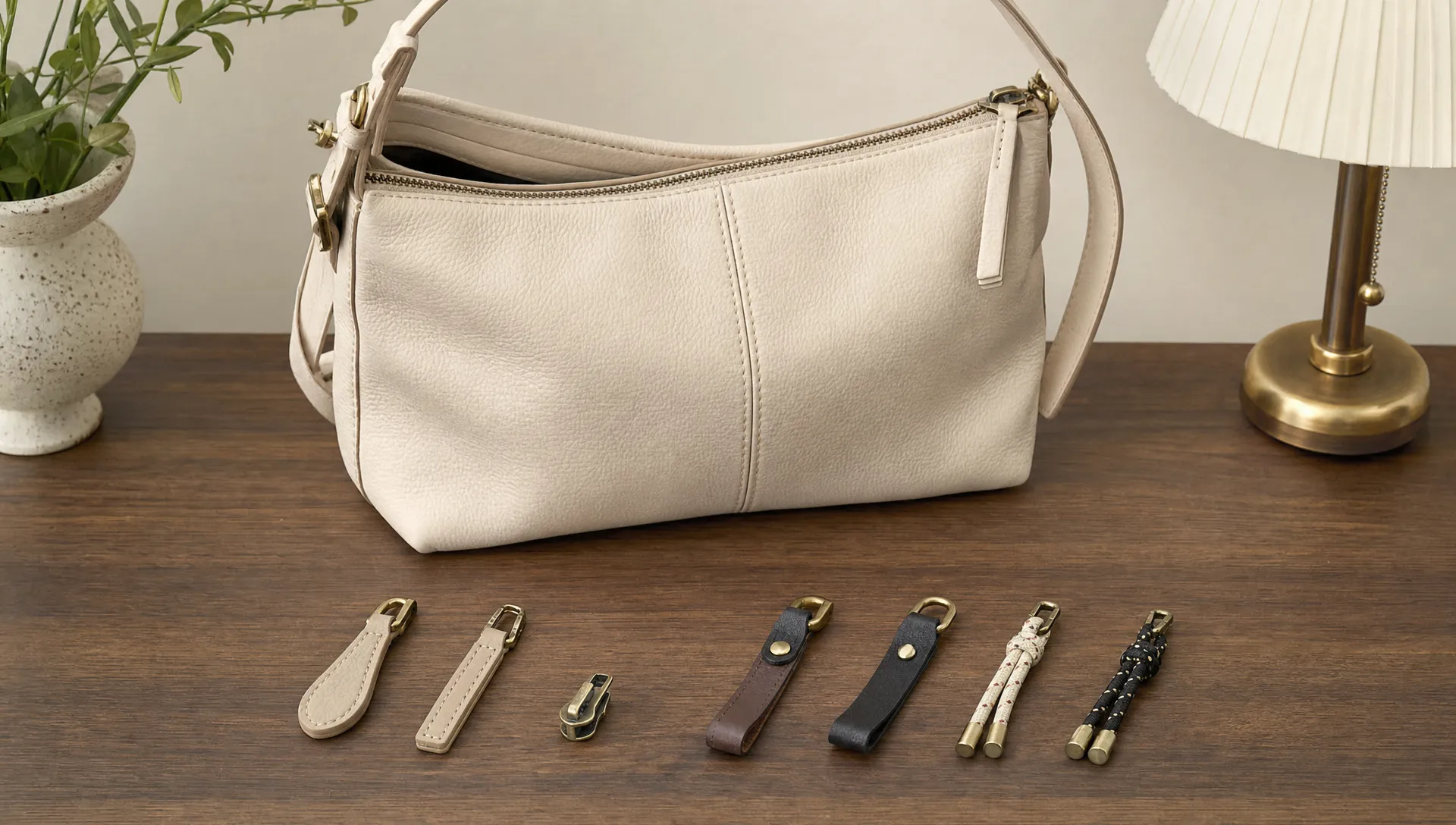
Color and finish also affect whether the repair looks intentional. Match the bag’s hardware when possible, or choose a contrasting material that repeats another detail on the bag, such as a leather handle, logo patch or strap trim.
Attach the new pull so it stays secure
Once you have the right replacement, focus on the attachment method. A beautiful pull will still fail if the connector is too weak or poorly closed.
A split ring is one of the most reliable options for everyday bags because it coils around the slider bridge and resists opening under tension. A jump ring can look cleaner, but it must be thick enough and fully closed. Cord and leather loops can also work well when they pass directly through the slider opening and are tied or riveted securely.
| Attachment method | Best for | Watch out for |
|---|---|---|
| Split ring | Daily-use bags, backpacks, totes | Rings that are too large may look bulky |
| Jump ring | Purses and dressier bags | Thin rings can pull open over time |
| Cord loop | Casual bags and gear | Knots must be tight and trimmed cleanly |
| Leather loop | Handbags and handmade bags | Weak leather can stretch or tear |
| Small carabiner clip | Temporary access or travel use | Clips may scratch hardware or fabric |
After attaching the pull, test it more than once. Open and close the bag slowly, then at your normal pace. Tug from the same angle you would use in daily life. If the ring opens, the knot shifts or the pull twists the slider sideways, adjust it before you put the bag back into rotation.
For a more secure installation method, especially if you are replacing multiple pulls or repairing a bag you use every day, follow the principles in HiLabels’ guide on installing a zipper pull that stays secure. A careful attachment can keep a small repair from becoming a repeated annoyance.
Know when not to repair it yourself
A broken zipper pull is usually simple. A broken zipper is not always simple. If the slider bridge has snapped off completely, there may be no safe place to attach a new pull. If the slider no longer closes the teeth, adding a new tab will only make it easier to pull a failing part.
Consider taking the bag to a cobbler, tailor, luggage repair shop or leather specialist if the bag is expensive, vintage, heavily structured or made from delicate material. Professional repair is also smart when the zipper is sewn into a lined bag in a way that makes slider replacement difficult.
You should pause the DIY repair if you notice any of these signs:
- The zipper teeth separate after you close them.
- The slider is visibly cracked, crushed or missing its bridge.
- Fabric, lining or thread is trapped deep inside the slider.
- The zipper tape is tearing away from the bag.
- The bag is leather, suede or coated fabric that could be damaged by tools.
A repair shop can often replace a slider without replacing the full zipper, depending on the construction. That can preserve the original bag and cost less than removing and sewing in an entirely new zipper.
Make the repair look like a design choice
The difference between a quick fix and a good repair is often consistency. If one zipper pull broke on a bag with multiple compartments, check the others. Matching all visible pulls can make the bag look refreshed rather than patched.
For a purse, matching the replacement pull to the handle material can create a cohesive look. For a travel bag, slightly larger pulls in the same color can make compartments easier to identify. For a handmade or small-batch product, custom pulls can turn a repair lesson into a branding upgrade.
This is where a broken zipper pull can reveal a product improvement opportunity. If customers regularly use a pocket, a larger or more tactile pull may make the bag easier to use. If the original pull looked generic, a replacement can add identity without redesigning the whole bag.
HiLabels offers custom zipper pulls along with woven labels, patches, ribbons and care labels for brands that want durable, polished finishing details. For makers, boutiques and product teams, a branded zipper pull can reinforce the same visual language as a label or patch while also improving grip.
Prevent the next zipper pull from breaking
Most zipper pulls break from repeated stress, not one dramatic moment. Heavy charms, sideways yanking, overfilled compartments and stuck fabric all increase strain on the small connection point between the pull and slider.
The easiest prevention habit is to pull in line with the zipper, not away from the bag. If the zipper resists, stop and check for fabric, thread or pressure from an overpacked pocket. Forcing the pull often bends the slider or weakens the attachment point.
Keep zippers clean, especially on bags used for travel, sports, commuting or outdoor activities. Dust and grit make the slider harder to move, which makes you pull harder. A soft brush can remove debris from the teeth, and a zipper lubricant made for bags or gear can help stubborn zippers move smoothly.
If you add decorative pulls or charms, keep weight in mind. A charm that looks great hanging from a zipper may still be too heavy for daily movement. Choose pieces that are light, smooth and proportionate to the slider.
Frequently Asked Questions
Can I still use a bag with a broken zipper pull? Yes, if the slider still moves smoothly and the teeth close properly. Add a temporary pull, such as a split ring or cord loop, and avoid forcing the zipper if it sticks.
What is the easiest replacement for a broken zipper pull? A small split ring is usually the easiest and most secure quick replacement. It works well when the slider bridge is intact and you need a simple handhold.
Do I need to replace the whole zipper if the pull breaks? Not usually. If only the pull tab is missing, you can often attach a new pull without replacing the zipper. If the slider, teeth or zipper tape are damaged, a larger repair may be needed.
What type of zipper pull is best for a handbag? Leather and metal pulls are common choices for handbags because they look polished and feel comfortable. Match the size, color and hardware finish to the bag for the most natural result.
When should I take the bag to a professional? See a professional if the slider is cracked, the teeth separate, the zipper tape is torn or the bag is valuable enough that tool marks would be a concern.
Give your favorite bag a longer life
A broken zipper pull is frustrating, but it is rarely the end of a good bag. Start by checking whether the slider still works, use a safe temporary fix if needed, then choose a replacement that suits the bag’s material, scale and everyday use.
For brands, makers and repair-minded businesses, the small details matter. HiLabels helps create custom zipper pulls and other durable branding details that make bags, apparel and accessories feel finished from the first use to the next repair.


