How to Choose a Zipper Pull Cord for Bags and Outerwear
A zipper pull cord looks like a small detail, but on bags and outerwear it changes how a product feels every time someone opens a pocket, closes a jacket or grabs gear in bad weather. The right cord improves grip, supports the product’s style and holds up to repeated use. The wrong one frays, slips through the slider or makes an otherwise well-made item feel unfinished.
Choosing well is not only about picking a color. Cord material, diameter, knot style, attachment method and branding all matter. A lightweight pouch does not need the same pull as a ski jacket. A commuter backpack has different demands than a handmade canvas tote. Use the guide below to match the cord to the product, avoid common fit problems and create a detail that feels intentional.
What a zipper pull cord needs to do
A zipper pull has one practical job: make the slider easier to operate. Cord versions are popular because they are light, flexible and comfortable to grab, especially compared with a bare metal tab. On outerwear, they are often easier to use with gloves. On bags, they make small compartments faster to find by touch.
A good zipper pull cord should do four things at once: stay attached, feel comfortable, suit the product’s environment and reinforce the design language. If any one of those fails, the pull becomes annoying. A cord that is beautiful but too thin can dig into fingers. A thick cord that looks rugged may feel oversized on a small cosmetic pouch. A bright color might improve visibility on outdoor gear, but it can look distracting on a minimalist fashion bag.
The best choice usually comes from the product’s use case rather than the cord alone. Start with how the item will be handled, then narrow the options by material and finish.
Match the cord to the bag or outerwear use case
Before comparing materials, define what the product has to survive. A zipper pull cord on a city tote might be opened a few times a day in mild conditions. One on a hiking shell or travel backpack may face rain, abrasion, dirt, cold fingers and hundreds of quick pulls.
Use this table as a starting point:
| Product type | Best cord qualities | Common design priority |
|---|---|---|
| Lightweight pouch | Thin, soft, flexible | Clean scale and color matching |
| Handmade bag | Textured, decorative, comfortable | Craft detail and personality |
| Backpack | Durable, abrasion resistant, easy to grip | Strength and visibility |
| Rain jacket | Water resistant, glove friendly | Fast access in wet conditions |
| Winter outerwear | Larger loop, textured grip | Use with gloves |
| Premium fashion bag | Refined finish, controlled color | Brand consistency |
For backpacks, durability and attachment security matter more than decoration. A pull that catches on branches, seat hardware or luggage racks can loosen over time, so cord ends and knots should be chosen with care. If you are comparing options for pack design, HiLabels has a separate guide on how to choose backpack zipper pulls that last.
For handmade bags, the cord can become part of the maker’s signature. Cotton, waxed cord, braided cord and macrame-inspired pulls can soften the look of canvas, linen or crochet projects. If that craft-focused style fits your product, these macrame zipper pull ideas for handmade bags offer more design direction without making the pull feel purely decorative.
Choose the right cord material
Material affects hand feel, durability, water behavior and the way a cord ages. A zipper pull cord for outerwear usually needs more resistance to moisture and abrasion than one used on a small indoor accessory. Bags can sit somewhere in the middle, depending on whether they are fashion, travel or utility products.
Here are common cord choices and where they work best:
| Cord material | Strengths | Watch-outs | Best uses |
|---|---|---|---|
| Nylon cord | Strong, smooth, abrasion resistant | Can look technical | Jackets, backpacks, gear pouches |
| Polyester cord | Colorfast, durable, resists moisture | Slightly firmer hand feel | Outdoor bags, uniforms, casual outerwear |
| Paracord | Rugged, easy to knot, widely available | Can be bulky on small items | Backpacks, jackets, travel gear |
| Cotton cord | Soft, natural look, easy to dye | Absorbs moisture and may wear faster | Handmade bags, indoor accessories |
| Waxed cord | Structured, refined, water shedding | Wax can change feel over time | Leather goods, fashion bags, small pouches |
| Elastic cord | Flexible, quick to grab | May stretch out with heavy use | Sport items, lightweight outerwear |
Paracord is one of the strongest choices for casual gear because it is easy to knot and comfortable in the hand. It can also look too bulky if the slider is small, so test the scale before committing. For DIY or small-batch rugged pulls, HiLabels’ guide to paracord zipper pulls for bags and jackets covers knot styles and basic construction.
Cotton and waxed cords bring warmth and texture. They work well when the product is meant to feel handmade, natural or premium. Just be realistic about wear. A cotton pull on a beach tote may look great at first but absorb water and dirt faster than polyester or nylon.
Get diameter, length and grip right
Sizing is where many otherwise good pulls fail. A cord that is too thin can feel weak, even if the material is strong. A cord that is too thick may crowd the zipper slider opening or stop the pull from moving naturally.
For many bags, cord diameters between 2 mm and 4 mm are practical. Small pouches often look better closer to 1.5 mm to 2.5 mm. Outerwear and backpacks can handle thicker cords, often around 3 mm to 5 mm, especially when gloves are involved. These are design ranges, not fixed rules, so always test the actual cord with the exact zipper slider.
Length also affects usability. A short loop looks neat but may be hard to grab. A long loop is easier to find but can snag. On jackets, the pull should be long enough to use with cold hands but not so long that it swings constantly or catches on backpack straps.
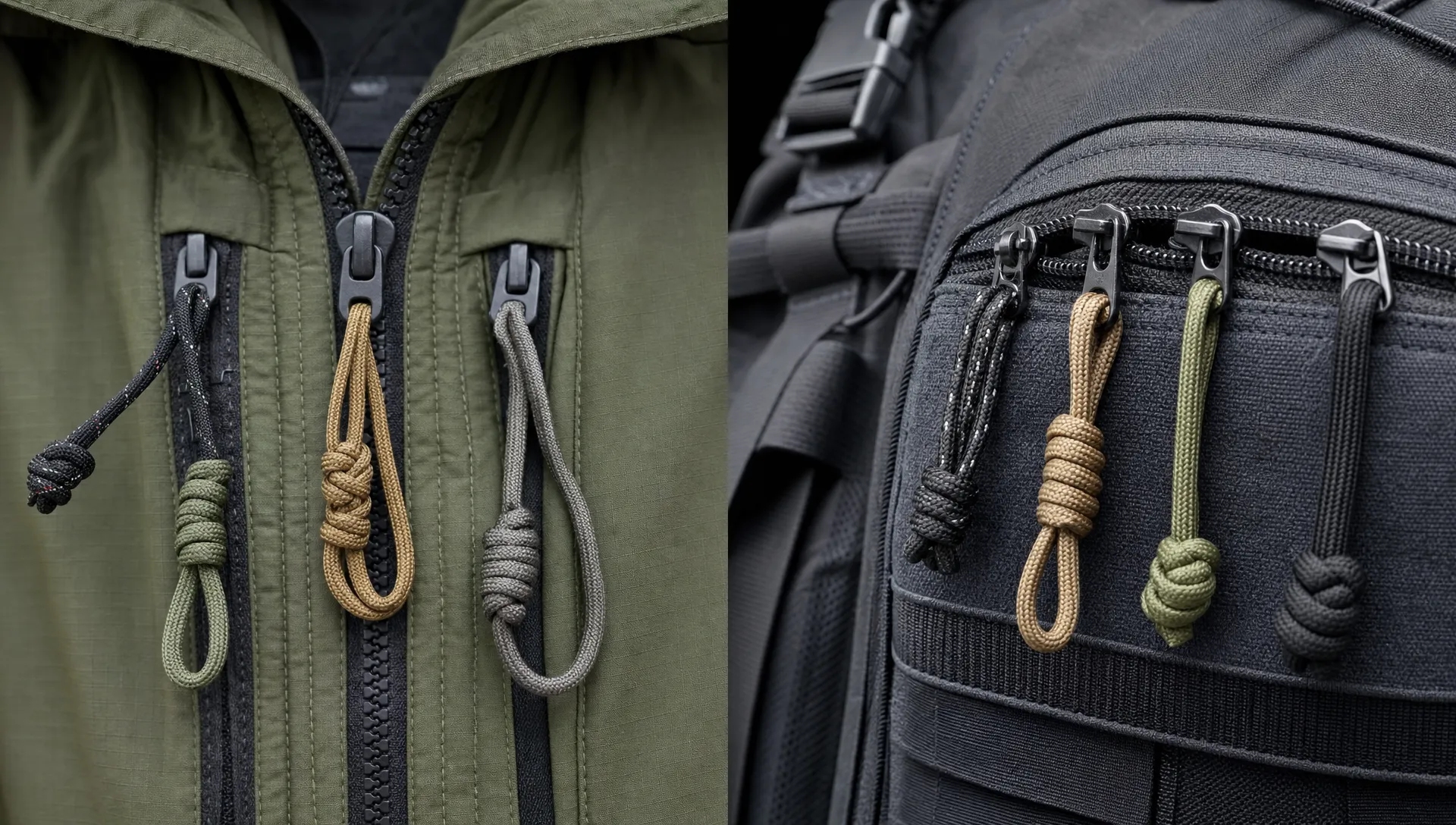
Grip comes from a mix of diameter, texture and end treatment. Knots, molded ends and woven tabs all give fingers something to hold. Smooth cord can work if the loop is large enough, but textured cord is usually better for outerwear, kids’ items and travel gear.
Choose an attachment method that stays secure
The attachment point is just as important as the cord. A zipper pull cord can pass directly through the slider tab, wrap through a small ring or connect to a branded pull component. The right option depends on the size of the slider opening and how much movement the pull needs.
Direct loop attachment is simple and clean. It works best when the slider has enough space for the cord to pass through without pinching. A lark’s head knot, overhand knot or stopper knot can be enough for light to medium use. For heavier bags or jackets, consider adding a ring or reinforced component so the cord does not rub in one tight spot.
Cord ends should also be finished neatly. Synthetic cords can often be heat sealed, but this has to be done carefully to avoid sharp melted edges. Cotton cords may need knots, binding or metal tips. For production items, consistency matters. The user should not see one pull with a tight knot and another with uneven, fuzzy ends.
If you are troubleshooting loose pulls or choosing between split rings, loops and knots, this HiLabels article on how to install a zipper pull that stays secure goes deeper into attachment methods.
Make the zipper pull part of the brand system
Once the functional choices are made, color and branding bring the detail into the full product design. A zipper pull cord can match the shell fabric, contrast for visibility or coordinate with labels, patches and trim. For small brands, this is a useful place to create recognition without redesigning the whole bag or jacket.
A tonal cord feels subtle and premium. A contrast cord can make pockets easier to find and add energy to outdoor or children’s products. Reflective flecks can be useful on commuter bags and running outerwear. If the product already has woven labels, patches or branded ribbon, the zipper pull should feel like it belongs to the same family.
HiLabels offers custom zipper pulls, woven labels, care labels, ribbons and patches, which makes it easier to align small branding details across a collection. For example, a black technical jacket might use a dark cord pull with a small branded detail, then carry the same logo treatment into a woven neck label and care label. A handmade tote might pair a cotton cord pull with a softer woven label and natural-color ribbon.
For teams selling branded goods across borders, product details also sit inside broader business paperwork such as supplier terms, liability language and general conditions. In the Netherlands, Janssen Van den Biezenbos Advocaten in Eindhoven provides information about civil disputes, liability and legal terms, which may be relevant when contracts or product claims need professional review.
Test before you order in quantity
A cord can look perfect in a flat mockup and still feel wrong on the finished product. Always test samples on the actual zipper, fabric and use case. If the product has multiple pocket sizes, test the pull on each zipper type rather than assuming one size works everywhere.
A simple testing checklist can prevent most production mistakes:
- Pull the zipper repeatedly with dry hands, wet hands and gloves if relevant.
- Check whether the cord catches on seams, straps, snaps or pocket flaps.
- Tug the attachment point firmly to see if the knot tightens or slips.
- Look for fraying after rubbing the pull against fabric and hardware.
- Confirm that the color still works under indoor light, daylight and product photography.
- Compare the pull scale against the label, zipper tape, slider and garment or bag size.
For outerwear, test movement while the garment is worn. A pull that lies flat on a table may bounce or twist when someone walks. For bags, test packed and unpacked conditions. A backpack zipper under tension behaves differently when the compartment is full.
Common mistakes to avoid
One common mistake is choosing cord based only on appearance. A braided cotton pull might photograph beautifully but fail quickly on a rain jacket. A thick paracord loop may suit a hiking pack but overwhelm a small clutch. Scale should always match the zipper and product category.
Another mistake is ignoring the slider opening. Some cords are simply too thick to pass through cleanly. Forcing them can restrict movement or damage the finish on the slider. If you need a thicker grip, use a thinner attachment loop with a larger end detail instead of jamming oversized cord through a small hole.
Brands also sometimes use too many pull styles in one collection. Variation can be useful, but every detail should feel intentional. If one jacket uses paracord, another uses rubber and another uses waxed cotton, customers may not read the line as cohesive unless the colors, logos or hardware bring the story together.
FAQ
What is the best material for a zipper pull cord? Nylon and polyester are strong all-purpose choices for bags and outerwear because they resist abrasion and moisture well. Cotton and waxed cord are better for handmade, fashion or low-exposure items where texture and appearance matter most.
How thick should a zipper pull cord be? Many small pouches work well with 1.5 mm to 2.5 mm cord, while bags and jackets often use 2 mm to 5 mm cord depending on the zipper size and grip needs. Always test the cord with the actual slider before ordering.
Can I use paracord for jacket zipper pulls? Yes, paracord can work well on jackets, especially casual, outdoor and utility styles. It is durable and easy to grip, but it may look too bulky on lightweight garments or small zipper sliders.
How do I stop cord zipper pulls from fraying? Synthetic cords are often heat sealed, while cotton cords may need knots, binding or end caps. The best finish depends on the material, the product style and whether the pull will face heavy abrasion.
Should zipper pull cords match the bag or contrast with it? Matching cords create a refined, subtle look. Contrast cords improve visibility and can add personality. For branded products, choose the option that supports the overall label, patch, zipper and trim system.
Bring the detail together
The right zipper pull cord should feel good in the hand, survive the product’s real environment and support the visual identity of the bag or outerwear piece. Start with use case, choose a material that fits, test the size on the actual zipper and finish the cord in a way that looks consistent.
If you want the pull to become part of a larger brand system, HiLabels can help you create custom zipper pulls, woven labels, patches, ribbons and care labels that work together across your collection.


