My Zipper Pull Came Off: A Quick Repair Guide
If my zipper pull came off, the good news is that the zipper itself may still be perfectly usable. In many cases, only the small tab you hold has detached, while the slider, teeth and stops are still intact. That means you can often make a quick repair with a split ring, cord loop or replacement pull instead of sewing in a whole new zipper.
Start by slowing down for one minute before you tug on the slider with force. A missing pull is annoying, especially on a jacket, backpack or pouch you use every day, but rough handling can bend the slider or pull it off the teeth. The right fix depends on which small part failed, so the first step is a quick inspection.
My Zipper Pull Came Off: What Actually Failed?
A zipper has more than one part that people casually call the “pull.” The pull tab is the piece your fingers grab. The slider is the metal or plastic body that moves up and down the teeth. The bail, sometimes called the bridge or crown, is the loop on the slider that holds the pull tab.
When my zipper pull came off because the tab snapped, the repair is simple. When the bail broke off, the slider usually needs more attention because there may be nowhere secure to attach a new tab. If the zipper teeth are separating or the slider has come off the track, you are dealing with a different repair.
| What you see | Likely problem | Best quick fix |
|---|---|---|
| Pull tab is missing but slider still moves | Tab detached or broke | Add a split ring, cord loop or replacement pull |
| Small loop on slider is cracked or gone | Bail is damaged | Replace the slider or use a specialty repair part |
| Slider is loose and teeth separate behind it | Slider is worn or spread | Tighten carefully or replace the slider |
| Slider came off one side of the zipper | Stop or slider issue | Reinstall slider and replace the stop |
If you are unsure whether the slider is still usable, compare it with another zipper on the same item. A healthy slider sits squarely on the teeth, moves with moderate pressure and does not wobble excessively from side to side.
Quick Fixes You Can Use Right Now
For an emergency repair, your goal is simple: create a grip that lets you move the slider without stressing the zipper. These fixes are useful for travel, outdoor gear, children’s jackets and bags that need to get through the day before a cleaner repair.
Use a paper clip for a temporary pull
A paper clip can work for a few hours or a day, especially on an inside pocket or low-stress pouch. Thread it through the bail, close the end as much as possible and avoid yanking. This is not ideal for a coat or backpack because the metal can bend open and snag fabric.
If my zipper pull came off right before leaving the house, a paper clip is usually the fastest temporary option, but it should be replaced with something smoother and stronger as soon as possible.
Add a small split ring
A split ring, like the type used on a keychain, is one of the most practical quick repairs. Choose a ring small enough to move freely through the bail but large enough to grip. Work it on slowly so you do not twist the slider.
This fix works well for metal sliders on backpacks, luggage, fleece jackets and pouches. For delicate garments, check that the ring edges are smooth so they do not scratch the fabric.
Tie on a cord loop
Cord is comfortable to grab, quiet in use and easy to replace. Thread a short piece through the bail, bring the ends together and tie a secure knot. Paracord, waxed cotton, leather lace and sturdy nylon cord can all work depending on the item.
For bags or outerwear, a cord pull can be more comfortable than a narrow metal tab, especially when wearing gloves. If you want a more finished look, HiLabels has a guide to choosing a zipper pull cord for bags and outerwear that explains material, diameter and attachment choices.
How to Reattach a Pull Without Damaging the Slider
Once you have time for a cleaner repair, inspect the slider under good light. Look for cracks, sharp edges, spreading at the sides or a bail that has opened up. If the bail is intact, you can usually attach a replacement pull without touching the zipper teeth.
When my zipper pull came off but the bail was still closed, the safest repair was to use a replacement pull with a jump ring or clasp. The key is to avoid prying the bail open unless it was designed to open. Many slider bails snap if they are bent too far.
A careful reattachment usually follows this order:
- Clean lint or thread from around the slider with tweezers.
- Test the slider by moving it gently with pliers or your fingers.
- Choose a replacement pull that fits through the bail without forcing it.
- Attach the pull with a split ring, jump ring, cord loop or compatible clip.
- Close any ring fully so there is no gap for the pull to slip through.
- Zip and unzip several times while watching for rubbing, twisting or snagging.
Needle-nose pliers are useful, but use light pressure. Covering the plier jaws with tape can reduce scratches on coated or painted hardware.
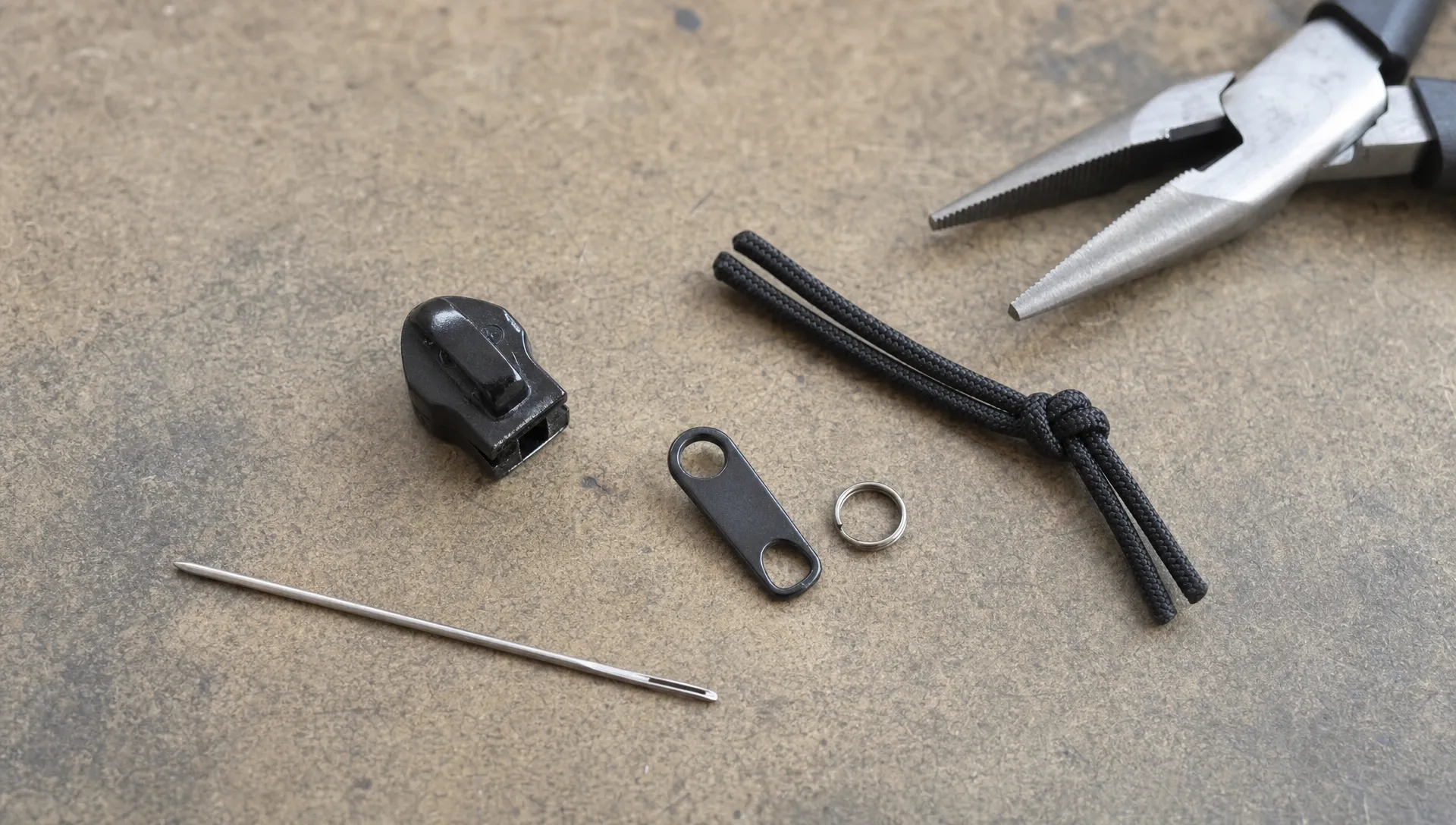
If you are replacing a pull on a valuable bag or garment, take extra care with the slider. HiLabels covers the process in more detail in its guide to replacing a zipper pull without damaging the slider.
When to Replace the Pull, Slider or Whole Zipper
A missing pull does not automatically mean the zipper is ruined. Replacing only the pull is enough when the slider moves smoothly, the bail is secure and the teeth still close evenly. This is the cheapest and least invasive repair.
If the slider does not close the teeth, feels sloppy or keeps separating after you attach a new pull, the slider is probably worn. In that case, replacing the slider is usually better than trying to force a new tab onto bad hardware.
When my zipper pull came off and the zipper started separating behind the slider, the missing tab was not the real problem. The slider had likely widened with use, which meant the teeth were not being pressed together properly.
Use this simple decision table before you buy parts:
| Condition | Replace the pull only? | Replace the slider? | Replace the whole zipper? |
|---|---|---|---|
| Missing tab, smooth slider movement | Yes | No | No |
| Broken bail on slider | Usually no | Yes | No, unless teeth are damaged |
| Teeth close then split open | No | Usually yes | Only if teeth or tape are damaged |
| Missing bottom stop or torn zipper tape | No | Maybe | Often yes |
| Corroded, cracked or melted teeth | No | No | Yes |
Replacing the whole zipper is the last resort because it usually requires sewing skill and more time. On many jackets and bags, a slider or pull replacement restores normal use without changing the original zipper tape.
Prevent the Repair from Failing Again
The repair will last longer if the new pull matches the item’s use. A tiny decorative charm may look nice on a coin purse, but it may not survive a hiking pack. A heavy metal pull may feel premium, but it can bounce, chip coatings or strain a lightweight slider.
For daily-use items, choose a pull that has enough length for a comfortable grip and enough flexibility to move with the slider. On outdoor gear, cord pulls are often practical because they work with gloves and do not get cold like metal. On handbags or branded products, leather, woven or custom-molded pulls can make the repair look intentional.
If my zipper pull came off more than once on the same item, I would look beyond the replacement tab and check how the zipper is being used. Overpacked bags, side tension, dirt in the teeth and yanking at an angle all shorten the life of a zipper pull repair.
A few habits help protect the new pull:
- Zip with steady pressure instead of sharp tugs.
- Hold the fabric near the zipper if the item is tight or overfilled.
- Keep thread, lint and grit out of the slider path.
- Replace bent split rings before they open further.
- Avoid pulls that are much heavier than the original hardware.
For production runs, brand launches or premium repairs, custom zipper pulls can also improve usability and branding at the same time. HiLabels offers custom zipper pulls and other branded trim options for apparel, accessories and bags, which can help a replacement feel like part of the original design.
Fast Repair Checklist
Before you call the zipper broken, run through this short checklist. It helps you choose the smallest repair that will actually solve the problem.
First, check whether the slider still moves. If it does, add a temporary pull and test whether the teeth close. Next, inspect the bail. If the bail is intact, you can usually add a split ring, cord or replacement tab. If the bail is broken, plan on replacing the slider rather than forcing a weak connection.
When my zipper pull came off on a bag, I would also empty the compartment before testing the repair. This removes side tension and gives a more accurate picture of whether the slider works. A zipper that fails when the bag is overstuffed may work normally when the load is reduced.
Finally, match the replacement to the item. A jacket needs a pull that is comfortable in the hand. A luggage zipper needs strength. A pouch or cosmetic bag may only need a small, neat tab. The best repair is not always the strongest-looking part, it is the part that fits the slider and the way the item is used.
Frequently Asked Questions
Can I use pliers to pull the zipper if the pull came off? Yes, but only gently and temporarily. Grip the slider body lightly, move it slowly and avoid squeezing the sides unless you are intentionally adjusting the slider. Too much pressure can distort the slider and make the zipper worse.
Is a paper clip safe as a zipper pull replacement? A paper clip is fine for a temporary fix on a low-stress zipper. It can bend, scratch finishes or snag fabric, so replace it with a split ring, cord loop or proper pull when you can.
What size replacement zipper pull do I need? The pull must fit through the slider bail and move freely without twisting. If you still have the old pull, use it as a reference for length, width and attachment style. If not, measure the bail opening before buying parts.
Why does my new zipper pull keep coming off? The attachment ring may not be fully closed, the bail may be cracked or the replacement pull may be too thick for the slider. If the bail itself is damaged, a new pull alone will not stay secure.
Should I replace the whole zipper if my zipper pull came off? Usually, no. Replace the pull first if the slider and teeth still work. Replace the slider if the bail is broken or the teeth separate. Replace the whole zipper only when the teeth, stops or zipper tape are badly damaged.
Turn a Small Repair Into a Better Detail
A missing zipper pull is frustrating, but it is often a small hardware problem rather than a ruined garment or bag. Identify the failed part, choose a repair that fits the slider and avoid forcing the bail open unless the part is designed for it.
If the item belongs to your brand, this small repair is also a chance to improve the finished product. A well-chosen pull can make a zipper easier to use and reinforce the look of your apparel, bag or accessory. For more repair options, HiLabels also explains how to fix a broken zipper pull without replacing the zipper so you can compare methods before choosing the final fix.


