Where to Get Custom Patches With No Minimum
If you only need one patch, a prototype, or a small run for a limited project, the best place to get custom patches with no minimum depends on what you care about most: professional quality, speed, price, or flexibility. The short answer is that you can usually find no-minimum or very low-quantity custom patches through specialized patch manufacturers, online maker marketplaces, local embroidery shops, and some print-on-demand services.
The more useful answer is that not all no-minimum patch orders are equal. A single patch for a backpack is different from a brand sample for an apparel line, and both are different from a one-off morale patch for a team. No-minimum ordering can be convenient, but it often comes with tradeoffs in unit price, material options, finishing, and durability.
This guide breaks down where to order, what to ask before you buy, and how to choose a supplier that can handle a one-off patch today without disappointing you if you need 50, 500, or 5,000 later.
What does custom patches no minimum really mean?
When a supplier says custom patches no minimum, it usually means one of four things. Understanding the difference helps you avoid surprise costs and mismatched expectations.
A true no-minimum patch supplier will let you order one custom patch with your design, size, colors, and backing. This is useful for gifts, prototypes, cosplay, small clubs, or testing a brand concept before investing in production.
A low-minimum supplier may advertise flexible quantities but still require a small batch, often because woven, embroidered, or printed patches need machine setup, artwork preparation, proofing, and finishing. Even when the order quantity is low, the production process is not always simple.
A sample-first supplier may allow one pre-production sample before a larger order. This is common for brands that care about exact color, size, thread detail, edge finish, or backing performance.
Some suppliers offer stock patch customization, where you choose from existing shapes, blanks, or templates and add a name, logo, or short text. These can be affordable, but they may not provide the fully custom look a brand needs.
The key is to read the details carefully. No minimum does not always mean no setup fee, no proofing charge, or the same price per patch as a bulk order.
Best places to get custom patches with no minimum
There is no single best source for every project. The right choice depends on whether your patch is for branding, uniforms, resale, personal use, or testing.
| Where to order | Best for | Main advantage | What to watch for |
|---|---|---|---|
| Specialized patch manufacturers | Brand samples, apparel lines, teams, resale products | Better construction, proofing, and material guidance | Some may have minimums or higher sample costs |
| Online custom patch platforms | Personal patches, small clubs, quick projects | Easy ordering and fast quoting | Quality and support can vary widely |
| Maker marketplaces | One-off gifts, novelty patches, handmade styles | Flexible creative options | Limited repeatability for future bulk orders |
| Local embroidery shops | Uniforms, repairs, local team patches | In-person support and fabric advice | May focus on direct embroidery rather than standalone patches |
| Print-on-demand services | Merch testing and small online stores | No inventory risk | Patch types and finishing may be limited |
| Promotional product distributors | Events and corporate giveaways | Help with sourcing and logistics | Often better suited to medium or bulk quantities |
If you want a patch that represents a clothing brand, team, or organization, start with a professional patch or label manufacturer rather than the cheapest one-off listing you can find. The upfront conversation may take longer, but you are more likely to get advice on size, weave, backing, border, and long-term repeatability.
For example, HiLabels offers custom branding products such as woven labels, patches, zipper pulls, ribbons, and care labels, which makes it a practical starting point for apparel makers who want their patch to fit into a broader brand identity. You can explore the dedicated custom patches product page to see how patches fit into the wider custom branding workflow.
When a no-minimum patch order makes sense
No-minimum ordering is especially useful when you are not ready to commit to a full production run. If you are testing a new logo, checking how a patch looks on a garment, or creating a one-time gift, ordering one or a few pieces can save money and prevent waste.
It is also valuable for small brands. Before producing hundreds of hoodies, caps, jackets, or bags, you can order a sample patch and physically test it. Does it look premium in person? Is the lettering readable? Does the backing suit the fabric? Does the patch feel too stiff or too bulky for the garment?
No-minimum custom patches are also helpful for:
- Prototype patches for apparel collections
- Limited-edition drops or micro-batches
- Team samples before a larger uniform order
- Event staff patches for small gatherings
- Personalized gifts and commemorative pieces
- Repairs or upgrades to a single jacket, bag, or hat
However, if you already know you need a professional run, a no-minimum supplier is not always the most cost-effective option. A single patch might cost much more per unit than a batch because setup, digitizing, proofing, and production preparation are spread across fewer pieces.
Where to order based on your use case
For apparel brands and merch sellers
If the patch will appear on clothing you sell, quality matters more than simply finding the lowest no-minimum price. Your patch becomes part of the product experience. It influences perceived value, durability, and whether customers feel they bought something intentional rather than generic.
For apparel, woven patches are often a strong choice when your design has small text, fine lines, or a clean brand mark. Embroidered patches are better when you want raised texture and a classic stitched look. If you are choosing between these two options, this comparison of custom embroidered patches vs woven patches can help you match the construction to your design.
For a brand sample, ask the supplier whether they can reproduce the same patch consistently later. A one-off patch is only useful if it teaches you something about production quality. If the supplier cannot scale the order or maintain color consistency, you may need to start over when demand grows.
For teams, clubs, and organizations
Teams often need patches for jackets, hats, bags, or uniforms. If you only need a small quantity at first, look for a supplier that can guide you on backing and application. Iron-on backing may be convenient for casual apparel, while sew-on backing is often more secure for uniforms that see frequent washing or movement. Hook-and-loop backing is useful when patches need to be removable.
The design should be simple enough to read at the patch size you choose. Many team patches fail because they try to include too many words, dates, icons, or borders in a small space. If your patch is smaller than three inches wide, prioritize the team name, a strong symbol, and high contrast.
For personal projects and gifts
For a single patch used as a gift, novelty item, or personal accessory, marketplaces and small studios can be a good fit. You may find artists who specialize in playful designs, unusual shapes, or hand-finished details.
The main tradeoff is repeatability. If you later want 100 identical patches, a small maker may not have the same production setup as a professional factory. That may not matter for a gift, but it matters if the design becomes part of a brand.
For prototypes before a larger order
A sample order is often the smartest way to use no-minimum custom patches. Treat it as a test, not just a purchase. Place the patch on the actual garment or product, review it in natural light, test the backing, and ask people whether the logo is easy to recognize.
When comparing suppliers, look for evidence of craft, process clarity, reviews, and ways to contact a real person. That kind of transparency is valuable in many craftsmanship-driven industries. For example, a local service provider such as a specialist roofing firm in Odense and on Funen builds trust by clearly presenting services, quality signals, and contact options. A patch supplier should make its materials, proofing process, and support just as easy to evaluate.
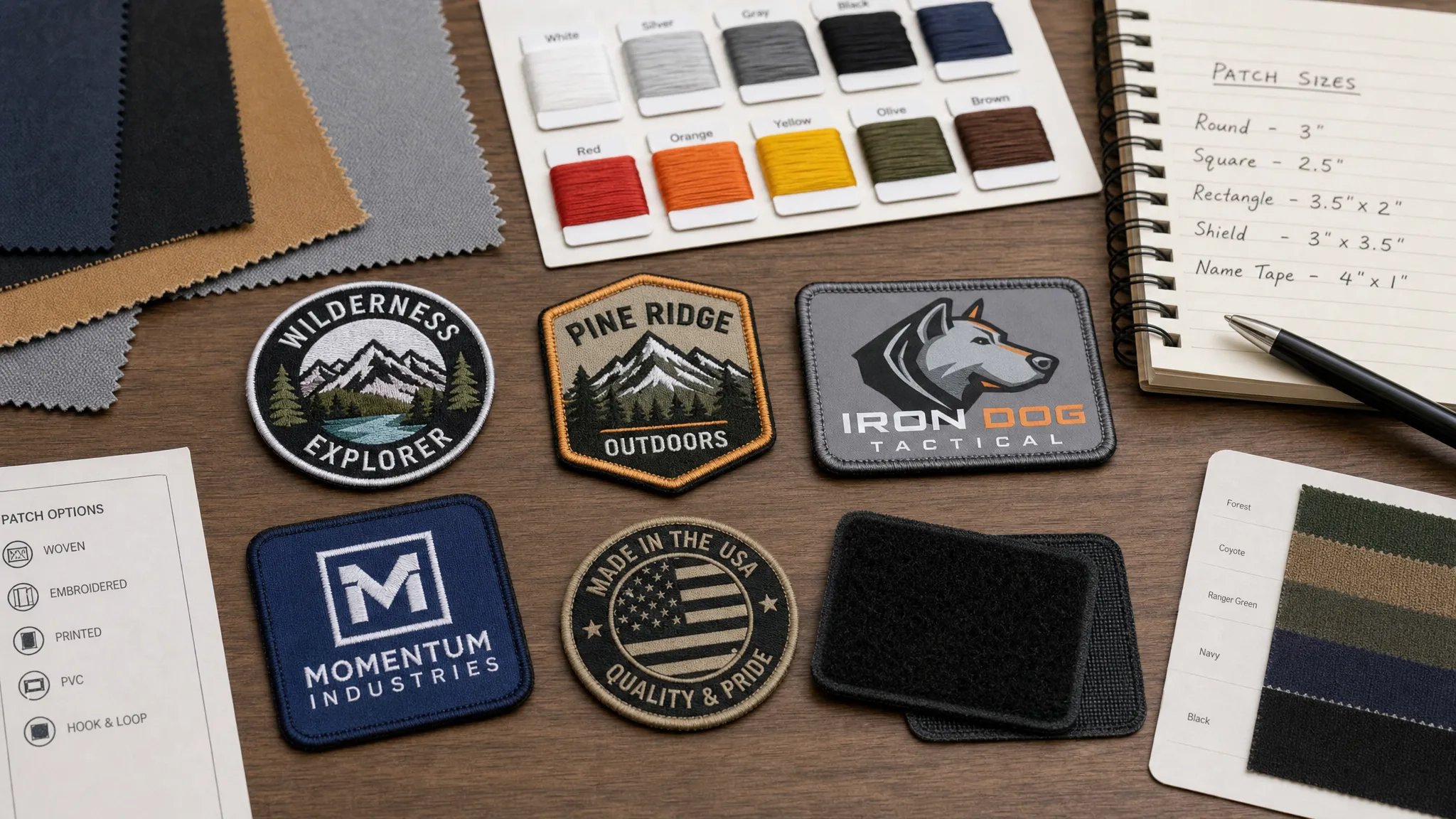
What to check before ordering custom patches with no minimum
Before you buy, slow down and review the details that affect how the finished patch will look and perform. Small orders are often less forgiving because you do not have many extra pieces to test or replace.
Start with the artwork. Vector files are usually best because they scale cleanly, but many suppliers can also work from high-resolution images. If your design includes tiny text, gradients, thin outlines, or detailed illustrations, ask whether the chosen patch type can reproduce it clearly.
Next, confirm the size. A patch that looks great on a screen may feel too large on a cap or too small on a jacket back. Print a paper mockup at actual size and place it on the garment before ordering.
Then choose the attachment method. Sew-on patches are versatile and durable. Iron-on patches are convenient, but fabric compatibility matters. Hook-and-loop patches are ideal for removable use. Adhesive backing may work for temporary applications, but it is usually not the right choice for garments that will be washed or worn heavily.
Also ask about the border. Merrowed borders create a classic raised edge, especially on simple shapes like circles, squares, and rectangles. Laser-cut or heat-cut borders can work better for custom shapes and sharper design silhouettes.
Finally, request a digital proof when available. A proof helps catch spelling mistakes, layout problems, color concerns, and size issues before production. For brand use, this step is essential.
No minimum vs bulk ordering: which is better?
No-minimum patch ordering is best when you need flexibility. Bulk ordering is better when the design is final and you care about unit economics. The right decision often depends on where you are in the project.
| Factor | No-minimum order | Bulk order |
|---|---|---|
| Best stage | Testing, gifting, sampling | Final production, resale, uniforms |
| Upfront cost | Lower total cost | Higher total cost |
| Cost per patch | Usually higher | Usually lower |
| Design risk | Lower risk because you order fewer | Higher risk if artwork is not finalized |
| Consistency testing | Good for checking one sample | Better for checking production consistency |
| Inventory risk | Minimal | Requires storage and demand planning |
If you are launching a brand, a common path is to order one or a few samples first, refine the design, then move into a larger production run once the patch has been tested on real products.
Red flags when choosing a no-minimum patch supplier
A no-minimum offer can be attractive, but it should not replace basic supplier due diligence. Cheap patches can become expensive if they arrive late, look different from the proof, peel off quickly, or cannot be reordered consistently.
Be cautious if a supplier cannot explain the difference between patch types, does not show real product examples, avoids questions about backing, or gives vague answers about production time. Also be careful with listings that show polished mockups but no close-up photos of actual finished patches.
You should also ask how revisions are handled. If the first proof does not work, can you request changes? Are there additional charges? How many revisions are included? Clear communication before ordering is a strong sign of a reliable production partner.
For a deeper supplier evaluation process, this guide on how to choose a reliable custom patch factory explains the quality checks, proofing questions, and communication standards that matter most.
How to prepare your design for a better small patch order
The smaller the order, the more important it is to prepare well. You may not have the budget or time to reorder, so your first submission should be as clear as possible.
Keep the design focused. A patch is not a poster. It has limited space, texture, and thread or print constraints. Strong shapes, readable lettering, and contrast usually matter more than tiny details.
Limit your color palette when possible. Too many colors can increase complexity and sometimes make the patch feel busy. For woven and embroidered patches, thread colors are not the same as screen colors, so ask about available color matching if brand accuracy is important.
Think about the final product. A rugged canvas jacket can handle a heavier patch. A lightweight T-shirt may need something thinner and softer. A cap patch often needs a size and shape that works on a curved surface.
If your patch is part of a larger clothing line, consider how it will work with labels, hangtags, packaging, and care information. A cohesive brand system looks more professional than a patch that was designed in isolation.
Questions to ask before placing the order
Before ordering custom patches with no minimum, send the supplier a concise message with the practical details. This helps you compare quotes fairly and reduces the chance of production problems.
Good questions include:
- Can I order one sample before a larger run?
- Is there a setup, digitizing, or proofing fee?
- Which patch type is best for my artwork?
- What backing options are available for my fabric?
- Will I receive a digital proof before production?
- Can you reproduce the same patch later in a larger quantity?
- What is the estimated production and shipping timeline?
- Are there artwork requirements or file format preferences?
The answer quality matters as much as the answer itself. A good supplier will not just say yes to everything. They will explain limitations, suggest improvements, and help you avoid choices that could hurt the final result.
So, where should you get custom patches with no minimum?
If you need a quick one-off for personal use, an online marketplace or small creative studio may be enough. If you need a patch for clothing, uniforms, merch, or a brand sample, prioritize a professional patch supplier that understands materials, backing, proofing, and repeat production.
The best choice is usually the supplier that can support your next step, not just your first patch. A no-minimum order should give you confidence in the design, the construction, and the production process. If the patch may eventually represent your brand, choose a partner that can help you scale without sacrificing quality.
Frequently Asked Questions
Can I really order just one custom patch? Yes, some suppliers allow one-off custom patch orders, but availability depends on the patch type, artwork, backing, and production method. Always confirm whether there are setup or proofing fees.
Are no-minimum custom patches more expensive? Usually, yes. The total order cost may be low because you are buying fewer pieces, but the cost per patch is often higher because setup and production work are spread across a small quantity.
What is the best patch type for a small brand sample? Woven patches are often best for fine detail and clean logos, while embroidered patches work well for a textured, classic look. Printed patches may suit artwork with gradients or complex color.
Should I choose iron-on or sew-on backing? Sew-on backing is generally more durable across many garment types. Iron-on backing is convenient, but it must match the fabric and be applied correctly. For removable patches, consider hook-and-loop backing.
What files do I need to order a custom patch? Vector artwork is ideal, but many suppliers can work with high-resolution image files. The clearer your artwork, size requirements, and color references are, the easier it is to produce an accurate patch.
Is a no-minimum patch order good for testing a clothing line? Yes. Ordering a sample before bulk production is a smart way to test size, readability, fabric compatibility, and overall brand feel before committing to a larger run.
Create patches that fit your brand from the start
A no-minimum order is a great way to test an idea, but the best patches are designed with the final product in mind. HiLabels helps apparel brands, teams, and creators build polished branding details through custom woven labels, patches, ribbons, zipper pulls, and care labels.
If you are preparing a sample, refining a logo patch, or planning a future production run, start with quality materials and a supplier that understands apparel branding. Visit HiLabels to explore custom branding options for your next project.


