Custom Sewing Labels Every Maker Should Consider
A good label does more than identify who made a garment. It helps your work feel finished, tells customers how to care for it, reinforces your brand, and turns a handmade piece into something that looks retail-ready. For independent makers, sewists, boutique clothing brands, quilters, and small-batch accessory designers, custom sewing labels are one of the smallest upgrades with the biggest visual impact.
The challenge is choosing the right label before you order. A neck label that works beautifully for a linen dress may not be the best option for a beanie, tote, baby blanket, or zipper pouch. The best choice depends on how the item will be worn, washed, gifted, sold, and remembered.
This guide walks through the custom sewing labels every maker should consider, when each type makes sense, and how to design labels that look professional without overcomplicating your product.
Why custom sewing labels matter for makers
When someone buys a handmade item, they are buying more than fabric and thread. They are buying trust, craftsmanship, and the story behind the maker. A label makes that story visible.
For hobbyists, labels add a polished signature to gifts, quilts, and personal projects. For sellers, they create continuity across collections and make it easier for customers to remember your name. For growing brands, labels support packaging, product compliance, wholesale presentation, and repeat purchases.
The key is to think of labels as part of the product experience, not as an afterthought. The way a label feels against the skin, how well it survives washing, and where it sits on the item all influence how customers perceive your work.
The main custom sewing labels to consider
Most makers do not need every label type at once. Start with the labels that solve your most immediate problem, such as brand recognition, care instructions, sizing, or a more premium finish.
| Label type | Best for | Common placement | Maker tip |
|---|---|---|---|
| Brand labels | Apparel, accessories, quilts, bags, gifts | Neck, waistband, side seam, inside bag, quilt back | Keep the logo readable at small sizes |
| Care labels | Garments, baby items, home textiles, washable accessories | Inside seam, side seam, lower interior edge | Include only care instructions you can confidently stand behind |
| Size labels | Apparel, pet wear, children’s clothing, fitted items | Neck, waistband, side seam | Make sizing easy to spot during shopping or reordering |
| Hem labels | Shirts, jackets, sweatshirts, outerwear | Sleeve hem, bottom hem, side hem | Use them for subtle external branding |
| Fold-over labels | Knits, hats, scarves, blankets, bags | Edge, seam, cuff, pocket | Great when you want branding visible from both sides |
| Patches | Denim, workwear, hats, bags, outerwear | Chest, sleeve, back, pocket, cap front | Choose patches when texture and durability matter |
| Branded ribbon | Packaging, gift wrapping, hang presentation | Around parcels, product bundles, garment packaging | Useful for a premium unboxing experience |
Brand labels: the essential maker’s signature
If you choose only one label, make it a brand label. This is the tag that carries your shop name, logo, initials, or maker mark. It gives your work a signature and helps customers connect the item back to you long after the sale.
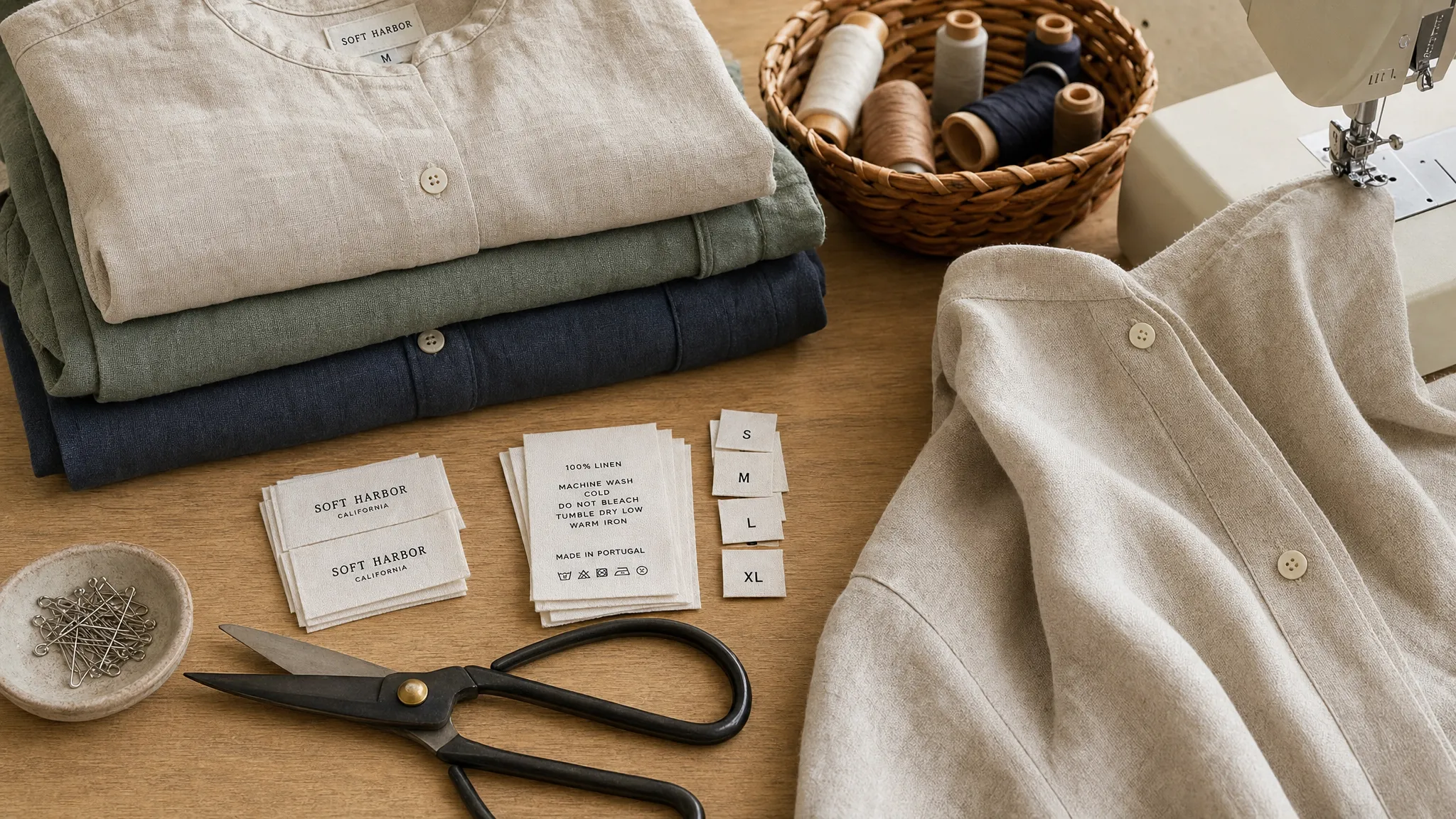
Woven brand labels are especially popular for sewing projects because the design is created with thread rather than printed ink. That gives the label texture, durability, and a more finished look. If your products are washed frequently, worn often, or sold as premium handmade pieces, woven labels are usually a strong choice.
For makers still refining their identity, a simple text-based label can be enough. You do not need a complex logo to look professional. A clean name, strong contrast, and thoughtful placement can do more than a crowded design.
If you are ready to turn your artwork into a physical tag, HiLabels lets you create custom woven labels online by uploading artwork and choosing label details such as type, finish, size, colors, and application method.
Care labels: practical, professional, and often necessary
Care labels are not the most glamorous label type, but they are one of the most useful. They tell customers how to wash, dry, iron, or handle the item, which reduces confusion and protects the quality of your work.
For apparel sellers, care and content information may also be part of your legal responsibilities depending on where you sell. In the United States, clothing and textile products can be subject to labeling rules related to care instructions, fiber content, country of origin, and business identity. If you sell across regions, always check the rules that apply to your product category and market.
Even if you are not legally required to use a care label for a particular handmade item, including one can still improve the customer experience. A buyer should not have to guess whether a handmade linen apron can be machine washed, whether a quilt should be tumble dried, or whether a wool accessory needs special handling.
A good care label should be concise. Avoid cramming in every possible instruction. Include the information that protects the item and gives the buyer confidence.
Size labels: small details that reduce friction
If you make clothing, size labels are easy to overlook when you are producing in small batches. But once you sell at markets, ship online orders, or offer multiple sizes, they become extremely helpful.
Size labels make the shopping experience easier. Customers can quickly confirm the size before trying on an item. Retailers and boutiques can organize your pieces more efficiently. Repeat buyers can check what they purchased previously and reorder with less hesitation.
For children’s clothing, pet apparel, lingerie, hats, and fitted accessories, size labels can prevent returns and reduce customer service questions. They can be separate small tags or included as part of a larger brand or care label.
Hem labels: subtle branding with a premium feel
A hem label is a small label placed near the edge of a garment, often on a sleeve, lower hem, side seam, or pocket edge. It is more visible than an interior tag but usually more understated than a large logo patch.
Makers should consider hem labels when they want their branding to be seen while the item is worn. They work especially well on T-shirts, sweatshirts, jackets, aprons, outerwear, and casual basics. A tiny woven hem tag can make a simple garment look more intentional and collection-ready.
If you are deciding whether external branding fits your products, HiLabels has a helpful guide on why custom hem labels add a premium finish and how to place them thoughtfully.
Fold-over and loop labels: ideal for edges and seams
Fold-over labels are excellent for makers who want a label to wrap around an edge, cuff, seam, or opening. They are commonly used on beanies, scarves, blankets, tote bags, pouches, and handmade home goods.
This format gives you more visibility because the label can be seen from the outside and sometimes from both sides. It can also feel more integrated into the item, especially when sewn into an edge seam rather than placed flat on the surface.
Fold style matters. A center-fold label is often used inside necklines or seams. An end-fold label creates clean tucked edges for topstitching. A loop-fold label works well when the label needs to hang naturally from a seam or edge. The right fold depends on how you plan to attach it and whether you want the label visible, hidden, or partly visible.
Patches: when your label should be a design feature
Patches are more than identification. They become part of the product design. If your pieces are rugged, sporty, vintage-inspired, workwear-focused, or accessory-driven, a patch may communicate your brand better than a small interior label.
Custom patches can work on hats, denim jackets, backpacks, aprons, outerwear, uniforms, and heavy canvas goods. They add texture and are often visible from a distance. For makers who sell at craft fairs or through social media, that visibility can be valuable because the brand mark appears directly in product photos.
A patch does not need to be large. In fact, smaller patches often feel more refined when used on handmade goods. The goal is to complement the item, not overpower it.
Branded ribbons and packaging labels: finish the customer experience
Not every custom label has to be sewn into the product. If you sell handmade goods, packaging is part of the moment your customer remembers. Branded ribbon, woven ribbon, or small fabric labels can make gift wrapping, product bundles, and shipped orders feel more special.
This is especially useful for makers who sell items as gifts, such as baby blankets, bridal accessories, holiday products, embroidered keepsakes, or boutique apparel. A branded ribbon can make a simple box or tissue wrap feel more elevated without redesigning your entire packaging system.
If your handmade business is growing beyond the sewing room, think about the complete customer journey. That includes labels, packaging, order communication, and website testing. For example, if your shop uses automated email receipts, wholesale inquiry forms, or signup flows, operations teams can use programmable temp inboxes for signup verification flows to test customer-facing emails without cluttering a real inbox.
Choosing the right material and finish
The best custom sewing labels balance durability, comfort, and appearance. A label for a baby onesie should feel soft and unobtrusive. A label for a waxed canvas tool roll can be sturdier and more textured. A label for a luxury garment should look refined up close and survive repeated care.
Woven labels are a strong option when you want long-lasting branding with a premium feel. Printed labels can be useful for detailed care information, dense text, or designs that require very fine lines. Patches are ideal when branding should be visible and tactile. Ribbons work best for packaging, trims, and presentation.
Before you order, consider how the item will be used. Will it be washed weekly? Will it touch bare skin? Will it be stretched, folded, ironed, or exposed to outdoor conditions? A label that looks beautiful on the table still needs to perform in real life.
Design tips for labels that look professional
A custom label is small, which means every design decision matters. The most common mistake makers make is trying to include too much. Fine details, thin lettering, low contrast, and tiny icons can disappear once the label is woven or sewn into a seam.
Use this quick checklist before finalizing your label design:
- Keep the most important text large enough to read at the finished size.
- Choose strong contrast between the background and lettering.
- Simplify detailed artwork, especially thin lines and small icons.
- Leave enough space around the edges for stitching.
- Match the label style to the product, not just to your logo file.
- Test placement with a paper mockup before ordering.
- Think about comfort if the label will touch skin.
For a deeper look at artwork preparation, sizing, color choices, and readability, see these practical tips for better custom design woven labels.
Where to place labels on handmade items
Placement affects both branding and comfort. Interior neck labels are traditional for shirts, jackets, and dresses, but they are not always the best option if your customers are sensitive to tags. Side-seam labels can be less intrusive. Hem labels make the brand visible. Quilt labels often belong on the back corner. Bags may need labels inside, outside, or on a pocket.
Think about how the item is used. A label inside a tote should be easy to see when the bag is opened. A label on a scarf should not scratch the neck. A label on baby clothing should avoid irritating seams. A label on a handmade coat should align with the garment’s quality and structure.
If you are unsure, create a prototype. Pin or baste the label in different locations, then handle the item the way a customer would. Try it on, fold it, wash it, photograph it, and package it. The best placement often becomes obvious once the item is in motion.
How many label types should a maker start with?
Start simple. Most makers can begin with one strong brand label and add care or size labels when needed. If you sell apparel, care and size labels may become important quickly. If you make accessories, a fold-over label or patch might be more useful. If you sell giftable products, branded ribbon can make your packaging feel more complete.
A practical first label system might include a woven brand label for your main products, a care label for washable items, and a packaging ribbon or small exterior detail for premium presentation. As your line grows, you can add seasonal labels, limited-edition tags, collaboration labels, or product-specific patches.
The goal is not to label everything. The goal is to make each label earn its place.
Frequently Asked Questions
What are custom sewing labels used for? Custom sewing labels are used to identify the maker or brand, share care instructions, show sizing, add a premium finish, and make handmade products look more professional.
Are woven labels better than printed labels? Woven labels are often better for durable branding because the design is made with thread. Printed labels can be better for detailed care information, small text, or designs with fine lines.
What label should a new maker order first? A simple woven brand label is usually the best first choice because it can be used across many products, from clothing and bags to quilts and accessories.
Where should I sew a label on handmade clothing? Common placements include the inside neck, waistband, side seam, sleeve hem, lower hem, or pocket. Choose a spot that supports branding without causing discomfort.
Do handmade items need care labels? Many apparel and textile products sold commercially may need care, fiber, origin, or business identity information depending on local regulations. Even when not required, care labels help customers protect their purchase.
Make every handmade piece feel finished
Custom sewing labels help your work carry your name, your standards, and your story. Whether you are preparing for your first craft market or refining a growing apparel line, the right label can make every piece feel more intentional.
HiLabels offers custom woven labels, care labels, patches, ribbons, zipper pulls, and bespoke options with a user-friendly ordering process and experienced craftsmanship. When you are ready to create labels that match the quality of your work, start designing with HiLabels.


