Design Your Own Woven Labels for a Consistent Collection
A collection feels consistent when every detail appears to belong to the same brand world. Fabric choices, silhouettes, color stories and packaging all matter, but woven labels often do more quiet work than designers realize. They sit inside necklines, along side seams, on hems and sometimes on the outside of the garment, reminding the customer who made the piece every time it is worn, folded or gifted.
When you design your own woven labels, the goal is not only to make one beautiful label. The stronger goal is to create a repeatable label system that can move across tees, jackets, accessories, limited drops and future collections without feeling patched together. A good system gives every product a shared identity while leaving room for small variations by category.
This guide focuses on that system: how to plan label design, placement, size, color and finish so your full collection looks intentional from the first sample to the final reorder.
Why woven label consistency matters across a collection
Customers may not describe your label strategy out loud, but they feel it. A soft neck label on one piece, a bulky side seam label on another and a mismatched logo patch on a third can make a collection feel less refined, even when the garments themselves are well made.
Consistent custom woven labels help create three useful signals:
- Brand recognition: The same logo treatment, thread colors and label shape make your products easier to identify.
- Product confidence: A well made woven label suggests that the garment was finished with care.
- Collection cohesion: Labels connect different pieces, especially when a line includes multiple fabrics, colors or categories.
Woven labels are also durable. Unlike printed hangtags or paper packaging, they remain attached to the product through everyday use. That makes them a long-term branding element, not just a finishing detail.
Start with a label system, not a single label
Before choosing thread colors or uploading artwork, map the role each label needs to play. A small capsule collection may only need one main brand label and one care label. A larger line might need neck labels, side seam labels, hem tabs, woven patches, zipper pulls and custom ribbon for packaging.
The easiest way to keep everything aligned is to build a label system with one core design language. That system should answer questions like where your logo appears, which colors are always used, how much empty space surrounds the mark and which label shapes belong to which product types.
Think of your main woven label as the anchor. Secondary labels can then borrow from it without copying it exactly. For example, your neck label might show the full brand name, while a hem tab uses a monogram and a patch uses the same border style. The customer sees variety, but the pieces still feel related.
If you are still refining the mark itself, it helps to review how to create a logo that will translate into thread. HiLabels has a practical guide on building your own logo for woven labels before you move into production details.
Define your core label rules
A collection can include different label formats without looking inconsistent, as long as the rules are clear. These rules do not have to be complicated. In fact, simple rules are easier to maintain through new seasons and reorders.
Use this framework to define the essentials:
| Label rule | What to decide | Why it matters |
|---|---|---|
| Logo version | Full wordmark, icon, monogram or stacked logo | Keeps brand marks consistent across small and large labels |
| Color palette | Main thread color, background color and optional accent | Prevents mismatched labels across different garments |
| Label shape | Straight cut, folded, tab style, patch or ribbon | Helps each product category feel planned |
| Placement | Neck, waistband, side seam, hem, sleeve, bag edge or packaging | Creates a predictable customer experience |
| Application | Sew-in, iron-on where suitable or product-specific finish | Affects comfort, durability and production workflow |
| Information hierarchy | Brand name, size, origin, care details or collection name | Avoids overcrowding and improves readability |
Once these rules are set, document them in a simple brand production sheet. Include label dimensions, fold type, colors, placement notes and approved logo files. This small step saves time when you reorder or add new products later.
Design for weaving, not just for a screen
A logo can look sharp on a website and still fail as a woven label. Weaving uses threads, not ink, so extremely fine lines, tiny text, gradients and photographic detail do not translate the same way.
The best woven label designs usually have clear shapes, strong contrast and enough spacing between elements. If your logo includes thin strokes or intricate marks, simplify it before ordering. You do not need to remove personality. You need to make the design readable at the size it will actually be woven.
Pay close attention to these design details:
- Choose a logo version that remains readable at label size.
- Limit thread colors to the colors that matter most to your identity.
- Avoid small text unless the label size supports it comfortably.
- Use contrast between the background and lettering.
- Leave breathing room around the logo so the label does not feel cramped.
This is especially important when you design your own woven labels online. A digital preview is helpful, but your artwork should still be prepared with textile production in mind. If you want a broader walkthrough of the online setup process, HiLabels explains how to approach designing your own woven labels online without the guesswork.
Match label types to the products in your collection
Consistency does not mean using the exact same label everywhere. A hoodie, silk scarf, canvas tote and denim jacket may all need different label formats. The key is to let each format serve the product while staying inside your brand rules.
A soft garment may need a comfortable folded label in the neck or side seam. A structured outerwear piece can support a more visible woven patch. Accessories may call for small tabs or branded ribbon. Care labels can carry required garment information while still matching the overall label system.
| Product type | Label approach | Consistency tip |
|---|---|---|
| T-shirts and knits | Soft neck label, side seam label or hem tab | Keep the logo clean and avoid scratchy placements |
| Jackets and outerwear | Woven patch, inside brand label or zipper pull | Use stronger contrast and a slightly more substantial finish |
| Bags and accessories | Side tab, exterior patch or custom ribbon | Repeat the same icon, border or thread palette |
| Kidswear or loungewear | Soft folded label and clear care label | Prioritize comfort and readability |
| Limited editions | Main brand label plus small collection marker | Add distinction without replacing the core brand identity |
For brands that want to extend woven details beyond the main garment label, ideas like tabs, ribbons, patches and zipper pulls can help create a richer identity. HiLabels covers more possibilities in its article on custom woven fabric details for distinctive branding.
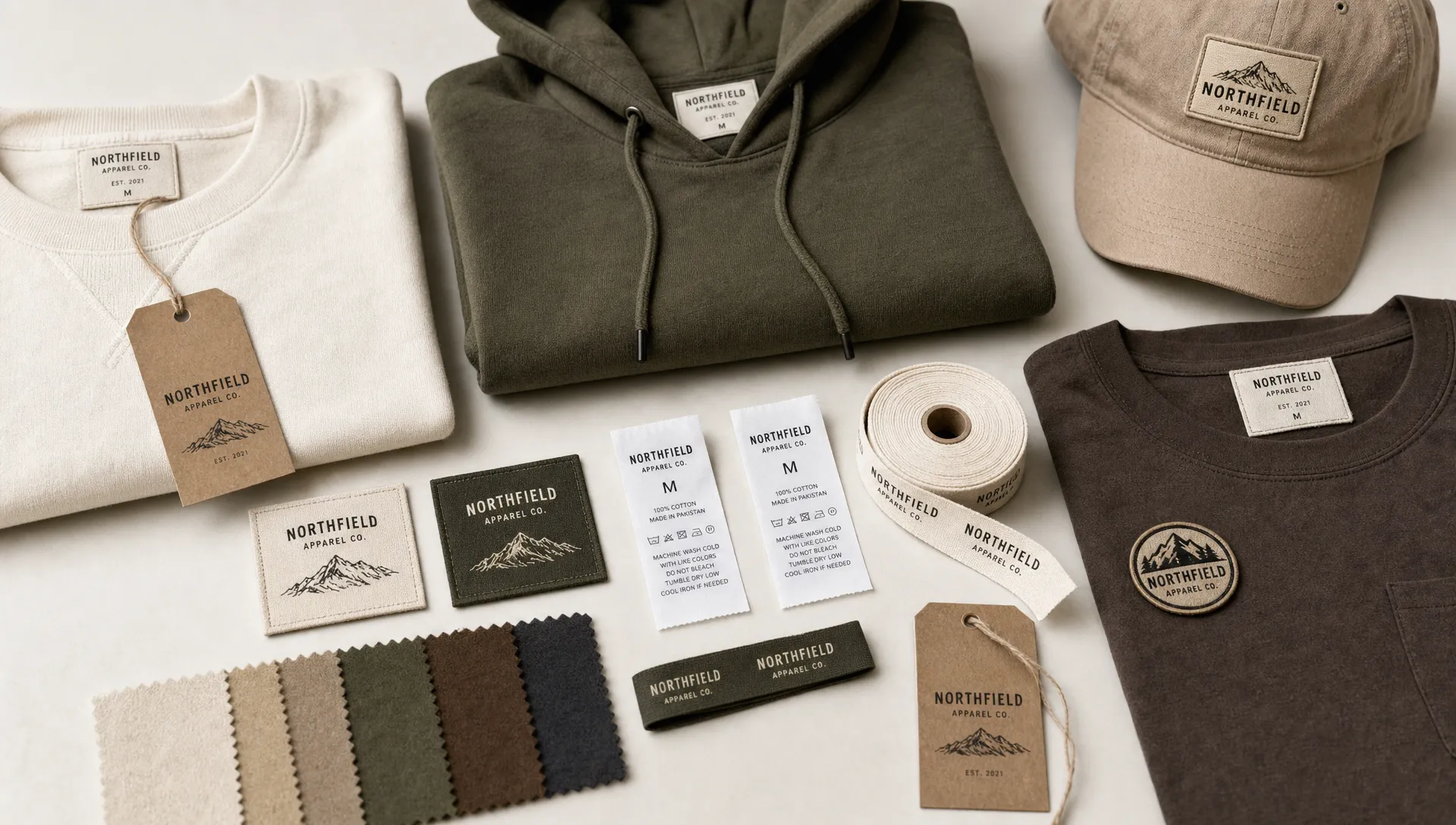
Keep color consistent across seasons
Color inconsistency is one of the quickest ways to make a collection look unplanned. This can happen when one label uses bright white, another uses cream and a later reorder uses a slightly different background shade. Small differences become more noticeable when products sit together on a rack or ship in the same order.
Choose a core label colorway that works across most of your collection. Many brands use a neutral background with a high-contrast logo because it works with light, dark and seasonal garments. Others choose a signature brand color that becomes part of the customer experience.
If you run seasonal collections, decide which elements are fixed and which can change. For example, the logo, label shape and placement might stay the same, while a small accent thread changes for a limited release. This gives each drop a fresh detail without weakening your main identity.
Plan placement before production
Label placement should be decided at the sample stage, not after bulk production begins. A label that looks perfect on a flat mockup may sit awkwardly when sewn into a curved neckline or thick seam. Test placement on the actual garment or a close sample fabric whenever possible.
For interior labels, comfort matters as much as appearance. Customers notice scratchy neck labels quickly, especially on lightweight tops, activewear or kidswear. For exterior labels, proportion and visibility matter more. A patch that is too small may disappear, while one that is too large can overpower the garment.
Create a placement guide for every product category. It can be as simple as a photo of the sample with notes such as “center back neck,” “left side seam,” “lower right hem” or “inside pocket seam.” If multiple factories or sewing partners handle production, this guide keeps results consistent.
Build a reorder-friendly specification sheet
A consistent collection depends on repeatable specifications. When you find a label size, fold and colorway that works, document it clearly. Do not rely on memory or old email threads.
Your woven label specification sheet should include:
- Artwork file name and logo version.
- Label dimensions.
- Fold or cut style.
- Thread colors or approved color references.
- Background color.
- Application method.
- Placement notes by garment type.
- Any comfort, edge or finish requirements.
This kind of documentation becomes more valuable as your brand grows. It also helps when storing inventory, organizing trims or moving production materials between locations. If your operation expands into larger storage, retail buildouts or mobile workshop needs, companies such as Outback Shipping Containers can support businesses with container options and delivery logistics for secure space planning.
Use woven labels to separate product tiers
If your collection includes different price points, label design can help customers understand the difference without making the line feel fragmented. A premium capsule might use a more substantial woven patch, a signature collection may use the main neck label and basics might use a simpler tab.
The important part is to maintain a family resemblance. Keep the logo treatment, colors or shape consistent, then vary one element at a time. If everything changes at once, the tiers may look like separate brands.
A simple structure might look like this:
| Collection tier | Label variation | Shared brand element |
|---|---|---|
| Core basics | Small woven neck label | Main wordmark and neutral color palette |
| Seasonal capsule | Main label plus accent color | Same logo size and fold style |
| Premium line | Woven patch or upgraded placement | Same border, typography or brand icon |
| Accessories | Woven tab or ribbon | Same thread colors and monogram |
This approach gives you flexibility while protecting recognition.
Common mistakes to avoid
Many label problems come from designing each piece in isolation. A label might look good on its own but clash with the rest of the collection once everything is assembled.
Avoid changing the logo treatment too often. Switching between full logo, icon, stacked logo and script version without a clear rule can confuse the visual system. Also avoid overcrowding the label with too much information. If you need care instructions, fabric content or compliance details, use a separate care label instead of forcing everything onto the brand label.
Another common issue is choosing label size without considering placement. A wide center-fold label may work in a jacket but feel bulky inside a lightweight tee. A tiny side tab may work for accessories but fail to communicate enough brand presence on outerwear.
Finally, do not skip proofing. Review the label design carefully before production and check spelling, spacing, logo orientation, color contrast and fold direction. Small errors are much easier to fix before labels are woven.
How HiLabels helps you create a consistent label collection
HiLabels gives brands a practical way to turn a label system into finished woven products. With more than 31 years of experience, HiLabels offers custom woven labels, care labels, patches, ribbons, zipper pulls and bespoke product options for brands that want durable, professional details.
The online process is designed to make ordering straightforward. You can upload artwork, choose label type, select finishes and add design notes through the custom woven clothing labels tool. That makes it easier to keep specifications organized when you are developing a full collection instead of ordering one label at a time.
For designers, makers and growing apparel brands, the biggest benefit is control. You can create labels that match your brand identity, then use those same decisions across future products, seasonal drops and reorders.
Frequently Asked Questions
What should I decide before I design my own woven labels? Start with the label’s purpose, placement, size, fold style, logo version and color palette. These decisions help you create labels that work across the full collection instead of just one garment.
Can I use different woven labels in the same collection? Yes. Different formats can work well together if they share brand elements such as logo style, thread colors, border shape or placement logic.
How many colors should a woven label use? Use only the colors needed for clear branding and readability. Too many colors can make a small label feel busy, especially if the logo has fine detail.
Are woven labels better for clothing brands than printed labels? Woven labels are often chosen for their durability, texture and premium feel. Printed labels can be useful for certain applications, but woven labels create a long-lasting brand detail that stays with the garment.
How do I keep reorders consistent? Save your final artwork, dimensions, fold type, colors, placement notes and order details in a specification sheet. Using the same approved specs helps future labels match the originals.
Create labels that make the whole collection feel connected
A consistent collection is built from repeated choices. Your woven labels should follow the same principle. When the logo, color, size, finish and placement work together, each garment feels like part of a stronger brand story.
If you are ready to design your own woven labels, start with a simple system and build from there. HiLabels can help you create durable, high-quality woven labels and related brand details that carry your identity across every piece in your collection.


